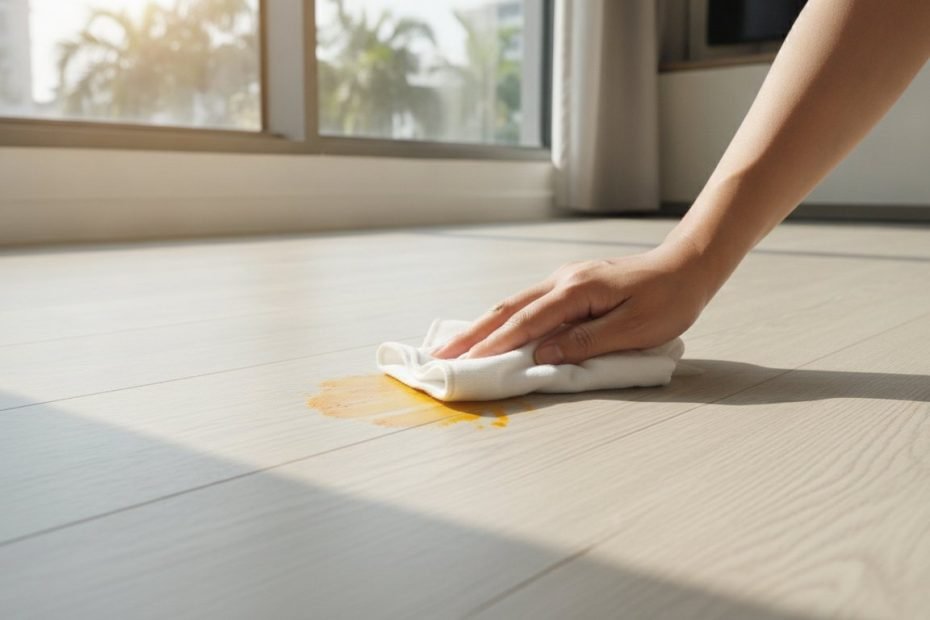
Your vinyl floor’s biggest enemy isn’t the stain itself; it’s the harsh chemical you’re about to use to remove it. It’s stressful to watch a splash of chili oil or a scuff mark threaten the look of your home, especially when generic advice for cleaning stubborn stains off vinyl floors doesn’t seem to work. You shouldn’t have to choose between a clean floor and a damaged wear layer. We know you value the safety and longevity of your flooring, and the fear of permanent discoloration is a common frustration for many property owners.
This guide will help you master the professional techniques for restoring your surfaces without compromising the material’s integrity. We’ll provide you with the exact knowledge of safe, pH-neutral cleaning agents that protect your floor’s warranty while delivering a pristine finish. You’ll discover a methodical approach to stain removal, moving from the least-aggressive methods to expert-level solutions for the toughest grime. By the end of this article, you’ll have the peace of mind that comes from knowing exactly how to maintain a beautiful, high-quality floor for years to come.
Key Takeaways
- Protect your floor’s longevity by mastering the “least-aggressive” approach to preserving the vital protective wear layer.
- Discover professional techniques for cleaning stubborn stains off vinyl floors using safe, pH-neutral agents like baking soda and isopropyl alcohol.
- Resolve tough local challenges like curry and turmeric marks with a targeted three-step removal process designed for the Singaporean home.
- Ensure your floor warranty remains intact by avoiding high-heat cleaning methods that lead to permanent edge curling and delamination.
- Learn how modern vinyl allows for surgical plank replacement when deep damage or burns make surface cleaning impossible.
The Science of Vinyl Stains: Why “Least-Aggressive” Wins
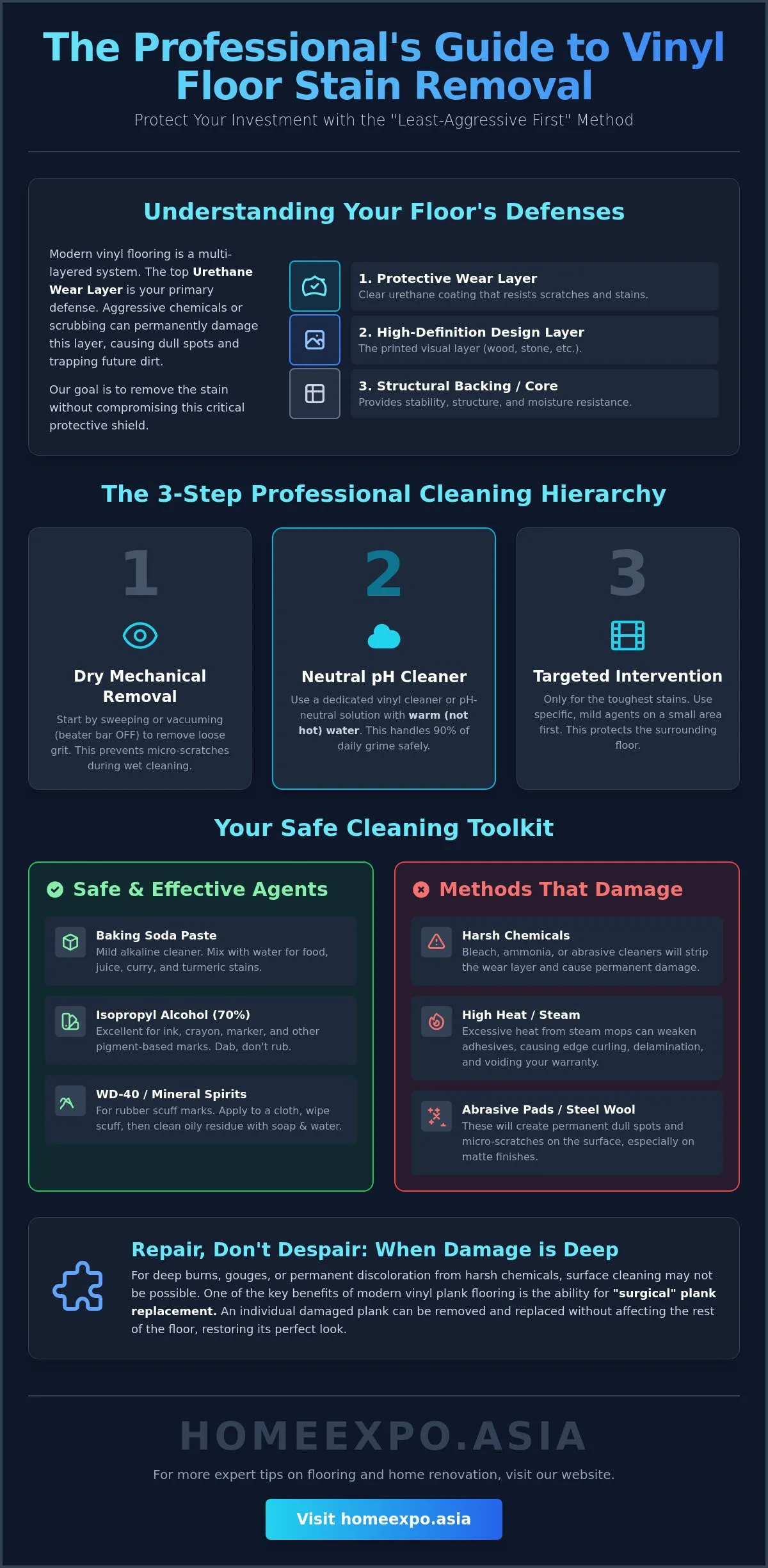
Vinyl isn’t just a single layer of plastic. It is a sophisticated, multi-layered system designed to withstand the heavy foot traffic and high humidity common in Singaporean households. At the very top of this system sits the wear layer. This clear, urethane-based coating is your floor’s primary defense against damage. When homeowners face the challenge of cleaning stubborn stains off vinyl floors, they often make the mistake of reaching for the strongest chemical available. This aggressive approach can permanently compromise the wear layer, leading to more problems than just a simple stain.
The “least-aggressive” framework is the professional standard for a reason. Aggressive scrubbing or the use of abrasive pads can create permanent “dull spots” on your floor. This is especially true for modern ultra-matte finishes, which saw a 45% increase in consumer requests in 2024. Once the texture of the wear layer is flattened or chemically etched, it cannot be easily restored. Starting with the mildest possible solution ensures you remove the mark while keeping the protective shield intact. In Singapore’s tropical climate, high humidity can cause organic stains like food spills to bond more quickly with the microscopic texture of the floor. Heat also accelerates chemical reactions, meaning a harsh cleaner might damage the PVC before you even have a chance to wipe it away.
Understanding Your Vinyl Floor Construction
To clean effectively, you must understand what you’re working with. Modern vinyl consists of a structural backing, a high-definition printed design layer, and the protective urethane coating. While traditional Vinyl composition tile (VCT) is often porous and requires regular waxing, residential luxury vinyl is engineered to be low-maintenance. Most “stubborn” stains aren’t actually deep inside the vinyl. They’re simply trapped in the surface texture or the grain of the wear layer. Using excessive heat or heavy industrial solvents can cause the layers to separate, leading to edge curling or delamination, which often voids your manufacturer’s warranty.
The Professional Cleaning Hierarchy
Follow this proven three-step hierarchy to ensure safety and effectiveness when cleaning stubborn stains off vinyl floors. This methodical approach builds trust in the process by prioritizing the floor’s long-term health over a quick, risky fix.
- Step 1: Dry Mechanical Removal. Always start by removing loose grit. Use a soft-bristle broom or a vacuum with the beater bar turned off. Small particles of sand act like sandpaper under a mop, creating micro-scratches that trap future stains.
- Step 2: Neutral pH Cleaners and Warm Water. Use a dedicated vinyl cleaner mixed with warm (not hot) water. This handles 90% of household grime by breaking surface tension without stripping the urethane coating.
- Step 3: Targeted Chemical Intervention. Only move to specialized agents like isopropyl alcohol or alkaline pastes for specific pigments or oils. This targeted approach limits chemical exposure to the smallest possible area.
Safe and Effective Agents for Cleaning Stubborn Stains
Selecting the right cleaning agent is the most critical step in cleaning stubborn stains off vinyl floors. While modern wear layers are incredibly durable, they’re not invincible. Using the wrong chemical can lead to permanent hazing or even structural softening of the PVC. Our goal is to provide you with a toolkit of safe, effective solutions that preserve your floor’s beauty and warranty. These methods focus on breaking down the stain’s chemistry rather than using brute force.
Baking soda is a standout natural agent. When mixed with a little water to form a thick paste, it acts as a mild alkaline cleaner. It’s particularly effective at lifting acidic stains from food or juice without being abrasive enough to scratch the surface. For ink, crayon, or pigment-based marks, 70% isopropyl alcohol is your best friend. Apply it to a soft cloth first, then dab the stain gently. It evaporates quickly, which prevents moisture from lingering in the floor’s texture.
You might have heard that vinegar is a great cleaner, but white vinegar is often too acidic for frequent use on vinyl. Apple cider vinegar is a much safer alternative. Its lower acidity levels provide enough power to cut through hard water spots and grime without the risk of etching the urethane finish. For those frustrating black scuff marks from rubber-soled shoes, a small amount of WD-40 works wonders. It lubricates the rubber, allowing it to slide off the floor. Just remember to clean the area with dish soap afterward to remove the oily residue so the surface isn’t slippery.
There are certain chemicals you must never use. Bleach and ammonia are too harsh; they can cause your vinyl to become brittle and yellow over time. Similarly, never apply floor wax. Modern vinyl is designed to be “no-wax,” and adding a layer of wax will only create a sticky film that attracts more dirt and dulls the original finish.
Natural vs. Chemical Solvents
Baking soda works as a gentle polishing agent that breaks down organic matter. Meanwhile, a few drops of pH-neutral dish soap in warm water remains the most reliable way to break down oily residues from cooking. If you’ve invested in high-quality vinyl flooring, using a specialized, manufacturer-approved deep cleaner is often the safest path for quarterly maintenance. These products are specifically formulated to protect the chemical bonds of the urethane wear layer.
The “Spot Test” Protocol
Never apply a new cleaning agent to the center of your room. Always perform a spot test in a hidden corner or under a piece of furniture first. Apply the agent, let it sit for a few minutes, and wipe it away. Look closely for any signs of a negative reaction, such as softening of the surface, discoloration, or bubbling. If the area remains pristine, you can proceed with confidence. Always ensure proper ventilation when using alcohol or specialized solvents to maintain a healthy home environment.
Targeted Removal for Common Singaporean Stains
Singaporean homes face unique challenges that generic cleaning guides often overlook. Our vibrant food culture and humid climate mean that cleaning stubborn stains off vinyl floors requires a specialized approach. High-pigment ingredients like turmeric or the sticky residues left by tropical humidity don’t respond well to basic mopping. You need a professional strategy that addresses the chemistry of the stain while protecting your investment. This section focuses on the most common domestic “emergencies” found in local households.
The Curry & Turmeric Crisis
Heat causes the chemical pigments in food to fuse with the vinyl’s molecular structure, making the discoloration permanent. This is why you should never use hot water on a fresh turmeric stain. After the 15-minute dwell time, wipe the paste away with a damp, cool cloth. If a faint yellow tint remains, repeat the process. This methodical dabbing ensures you lift the pigment without needing the aggressive scrubbing that creates dull spots on your floor’s finish.
Removing Scuffs and Crayon Marks
Rubber scuffs from school shoes or furniture legs are a daily reality. While we previously discussed the WD-40 method, the “Tennis Ball” trick is often a safer first step for light marks. Take a clean, dry tennis ball and rub it firmly over the scuff. The texture of the ball’s felt provides just enough friction to pull the rubber residue off the vinyl without any chemical intervention. For more precise work, a simple white pencil eraser can lift scuffs with minimal effort.
Managing wax-based stains like crayons or lipstick requires a different tactic. Since wax is an oil-based solid, you can use the “oil-on-oil” method. A single drop of jojoba or mineral oil on a soft cloth will dissolve the wax’s bond. If the wax is thick, you can apply very mild heat from a hairdryer for five seconds to soften it, then immediately blot it with a paper towel. For permanent marker or ink, use the isopropyl alcohol technique mentioned earlier, but remember the professional rule: dab from the outside of the stain toward the center to prevent the ink from spreading across the floor.
Red wine and fruit juices are highly acidic. If left to sit, they can etch the surface of your floor. Neutralize these acids immediately by wiping the area with a mixture of water and pH-neutral dish soap. This quick intervention prevents the acid from eating into the urethane coating, keeping your floor’s protective barrier intact and your warranty secure.
Long-Term Maintenance: Protecting Your 2026 Vinyl Investment
Prevention is always more cost-effective than restoration. Once you’ve mastered the art of cleaning stubborn stains off vinyl floors, your focus should shift to preventing them from returning. Modern flooring is designed for durability, but the tropical climate of Singapore presents specific challenges. High humidity and intense UV exposure can degrade the protective wear layer if you don’t use the right maintenance protocols. Taking proactive steps now will ensure your floor remains a beautiful asset for your home’s value.
One of the most dangerous tools in a homeowner’s arsenal is the steam mop. While often marketed as a “deep cleaning” solution, steam mops are a primary cause of floor failure. The intense heat and pressurized moisture can penetrate the seams of your planks. This leads to edge curling and delamination, where the layers of the vinyl begin to separate. This damage is usually permanent and can void your manufacturer’s warranty. It is far safer to rely on microfiber technology and pH-neutral cleaners.
Similarly, you must be mindful of Singapore’s intense sunlight. Prolonged UV exposure through large windows can cause uneven fading over time. This is especially noticeable if you move furniture after several years and find “shadows” on the floor. Using sheer curtains or UV-blocking window films is a simple way to protect your floor’s vibrant print layer from the harsh 2026 sun.
The Best Equipment for Vinyl Care
Choosing the right tools is essential for maintaining the integrity of vinyl flooring singapore. Microfiber flat mops are the industry standard because they trap dust and bacteria without requiring excessive water. Traditional string mops often leave streaks and deposit dirty water back into the floor’s texture. Using a soft-bristle vacuum is also a key part of the process when cleaning stubborn stains off vinyl floors, as it removes the grit that causes micro-scratches. We recommend the “Double Bucket” method: use one bucket for your cleaning solution and another for rinsing your mop head. This ensures you’re always using clean water on your floors.
Climate-Specific Protection
In our humid environment, grime can bond quickly to the floor’s surface. To prevent this, avoid using rubber-backed mats or rubber furniture feet. Rubber contains chemicals that can react with the vinyl through a process called plasticizer migration, leaving behind permanent yellow stains. Instead, use felt pads for furniture and natural fiber rugs to protect high-traffic areas. If your floor begins to look dull after a few years, consider an annual deep clean using a professional-grade restorer rather than trying to “wax” it yourself. If you’re looking to upgrade your home with high-quality materials, explore our professional vinyl flooring installation services to ensure a flawless and lasting finish.
Repair or Replace? When Stubborn Stains Become Permanent
Sometimes, even the most diligent efforts at cleaning stubborn stains off vinyl floors reach a limit. It’s frustrating to realize that a mark isn’t just surface grime but a permanent change in the material’s chemistry. Understanding the difference between a stubborn pigment and a “burn” or deep scratch is vital for your next steps. A true stain sits on or just within the wear layer. A burn, often caused by high heat or harsh chemicals like undiluted bleach, actually melts or etches the urethane finish. If the area feels rough to the touch or appears melted, no amount of cleaning will restore the original sheen.
Modern flooring offers a distinct advantage: modularity. If you’re dealing with a permanent mark, you don’t necessarily need a full home renovation. The “Plank Replacement” method allows for surgical repairs that target only the affected area. This is why we always advise homeowners to keep at least one box of spare planks from their original installation. Replacing a single damaged plank is significantly more cost-effective than replacing the entire room. When assessing the cost-benefit, consider the age of your floor. If the wear layer is thinning across the entire area, a single repair might only be a temporary fix. In such cases, a localized refresh can restore the aesthetic of a high-traffic room without the disruption of a complete overhaul.
Evaluating Floor Integrity
Before deciding to replace, perform a few visual checks to ensure the issue isn’t structural. Look for “cupping” where edges are higher than the center or “peaking” at the seams. These aren’t just stains; they’re signs of moisture issues from the subfloor or heat damage. You can also use the “Dime Test” for scratches. If the edge of a dime can fit into a scratch, the wear layer is compromised. This deep breach means the area will likely attract dirt that mopping can’t reach, eventually leading to a dark, permanent line that looks like a stain but is actually trapped debris.
Home Expo Asia: Your Partner in Flooring Longevity
As a leading vinyl flooring supplier singapore, we believe our relationship with you begins after the installation is complete. Our professional flooring singapore services include comprehensive after-sales support to help you navigate these repair decisions. Whether you need a site assessment to determine if a stain indicates a deeper moisture problem or you’re ready for a fresh start, our experts provide transparent guidance. We can help you assess whether a simple repair or a full room refresh offers the best long-term value for your property. By choosing quality materials and professional installation, you gain the peace of mind that your home remains beautiful and easy to maintain for years to come.
Mastering Your Floor’s Long-Term Beauty
Maintaining a pristine home shouldn’t be a source of stress. By prioritizing the “least-aggressive” approach and using the right chemical agents, you can successfully manage the challenge of cleaning stubborn stains off vinyl floors while keeping your wear layer intact. These professional techniques ensure your flooring remains a durable, high-quality asset for your property, whether you’re dealing with a sudden curry spill or persistent rubber scuffs. Protecting your investment starts with the right knowledge and ends with the right tools.
If your current flooring has reached the end of its lifespan or you’re ready for an upgrade that offers superior stain resistance, we’re here to help. Our team provides over 200+ designs featuring premium wear layers engineered for the Singaporean lifestyle. Every project is handled by our expert Singapore-based installation team and includes comprehensive warranties against delamination and fading. Get a Risk-Free Quote for New, Stain-Resistant Vinyl Flooring Today. You deserve a floor that stands up to your daily life with confidence and style.
Frequently Asked Questions
Can I use a steam mop to clean stubborn stains on vinyl?
No, you should never use a steam mop on vinyl flooring. The intense heat and pressurized steam can penetrate the seams between planks, leading to delamination and permanent edge curling. This type of thermal damage is often irreversible and can void your manufacturer’s warranty. Stick to microfiber mops and warm water to ensure your floor remains structurally sound and beautiful for years.
How do I remove yellow stains from my vinyl floor caused by rubber mats?
Yellow stains from rubber-backed mats are usually the result of a chemical reaction called plasticizer migration. These marks are often permanent because the discoloration occurs within the vinyl material itself rather than on the surface. To prevent this, only use mats with natural fiber or non-staining backings. If the stain is fresh, a professional-grade floor restorer might offer some improvement, but deep chemical burns typically require plank replacement.
Is it safe to use Magic Erasers on vinyl flooring?
You should use Magic Erasers with extreme caution because they are micro-abrasives that can strip the protective wear layer. While they are sometimes effective for cleaning stubborn stains off vinyl floors, they often leave behind a noticeable dull spot on matte or high-gloss finishes. Always test a small, hidden area first. Use the lightest pressure possible to avoid permanent surface etching that attracts more grime over time.
How do I get dried curry or turmeric stains out of vinyl?
To remove dried curry or turmeric, apply a thick paste made of baking soda and a small amount of hydrogen peroxide. Let the mixture sit on the yellow mark for exactly 15 minutes before wiping it away with a cool, damp cloth. This method effectively lifts the intense pigments without the need for aggressive scrubbing. It preserves the integrity of your floor’s finish while tackling one of Singapore’s most common kitchen stains.
Can I use nail polish remover (acetone) on vinyl floors?
No, you must avoid using acetone or nail polish remover on any vinyl surface. These strong solvents are capable of melting the PVC material and permanently dissolving the protective urethane wear layer. If you spill nail polish, blot the liquid immediately with a paper towel. Use a small amount of isopropyl alcohol on a soft cloth as a much safer alternative for breaking down the pigment without liquefying your floor.
What is the best neutral pH cleaner for vinyl floors in Singapore?
The best neutral pH cleaner is a specialized solution formulated for luxury vinyl, such as those provided by reputable flooring brands. You can also create a highly effective DIY cleaner by mixing a few drops of pH-neutral dish soap with warm water. This simple mixture ensures you’re cleaning stubborn stains off vinyl floors without leaving behind a sticky chemical residue. It protects the wear layer while maintaining a streak-free, professional finish.
How do I remove wax or candle drippings from vinyl without scratching it?
Remove wax by placing a bag of ice over the dripping until it becomes completely brittle. Once the wax is hardened, use a plastic scraper or the edge of a credit card to gently pop it off the surface. Do not use metal knives or heat. Metal can easily gouge the wear layer, and heat may cause the wax to melt deeper into the microscopic grain of the vinyl.
Why does my vinyl floor feel sticky even after mopping?
Your floor feels sticky because of soap scum buildup or the use of improper cleaning agents like wax-based polishes. This typically happens when you use a high concentration of detergent or fail to rinse the floor with clean water. To fix this, mop the area with a mixture of warm water and a small amount of apple cider vinegar. This will strip away the residue and restore the floor’s original texture.