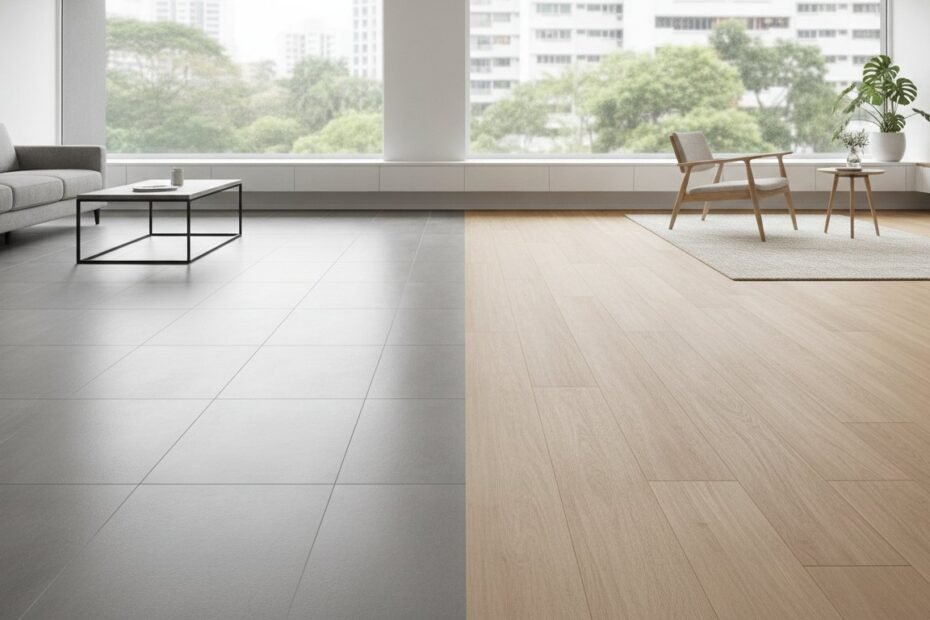
What if the “permanent” floor you’re planning for your HDB flat is actually the one most likely to crack under pressure? Many homeowners assume that traditional materials are the only way to guarantee quality, but the reality of 2026 renovation trends suggests otherwise. When comparing homogeneous tiles vs vinyl flooring singapore, you’re making a choice that impacts your budget, your timeline, and your family’s safety for years to come.
We understand the stress of choosing a foundation for your home. You’ve likely felt the fear of tiles popping or the anxiety surrounding the high cost and mess of hacking existing floors. It’s natural to want a stylish space that’s also safe for children and elderly parents. You deserve a solution that provides long-term reliability without the headaches of a traditional construction site.
This guide will show you exactly how to achieve a floor that lasts over a decade with minimal maintenance. We’ll walk through the technical standards, cost-effective installation methods, and the latest aesthetic trends to ensure your renovation is a success. By the end, you’ll have the professional clarity needed to choose the perfect foundation for your lifestyle.
Key Takeaways
- Understand the structural differences between full-body porcelain tiles and resilient multi-layer vinyl to determine which foundation matches your family’s daily needs.
- Evaluate the performance of homogeneous tiles vs vinyl flooring singapore based on impact resistance, scratch durability, and the long-term maintenance of grout lines.
- Learn how to bypass the high costs and mess of hacking by using vinyl overlay techniques, potentially saving weeks on your 2026 renovation timeline.
- Identify the best materials for specific zones, from the waterproof reliability needed in bathrooms to the slip-resistant comfort ideal for kitchens and living rooms.
- Gain professional insights into how expert installation and proper cement screeding prevent common issues like floor popping or warping over time.
Understanding the Basics: Homogeneous Tiles and Vinyl Flooring
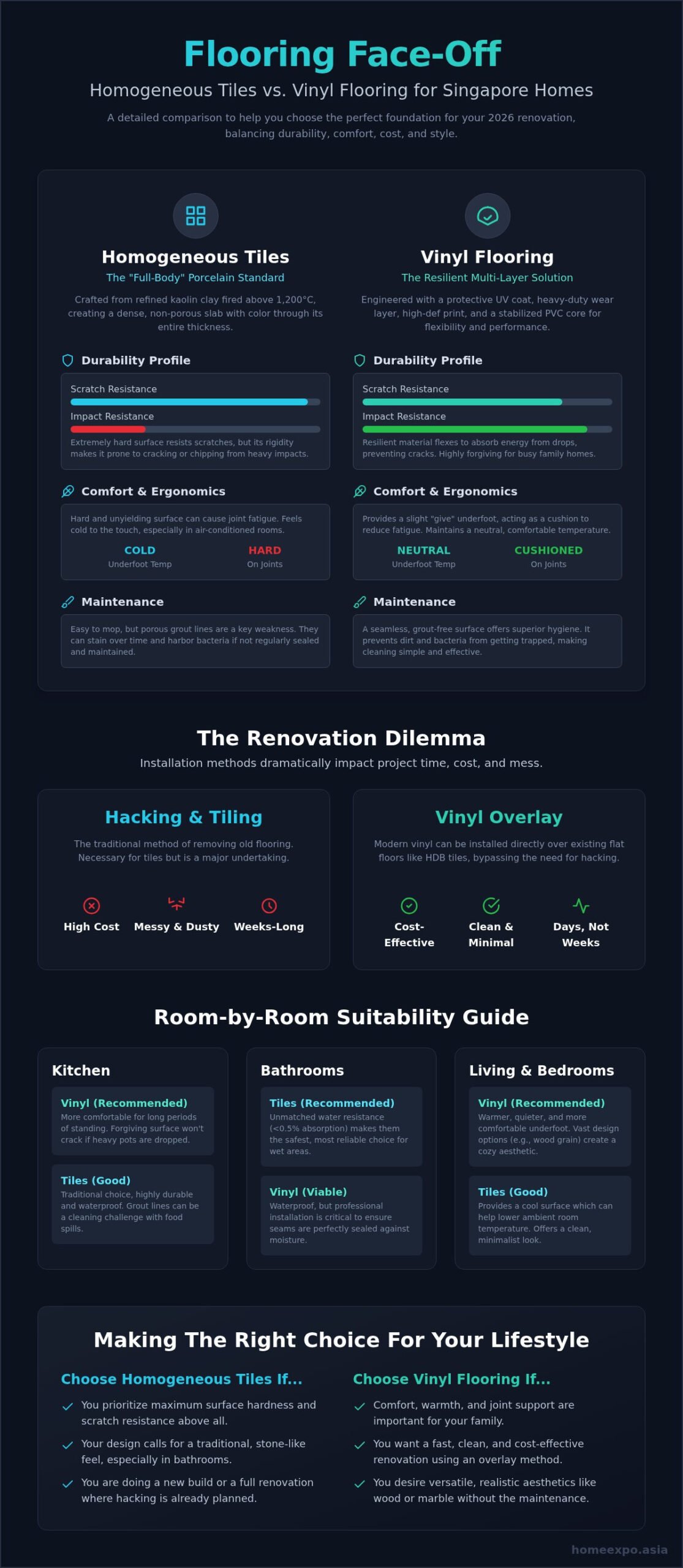
Deciding between homogeneous tiles vs vinyl flooring singapore is the most significant choice you’ll make for your 2026 renovation. These materials dominate the local market because they are specifically engineered to handle Singapore’s intense humidity without warping or rotting. While they may look similar on the surface, their structural properties couldn’t be more different. Homogeneous tiles are essentially full-body porcelain, where the color and pattern run through the entire thickness of the slab. Vinyl is a resilient, multi-layer material crafted primarily from high-grade PVC and stabilizers. While tiles offer a rigid, stone-like feel, vinyl provides a softer, more flexible surface that adapts to your home’s needs.
The choice often comes down to a battle between “hard” and “resilient” philosophies. Singapore’s tropical climate demands materials that don’t trap moisture or encourage mold growth. Both contenders excel here. Tiles provide a cool surface that helps lower ambient temperatures, while vinyl offers a warm, slip-resistant texture. Understanding these foundational differences is the first step toward a floor that lasts over a decade.
The Anatomy of a Homogeneous Tile
The “full-body” designation is the gold standard for durability in Singaporean homes. These tiles are made from refined kaolin clay fired at temperatures exceeding 1,200 degrees Celsius. This process creates a dense, non-porous slab with a water absorption rate typically less than 0.5 percent. If you accidentally chip a tile, the color underneath is identical to the surface. This makes minor damage almost invisible to the naked eye. This extreme reliability is why they remain a staple for HDB kitchens and bathrooms where moisture and heavy foot traffic are constant factors.
The Layers of Modern Vinyl Flooring
Modern vinyl is a feat of engineering. It’s far removed from the thin, plastic-feeling sheets of previous decades. It’s built in several distinct layers to ensure maximum performance in a residential setting. The Sheet vinyl flooring composition typically includes a protective UV coating, a heavy-duty wear layer, a high-definition print layer, and a stabilized core. In 2026, the trend has shifted heavily toward Luxury Vinyl that perfectly mimics natural oak or Italian marble. This material offers a distinct ergonomic advantage. Its resilient core provides “give” underfoot, making it much more comfortable for families with young children or elderly members who spend long hours standing. Unlike natural timber, it won’t expand or contract significantly during the monsoon season, ensuring your floor stays level and secure.
Direct Comparison: Performance, Comfort, and Longevity
Choosing between homogeneous tiles vs vinyl flooring singapore requires looking beyond the initial showroom sparkle. In a high-traffic Singaporean home, performance is measured by how well a floor handles daily life, from spilled Laksa to heavy furniture. Homogeneous tiles are legendary for their surface hardness. They resist scratches from pets and dragging chairs better than almost any other material. However, their rigidity is a double-edged sword. They lack impact resistance; dropping a heavy object can lead to permanent cracks that are difficult to repair without hacking.
Vinyl flooring takes a different approach to durability. It’s a resilient material designed to absorb energy. Instead of cracking, it flexes. This makes it exceptionally forgiving in kitchens where heavy pots might fall. Maintenance also favors the modern homeowner. While both surfaces are easy to mop, tiles rely on grout lines. These cement-based joints are porous. They eventually stain and can harbor bacteria if not sealed regularly. High-quality vinyl offers a more hygienic, grout-free surface. With a variety of over 200 designs, you can now secure a premium wood grain or stone aesthetic that matches 2026 interior trends without the cleaning headache.
The Comfort Factor: Temperature and Ergonomics
Singapore’s love for air conditioning creates a specific problem for tile owners. In a cooled room, tiles become ice-cold, which can be uncomfortable for bare feet. Vinyl maintains a neutral temperature, providing a much warmer and more inviting feel. Ergonomics is another critical factor. Standing on a hard tile surface for long periods, perhaps while cooking or cleaning, puts significant pressure on your joints. Vinyl’s slight “give” acts as a cushion, reducing fatigue for your knees and back.
Acoustics are often overlooked in high-density HDB living. Tiles reflect sound, amplifying the noise of footsteps, falling toys, or moving chairs. This can lead to friction with neighbors below. Vinyl naturally dampens these vibrations. It creates a quieter environment within your home and reduces the sound transmission to the units around you. If you’re unsure which material suits your specific layout, a free site assessment can provide clarity on your subfloor condition.
Long-term Durability in the Tropics
Humidity is the ultimate test for any Singaporean floor. Homogeneous tiles handle moisture perfectly, but they are prone to the “popping” phenomenon. This happens when the subfloor or tiles expand and contract at different rates, causing the floor to buckle or explode upward. Vinyl is engineered to avoid this structural stress. Modern versions are 100% waterproof and termite-proof, making them as reliable as stone but with added flexibility. This stability ensures your floor stays flat and secure even as the weather shifts outside.
The Renovation Dilemma: Hacking vs. Overlaying
The 2026 “popping tile” epidemic has left many older HDB flat owners in a difficult position. When your existing floor buckles or cracks, you face a critical decision regarding homogeneous tiles vs vinyl flooring singapore. Choosing to retile usually means a full hacking process. This involves removing every piece of old ceramic or porcelain, which is a noisy, dusty, and expensive endeavor. The sheer volume of debris generated can turn your home into a construction zone for weeks, making the environment unlivable during the process.
HDB regulations are strict about noisy renovation works. These are generally limited to three consecutive working days between 9:00 am and 5:00 pm. If your hacking project exceeds this window, your entire renovation timeline stretches significantly. In contrast, overlaying is the secret weapon of modern vinyl. It allows you to install a fresh, stylish surface directly over your existing floor without the need for heavy demolition. This approach can reduce your renovation costs by 2 to 3 times compared to a full hack-and-retile project while keeping your home much cleaner. It’s the most efficient way to resolve the homogeneous tiles vs vinyl flooring singapore debate for those on a tight schedule.
When is Cement Screeding Necessary?
A level base is the non-negotiable foundation for any successful floor. This is where cement screed becomes essential. It smooths out imperfections in the concrete subfloor to prevent your new material from warping or developing “hollow” spots. A professional assessment is vital before you decide to overlay. If your current tiles are already popping or uneven, a fresh screed layer ensures your new foundation remains stable for the next decade. This step prevents the structural stress that often leads to tile failure in older properties.
Step-by-Step Vinyl Installation Process
The click-lock system is the gold standard for 2026 vinyl installation, ensuring a seamless and glue-free fit. The process is remarkably efficient:
- Site preparation: The existing surface is thoroughly cleaned and leveled to ensure no debris is trapped underneath.
- Underlayment: A specialized foam or IXPE layer is laid for extra cushioning and soundproofing.
- Installation: The vinyl planks are clicked together with precision, leaving small gaps at the edges for natural expansion.
- Finishing: Skirting and trimmings are installed for a clean, professional look that hides the expansion gaps.
This entire process typically takes only a few days. You can move back into your space much faster than a tiling project would permit, avoiding the mess and logistical nightmare of long-term construction.
Room-by-Room Guide: Where to Use Tiles vs. Vinyl
Selecting the right material for each zone in your home is about balancing utility with your daily lifestyle. While we’ve discussed performance and installation, the room’s specific function often dictates the winner in the homogeneous tiles vs vinyl flooring singapore debate. A living room requires a different level of resilience and comfort than a service yard or a master bathroom. By matching the material’s properties to the room’s environment, you ensure your foundation remains beautiful and functional for years to come.
The Wet Area Verdict
Bathrooms are the only areas where the choice is absolute. We strongly recommend homogeneous tiles for all wet zones. Their technical composition allows for a water absorption rate of 0.5 percent or less, which is critical for preventing leaks into the units below. Safety is the priority here. You should look for tiles with an R10 or R11 slip-resistance rating to provide a secure grip underfoot when the surface is wet. These ratings are the industry standard for preventing falls in high-moisture environments.
Kitchens offer more flexibility. While many prefer the easy-clean nature of tiles for heavy cooking, high-grade waterproof vinyl planks are a viable alternative for 2026 homes. Modern vinyl is engineered to handle occasional spills without swelling. It also offers a softer landing for dropped glassware, which would almost certainly shatter on a rigid tile surface. If your kitchen is an open-concept space that flows into the living room, using vinyl throughout creates a unified, expansive look.
Living and Dining: Setting the Aesthetic
The living room is where you can truly showcase your style. Many homeowners are moving away from the visual clutter of grout lines found in traditional tiling. Vinyl provides a seamless advantage, offering long, continuous planks that make a room feel larger. You can elevate this space by using herringbone flooring patterns. This classic layout adds a luxury feel that was once only achievable with expensive solid timber.
To create a truly cohesive Singapore interior design, consider matching your new floor with complementary wall paneling. This combination masks the transition between vertical and horizontal surfaces, resulting in a polished, designer look. For bedrooms, the warmth of vinyl is the clear winner. It provides a comfortable, “barefoot” experience that feels cozy in the morning, unlike the cold shock of walking on tiles in an air-conditioned room.
Ready to see these materials in person? Explore our 200+ vinyl designs to find the perfect match for every room in your home.
Making the Right Choice for Your Singapore Home
Finalizing the homogeneous tiles vs vinyl flooring singapore debate requires an honest look at your daily routine. Your choice of foundation dictates how much time you’ll spend on maintenance over the next decade. If you own a resale HDB, the speed and cleanliness of a vinyl overlay often outweigh the permanence of new tiles. For new BTO owners, a hybrid approach often works best. You can secure the waterproof reliability of tiles in bathrooms while enjoying the ergonomic warmth of vinyl in bedrooms and living areas.
Use this checklist to guide your final decision:
The quality of the material is only half the battle. Even the most expensive tile or plank will fail if the installation is rushed. Professional hands ensure that expansion gaps are correct and that the subfloor is perfectly prepped. This attention to detail prevents the common 2026 issues of buckling or “hollow” sounding floors that plague DIY or low-cost projects. A reliable expert will always prioritize the structural integrity of your home over a quick fix, a standard of excellence often discussed at industry events like the Los Angeles Real Estate Grand Expo.
Why Home Expo Asia is Your Trusted Partner
We provide access to over 200 design options, ensuring your home matches your exact aesthetic vision. Whether you prefer a Scandi-inspired light oak or a bold Industrial stone look, our collection has a solution. We specialize in professional vinyl flooring Singapore installation that prioritizes long-term durability. Our team is committed to total transparency. You’ll receive a clear breakdown of works with no hidden costs, backed by full after-sales support to give you total peace of mind throughout your renovation journey.
Next Steps: Get Your Risk-Free Quote
Preparing for a successful renovation starts with an accurate site assessment. A professional will check your floor levels and moisture content to avoid expensive surprises later. When choosing a top renovation company in Singapore, look for a partner that offers official documentation and proven social proof. This protects your investment and ensures the project stays on schedule. Ready to transform your space? Book your free site assessment with Home Expo Asia today!
Building Your Perfect Foundation for 2026 and Beyond
Your home’s foundation is more than just a surface; it’s the stage for your family’s daily life. Navigating the choice between homogeneous tiles vs vinyl flooring singapore doesn’t have to be overwhelming. You now know that while tiles offer unmatched hardness for wet areas, modern vinyl provides the ergonomic comfort and cost-saving overlay benefits that define 2026 interior trends. It’s about matching the right material to your specific lifestyle and property needs.
Choosing the right material is only the first step. Long-term peace of mind comes from professional installation and a comprehensive warranty. As a trusted Singapore flooring expert, we offer over 200 designs to ensure your space is as stylish as it is durable. We’re here to help you avoid the mess of hacking while securing a floor that lasts for a decade or more. Take the first step toward a beautiful, hassle-free home renovation today.
Get a Risk-Free Vinyl Flooring Quote & Free Site Assessment
Frequently Asked Questions
Is vinyl flooring cheaper than homogeneous tiles in Singapore?
Vinyl is generally the more budget-friendly option for Singaporean homeowners. While the material costs can vary, the total project price for vinyl is significantly lower because it eliminates the need for expensive hacking and debris removal. Tiling requires intensive labor and specialized adhesives, whereas vinyl can be overlaid on existing surfaces. This saves you substantial costs on both professional installation fees and HDB renovation permits in 2026.
Can I install vinyl flooring over my existing HDB tiles?
You can definitely install vinyl over existing tiles if there’s only one layer of flooring currently in place. HDB regulations in 2026 specify that the new floor finish, including the adhesive, mustn’t exceed a total thickness of 13mm. Your subfloor must also be structurally sound and level. If your current tiles are popping or uneven, a professional assessment is necessary to determine if a cement screed is required first.
Do homogeneous tiles really last forever?
Homogeneous tiles are incredibly durable because they’re fired at temperatures exceeding 1,200 degrees Celsius, but the installation itself has a lifespan. While the porcelain material is nearly indestructible, Singapore’s humidity often causes tiles to debond or pop over time. In the homogeneous tiles vs vinyl flooring singapore comparison, vinyl is often preferred for long-term stability. It doesn’t suffer from the same structural expansion issues that lead to cracked or hollow tiles.
Is vinyl flooring safe for homes with pets and toddlers?
Vinyl is exceptionally safe for families with young children and active pets. It provides a softer landing in case of accidental falls and offers superior slip resistance compared to polished porcelain surfaces. Modern vinyl options feature heavy-duty wear layers that resist scratches from pet claws and toys. It also dampens the sound of running feet, which is a major benefit for maintaining peace with your neighbors in high-density HDB blocks.
What happens if my homogeneous tiles start popping?
Popping tiles are a serious safety hazard that requires immediate professional attention to prevent injury. Under HDB rules, noisy hacking works must be completed within three consecutive working days. This makes the repair process for tiles loud, dusty, and logistically difficult. Many homeowners choose to resolve this issue by switching to a vinyl overlay. This provides a level, secure foundation without the extended noise and mess of a full traditional retiling project.
How do I clean and maintain vinyl flooring compared to tiles?
Both materials are easy to clean with a damp mop, but vinyl has a distinct hygienic advantage in the long run. Homogeneous tiles rely on grout lines that are porous and prone to staining or harboring bacteria over time. Vinyl provides a seamless, grout-free surface that doesn’t trap dirt or moisture. You don’t need specialized chemical sealers for vinyl, whereas tile grout often requires deep scrubbing to maintain its original appearance.
Does vinyl flooring increase the resale value of my HDB?
High-quality vinyl helps maintain and potentially boost resale value by offering a modern, move-in-ready look that appeals to 2026 buyers. Most new owners prefer wood-look aesthetics and seamless designs that match current interior trends without the hassle of future hacking. Since vinyl is durable and easy to maintain, it’s viewed as a practical investment. A professional installation backed by a comprehensive warranty provides the quality assurance that savvy property buyers look for.
How long does the installation of vinyl vs. tiles take?
Vinyl installation is remarkably fast, typically taking only two to five days for a standard HDB flat. In contrast, a full tiling project involves hacking, debris removal, and curing times, which can stretch the timeline to several weeks. When evaluating homogeneous tiles vs vinyl flooring singapore, the speed of vinyl allows you to move back into your home much sooner. This avoids the logistical stress and temporary housing costs associated with a prolonged renovation.