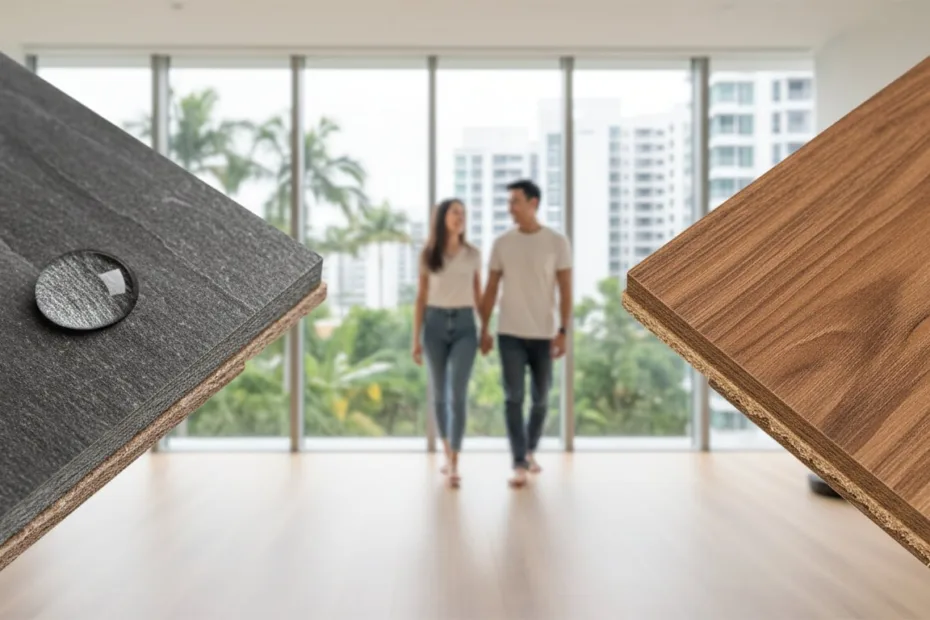
The softest feeling floor under your feet might actually be the one that fails first in Singapore’s 80% average humidity. When you’re investing S$4,000 or more into a home renovation, the last thing you want is a floor that buckles after the first monsoon season. We know the technical jargon is confusing. You just want a floor that looks beautiful, stays cool, and doesn’t dent when you move your heavy teak furniture. Comparing SPC vs WPC vinyl flooring singapore is the only way to ensure your choice matches your specific lifestyle needs.
We agree that your home should be a safe, worry-free sanctuary for your family. That’s why we emphasize quality as our #1 priority, using only FloorScore and SGS certified materials to build confidence in every plank. This guide promises to clear the technical confusion by showing you exactly which material offers the 10-year durability you deserve. You’ll discover the trade-offs between the rigid limestone core of SPC and the air-filled cellular structure of WPC. We’ll preview the specific maintenance requirements and comfort levels of both, ensuring your flooring investment is 100% risk-free.
Key Takeaways
- Understand why Singaporean homeowners are shifting to rigid core technology over traditional laminate to achieve long-lasting, water-resistant results.
- Discover the critical differences in thickness and “foot feel” when comparing SPC vs WPC vinyl flooring singapore to find the right comfort level for your family.
- Learn why SPC’s superior stability is the ultimate defense against Singapore’s 80%+ humidity and constant temperature fluctuations.
- Get a practical room-by-room guide to help you balance your budget between SPC and WPC without compromising on durability or style.
- Identify why professional installation and certifications like FloorScore and Green Label Singapore are essential for a safe, risk-free home environment.
Understanding SPC and WPC: The Evolution of Vinyl Flooring in Singapore
The Singapore flooring landscape has changed rapidly since 2015. We’ve seen a massive shift from traditional Luxury Vinyl Tiles (LVT) to advanced rigid core technologies. Most Singaporean homeowners now bypass laminate or solid wood for their BTO or resale renovations. Laminate often fails in our 80% average humidity; meanwhile, solid wood requires high maintenance and costs between S$15 and S$30 per square foot. This shift is a key part of the evolution of vinyl flooring, providing a waterproof and termite-proof solution that fits the local lifestyle.
Understanding the difference in SPC vs WPC vinyl flooring singapore is essential for meeting the 2026 flooring standards. These upcoming standards focus on slip resistance and low Volatile Organic Compound (VOC) emissions to ensure home safety. Whether you prefer a “Stone” or “Wood” composite core depends on your specific needs for comfort versus durability. Both options offer a significant upgrade over older synthetic floors, but they serve different roles in a modern Singaporean home.
What is SPC (Stone Plastic Composite)?
SPC is the latest industry standard for durability. Its core consists of natural limestone powder, polyvinyl chloride, and stabilizers. This combination creates a core that’s incredibly dense and stable. It won’t expand or contract, even when exposed to the intense afternoon sun in high-floor HDB units. SPC is a high-density, ultra-durable flooring solution designed for maximum impact resistance. It’s the professional choice for high-traffic areas like living rooms and kitchens where heavy furniture is common.
What is WPC (Wood Plastic Composite)?
WPC was the first rigid core product to gain popularity before SPC arrived. It uses a mix of recycled wood flour, plastic, and a chemical foaming agent. This foaming agent is the secret to its performance. It creates tiny air pockets within the core that provide a “cushioned” feel underfoot. It’s warmer and quieter than SPC, making it a popular choice for bedrooms. While it’s the predecessor to SPC in the resilient market, it remains a high-quality option for those who prioritize comfort over extreme hardness.
- Durability: SPC is harder and more resistant to dents from dropped objects.
- Comfort: WPC offers better sound absorption and a softer walk.
- Safety: Both materials are now tested to meet strict Singapore Green Label requirements.
- Value: These floors provide a premium look without the S$20+ per square foot price tag of natural materials.
Choosing between these two depends on your room’s specific requirements. We’ve helped thousands of homeowners select the right core based on their lifestyle. It’s about finding the perfect balance between the “Stone” strength of SPC and the “Wood” comfort of WPC. Both are reliable, safe, and built to last for decades in our local climate.
SPC vs. WPC: A Head-to-Head Comparison of Performance and Comfort
When choosing between SPC vs WPC vinyl flooring Singapore homeowners often prioritize the physical build of the plank. WPC planks typically measure between 5mm and 8mm in thickness. This extra bulk comes from the foaming agent used in the wood-plastic composite core. In contrast, SPC planks are sleeker, usually ranging from 3.2mm to 7mm. While SPC is thinner, it’s significantly denser because its core consists of limestone powder and stabilizers. This high density makes the plank feel like solid stone underfoot, whereas WPC offers a slight “give” that mimics the feel of traditional hardwood.
Noise reduction is a major factor in Singapore’s high-rise HDB and condo living. WPC excels here. The air bubbles created by the foaming agent act as a natural acoustic barrier. This reduces the “click-clack” sound of footsteps or falling objects. SPC is naturally louder, but many modern SPC options now come with pre-attached IXPE or EVA underlayment to bridge this gap. Choosing FloorScore® certified flooring ensures that regardless of the core type, your home maintains high indoor air quality standards while managing these acoustic levels effectively.
- ✓ WPC Thickness: 5mm to 8mm for a softer feel.
- ✓ SPC Thickness: 3.2mm to 7mm for maximum space efficiency.
- ✓ Rigidity: SPC is ultra-rigid; WPC allows for more flexibility over slightly uneven subfloors.
Durability and Dent Resistance
SPC is the clear winner for high-traffic areas or rooms with heavy mahogany furniture. Because the stone-plastic composite core is ultra-rigid, it passes standard indentation tests with zero visible marks even under 2,000 psi of pressure. WPC is softer. Over a 5-year period, heavy wardrobes or pianos can leave permanent indentations in WPC’s wood-core base. If you wear high heels or have active pets, SPC’s rigid construction prevents the core from compressing, keeping your floor level and beautiful for decades.
Walking Comfort and Ergonomics
WPC remains the top choice for bedrooms and playrooms. The foaming agent provides an ergonomic cushion that reduces joint fatigue during long periods of standing. This is a vital consideration for households with elderly family members who need a softer surface to prevent knee strain. While SPC can feel cold and hard, a high-quality 1.5mm underlayment can add much-needed warmth and bounce. If you want to see how these materials feel in person, you can browse our latest collections to compare the textures for yourself.
The Singapore Factor: Which Flooring Survives Humidity and High Traffic Best?
Singapore’s tropical climate presents unique challenges that standard flooring often fails to meet. With average humidity levels exceeding 80% year-round, your choice between SPC vs WPC vinyl flooring singapore determines how long your floor stays flat and beautiful. High moisture content in the air often leads to expansion in lower-quality materials. SPC (Stone Plastic Composite) is engineered with a limestone core, making it virtually immune to these shifts. This density ensures your floor doesn’t buckle when the weather shifts from a heavy monsoon downpour to a scorching afternoon sun.
While many brands claim to be waterproof, there’s a vital difference between surface water and subfloor moisture. Water sitting on top won’t hurt quality vinyl, but moisture rising from a damp HDB cement screed can cause major issues. We ensure our installations align with resilient flooring industry standards to prevent “cupping” or joint separation. It’s not just about the planks; it’s about how they interact with the unique Singaporean environment.
Handling the Tropical Climate
SPC flooring offers superior dimensional stability for local homes. In sun-drenched balconies or living rooms with large floor-to-ceiling windows, temperatures can hit 35°C or higher. SPC won’t warp or buckle under this intense heat. WPC performs well in air-conditioned bedrooms, but it can struggle in non-air-conditioned spaces where humidity fluctuates wildly. Because SPC has higher thermal conductivity, it stays cooler to the touch. This provides that refreshing “cool floor” feel that homeowners love during a July heatwave. It’s the practical choice for a consistent feel across all rooms.
Suitability for HDB and Condo Renovations
Renovating in Singapore requires following strict HDB guidelines regarding floor thickness and weight. Most SPC planks are 4mm to 6mm thick, fitting perfectly within the weight limits for modern flats. Evolution in flooring Singapore standards means homeowners now prioritize efficiency and safety over traditional high-maintenance materials. When comparing SPC vs WPC vinyl flooring singapore for your renovation, the “Click-lock” system is a game-changer. It allows for rapid installation without messy glues or toxic smells, which is essential for tight 4-week renovation timelines.
- ✓ 100% Formaldehyde-free for family safety
- ✓ Certified by SGS and TUV SUD for maximum durability
- ✓ High-density core resists heavy furniture indentations
- ✓ Quick 1-day installation for most HDB living rooms
- ✓ Official invoice and 10-year material warranty provided
Our experience with over 5,000 local installations shows that SPC handles the high foot traffic of a busy Singaporean household better than WPC. It’s denser, tougher, and built to last in our specific environment. Choosing the right material now means you won’t have to worry about repairs for the next decade.
Choosing the Right Vinyl for Your Home: Room-by-Room Recommendations
Selecting the best material requires a practical framework based on how you use each space. You don’t need to use the same material throughout the entire house. Many Singaporean homeowners find that a hybrid approach maximizes both comfort and budget. While SPC prices in Singapore typically range from S$3.50 to S$5.50 per square foot, premium WPC can reach S$8.00 due to its thicker, specialized core. By choosing SPC vs WPC vinyl flooring singapore based on room utility, you ensure high performance where it’s needed most without overspending.
The Kitchen and Bathroom Debate
SPC is the gold standard for high-moisture zones. Its stone-plastic composite core is 100% waterproof and won’t swell, even if a pipe leaks or a heavy spill occurs. For technical details on why this core is so stable, check our SPC flooring guide. Safety is a priority in Singaporean households, especially with young children or elderly family members. We recommend looking for an anti-slip rating of at least R10 for kitchens. This provides the necessary friction to prevent slips on wet surfaces, making your home a safer environment.
Living Rooms and Bedrooms
WPC is often the luxury choice for bedrooms because of its superior comfort. The wood-plastic core contains air pockets that act as natural insulators, keeping the floor warmer and softer for barefoot walking. Noise reduction is another critical factor. WPC can reduce impact sound by up to 20 decibels, which helps maintain peace with your downstairs neighbors in high-rise HDB or condo units. If you want to upgrade the visual appeal of these rooms, you can compare these materials to herringbone flooring for a more sophisticated, designer finish.
Maintenance in a Humid Environment
Singapore’s average humidity of 84% makes mold resistance a top priority. Both SPC and WPC are synthetic, so they don’t attract organic growth like traditional wood. On the surface, they look identical because they use the same high-definition decorative films. To keep your floors looking new, follow these simple steps:
- ✓ Sweep or vacuum daily to remove abrasive grit that can scratch the wear layer.
- ✓ Use a damp mop with a pH-neutral cleaner specifically designed for vinyl.
- ✓ Avoid steam mops; the intense heat can eventually weaken the adhesive bonds.
- ✓ Place mats at entrances to catch 80% of outdoor dirt before it hits your floor.
Our flooring solutions are certified for safety and durability, providing a risk-free way to upgrade your home. Contact Home Expo Asia for a free flooring consultation today.
Why Professional Installation is Non-Negotiable for SPC and WPC Floors
Choosing between SPC vs WPC vinyl flooring singapore is only half the battle. Many homeowners attempt DIY installation to save a few hundred S$, but this often leads to costly repairs later. Singapore’s high humidity levels and specific HDB flooring regulations require a level of precision that only experts can provide. At Home Expo Asia, “Quality Is Our #1 Priority,” and we’ve seen how improper handling can ruin even the most expensive materials. Professional installation isn’t just about aesthetics; it’s about structural integrity and long-term durability.
Our commitment to excellence is backed by a 5.0/5.0 Google review rating from hundreds of satisfied clients. We don’t just lay planks; we engineer a flooring solution. This is why we offer a “Risk-Free” promise that includes a 1-year installation warranty and a 10-year materials warranty. You’ll receive an official invoice and a clear breakdown of costs, ensuring there are no hidden fees. When you hire professionals, you’re buying peace of mind and a floor that won’t buckle or gap after the first monsoon season.
The Role of Subfloor Preparation
SPC flooring is incredibly rigid. This means it’s less forgiving of uneven surfaces than WPC. If your cement screed has a deviation of more than 3mm, the click-lock system will eventually snap under the weight of foot traffic. Our team uses laser-leveling tools to ensure the base is perfect. We also handle “popping tiles” in older resale flats by securing the subfloor before installation. Using the correct moisture barrier is a technical advantage we provide, preventing alkaline salts in the concrete from damaging your new floor.
Certified Safety for Your Family
Indoor air quality is vital in Singapore’s enclosed, air-conditioned environments. Cheap, uncertified vinyl can off-gas formaldehyde, which is a known health hazard. Home Expo Asia ensures all materials meet FloorScore and Green Label Singapore certifications. We test our products against international standards from SGS and TUV SUD to guarantee formaldehyde emissions are near zero. Your family’s safety is our top concern, and we only use materials that we would trust in our own homes.
Ready to upgrade your home with the best flooring solutions in the local market? Book a free site assessment with Home Expo Asia to see the samples in person and get an accurate quote for your space.
Secure Your Ideal Home Foundation for 2026
Choosing between SPC vs WPC vinyl flooring singapore depends on your specific lifestyle needs and room requirements. SPC’s stone-polymer core offers 100% waterproof protection and superior dent resistance for high-traffic kitchens, while WPC provides a softer, warmer feel for cozy bedrooms. Both materials are engineered to survive Singapore’s 80% average humidity levels without warping or swelling. We’ve helped thousands of local homeowners upgrade their spaces with materials that are FloorScore and Green Label Certified for maximum indoor air safety.
At Home Expo Asia, quality is our #1 priority. We back our craftsmanship with a 10-year materials warranty and have earned a perfect 5.0/5.0 rating on Google from satisfied clients across the island. It’s a risk-free investment in your home’s value and your family’s comfort. Our professional installers ensure a seamless finish that DIY projects just can’t match. You don’t have to compromise on style to get professional-grade durability at super affordable prices.
Get a Risk-Free Quote for Your SPC or WPC Flooring Today
Your beautiful new interior is just one click away and we’re ready to make it happen.
Frequently Asked Questions
Which is more expensive in Singapore, SPC or WPC?
WPC flooring is generally more expensive than SPC in the Singapore market. You can expect to pay between S$5.50 and S$9.00 per square foot for WPC, while high quality SPC typically ranges from S$3.50 to S$6.50 per square foot. This price difference exists because WPC uses a more complex foaming agent to create its comfortable core. At Home Expo Asia, we ensure transparent pricing with no hidden fees on all our certified vinyl options.
Can I install SPC vinyl flooring over my existing HDB tiles?
You can definitely install SPC vinyl flooring over your existing HDB tiles as long as the surface is level and grout lines are less than 3mm wide. This overlay method is a popular choice for Singaporean homeowners because it eliminates the need for messy hacking and saves you approximately S$800 to S$1,500 in demolition costs. Our professional installers verify the floor levelness before starting to ensure a 100 percent stable fit that won’t click or shift.
Is WPC flooring really waterproof enough for a Singaporean kitchen?
WPC flooring is 100 percent waterproof and perfectly suitable for a Singaporean kitchen environment. The core consists of wood plastic composite that doesn’t swell or peel when exposed to spills or high humidity levels common in local homes. While it handles moisture expertly, we recommend wiping up standing water within 24 hours to maintain the integrity of the click lock system. For wet kitchens with heavy cooking, SPC is often preferred for its slightly higher density.
How long does SPC vs WPC flooring typically last in a tropical climate?
In Singapore’s tropical climate, both options are exceptionally durable, with SPC typically lasting 20 to 25 years and WPC lasting 15 to 20 years under residential use. The high limestone content in SPC makes it more resistant to the 90 percent humidity levels and thermal expansion caused by afternoon sun. When comparing SPC vs WPC vinyl flooring singapore, SPC’s rigid core provides superior dimensional stability, ensuring the planks don’t warp even during the hottest months of the year.
Does SPC flooring feel cold to the touch compared to WPC?
SPC flooring does feel slightly colder and harder underfoot compared to WPC because of its stone based core. WPC contains a foaming agent that creates tiny air pockets, providing better insulation and a warmer, cushioned feel. If you prefer walking barefoot at home, WPC offers a more comfortable experience. However, many Singaporeans find the coolness of SPC refreshing in our 32 degree weather, especially when paired with a high quality IXPE underlayment.
What is the best way to clean vinyl flooring in Singapore?
The best way to clean your vinyl floors is by using a PH neutral cleaner and a well wrung damp microfiber mop. Avoid using steam mops or harsh chemicals like bleach, which can damage the wear layer and void your 10 year material warranty. For daily maintenance, a simple sweep or vacuum with a soft brush attachment removes 95 percent of household dust and grit. This routine keeps your floors looking new without the need for expensive professional polishing services.
Do I need an underlayment for SPC flooring in a condo?
Yes, you definitely need an underlayment for SPC flooring in a condo to meet noise reduction standards and improve foot comfort. Most premium SPC planks come with a pre attached 1.5mm or 2mm IXPE foam backing that reduces impact noise by up to 20 decibels. This is crucial for maintaining good relationships with neighbors living below you. At Home Expo Asia, our SPC products are FloorScore certified, ensuring the underlayment is safe and free from harmful VOC emissions.
Are SPC and WPC flooring eco-friendly and safe for children?
Both options are safe for children and pets when they carry the right certifications like Green Label Singapore or SGS TUV SUD. When choosing between SPC vs WPC vinyl flooring singapore, look for products that are 100 percent formaldehyde free and phthalate free. These certified materials ensure that your indoor air quality remains healthy for toddlers who spend time playing on the floor. Our range is rigorously tested to meet international safety standards, giving you total peace of mind for your family.