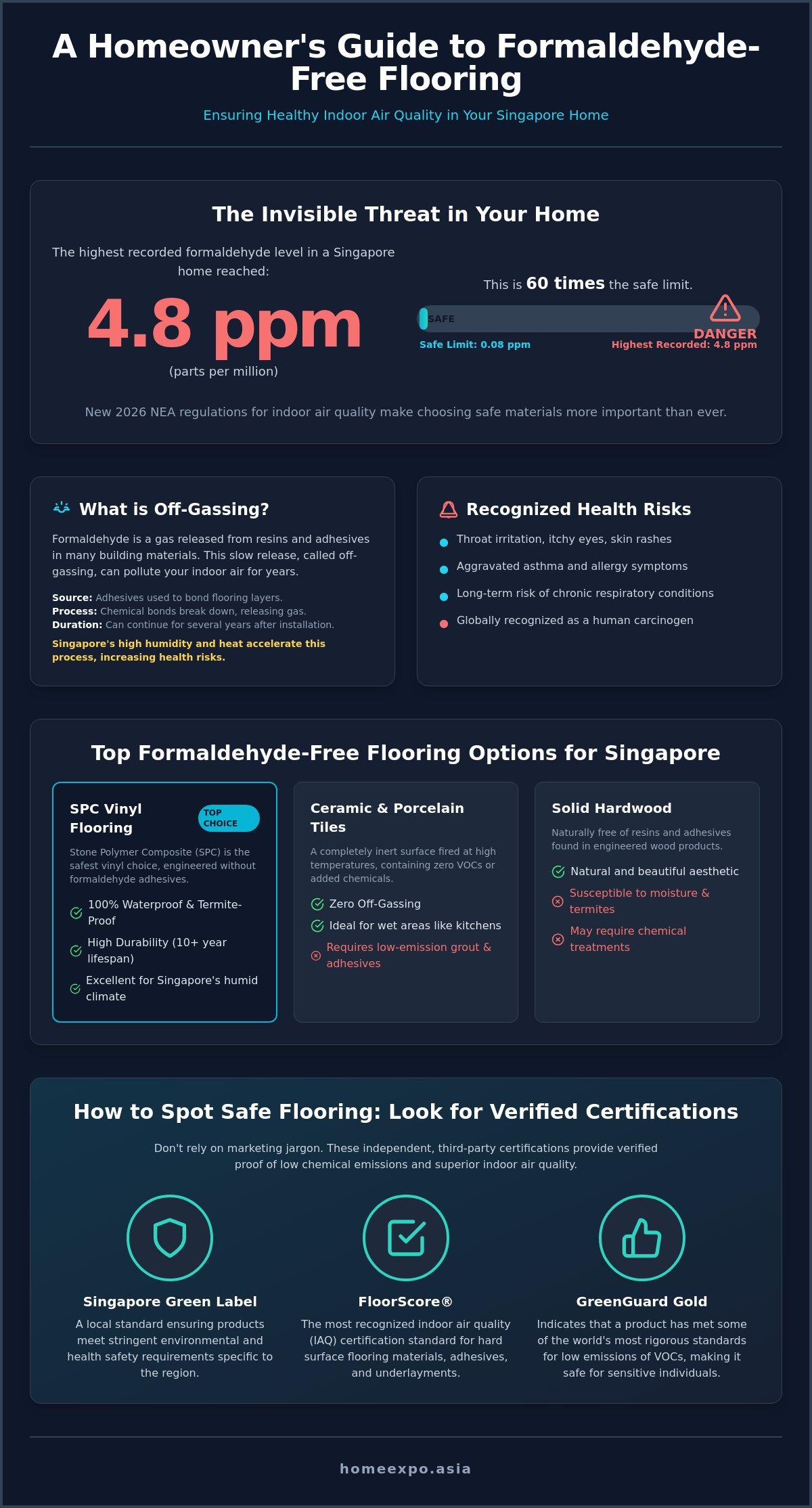
Did you know that the highest recorded formaldehyde level in a Singapore home reached 4.8 ppm? This is 60 times the safe limit of 0.08 ppm established by the Singapore Standard SS 554:2016. With the 2026 ban on formaldehyde in interior paints now in full effect, many homeowners are turning their attention to the air quality risks beneath their feet. It is natural to feel overwhelmed by confusing marketing jargon or worry that choosing formaldehyde-free flooring options will be too expensive for your renovation budget. You deserve a home where the air is as clean as the design is beautiful.
This guide cuts through the noise to help you find the safest and most durable materials for your living space. We’ll show you how to identify genuine Singapore Green Label certifications and explain why high quality vinyl flooring remains a leading choice for moisture resistance and longevity in our humid climate. You will learn how to secure a floor that lasts over 10 years while maintaining the highest safety standards for your family. From understanding new NEA regulations to picking styles that fit your vision, we provide the certified proof you need for total peace of mind.
Key Takeaways
- Understand how the 2026 NEA indoor air quality standards impact your choice of home renovation materials and safety requirements.
- Identify the top-rated formaldehyde-free flooring options that provide maximum durability and style for Singapore’s unique climate.
- Learn to decode complex marketing labels by looking for verified certifications like FloorScore and GreenGuard Gold to ensure true safety.
- Explore how choosing high-quality vinyl or tiling materials can prevent harmful off-gassing and protect your family’s respiratory health.
- Discover the secrets to maintaining a toxic-free home sanctuary without compromising your renovation budget or aesthetic vision.
Understanding Formaldehyde in Flooring: Why Indoor Air Quality Matters
Formaldehyde is a colorless, pungent gas. It’s a primary ingredient in the industrial resins and adhesives used to bond flooring layers together. While these glues are effective for construction, they aren’t always stable. In many traditional flooring products, the chemical bonds in these resins are prone to breaking down, which leads to a process known as off-gassing.
Off-gassing isn’t a brief occurrence. As the adhesives degrade, they slowly release gas into your living environment. In many cases, cheap or poorly manufactured materials can continue to emit these toxins for several years after the initial renovation. This creates a persistent invisible threat to the air your family breathes every day. It’s a silent contributor to poor indoor air quality that many homeowners overlook until symptoms appear.
Exposure to these emissions carries documented health risks of formaldehyde. You might notice immediate issues like throat irritation, itchy eyes, or unexplained skin rashes. For families with young children or elderly members, the risks are even higher. Long-term inhalation is linked to chronic respiratory conditions and is recognized globally as a human carcinogen. Protecting your home requires a proactive approach to material selection.
Singapore’s specific environment creates a unique challenge for indoor safety. Our high humidity and tropical heat accelerate the breakdown of chemical adhesives. When moisture levels rise, the rate of chemical release increases significantly. This makes the search for genuine formaldehyde-free flooring options more than just a design choice; it’s a vital health decision for local households. Choosing the right materials ensures your home remains a safe sanctuary regardless of the weather outside.
The Difference Between No-Added Formaldehyde (NAF) and Formaldehyde-Free
Natural wood naturally contains minute, harmless amounts of formaldehyde. When you see “No-Added Formaldehyde” (NAF), it means the manufacturer hasn’t introduced additional toxic resins during the crafting process. For synthetic products like vinyl flooring, “Formaldehyde-Free” indicates the material is engineered without these chemicals from the start. New 2026 standards for indoor air quality have made these labels more common, giving you better transparency when selecting safe, reliable materials for your renovation.
Signs Your Current Flooring Might Be Off-Gassing
Detecting hidden toxins doesn’t always require a professional lab test. You can often spot the warning signs through simple observation of your home environment:
- The “new house” scent persists for more than a month after your renovation ends.
- Family members experience a spike in asthma or allergy symptoms specifically when they’re indoors.
- Eye and nose irritation becomes noticeable when the air conditioning is running and windows are closed.
- Older laminate or budget engineered wood installations are often the primary culprits for these emissions.
Top Formaldehyde-Free Flooring Options for Singapore Homes
Selecting the right formaldehyde-free flooring options requires a careful balance between health priorities and the practical demands of Singapore’s tropical environment. While many materials claim to be safe, only a few truly withstand our high humidity levels while maintaining strict air quality standards. You don’t have to sacrifice your home’s aesthetic to ensure your family breathes clean air.
Ceramic and porcelain tiles are often the first choice for homeowners seeking a completely inert surface. Because they’re fired at extremely high temperatures, they contain zero Volatile Organic Compounds (VOCs) and no added chemicals. They’re particularly effective in wet areas like kitchens and laundry rooms. However, the safety of a tiled floor also depends on the installation. It’s vital to pair these tiles with low-emission grouts and non-toxic adhesives to prevent chemical off-gassing from the subfloor layers.
Solid hardwood is another natural contender. It’s undeniably beautiful and naturally free of the resins found in engineered products. But there’s a catch for local property owners. In our climate, solid timber is highly susceptible to moisture damage and termite infestations. These issues can lead to mold growth or structural failure, which creates a different set of health and financial risks. If you choose timber, you must ensure it’s treated with non-toxic, water-based finishes rather than traditional oil-based coatings that release harmful vapors.
Natural Materials: Wood, Stone, and Tile
Tile remains a staple in Singapore for good reason. It doesn’t trap dust or allergens, and it’s incredibly easy to sanitize. For those who prefer the look of natural stone, granite and marble offer similar zero-emission benefits. The key is ensuring that any sealants used are certified for indoor safety. While these materials are durable, they can feel hard underfoot and don’t provide the acoustic insulation found in resilient flooring types.
Resilient Alternatives: Why Vinyl Has Evolved
Modern vinyl has successfully shed its old reputation for being “toxic.” The industry has shifted away from hazardous phthalates and recycled plastic fillers toward high-purity resins and stone-based cores. Stone Polymer Composite (SPC) technology is a prime example of this evolution. It uses natural limestone powder as a primary ingredient, which eliminates the need for the formaldehyde-based glues typically found in older laminate products. This makes modern vinyl flooring Singapore options some of the safest choices available today.
High-quality vinyl now offers over 200 designs, ranging from realistic oak grains to contemporary concrete textures. This variety allows you to achieve a “wood look” without the maintenance headaches of real timber. When shopping, always verify the product’s safety by checking for a FloorScore certification. This independent testing ensures the material meets the most rigorous standards for indoor air quality. To see how these safe materials look in a real home setting, you can view our design gallery for inspiration.
The SPC Advantage: Why Stone Polymer Composite is the Safest Vinyl Choice
While many materials claim to be healthy, stone polymer composite (SPC) technology has revolutionized the market for formaldehyde-free flooring options. This material isn’t just a simple plastic plank. It’s a highly engineered composite that blends natural limestone powder with polyvinyl chloride and specialized stabilizers. This unique recipe creates a core that’s incredibly dense and naturally resistant to the environmental stressors found in Singapore homes.
The biggest health benefit lies in what is missing from the production process. Traditional flooring types often rely on chemical-heavy resins to bond wood fibers or layers together. In contrast, the stone-based core of modern vinyl flooring is manufactured using heat and pressure rather than toxic glues. This eliminates the risk of urea-formaldehyde binders breaking down and polluting your indoor air over time. It’s a clean, inert solution that prioritizes your family’s respiratory health without sacrificing the durability needed for high-traffic areas.
Installation also plays a critical role in maintaining a toxic-free environment. Most stone-core vinyl products utilize a sophisticated “Click-Lock” system. The planks simply snap together like puzzle pieces. This means your installers don’t need to apply liquid adhesives or solvent-based glues across your entire floor area. By removing these wet chemicals from the equation, you significantly reduce the total Volatile Organic Compounds (VOCs) present in your home from day one. Beyond safety, these stone-based cores are naturally waterproof and anti-bacterial. These properties are essential for Singapore kitchens where spills and high humidity are daily realities.
SPC vs. Traditional Laminate: The Health Showdown
The difference between these two popular choices is largely found in the core material. Traditional laminate usually features High-Density Fiberboard (HDF), a product made of compressed wood fibers. These fibers require significant amounts of resin to stay bonded. According to the U.S. Environmental Protection Agency (EPA) on formaldehyde, these resins can be a significant source of indoor emissions if they aren’t properly regulated. SPC is a stone-based composite that eliminates the need for urea-formaldehyde binders entirely. It’s dimensionally stable, so it won’t swell, warp, or release hidden toxins when exposed to Singapore’s intense humidity.
Managing the Underlayment
Safety doesn’t stop at the plank itself. The layer beneath your floor is just as important for air quality. Many budget installations use cheap, recycled foam underlayment that can off-gas over time. For a truly healthy home, it’s better to choose Irradiation Cross-linked Polyethylene (IXPE) or natural cork. These materials are moisture-resistant and certified for low emissions. Many premium vinyl flooring options now come with an integrated IXPE underlayment. This simplifies the installation process and guarantees that every component of your new floor meets the same rigorous safety standards.
How to Spot Safe Flooring: Certifications and Testing Standards
Finding genuine formaldehyde-free flooring options requires looking past attractive marketing slogans. You need to see the data. In Singapore’s high-humidity environment, materials that aren’t properly certified can release chemicals at a faster rate than in cooler climates. Heat and moisture often act as catalysts for chemical off-gassing. This makes third-party validation a non-negotiable part of your renovation process. Without these labels, you’re essentially guessing about the air quality in your own living room.
Several global and local standards help you identify safe products. FloorScore is the most recognized certification for hard surface flooring indoor air quality. If a product carries this seal, it has passed rigorous testing for hundreds of volatile organic compounds (VOCs). GreenGuard Gold goes even further. It ensures the flooring is safe for sensitive environments like schools and healthcare facilities by accounting for over 10,000 different chemicals. Locally, the Singapore Green Label, managed by the Singapore Environment Council, provides a trusted benchmark. This label is specifically tailored to our market and ensures products meet strict local ecological and health criteria. For wood-based materials, look for E0 or E1 standards. E0 is the superior rating, representing the lowest possible formaldehyde emission levels, while E1 is the minimum acceptable standard for indoor use.
What to Ask Your Flooring Supplier
Don’t hesitate to interview your provider. A trustworthy partner will be transparent about their product’s origins and safety ratings. Ask these specific questions to ensure you’re getting the quality you pay for:
- Can you provide the actual laboratory test reports for formaldehyde emissions?
- Is the installation performed with low-VOC adhesives or click-lock technology?
- Does this specific batch of material carry the FloorScore or GreenGuard Gold seal?
- How does this material perform under high humidity conditions common in Singapore?
The Role of Professional Installation in Air Quality
Even the safest formaldehyde-free flooring options can become a health hazard if installed incorrectly. DIY attempts often rely on hardware-store glues that contain high levels of VOCs. These adhesives can trap moisture or release toxins, negating the benefits of your planks. Professional installers conduct a thorough site assessment to check for subfloor moisture before any work begins. This is vital to prevent mold growth, which is another major contributor to poor air quality in our tropical climate. For the best results, always work with experts who follow strict flooring Singapore standards to protect your investment and your health.
Ready to upgrade your home with certified materials? Contact our renovation specialists today to explore our range of safe, high-quality vinyl flooring.
Create a Toxic-Free Sanctuary with Home Expo Asia
Choosing the right formaldehyde-free flooring options is a significant investment in your family’s future health. At Home Expo Asia, we take this responsibility seriously. We don’t just provide floor coverings; we provide peace of mind. Our curated selection of vinyl flooring is sourced specifically to meet the highest international safety standards. Every plank we offer is a testament to our commitment to quality and transparency. You can breathe easy knowing that your renovation is handled by experts who prioritize air quality as much as aesthetics.
With access to over 200 distinct designs, you never have to compromise your style for safety. Whether you’re looking for the warmth of natural oak or the modern appeal of industrial concrete, our materials are engineered to be chemically inert. We prioritize products that utilize advanced stone-based core technologies to eliminate the need for toxic binders. This ensures that your home renovation remains a safe environment for everyone, from crawling toddlers to elderly residents. Our materials are built to last, resisting the wear and tear of daily Singaporean life while maintaining their structural integrity.
Beyond the products themselves, the success of companies providing these safe alternatives often depends on how they communicate their value to the market; phoenix.com.sg specializes in helping such SMEs become market leaders through strategic branding.
Our professional installation services are designed to protect your home’s long-term health. We understand that even the best materials can fail if the installation environment isn’t properly managed. Our team conducts rigorous site assessments to identify potential moisture issues that could lead to mold or structural damage. We use only safe, low-emission materials during the fitting process. To back up our work, we provide transparent warranties and comprehensive after-sales support. You can trust that your new floor will remain a durable, healthy asset for years to come.
Why Homeowners Trust Our Selection
Homeowners across Singapore have trusted us with their renovations throughout 2026. Our experience in the local market allows us to recommend the best formaldehyde-free flooring options for our unique tropical climate. We offer free site assessments to help you determine exactly which flooring fit is right for your specific space. We believe that a healthy home should be accessible to everyone. That’s why we focus on providing affordable solutions without ever cutting corners on material safety or professional certification.
Start Your Healthy Renovation Today
The best way to appreciate the quality of our materials is to experience them in person. We invite you to visit our Balestier showroom. You can see the vibrant designs and smell the difference that high-quality, low-VOC materials make. Our consultants are ready to help you navigate your options and find the perfect match for your lifestyle. We’ll provide a personalized quote based on your specific apartment size and renovation needs. Take the first step toward a cleaner, safer living environment. Get a risk-free quote for your healthy home flooring today and start your journey to a toxic-free sanctuary.
Build a Healthier Future for Your Singapore Home
Protecting your home from invisible toxins is a vital step in modern Singaporean renovations. You now understand how high humidity can worsen chemical off-gassing and why choosing stone-core composite materials provides a distinct health advantage over traditional wood-based products. By prioritizing certified formaldehyde-free flooring options, you ensure your living space meets the strict safety standards of 2026 while providing a beautiful, durable foundation for your daily life.
Our team is ready to help you navigate these choices with confidence. We offer FloorScore and GreenGuard Gold certified options to guarantee the highest indoor air quality for your family. With a professional Singapore installation team and over 200 designs available, you can achieve a stunning look without compromising on safety. Don’t leave your air quality to chance during your next home improvement project.
Browse our 200+ certified formaldehyde-free vinyl designs and take the first step toward a cleaner, safer home today. Your journey to a toxic-free sanctuary begins with the right choice underfoot.
Frequently Asked Questions
Is vinyl flooring safe for babies and pets?
Yes, high quality vinyl flooring is safe for both babies and pets when it carries the right certifications. You should look for products that are phthalate-free and certified by FloorScore or GreenGuard Gold. These materials are non-porous and waterproof, which prevents the growth of mold and bacteria. They also provide a softer surface for crawling infants while remaining durable enough to withstand pet claws without releasing harmful chemicals into your home.
How can I tell if my floor contains formaldehyde?
The most obvious sign is a sharp, pungent “new house” smell that persists for more than a few weeks. You might also experience physical symptoms like watery eyes, throat irritation, or a runny nose when the windows are closed. To be certain, you should ask your supplier for the product’s technical data sheet. Truly safe formaldehyde-free flooring options will always have verifiable test reports from independent bodies to prove their emission levels.
Does “low VOC” mean it is formaldehyde-free?
No, “low VOC” and “formaldehyde-free” are two different standards. Formaldehyde is a specific type of Volatile Organic Compound, but a product labeled as low VOC might still contain trace amounts of it. To ensure maximum safety, specifically look for labels that state “No Added Formaldehyde” or “NAF.” This ensures that no toxic resins were used during the manufacturing process, providing a higher level of protection for your indoor air quality.
Why is SPC flooring considered healthier than laminate?
SPC is healthier because it uses a stone-based core rather than wood fibers. Traditional laminate relies on High-Density Fiberboard (HDF), which requires urea-formaldehyde glues to bond the wood particles together. SPC uses natural limestone powder and heat-compression to create a rigid plank. This process eliminates the need for toxic adhesives entirely. It is a much more stable option for Singapore’s humid climate, as it won’t warp or release gases when moisture levels rise.
Are there any natural formaldehyde-free flooring options suitable for Singapore?
Ceramic and porcelain tiles are the most reliable natural options for local homes. These materials are fired at extremely high temperatures, making them completely inert and free of any organic chemicals. They don’t require toxic sealants and are naturally resistant to the mold issues that plague timber in tropical weather. While solid stone is also a safe choice, ensure that the grout and adhesives used during installation are also certified as low-emission.
How long does it take for new flooring to stop off-gassing?
Cheap, uncertified materials can continue to release harmful gases for several years. However, high-quality flooring that meets international safety standards typically finishes the majority of its off-gassing within 72 hours to two weeks. You can speed up this process by keeping your windows open and using fans to improve cross-ventilation. Proper air flow is essential during the first month after any major home renovation to ensure the air remains fresh and safe.
Does Singapore have regulations for formaldehyde in building materials?
Yes, Singapore has significantly tightened its safety standards recently. As of January 1, 2026, the National Environment Agency (NEA) officially prohibited the sale of interior paints containing added formaldehyde. For indoor air quality, the Singapore Standard SS 554:2016 sets a strict limit of 0.08 ppm for formaldehyde levels in air-conditioned spaces. These regulations are part of a broader government effort to protect citizens from the long-term health risks associated with poor indoor air quality.
Can I install new flooring over my old tiles to reduce dust and chemicals?
Yes, overlaying vinyl flooring over existing tiles is an excellent way to maintain a healthy home environment. This method avoids the intensive dust and debris created by hacking up old cement and tiles. It also prevents the release of any old adhesives or chemicals trapped beneath your current floor. It’s a faster, cleaner installation process that provides an immediate upgrade to your home’s safety and style without the mess of a traditional demolition.