If you’re choosing a floor for your HDB based solely on looks, you might be inviting a costly disaster into your living room. When weighing the pros and cons of vinyl flooring vs laminate singapore homeowners often discover that what works in cooler climates can fail miserably in our local humidity. It’s stressful to worry about your brand-new floor warping, swelling, or succumbing to deep scratches from pets and heavy furniture.
We understand that you don’t want a home that requires constant babying or expensive repairs. You need a solution that offers the high-end look of real wood but remains 100% waterproof and durable. This ultimate 2026 guide is designed to give you peace of mind by explaining exactly how different materials perform in tropical conditions. You’ll learn about the latest Stone Plastic Composite (SPC) technology and how to navigate HDB regulations regarding floor thickness and sound insulation. We’ll compare costs, durability, and maintenance to ensure your renovation is a true value-for-money investment.
Key Takeaways
- Learn why Singapore’s high humidity makes 100% waterproof vinyl a more reliable choice than moisture-sensitive laminate for long-term durability.
- Understand the core differences in vinyl flooring vs laminate singapore to avoid common renovation pitfalls like floor warping and swelling.
- Discover how professional vinyl installation can be overlaid directly on existing tiles to save on hacking costs and renovation time.
- Identify the best low-maintenance flooring for busy households by comparing scratch resistance and impact durability against daily wear and tear.
- Navigate 2026 HDB flooring regulations with confidence, specifically focusing on the latest rules for floor thickness and sound insulation.
What is Vinyl and Laminate Flooring? 2026 Definitions
Choosing the right surface for your home involves more than just picking a color or pattern. In 2026, the debate over vinyl flooring vs laminate singapore has shifted from simple price comparisons to deep technical performance. While both materials offer a wood-look finish, their internal structures couldn’t be more different. Vinyl flooring is a fully synthetic product designed for maximum resilience in tropical conditions. In contrast, laminate relies on a wood-based core that provides a distinct underfoot feel but carries specific risks in our humid environment.
Modern homeowners often prioritize aesthetics, but the narrowing gap between these materials makes the choice harder. Today’s high-end vinyl options feature textures so realistic they’re indistinguishable from timber. However, the real value lies beneath the surface. In Singapore’s climate, material composition is the single most important factor for a successful renovation. A cheaper material that swells after six months is never a bargain.
The Anatomy of Modern Vinyl (SPC)
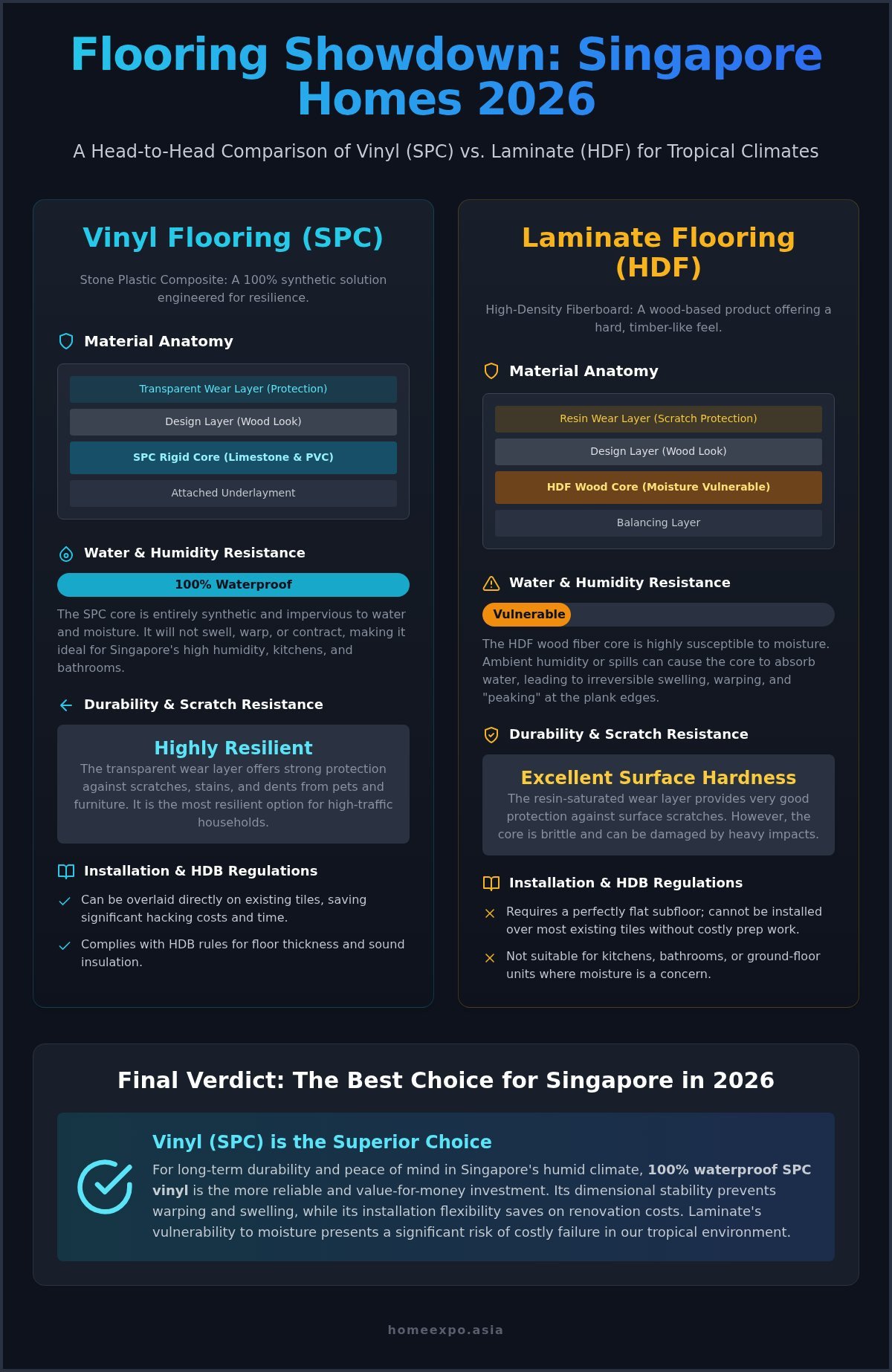
Modern vinyl has evolved significantly to meet the demands of high-traffic households. The current industry standard is Stone Plastic Composite, often referred to as SPC. This material features a rigid core made from a blend of natural limestone powder and polyvinyl chloride. This specific combination creates a plank that’s entirely waterproof and dimensionally stable. It doesn’t expand or contract when your air conditioning is turned on and off. For HDB households, the most critical specification is the wear layer. This transparent top coating protects the design from scratches, stains, and dents. SPC flooring is the most resilient option for Singapore homes in 2026.
The Anatomy of Laminate (HDF)
To understand the basics of this material, you might ask, What is Laminate Flooring? It’s a multi-layer synthetic flooring product fused together through a high-pressure lamination process. The core consists of High-Density Fiberboard (HDF), which is made of compressed wood fibers and resin. This construction gives laminate its signature hardness and a feel that closely mimics solid timber. A resin-saturated wear layer provides excellent protection against surface scratches from furniture or pets. However, the HDF core remains inherently vulnerable to moisture. If water seeps into the joints during cleaning or due to high humidity, the wood fibers can swell. This often leads to “peaking” at the edges, which is difficult and expensive to repair.
- Vinyl: 100% synthetic, waterproof, and ideal for kitchens or high-humidity areas.
- Laminate: Wood-based, scratch-resistant, but prone to moisture damage.
The Climate Test: Humidity and Water Resistance in Singapore
Singapore’s tropical environment isn’t just hot. It’s incredibly damp. With average humidity levels often exceeding 80%, your choice of material becomes a long-term financial decision. When comparing vinyl flooring vs laminate singapore households must understand that humidity acts as a constant force against their floors. While a floor might look beautiful on installation day, the real test happens during the monsoon season when moisture levels peak. Selecting a material that can’t handle the local climate often leads to costly replacements within just a few years.
Marketing terms like “water-resistant” and “waterproof” are often used interchangeably, but they mean very different things. Water-resistant laminate can handle a quick spill if you wipe it up immediately. However, it cannot withstand the ambient moisture that permeates Singaporean homes. In contrast, vinyl is truly waterproof. It serves as a reliable barrier against liquid damage, making it a much safer choice for ground-floor units where rising damp is a frequent concern. For a successful renovation, you must apply the “Kitchen and Bathroom” rule: laminate should never be installed in these high-moisture zones.
Why Laminate Swells: The HDF Vulnerability
Laminate floors rely on a High-Density Fiberboard (HDF) core. This is essentially compressed wood fibers held together by resin. Even if the surface is protected by a tough wear layer, moisture finds its way in through the click-lock joints. Once the core absorbs water, it expands. This causes “peaking,” where the edges of the planks lift and push against each other. You can’t simply sand this down. While running a dehumidifier might help slightly, it won’t fix structural damage once the HDF has been compromised. When looking at How to Choose Between Laminate and Vinyl, you’ll see that moisture vulnerability is the biggest drawback of wood-based products in the tropics.
Vinyl’s Total Waterproof Performance
Modern vinyl planks use a combination of PVC and limestone. These materials are non-porous. They don’t absorb moisture from the air or from wet mopping. This makes them naturally resistant to mold and mildew, which is a major health consideration in our damp climate. Because of its resilient core, vinyl flooring singapore is the preferred choice for kitchens. You can cook and clean without worrying about a stray splash ruining your entire floor. If you’re unsure how your specific subfloor will handle humidity, it’s best to get a professional site assessment to identify potential moisture risks before you buy.
Durability, Comfort, and Daily Life: Which Lasts Longer?
Daily life in a busy household puts immense pressure on your floors. While our previous sections focused on technical specs and moisture, the way a floor feels and sounds underfoot defines your living experience. When comparing vinyl flooring vs laminate singapore homeowners often weigh the trade-off between surface hardness and impact resilience. Laminate is famous for its high AC (Abrasion Class) rating. This makes it incredibly difficult to scratch with furniture legs or shoes. However, vinyl offers a different kind of strength. Because it’s made of a limestone and PVC composite, it absorbs impacts. If you drop a heavy glass bottle or a kitchen pot, vinyl is much less likely to crack or chip compared to the brittle surface of laminate.
Comfort is where these two materials diverge sharply. Laminate is a rigid, wood-based product. It can feel hard on the joints if you’re standing for long periods while cooking or cleaning. It also tends to stay cold, which can be jarring in an air-conditioned bedroom. Vinyl provides a slight “give” and a warmer surface temperature. This makes it a far more comfortable choice for families with young children who spend time playing on the floor. It’s a small detail that significantly improves the “coziness” of your home.
Pet-Friendly Flooring: Claws and Accidents
Pet owners face unique challenges. Large dog breeds with heavy claws can eventually wear down even high-quality surfaces. While laminate’s hard top layer resists scratches well, it’s a disaster for “indoor accidents.” If a pet has an accident and it’s not cleaned immediately, the liquid seeps into the HDF core of a laminate floor, causing permanent swelling. Vinyl solves this problem entirely. It’s 100% waterproof, so accidents won’t ruin the structure of the floor. For better traction, look for vinyl with a textured wear layer. This helps older pets walk without slipping on a slick surface.
Acoustics and Footfall Noise
Living in a high-rise HDB or condo means you have to consider your neighbors. Laminate floors are notorious for a “hollow” sound. Every step in high heels or a pet’s “clack-clack” across the room is amplified. Vinyl is naturally denser and more sound-absorbent. To meet HDB sound insulation requirements, many modern flooring installations must achieve a minimum of 8 dB in noise reduction. Vinyl, especially when paired with a professional underlay, provides a muffled, quiet step. This makes it the superior choice for nurseries and bedrooms where peace and quiet are a priority.
- Scratch Resistance: Laminate wins on surface hardness.
- Impact Resistance: Vinyl wins by absorbing shocks without cracking.
- Sound: Vinyl is significantly quieter for high-rise living.
- Comfort: Vinyl feels warmer and softer underfoot.
Installation and Cost Comparison for Singapore Homes
When you analyze the economics of vinyl flooring vs laminate singapore homeowners must look beyond the sticker price. The total investment includes material, labor, and subfloor preparation. In 2026, HDB regulations remain a primary driver of renovation costs. For new BTO flats, the total thickness of your floor finish and the underlying cement screed must not exceed 50mm. If your unit doesn’t come with pre-installed tiles, you’ll need to account for the cost of professional cement screeding to create a level surface before any flooring can be laid.
The choice between hacking and overlaying is where vinyl truly shines. Hacking existing tiles is a labor-intensive process that requires an HDB permit and can add significant costs to your budget. It also generates immense dust and noise, which is restricted to specific hours between 9:00 a.m. and 6:00 p.m. on weekdays and Saturdays. Many residents choose to skip this hassle by overlaying. However, HDB rules for overlays are strict; the new flooring and adhesive cannot exceed a total thickness of 13mm. This regulation makes thinner materials much more practical for modern renovations.
The Overlay Advantage
Vinyl planks typically feature a thin profile, usually ranging between 5mm and 6.5mm. This slim build is a massive advantage for tile overlays because it rarely interferes with existing door clearances. In contrast, thicker laminate planks often require you to trim the bottom of your doors, adding another layer of carpentry work to your project. Proper base preparation is still vital to ensure no “telegraphing” of grout lines occurs. You can find more details on subfloor requirements in our guide to flooring singapore for 2026.
Installation Timelines
Efficiency is another key factor. A professional team can typically floor a standard 4-room HDB flat in just two to three days when using an overlay method. While both materials use a “click-lock” system that avoids messy glues, professional installation is still essential. Expert installers ensure that expansion gaps are correctly calculated and that skirting and transition profiles are finished seamlessly. This level of precision is often a requirement for maintaining material warranties. If you’re ready to transform your space without the mess of hacking, consider booking a professional installation service to get an accurate site assessment.
- HDB Overlay Limit: Maximum 13mm total thickness.
- BTO New Floor Limit: Maximum 50mm including screed.
- Renovation Hours: Weekdays and Saturdays, 9:00 a.m. to 6:00 p.m. only.
- Timeframe: 2-3 days for a standard 4-room flat overlay.
Final Verdict: Which Should You Choose in 2026?
Deciding between vinyl flooring vs laminate singapore comes down to your lifestyle and how much time you want to spend on maintenance. Both materials have evolved significantly by 2026, but they serve different needs. Laminate remains a viable choice if you strictly prioritize surface hardness and want the exact, rigid feel of wood in dry, low-traffic areas like a guest bedroom. However, for the vast majority of Singaporean homes, vinyl is the superior long-term investment. It provides a 100% waterproof, low-maintenance surface that easily handles our 80% average humidity without the risk of structural failure.
We provide over 200 designs that bridge the aesthetic gap between these materials. You no longer have to choose between the deep, realistic textures of laminate and the technical resilience of vinyl. Our collections offer the high-end look of timber with the waterproof security required for a tropical climate. Because every home has unique subfloor conditions, a professional site assessment is the only way to be 100% sure which material will perform best in your specific HDB or condo unit.
Decision Matrix for Singaporean Homeowners
Your choice often depends on the type of property you’re renovating. For new BTO flats, vinyl is the practical favorite because its thin profile easily stays within the HDB 13mm overlay limit. In resale flats, vinyl is more forgiving over slightly uneven tiles. Always remember to check your HDB renovation permits if you plan on hacking existing floors, as this requires official approval and adherence to strict noise schedules. We provide professional installation and robust warranty support for all our vinyl projects, ensuring your new floor is safe, stable, and built to last.
Ready to Transform Your Home?
Digital photos can’t capture the true texture of a floor. We encourage you to see our samples in person to compare the embossed grains and underfoot feel for yourself. Seeing the material in your own lighting makes a massive difference in the final result. It’s no surprise that top renovation companies in singapore often recommend vinyl for its versatility and resistance to the local climate. Book a free site assessment today to get expert advice tailored to your home’s layout and moisture levels.
- Choose Laminate if: You want maximum scratch resistance in dry, air-conditioned rooms.
- Choose Vinyl if: You need a waterproof, pet-friendly, and humidity-proof floor for the whole house.
- Design Range: Over 200 styles available to match any interior theme.
- Next Step: Book a free site assessment to verify your subfloor condition.
Secure Your Home’s Value with Climate-Proof Flooring
Choosing between vinyl flooring vs laminate singapore doesn’t have to be a gamble when you prioritize long-term performance. We’ve explored how Singapore’s extreme humidity can compromise wood-based cores, making waterproof vinyl the clear winner for most HDB and condo renovations. By selecting a material specifically designed for tropical conditions, you avoid the stress of warping and costly repairs down the road.
Your home deserves a foundation that combines stunning beauty with industrial-grade durability. We offer over 200 designer vinyl patterns that mimic the warmth of real wood without its vulnerabilities. Every project is backed by professional installation and a full warranty to give you absolute peace of mind. Our team specializes in Singapore-specific climate-proof materials that stand up to daily wear and heavy humidity. Don’t leave your renovation to chance. Get Your Free Site Assessment & Vinyl Quote Today and take the first step toward a worry-free, beautiful home.
Frequently Asked Questions
Is vinyl flooring cheaper than laminate in Singapore?
Vinyl is generally more affordable when you consider the total project cost. While material prices are competitive, vinyl saves you money on labor because it’s easier to install as an overlay. When analyzing vinyl flooring vs laminate singapore, you’ll also avoid the high expenses of hacking and floor disposal. This makes it a budget-friendly choice for homeowners who want a premium look without a massive price tag.
Can I install laminate flooring in my HDB kitchen?
We don’t recommend installing laminate in kitchens or other wet areas. Laminate’s wood-based core is sensitive to moisture and can swell if water seeps into the joints. Since kitchens involve frequent spills and heavy mopping, it’s a high-risk zone for HDF materials. You’re much better off choosing a 100% waterproof vinyl that won’t warp or grow mold when exposed to daily kitchen activities.
Does vinyl flooring look fake compared to laminate?
Modern vinyl has come a long way and now features incredibly realistic textures. We offer over 200 designer patterns with high-definition layers that mimic the natural grain of timber. While laminate has a harder surface, vinyl often feels more authentic underfoot because it’s warmer and has a slight “give.” Most visitors won’t be able to tell the difference once the floor is professionally installed in your home.
How long does vinyl flooring last in Singapore’s humidity?
You can expect high-quality vinyl to last between 15 and 20 years with proper care. It’s perfectly suited for our tropical climate because it doesn’t absorb moisture from the air. Unlike wood-based products, vinyl remains dimensionally stable even during the humid monsoon months. It won’t expand, contract, or buckle, which is a common issue for other materials in non-air-conditioned spaces across Singapore.
Can I install vinyl flooring over my existing HDB tiles?
Yes, overlaying vinyl on top of existing tiles is a standard practice in Singapore. It’s a clean and efficient way to update your home’s look without a full hacking project. You just need to ensure the new floor doesn’t exceed HDB’s 13mm thickness limit for overlays. This method is much faster and helps you avoid the dust and noise associated with removing old floor finishes.
Which flooring is better for households with pets?
Vinyl is the superior option for homes with dogs or cats. It’s 100% waterproof, so accidents won’t cause the structural damage that often ruins laminate floors. Vinyl is also quieter underfoot and can help meet the 8 dB sound insulation requirement for HDB flats. Its impact resistance means it handles claws and heavy play without cracking, providing a safe and durable surface for your pets.
Do I need to hack my existing floor before installing vinyl?
Hacking is usually not necessary if your current floor is level and stable. Skipping the hacking process can save you between S$1,500 and S$2,500 in labor and permit fees. Most modern vinyl is designed specifically for overlays, allowing for a quick transformation of your space. If you’re unsure about your subfloor’s condition, a professional site assessment can confirm if an overlay is the right choice for you.
What is the standard thickness for vinyl flooring in 2026?
In 2026, the standard thickness for premium vinyl planks is typically between 5mm and 6.5mm. This specific range is perfect for Singaporean homes because it stays well within HDB’s 13mm overlay regulation. It’s thick enough to include a heavy-duty wear layer and integrated padding for comfort, yet thin enough to avoid major issues with door clearances. This balance ensures long-term durability and a seamless installation process.