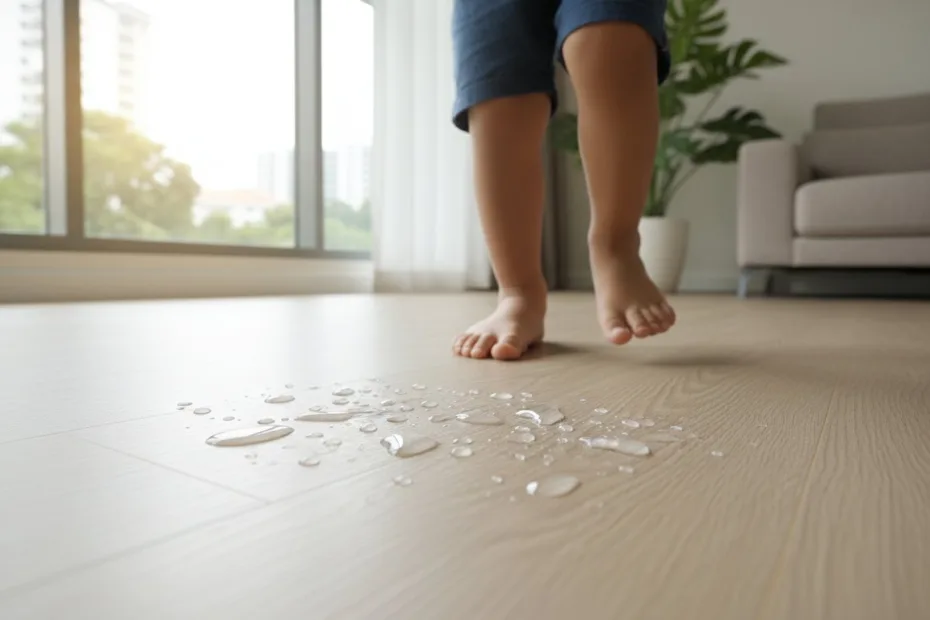
Modern textured vinyl is often safer than traditional tiles because its engineered grip remains consistent even when moisture is present. If you’re wondering are vinyl floors slippery when wet, you’re likely thinking about your family’s safety during a busy morning or a rainy afternoon. Many Singapore homeowners fear that vinyl feels “plasticky” and slick, which is a valid concern when planning a renovation. We understand that your home must be a sanctuary, not a hazard.
You’ll be glad to know that high-quality vinyl is a professional and trustworthy choice for your home. This guide helps you discover the truth about slip resistance and provides clear criteria for choosing the safest options. We’ll preview the technical ratings you need to know and the importance of professional installation for long-term security. By the end, you’ll have the peace of mind to select flooring that’s certified, tested, and officially safe for every room.
Key Takeaways
- Discover the engineering secrets that ensure modern vinyl provides consistent traction, finally answering the question: are vinyl floors slippery when wet?
- Learn why the R10 slip resistance rating is considered the “gold standard” for safe Singaporean kitchens and how to verify it before you buy.
- Identify which specific surface textures offer the best natural grip for your family without sacrificing a premium, high-quality aesthetic.
- Uncover the common household cleaning agents that actually make your floors more dangerous and what you should use instead to maintain safety.
- Understand the vital role of professional cement screed in preventing “puddling” zones that increase slip risks and ensure a level, safe surface.
Is Vinyl Flooring Slippery When Wet? The Reality for Modern Homes
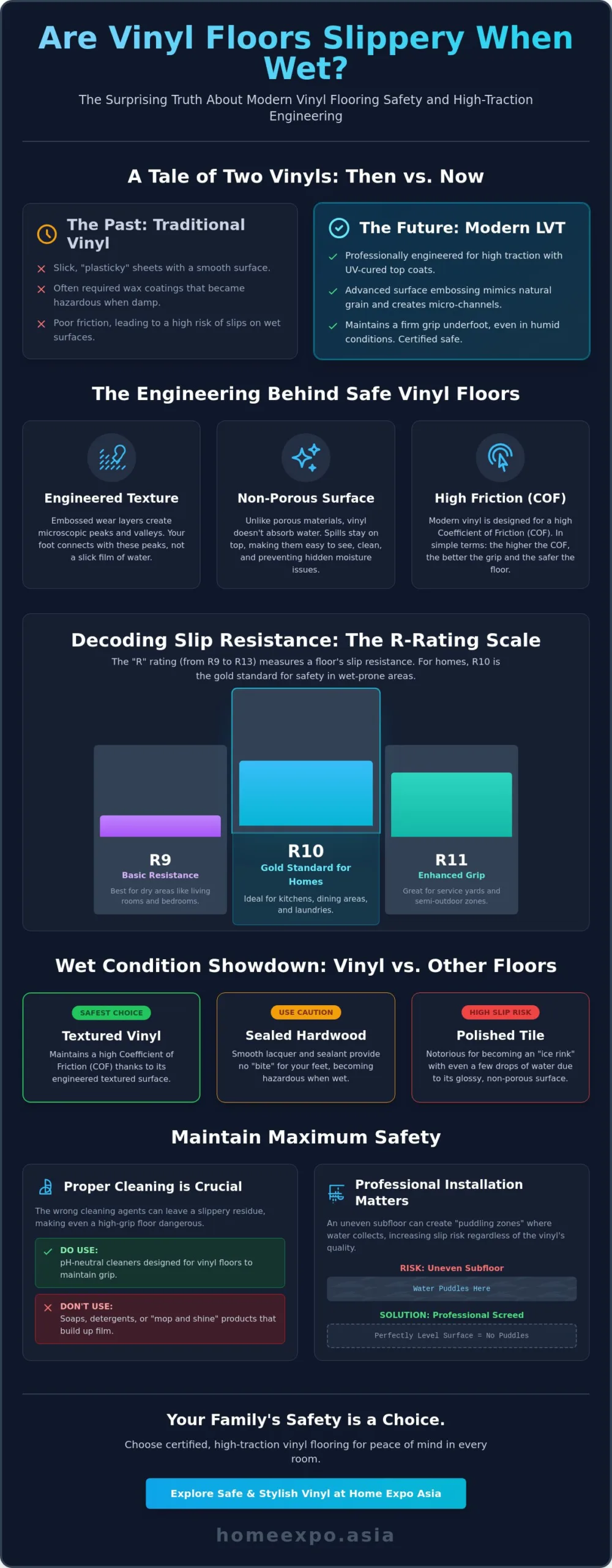
If you’re asking are vinyl floors slippery when wet, the short answer is: not as much as you’d think. While no surface is 100% slip-proof, modern vinyl is a far cry from the slick, plastic sheets of the past. Today’s high-quality vinyl is professionally engineered for high traction, even in the humid climate of Singapore. Unlike older Vinyl composition tile which often required wax coatings that became hazardous when damp, modern Luxury Vinyl Tiles (LVT) feature advanced top-coat technologies. These UV-cured layers are designed to provide a firm grip underfoot, ensuring your home remains a safe sanctuary for children and the elderly.
The “plastic” perception is outdated. When moisture hits a smooth surface, it creates a thin film that reduces friction. However, modern vinyl uses surface engineering to combat this. By incorporating texture directly into the wear layer, manufacturers ensure that water doesn’t just sit in a dangerous sheet. Instead, the foot maintains contact with the raised “peaks” of the floor’s texture. This makes it a reliable and experienced expert’s choice for residential spaces. At Home Expo Asia, we prioritize your safety by selecting materials that meet rigorous standards.
- ✓ High-traction wear layers for added security
- ✓ Advanced surface embossing that mimics natural grain
- ✓ Water-resistant technology that prevents warping
- ✓ Certified safe for families and eco-friendly
Vinyl vs. Other Flooring Types in Wet Conditions
When we compare vinyl grip to polished porcelain or ceramic tiles, vinyl often comes out on top. Polished tiles are notorious for becoming “ice rinks” with just a few drops of water. Textured vinyl, however, maintains a higher Coefficient of Friction (COF). COF is a simple measurement of how much grip a surface provides; the higher the number, the safer the floor. Sealed hardwood can also be more hazardous than vinyl because the smooth lacquer provides no “bite” for your feet when wet. Vinyl’s synthetic nature allows for deep, tactile textures that natural wood often loses after several coats of sealant.
Common Misconceptions About Vinyl Safety
A common myth is that all vinyl is slippery because it’s non-porous. In reality, being non-porous is a safety advantage. Because the material doesn’t absorb water, spills stay on the surface where they can be easily seen and wiped away. Modern surface embossing creates micro-channels. These channels allow water to disperse, ensuring that your foot makes direct contact with the floor material rather than sliding on a trapped layer of liquid. This is why many homeowners now realize that are vinyl floors slippery when wet is a question with a very reassuring answer: not when you choose professional, certified quality.
Understanding Slip Resistance Ratings (R-Ratings)
Determining if are vinyl floors slippery when wet often comes down to the technical R-rating listed on the product specification sheet. These ratings aren’t just random numbers. They represent rigorous testing results that tell you exactly how much grip a floor provides under specific conditions. The R-rating scale ranges from R9 to R13, with R9 offering the least friction and R13 providing the highest level of slip resistance for industrial environments. For most Singapore homeowners, understanding this scale is the first step toward a safe, professional renovation.
R-ratings are typically determined using a ramp test where a person walks on an oil-wet surface at increasing angles. While Singapore follows local standards like SS 485:2022, referencing OSHA floor safety standards provides a global perspective on why maintaining clean, dry walking surfaces is a universal safety priority. When you browse our collections, we make it easy to find these certifications because quality is our #1 priority. If you’re unsure which rating fits your HDB layout, you can speak with our flooring experts for a personalized recommendation.
- ✓ R9: Suitable for dry areas with low moisture risk.
- ✓ R10: The gold standard for residential kitchens and laundries.
- ✓ R11: Enhanced grip for service yards and semi-outdoor zones.
- ✓ Certified and tested for peace of mind.
Which R-Rating Do You Need for Your Room?
In living rooms and bedrooms, an R9 rating is usually sufficient. These areas stay dry and focus more on underfoot comfort. However, for kitchens and dining areas where accidental spills are common, R10 is a necessity. It provides that extra bit of “bite” when your feet encounter moisture. For service yards or bathrooms where floors are frequently damp, you should consider R11. This higher rating ensures maximum safety in the wettest zones of your home, preventing slips before they happen.
The Science of Friction: COF and Pendulum Tests
Beyond R-ratings, you might see references to Coefficient of Friction (COF) or Pendulum Test Values (PTV). A COF of 0.42 or higher is a reliable benchmark for a safe walking surface in residential settings. While the ramp test uses oil, the Pendulum Test often uses water to simulate real-world home scenarios. The Pendulum Test is the industry standard for measuring slip resistance in 2026. By choosing a floor with a high PTV, you’re investing in a durable, safe environment that protects your family from the common worry: are vinyl floors slippery when wet? At Home Expo Asia, we only provide materials that have passed these stringent tests, ensuring your renovation is truly risk-free.
Factors That Make Vinyl Flooring More (or Less) Slippery
Singapore’s tropical climate presents unique challenges for homeowners. With average humidity levels often exceeding 80%, condensation can settle on indoor surfaces, creating a potential hazard. If you’re concerned about whether are vinyl floors slippery when wet, it’s vital to understand that safety depends on specific manufacturing factors. High-quality vinyl isn’t just a flat piece of plastic. It’s a multi-layered product engineered for performance. From the physical texture of the surface to the chemical composition of the top coat, every detail plays a role in keeping your family on their feet.
Soap buildup is the hidden enemy of floor safety in many local households. When you use excessive cleaning agents or wax-based polishes, a thin, invisible film remains on the surface. This residue becomes incredibly slick the moment it encounters moisture. Maintaining a safe home involves more than just choosing the right material. Following Practical Tips to Prevent Slips, such as using pH-neutral cleaners and ensuring thorough rinsing, is essential for preserving the floor’s natural grip. At Home Expo Asia, we advocate for these simple maintenance steps to ensure your renovation remains a safe, risk-free investment.
The Magic of Embossed-in-Register (EIR) Texture
Embossed-in-Register (EIR) technology is a game-changer for slip resistance. Unlike standard “ticking” where a generic texture is pressed into the vinyl, EIR aligns the physical grooves exactly with the visual wood grain. This creates a deep, tactile surface that provides “mechanical grip” for your feet. When water is present, these micro-grooves allow moisture to disperse rather than forming a continuous, slick sheet. Comparing EIR to smooth or low-cost finishes reveals a significant difference in traction. This professional-grade texture ensures that even when are vinyl floors slippery when wet, your EIR-finished floor offers a reliable level of friction that smooth alternatives simply cannot match.
Wear Layers and Slip-Resistant Coatings
The wear layer is your floor’s first line of defense. Modern vinyl features wear layers enhanced with aluminium oxide, a hard mineral that adds both durability and a subtle, microscopic “bite” to the surface. Matte finishes are generally the superior choice for safety. While high-gloss floors might look premium, they’re often much smoother and slicker. We recommend a wear layer thickness of at least 0.5mm for high-traffic areas. This thickness ensures that the slip-resistant properties don’t wear down over time, providing long-term peace of mind. Our certified and tested materials are designed to maintain this grip for years, backed by our commitment to quality and safety.
- ✓ EIR texture for superior mechanical foot grip
- ✓ Matte finishes that reduce slickness compared to gloss
- ✓ 0.5mm wear layers for long-lasting traction
- ✓ Aluminium oxide coatings for professional-grade safety
Practical Tips to Prevent Slips in Your Singapore Home
Maintaining a safe home environment in Singapore requires more than just picking the right material. Our local humidity levels, which frequently hit 80% or higher, can turn even the best surfaces into a hazard if not managed correctly. If you’re still worried and asking are vinyl floors slippery when wet, the answer often lies in your daily maintenance routine. Proper care ensures that the high-traction engineering of your floor continues to perform exactly as intended. At Home Expo Asia, we believe that education is the key to long-term safety and peace of mind.
Strategic placement of entrance mats and area rugs is your first line of defense. In high-traffic wet zones like the entrance of your HDB flat or the area outside your bathroom, a heavy-duty mat with a rubberized backing is essential. These mats trap moisture from umbrellas and wet footwear before it reaches your vinyl. For kitchens, consider low-profile rugs that provide extra grip during meal prep. Always ensure these additions have non-slip underlays to prevent the rugs themselves from sliding. Managing spills immediately is equally vital. Whether it’s water, oil, or a sugary drink, wiping it up with a microfiber cloth prevents the liquid from spreading across the non-porous surface.
Cleaning for Grip, Not Just Shine
Many homeowners mistakenly believe that a “shiny” floor is a clean floor. In reality, a “squeaky clean” matte finish is much safer than a polished glow. Avoid wax-based or “shiny” floor cleaners at all costs. These products leave a microscopic film that fills in the textured grooves of your vinyl, making it significantly more slick. For the best results, use a simple solution of pH-neutral cleaner or a mixture of water and a small amount of white vinegar. For a deep dive into safe maintenance, read our Effortless Vinyl Floor Care: Your Complete Cleaning Guide. This professional approach ensures your floor remains durable and safe for years.
The Importance of Proper Ventilation
Singaporean homes often experience “sweating” floors, especially in air-conditioned rooms. When cold air chills the floor surface and is suddenly met with warm, humid air from an open window, condensation forms instantly. This moisture is a primary reason why people ask are vinyl floors slippery when wet. To prevent this, maintain consistent ventilation. Use exhaust fans in your kitchen and bathroom to pull moisture out of the air. If you use air-conditioning, try to avoid sudden temperature swings and consider using a dehumidifier during the monsoon season. These small steps protect your family and keep your home’s surfaces dry and secure.
Ready to upgrade to a safer, professionally installed floor? Contact our flooring experts today for a consultation tailored to your home’s needs.
- ✓ Use pH-neutral cleaners to avoid slippery residue
- ✓ Place rubber-backed mats at all entry points
- ✓ Maintain good airflow to prevent condensation
- ✓ Clean spills immediately to maintain surface friction
Why Professional Installation is Key to Floor Safety
If you’re still asking are vinyl floors slippery when wet, you need to look beneath the surface. A floor’s safety isn’t just about the wear layer; it’s about the foundation. Many homeowners don’t realize that an uneven subfloor is a major contributor to slip hazards. When a floor isn’t perfectly level, water naturally gravitates toward low spots, creating “puddling” zones. These hidden pools of water are much more dangerous than a light misting because they significantly reduce foot-to-floor contact. At Home Expo Asia, we ensure your foundation is flawless by using professional cement screed to create a level, safe surface before a single plank is laid.
Poor installation also leads to seepage issues that compromise your safety over time. If the joints aren’t tight or the clicking system is low-quality, moisture can crawl beneath the vinyl planks. This trapped water causes the material to “pop” or shift, creating an unstable walking surface. A floor that moves under your weight is much harder to navigate when damp. Our experienced installers focus on precision, ensuring every joint is air-tight to prevent water from reaching the subfloor. This meticulous approach is why we’re known as the best vinyl flooring installer in Singapore, with over 50 years of combined experience backing every job.
The Risk-Free Promise: Quality and Certification
We don’t just claim our floors are safe; we prove it through world-class certifications. Our materials are FloorScore certified and meet ISO 9001 standards, ensuring they’ve been tested for both durability and safety. Choosing Home Expo Asia means you’re investing in a product that’s eco-friendly and rigorously vetted for the Singapore market. We stand behind our work with a 1-year installation warranty and a 10-year materials warranty. It’s truly risk-free. For a deeper look at how we select the best materials for our clients, check out Vinyl Flooring Singapore: The Ultimate Guide for Homeowners (2026).
DON’T LISTEN TO US, LISTEN TO THEM
Our customers consistently highlight the reassuring feel of our textured vinyl, even in moisture-prone areas like kitchens. We’ve completed thousands of jobs across Singapore, maintaining a 5.0/5.0 rating on Google because we prioritize your family’s security. A professional site assessment is the first step in this process. Our experts visit your home to evaluate lighting, humidity, and room usage to help you choose the perfect R-rating. We don’t believe in guesswork. We provide an official invoice and a clear plan so you know exactly what you’re paying for. Book a free site assessment with Home Expo Asia today and let us help you create a home that’s as safe as it is beautiful.
- ✓ Level subfloors prevent dangerous water puddling
- ✓ Precision clicking systems stop unstable seepage
- ✓ Certified materials (FloorScore, ISO 9001, SGS)
- ✓ 1-year installation warranty for total peace of mind
Secure Your Home with the Right Flooring Choice
Choosing the right flooring is about more than just aesthetics; it’s about protecting the people you love. By prioritizing R10 or R11 slip resistance ratings and insisting on professional cement screed preparation, you eliminate the most common hazards in your home. Modern engineering and proper maintenance prevent the slick surfaces of the past. Now that you understand how texture and installation answer the question, are vinyl floors slippery when wet, you can plan your renovation with total peace of mind. Quality is our #1 priority, and we’re here to guide you through every technical specification.
Home Expo Asia brings over 50 years of combined flooring experience to your project. Our materials are certified safe and eco-friendly by FloorScore and Green Label Singapore, ensuring a healthy environment for your family. DON’T LISTEN TO US, LISTEN TO THEM; our 5.0/5.0 Google Reviews from real Singaporean homeowners prove our commitment to excellence. It’s risk-free! We’re ready to help you create a sanctuary that’s as safe as it is beautiful.
Get a Risk-Free Vinyl Flooring Quote for Your Singapore Home
Frequently Asked Questions
Is vinyl flooring safer than ceramic tiles for elderly people?
High-quality vinyl is generally safer for elderly people because it provides a more forgiving surface and better natural traction than polished ceramic tiles. While polished tiles become extremely slick with moisture, textured vinyl maintains its grip. Additionally, vinyl is softer underfoot, which reduces the impact force if a fall does occur. This makes it a professional and trustworthy choice for multi-generational Singapore homes where safety is the top priority.
Can I use vinyl flooring in my HDB bathroom?
You can use specific water-resistant vinyl flooring in HDB bathrooms if it features an R11 slip rating. This specialized vinyl is designed to withstand constant moisture without warping or becoming slick. However, professional installation is vital to ensure the subfloor is level and the joints are perfectly sealed. This prevents water from seeping underneath the planks. Many homeowners worry about whether are vinyl floors slippery when wet in bathrooms, but certified, high-traction vinyl is a safe and durable choice.
Does the thickness of vinyl affect how slippery it is?
Thickness itself doesn’t determine slip resistance, but the quality of the wear layer and its texture do. A thicker wear layer, such as 0.5mm, allows for deeper Embossed-in-Register (EIR) textures that provide more mechanical grip. While a 5mm plank might feel more stable than a 3mm plank, the surface finish is what prevents you from sliding. Always check the R-rating rather than just the total thickness of the material for a safe home.
What is the best way to clean vinyl to keep it from being slippery?
The best way to maintain safety is using a pH-neutral cleaner and avoiding any wax-based products. Wax creates a microscopic film that fills in the floor’s texture, making it hazardous when damp. For a reliable clean, use a damp microfiber mop rather than a soaking wet one. This ensures that the floor’s engineered grip remains exposed and effective. Regular cleaning prevents the buildup of oils and soap scum which are the primary causes of slips.
Are some brands of vinyl more slippery than others?
Yes, brands that lack official certifications like FloorScore or SGS testing often have smoother, lower-quality top coats. Premium brands prioritize safety by engineering matte finishes and deep textures into their products. At Home Expo Asia, we only supply certified materials that have undergone rigorous slip resistance testing. This ensures our customers don’t have to worry about whether are vinyl floors slippery when wet when they choose our professionally vetted and trusted collections.
Will steam mopping make my vinyl floor more slippery?
Steam mopping isn’t recommended because the high heat can damage the vinyl’s protective wear layer over time. A compromised wear layer loses its slip-resistant properties and becomes smoother. The excessive moisture left behind by steam can also linger in the air and settle back on the floor, increasing the risk of a fall. It’s safer and more effective to use a traditional damp mop with a certified floor cleaner for your daily maintenance.
How do I know if my current vinyl floor has a high slip rating?
You can identify a high slip rating by checking the original product specification sheet for an R10 or R11 rating. If you don’t have the paperwork, a simple “touch test” can help. High-traction floors usually have a visible and tactile wood-grain or stone texture rather than a perfectly smooth, glossy finish. For a definitive answer, you can book a professional site assessment where experts evaluate the surface condition and safety of your current installation.
Can I apply an anti-slip coating to my existing vinyl floors?
You can apply specialized anti-slip coatings to existing vinyl, but it’s often better to address the root cause, such as improper cleaning or an uneven subfloor. These coatings can change the look of your floor and may require frequent re-application. Before applying any chemical treatments, ensure the floor is free of soap residue. If your floor remains slick despite proper cleaning, it might be time to consider a professional upgrade to a certified slip-resistant material.