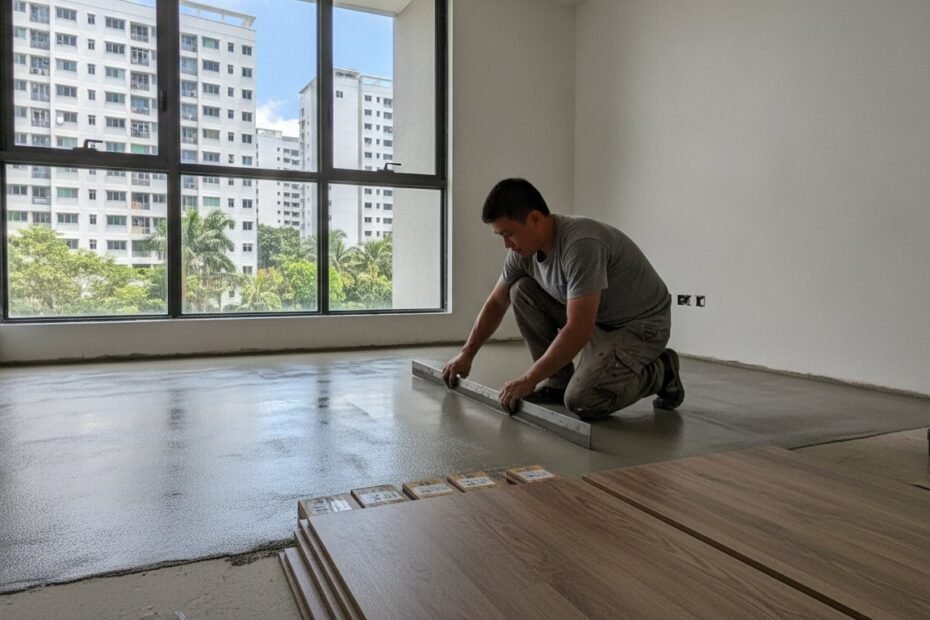
Did you know that HDB no longer provides “goodwill” cement screeding for new flats, leaving homeowners to manage this critical foundation entirely on their own? It’s a surprising shift that has many Singaporeans worried about hidden costs and technical compliance. When you’re investing in premium flooring, the quality of your cement screed hdb work is the single most important factor for a long-lasting result. A poorly prepared subfloor leads to buckling vinyl or hollow tiles, turning your dream renovation into a costly headache.
We understand that navigating HDB renovation guidelines can be stressful. You deserve a home that’s built on a safe, level, and professional foundation. This guide provides everything you need to know about current 2026 policies, from mandatory pre-packed screed requirements to the maximum 50mm thickness limit for floor finishes. We’ll show you how to secure the right permits and coordinate your cement works for a seamless installation. By the end of this article, you’ll have a clear roadmap to a perfectly level floor that meets every HDB standard and stands the test of time.
Key Takeaways
- Learn why a perfectly level subfloor is the essential prerequisite for a flawless vinyl installation and how it protects your flooring warranty.
- Understand current 2026 cement screed hdb regulations, including the mandatory use of pre-packed materials and the 50mm maximum thickness rule.
- Compare traditional screed and premium self-levelling compounds to determine which method best suits your flat’s structural needs and renovation budget.
- Get a step-by-step breakdown of the HDB permit application process and the critical timeline for floor hacking and debris removal.
- Discover the benefits of using a single-point contractor to manage both cement works and final flooring for a stress-free, integrated renovation experience.
Understanding Cement Screed for HDB Flats: The Basics
Your floor’s durability begins long before the first vinyl plank is laid. It starts with a solid foundation. In every HDB renovation, the subfloor acts as the unsung hero that determines whether your home feels premium or poorly constructed. Understanding the basics of this layer is the first step toward a successful renovation that lasts for decades.
A Screed is a specific layer of material, typically a precise mix of cement and sand, applied directly onto the structural concrete base of your unit. Think of it as the vital bridge between the raw building structure and your beautiful final flooring. In a high-rise environment, this layer serves two primary purposes: it levels out the rough, uneven surface of the structural slab and provides the necessary strength to support your daily foot traffic.
HDB maintains very strict safety standards regarding floor weight. The total thickness of your floor finishes combined with the cement screed hdb must never exceed 50mm. This isn’t just a suggestion; it’s a structural requirement to ensure the floor slab isn’t overloaded beyond its 150kg per square meter limit. By following these guidelines, you protect the integrity of the entire building while creating a flawless base for your home.
What Exactly is Cement Screeding?
Professional contractors in Singapore use a carefully balanced sand-to-cement ratio to create a durable rendering. While traditional mixes were once the norm, current 2026 standards mandate the use of pre-packed screed for dry areas like bedrooms and living rooms. These factory-batched materials provide superior consistency compared to manual on-site mixing. This precision ensures your subfloor is smooth, level, and free from the structural weaknesses that lead to “hollow” sounds later. A well-applied screed also acts as a protective shield for the underlying structural slab, preventing moisture from seeping through and causing long-term damage.
Current HDB Cement Screeding Policies in 2026
The era of HDB providing complimentary “goodwill” floor rendering has officially ended. Today, BTO units are delivered with a bare finish standard. This means homeowners must take full responsibility for their floor preparation. You’re required to engage a professional from the HDB Directory of Renovation Contractors (DRC) to perform these works. This policy shift means you have more control over the quality of your foundation, but it also requires careful planning. You’ll need to coordinate with your contractor to ensure all cement works meet HDB technical standards before your vinyl or tiles are installed. Failing to follow these rules can lead to permit delays or even legal complications during your renovation journey.
Why Proper Screeding is Non-Negotiable for Your Floor
A beautiful floor is only as good as the surface beneath it. While homeowners often spend weeks selecting the perfect vinyl design, the technical preparation of the subfloor is what actually determines the lifespan of that investment. In 2026, premium flooring brands have become stricter than ever regarding installation environments. If your cement screed hdb foundation isn’t perfectly level, you risk voiding your flooring warranty before you even move in.
Poorly executed screeding creates a ripple effect of structural and aesthetic issues. When a subfloor is uneven, it leads to several common problems:
- Hollow Sounds: Gaps between the screed and floor tiles create echo chambers that sound “hollow” when walked upon.
- Joint Failure: Vinyl planks rely on delicate click-lock systems that snap if the floor flexes over a dip.
- Aesthetic Flaws: High-gloss or large-format finishes will highlight every bump and ridge in the base layer.
- Structural Stress: Exceeding the HDB 50mm thickness limit adds unnecessary weight to the floor slab, which is rated for a maximum load of 150kg per square meter.
Precision is your best defense against these risks. Professional site assessments ensure that your home meets the exact technical requirements for a long-lasting finish. You can explore integrated flooring packages that handle both the foundation and the final installation to ensure total compatibility.
The Dangers of Uneven Subfloors
Even a minor 3mm deviation over a two-meter span can ruin a vinyl floor installation. Modern vinyl planks are designed to be thin and flexible. While this makes them durable, it also means they telegraph the shape of the cement screed hdb underneath. Constant foot traffic over an uneven patch puts mechanical stress on the click-joints. Over time, these joints will separate or crack, leading to “clicking” noises and visible gaps that trap dirt and moisture. What looks like a premium floor in the showroom can quickly look “cheap” if the base is neglected.
Moisture Control and Curing Times
Singapore’s high humidity makes the curing process of cement especially critical. You shouldn’t rush the drying phase. Trapped moisture is a silent killer for flooring; it leads to mold growth and adhesive failure. In 2026, professional contractors use digital moisture meters to verify that the screed has reached the correct internal humidity before laying the final floor. This methodical approach ensures the bond between your cement and vinyl remains secure for decades, regardless of the tropical weather outside.
Traditional Cement Screed vs. Self-Levelling Compounds
Choosing the right material for your subfloor isn’t just about cost; it’s about matching the technical needs of your final floor finish. Traditional cement screed and self-levelling compounds serve different purposes in a Singapore home. While traditional methods are excellent for building bulk and height, self-levelling materials provide the precision required for modern, thin-profile flooring like vinyl. In 2026, the most successful renovations often utilize a hybrid approach to achieve both structural integrity and a mirror-flat finish.
Traditional cement screed hdb applications typically range from 30mm to 50mm in thickness. This method is the standard for correcting significant height differences across different rooms. Self-levelling compound, on the other hand, is a premium polymer-modified cement. It’s designed to flow across the floor like water, filling in minute dips and ridges that traditional screeding might miss. Understanding which one your flat needs depends on the current state of your concrete slab and your choice of final flooring.
- Traditional Screed: Best for bulk levelling and providing a sturdy base for thick tiles or marble.
- Self-Levelling Compound: Essential for vinyl flooring to prevent joint separation and “clicking” sounds.
- Hybrid Method: Uses traditional screed to reach the target height, followed by a thin self-levelling top coat for absolute flatness.
When to Use Traditional Cement Screed
Traditional screed remains the most cost-effective solution for large-scale renovations, especially in resale flats. If you’ve hacked away old tiles and found a raw, deeply pitted concrete slab, traditional screeding is necessary to build the floor back up to a usable level. It provides the heavy-duty support required for homogeneous tiles or natural stone. Because it’s applied at a greater thickness, it effectively masks major structural irregularities. This method is your primary tool for ensuring your entire home sits at a uniform height before any decorative finishes are applied.
The Benefits of Self-Levelling for Vinyl Flooring
Vinyl flooring is incredibly sensitive to subfloor imperfections. Even a tiny 3mm ridge can cause a vinyl plank to “telegraph” the bump or snap at the click-joint. Self-levelling compounds are the gold standard for preventing these issues. They create an ultra-smooth surface that feels solid underfoot. These compounds also offer rapid setting times, often allowing for foot traffic within a few hours. This speed is vital for tight renovation schedules. Most importantly, high-quality self-levelling layers are perfectly compatible with modern moisture barriers and adhesives, ensuring your cement screed hdb foundation remains dry and secure for decades.
Planning Your Renovation: HDB Rules and Sequencing
Success in HDB renovations relies on a strict, logical timeline. Skipping a step or rushing the cement screed hdb process leads to structural failures that are expensive to fix. You need a clear plan that aligns with HDB regulations and technical requirements to ensure your home remains safe and beautiful for years. Following a methodical sequence helps you avoid hidden costs and coordination errors between different contractors.
A professional renovation follows these five essential steps:
- Step 1: Secure your HDB Renovation Permit (Form A/B) through a registered contractor.
- Step 2: Complete hacking of existing tiles and ensure all debris is removed.
- Step 3: Conduct professional site measurements and precise laser level marking.
- Step 4: Lay the screed and allow for a mandatory 7 to 14 day curing period.
- Step 5: Perform a final moisture check before proceeding with flooring installation.
If you’re ready to start your journey with a professional assessment, book a site consultation today to ensure your renovation follows every technical standard.
HDB Renovation Permits and Guidelines
Permits are mandatory for any work involving floor hacking or topping up floors with lightweight screed. HDB requires that your total floor thickness, including the screed and finish, stays within the 50mm limit to prevent structural overloading. You must engage a contractor from the Directory of Renovation Contractors (DRC) for these works. Remember that noisy works like hacking are only allowed between 9:00 am and 5:00 pm on weekdays. Planning your schedule around these restrictions prevents complaints and ensures a smooth approval process.
The Correct Sequencing: Hacking to Screeding
Wet works like screeding must be completed before any carpentry or painting begins. This prevents dust and moisture from damaging your custom cabinets or fresh wall finishes. Once the cement screed hdb is laid, you must protect the surface from other trades to prevent cracks or gouges while it cures. Rushing into the next stage before the cement is fully dry will trap moisture, leading to mold or floor buckling. You can find more details on coordinating your home transformation in our Flooring Singapore: The Ultimate 2026 Homeowner’s Guide.
Professional Subfloor Solutions with Home Expo Asia
Home Expo Asia takes a holistic view of your home renovation. We believe that a premium floor is only as durable as the layer beneath it. While many contractors treat subfloor preparation as an afterthought, our integrated approach ensures that every cement screed hdb project is engineered for long-term performance. We don’t just lay vinyl; we build the foundation that supports your lifestyle for decades. This commitment to quality is why we prioritize structural integrity over quick fixes.
Choosing a single-point contractor for both cement works and flooring eliminates the coordination errors that often occur between different trades. Our expert team conducts comprehensive site assessments to determine the exact screeding method required for your unit’s specific concrete slab. Whether you need a traditional thick application or a high-precision self-levelling compound, we manage every technical detail. This seamless transition ensures that your chosen finish from our range of 200+ vinyl designs sits on a perfectly level base.
Transparency is a core pillar of our service. Homeowners often face hidden “levelling top-up” fees when they engage separate contractors who didn’t account for subfloor irregularities. We provide clear, upfront communication regarding the scope of work needed. This honesty builds the trust and security you need during a complex renovation process. You’ll never have to worry about unexpected costs or technical shortcuts when you partner with us.
Why Quality Subfloor Prep Saves You Money
Cutting corners on your subfloor is a false economy. A failed foundation means ripping up your entire floor later, resulting in double the material and labor costs. By investing in professional preparation now, you ensure lower maintenance requirements and prevent issues like hollow tiles or buckling planks. It’s about doing it right the first time to protect your financial investment. You can learn more about how to choose the right materials in our Vinyl Flooring Singapore: The Ultimate Guide for Homeowners (2026).
Get a Professional Assessment Today
Our team manages the entire process, from HDB permit coordination to the final moisture check. This methodical flow provides the peace of mind that comes with knowing your home complies with all technical standards. We back our work with comprehensive installation warranties, reflecting our confidence in our proprietary methods and historical experience. We handle the heavy lifting so you can focus on the joy of designing your new space. Take the first step toward a flawless home foundation and book a free site assessment for your HDB flooring today.
Build Your Dream Home on a Solid Foundation
Achieving a flawless interior starts with the technical details that remain hidden beneath your feet. You’ve learned that a professional cement screed hdb installation is the only way to protect your flooring warranty and prevent issues like buckling or hollow sounds. By following the 2026 HDB guidelines and allowing for proper curing times, you ensure your renovation is both beautiful and structurally sound. A level subfloor isn’t just a requirement; it’s an investment in the long-term durability of your home.
Our team simplifies this complex process by providing HDB-compliant renovation practices and professional site assessments. We offer an integrated solution that bridges the gap between raw cement works and the final installation of our over 200 vinyl designs. You can trust our experience to deliver a seamless, high-quality result without the stress of managing multiple contractors. Don’t leave your home’s foundation to chance.
Get a Risk-Free Quote for Your HDB Cement Works and Flooring Today
Your journey to a perfect home deserves the expertise of a reliable partner. We’re here to help you create a space that looks stunning and stays level for decades to come.
Frequently Asked Questions
Does HDB provide free cement screeding for BTO flats in 2026?
HDB has officially ceased its former “goodwill” floor rendering service for new flats. Homeowners are now responsible for engaging their own HDB-registered contractors to prepare the subfloor. This means your cement screed hdb works must be factored into your renovation budget and timeline from the start. You’ll need to ensure your contractor follows all technical standards to avoid permit delays.
How long does it take for cement screed to dry before I can lay vinyl?
You should allow for a mandatory curing period of 7 to 14 days under normal conditions. Singapore’s high humidity can affect this timeline, so it’s essential to use a digital moisture meter before installation. Rushing this process traps moisture, which leads to mold growth and adhesive failure in your final flooring. Professional site assessments always include these critical moisture checks.
What is the maximum thickness allowed for HDB flooring?
The total thickness of your floor finishes and the cement screed must not exceed 50mm. This strict limit ensures that the structural integrity of the floor slab is maintained. HDB also mandates that the floor loading does not exceed 150kg per square meter. These rules prevent structural overloading in high-rise buildings and are a non-negotiable part of your renovation permit.
Can I skip cement screeding if I am doing overlaying?
You can generally skip new screeding if your existing tiles are in good condition and perfectly level. Overlaying vinyl directly on top of sound tiles is a common way to save time and costs. However, if your current tiles are cracked, hollow, or uneven, you’ll need to hack them and apply a new cement screed hdb layer first to ensure a stable base.
How much does cement screeding cost for a 4-room HDB flat?
Costs vary based on the total floor area and the specific thickness required to level your unit. Factors such as the type of materials used and whether you choose premium self-levelling compounds will influence the final quote. It’s best to request a professional site assessment to get an accurate estimate tailored to your flat’s current condition rather than relying on general estimates.
Is self-levelling compound necessary for vinyl flooring?
While not strictly mandatory by HDB, it’s highly recommended for achieving the “mirror-flat” surface vinyl requires. Vinyl planks are sensitive to even minor 3mm deviations, which can cause the click-lock joints to snap over time. Using a self-levelling top coat provides the necessary precision to protect your flooring warranty and ensure a silent, solid feel underfoot for decades.
Can I use cement screed as a final floor finish (industrial look)?
Leaving the original HDB-provided cement screed bare is not permitted under renovation guidelines. However, you can achieve an industrial aesthetic by applying a specialized polished concrete finish or decorative screed. These options require professional sealing to prevent dusting and moisture absorption. This provides a seamless and durable final floor while staying fully compliant with HDB’s requirement for a finished surface.
What happens if the cement screed is not level?
An uneven subfloor leads to mechanical stress on your flooring, causing “clicking” noises and joint separation. You’ll likely experience “hollow” sounds when walking on tiles and may even find your flooring warranty voided by the manufacturer. Ensuring a level base is the most critical step to preventing these costly long-term structural issues and maintaining the aesthetic quality of your home.