
Did you know that starting your home makeover without the right paperwork could lead to a court fine of up to $5,000? For the 19,600 families receiving BTO keys in 2026, understanding how to get HDB permit for flooring renovation is the most critical step to avoid costly legal mistakes. It’s natural to feel overwhelmed by technical rules, especially when you’re trying to figure out if you can finally replace those standard tiles or if you’re still restricted by the three-year bathroom waterproofing rule.
We understand that you want a smooth, stress-free transformation for your living space. You deserve a home that’s both beautiful and fully compliant with HDB safety standards. This guide simplifies the entire application process, helping you move from confusion to a successful, legal installation with minimal downtime for your family.
You’ll learn exactly which flooring types require a permit, the specific 50mm thickness limits you must follow, and how to verify your contractor is on the official Directory of Renovation Contractors. Let’s ensure your renovation is risk-free and professionally handled from the very first tile.
Key Takeaways
- Understand why an HDB permit is a legal requirement to protect your home’s structural integrity and avoid potential fines.
- Learn exactly how to get HDB permit for flooring renovation by partnering with a registered contractor who handles the technical floor plan submissions.
- Navigate specific restrictions like the mandatory three-year waiting period for hacking bathroom floors in new BTO developments.
- Plan your schedule around HDB’s renovation hours to maintain good neighborly relations and ensure compliance with noisy work deadlines.
- Discover how to leverage over 50 years of industry experience to guarantee a safe, certified, and risk-free flooring installation.
What is an HDB Renovation Permit and Why is it Required?
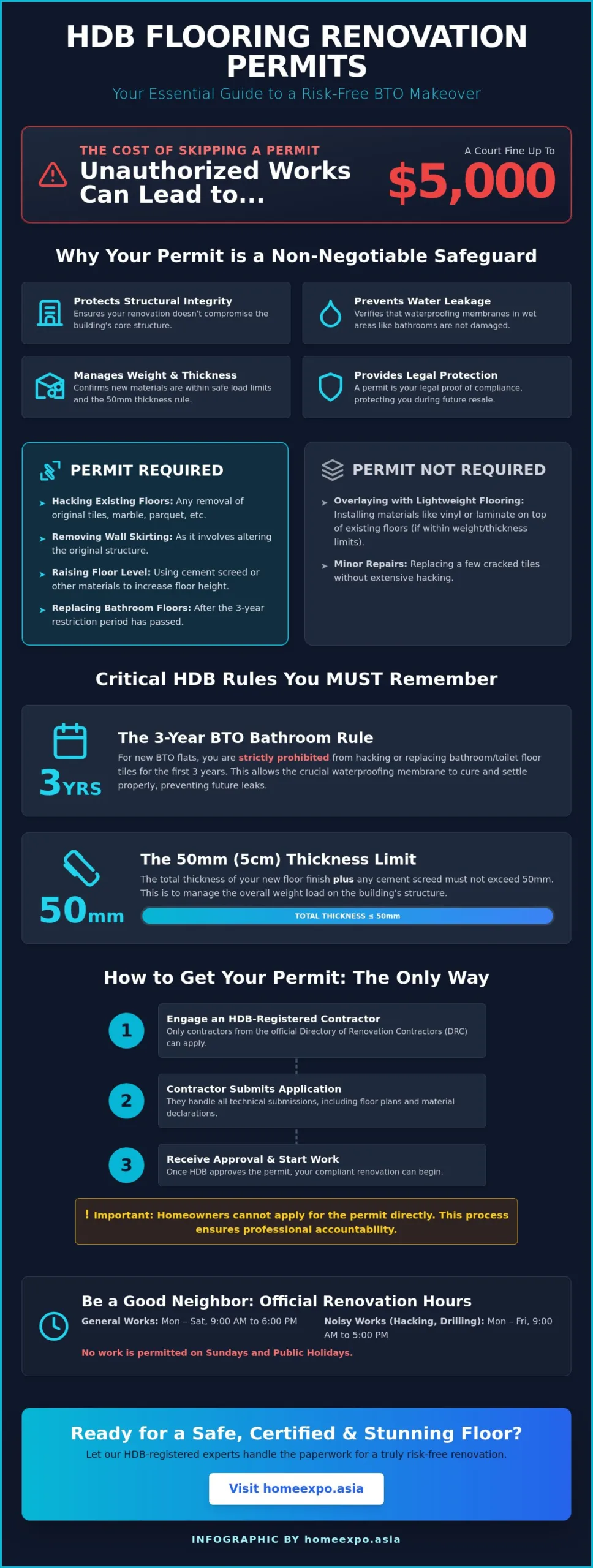
An HDB renovation permit is much more than a simple administrative formality; it’s a vital legal authorization that ensures your home remains safe and structurally sound. The Housing & Development Board (HDB) requires this permit to maintain the integrity of the entire building. Without it, you risk compromising the safety of your family and your neighbors. It’s a serious matter. If you proceed with works without one, you could face a court fine of up to $5,000. This regulation exists to keep Singapore’s high-rise living environments secure for everyone.
This permit acts as a professional safeguard for your property. It confirms that your proposed flooring changes won’t damage the building’s load-bearing structures or cause persistent issues like water leakage in the units below yours. To learn more about specialized leak prevention from Waffen Waterproofing Pte Ltd, consulting their experts can help ensure your home stays dry and secure. When you’re researching how to get HDB permit for flooring renovation, remember that this process is designed to protect your investment. We prioritize your safety and the longevity of your home above all else. A permit ensures your renovation follows these key safety standards:
- ✓ Verification that floor thickness remains within the 50mm limit
- ✓ Assurance that the waterproofing membrane in wet areas isn’t compromised
- ✓ Confirmation that the total weight of new materials is safe for the building’s structure
- ✓ Protection for neighbors against excessive noise, dust, and debris
The Role of the HDB-Registered Contractor
You might wonder why you can’t simply apply for the permit yourself. HDB rules state that only a contractor from the Directory of Renovation Contractors (DRC) can submit the application. This ensures a professional expert takes full responsibility for the technical aspects of the works. At Home Expo Asia, we handle this entire hurdle for you. HDB uses these permits to track exactly who is performing the renovation. If any issues arise during or after the job, there’s a clear line of accountability. By understanding how to get HDB permit for flooring renovation through a registered professional, you avoid legal traps and ensure high-quality workmanship.
Consequences of Unauthorized Renovation Works
The risks of skipping the permit process are severe and expensive. HDB has the authority to demand that you “reinstate” your flooring. This means you’d have to tear out your brand-new floors and return them to their original state at your own expense. It’s a financial nightmare that no homeowner wants to face. Additionally, unauthorized works can stall your future flat resale. Prospective buyers and HDB inspectors will flag these issues, potentially costing you thousands in lost property value. A truly “Risk Free” renovation starts with proper documentation. We ensure every step of your flooring journey is certified and fully compliant, so you can enjoy your new home with total peace of mind.
When Do You Actually Need a Permit for Flooring?
Not every flooring project requires a trip to the HDB portal. Knowing the difference between minor aesthetic changes and structural alterations is the first step in understanding how to get HDB permit for flooring renovation. The general rule is simple: if your plan involves “hacking”—the process of removing existing floor finishes like ceramic, marble, or parquet—you must obtain a permit. This rule is non-negotiable. Even seemingly small tasks, such as replacing the skirting along your walls, fall under these guidelines because they involve removing original material from the base of the structure.
For those who just moved into a new BTO flat in 2026, there’s a critical three-year restriction you must respect. You aren’t allowed to hack or replace bathroom and toilet floor tiles for the first 36 months. This period allows the waterproofing membrane to settle and stabilize. If you ignore this and leaks occur, you’ll be held liable for all repair costs for the units below you. If you’re unsure about your flat’s specific restrictions, you can always send us a Whatsapp for a quick consultation regarding your floor plan. We believe in getting it right the first time to keep your renovation “Risk Free.”
Another technical limit involves raising your floor level. If you’re using cement screed to level out a room, the total thickness of the new finish and screed combined cannot exceed 50mm. HDB enforces this limit to manage the overall weight load on the building’s structure. Exceeding this 5cm threshold can lead to structural stress, which is why your registered contractor must declare the intended thickness during the application process.
Hacking vs. Overlaying: The Permit Difference
The biggest “shortcut” in Singapore home renovation is overlaying. While hacking requires a permit and creates three consecutive days of noisy work, overlaying involves laying new material directly over your existing tiles. Since this doesn’t involve structural removal or heavy machinery, a permit is usually not required. This is why vinyl flooring Singapore has become the go-to solution for homeowners. It’s a fast, durable, and beautiful way to transform your home without the typical 21-day permit processing wait. It’s the most efficient way to achieve a high-quality look with zero legal downtime.
Special Considerations for Wet Areas
Wet areas like kitchens and bathrooms are the most sensitive zones in any HDB flat. HDB is exceptionally strict about these spaces to prevent ceiling leaks. If you do receive a permit to renovate an older kitchen, you must use pre-packed waterproofing screed. This is a certified, factory-blended material that ensures a consistent seal. Following the 10 renovation guidelines provided by industry experts helps you avoid common pitfalls, such as failing to extend the waterproofing membrane up the wall by at least 150mm. Remember, your BTO bathroom comes with a five-year waterproofing warranty from HDB. Any unauthorized hacking will void this protection instantly, leaving you vulnerable to future repair bills.
Step-by-Step: How to Apply for Your HDB Flooring Permit in 2026
Applying for your permit is a straightforward process when you follow the right sequence. As of early 2026, HDB has streamlined digital submissions, but they’ve also tightened the criteria for firms in the Directory of Renovation Contractors (DRC). You must ensure your chosen partner is fully updated with the latest 2026 workplace safety certifications required by HDB. This methodical approach ensures your home remains a safe environment during and after the works.
- Step 1: Engage an HDB-Registered Contractor. You cannot submit the application yourself. You must hire a professional like Home Expo Asia who is listed on the DRC. We take full responsibility for the technical accuracy of the submission.
- Step 2: Provide your flat’s floor plan. We use this to create a color-coded map of the works. HDB requires specific colors: Red lines indicate areas where hacking will occur, and Blue lines show where the new flooring will be installed.
- Step 3: Digital Submission via APEX. Your contractor will submit the electronic application through the APEX system. This platform is the official gateway for all renovation permits in 2026, ensuring that only verified professionals can handle your project.
- Step 4: Await HDB Approval. Once submitted, the processing time usually takes between 3 to 7 working days. During this period, HDB officers review the plan to ensure it meets all safety and structural guidelines.
- Step 5: Display the ‘Renovation Notice’. Once approved, you’ll receive a formal notice. This must be printed and displayed outside your flat at all times until the work is completed to inform your neighbors.
Following these steps is the only way to ensure you’re doing things correctly. If you’re wondering how to get HDB permit for flooring renovation without the stress, the secret is preparation. Having your documents ready before you even meet your contractor will save you days of back-and-forth communication.
Preparing Your Floor Plan for Submission
Your official floor plan is the most important document in this process. If you don’t have a copy, you can purchase one for $5 through the HDB e-Services portal. It’s vital to highlight the exact rooms where you want to change the floors. This precision prevents delays. We’ll also help you ensure your flooring Singapore selection stays within the mandatory weight and thickness limits. Remember, HDB won’t approve any material that risks the building’s structural health.
Timeline and Approval Expectations
While the standard wait is under a week, peak periods can see delays. During the 2026 BTO launch cycles in February and June, the volume of applications often spikes. You can track your application status in real-time via the My HDBPage portal using your Singpass. This transparency helps you plan your move-in date with confidence. If there are structural concerns, HDB might request additional details, but having an experienced contractor means these hurdles are handled before they become problems. It’s all part of our commitment to a “Risk Free” renovation experience.
HDB Flooring Rules and Renovation Etiquette
Securing your permit is a major milestone, but it’s only half the battle. Once you’ve mastered how to get HDB permit for flooring renovation, you must adhere to strict operational rules to avoid complaints or stop-work orders. HDB sets these boundaries to ensure that your dream home doesn’t become a nightmare for your neighbors. In 2026, enforcement is more rigorous than ever, with inspectors frequently checking sites for compliance with timing and noise regulations. Following these rules is the only way to keep your renovation “Risk Free” and on schedule.
- ✓ General renovation hours: 9:00 AM to 6:00 PM, Monday to Saturday only.
- ✓ Noisy works (hacking/drilling): Restricted to 9:00 AM to 5:00 PM on weekdays.
- ✓ Total ban: No work is permitted on Sundays or Public Holidays.
- ✓ Duration: Heavy hacking must be completed within 3 consecutive working days.
Staying within these windows is a matter of professional respect. A single violation can lead to a formal warning or a fine, which delays your project and adds unnecessary stress. Experienced installers will always respect these timeframes to protect your reputation in your new neighborhood. It ensures that the transition to your new space is as smooth as the floors we install.
Managing Noise and Neighbors
Building a good relationship with your neighbors starts before the first tile is removed. You are legally required to serve a written notice to neighbors living within a two-unit radius at least 3 days before any work begins. This gives them time to plan around the noise, which is especially important for those working from home or families with young children. During the hacking phase, ensure your contractor uses thick protective sheets for common corridors and lifts. This prevents dust from spreading and protects shared assets from scratches or impact damage, showing your neighbors that you value the community space.
Debris Removal and Disposal
One of the most common mistakes homeowners make is assuming renovation waste can go down the common rubbish chute. This is strictly prohibited and can lead to heavy fines. Heavy debris like broken homogeneous tiles or concrete can block the system or damage the compactor. You must coordinate with your Town Council to arrange for debris removal or engage a private haulage service. In 2026, fire safety regulations are a top priority. Debris must be cleared from the site daily and cannot be left in common areas like stairwells or lift lobbies. If you want a team that handles every detail from permit to final cleanup, book a professional flooring consultation with Home Expo Asia today.
Risk-Free Flooring Solutions with Home Expo Asia
Choosing the right partner makes the difference between a stressful renovation and a seamless one. With over 50 years of combined experience in the industry, our team has mastered every nuance of HDB regulations. We don’t just install floors; we manage the entire administrative burden so you can focus on the excitement of your new home. If you’re still wondering how to get HDB permit for flooring renovation without the typical headaches, the answer is simple: let our experts handle the electronic APEX submission and floor plan color-coding for you. We ensure every detail is compliant before the first tile is ever touched.
Quality Is Our #1 Priority. We believe that a beautiful home must also be a safe and healthy one. That’s why we only provide materials that have passed rigorous testing. Our commitment to transparency means you’ll receive an official invoice with no hidden fees, regardless of your flat’s size or complexity. When we say “It’s Risk Free!”, we back it up with solid guarantees:
- ✓ Certified eco-friendly materials (FloorScore, Green Label Singapore, SGS)
- ✓ 10-year materials warranty and 1-year installation warranty
- ✓ Strict adherence to 2026 HDB weight and 50mm thickness standards
- ✓ Decades of proven expertise in HDB-registered renovations
Our Professional Installation Guarantee
Our specialized teams, including our expert carpenter Singapore and flooring installers, work in perfect tandem. This coordination is essential for a flawless finish, especially when matching new floors with custom cabinetry or intricate skirting. We stay updated on the latest 2026 safety protocols to ensure your renovation is legally sound and structurally perfect. If you have immediate questions about your specific floor plan or the permit timeline, our direct WhatsApp support is available to provide professional guidance in real-time.
Start Your Dream Home Transformation Today
Your home deserves a foundation that lasts for decades. Whether you’re drawn to the timeless elegance of herringbone flooring or the practical, water-resistant benefits of our premium vinyl designs, we have a solution that fits your lifestyle. We offer a free site assessment and non-obligatory quotes to help you plan with confidence. Don’t let the permit process hold you back from the home you’ve always wanted. Book your free flooring consultation with Home Expo Asia and experience a truly professional, risk-free renovation today.
Secure Your Dream Home with Total Peace of Mind
Your journey to a beautiful, legally compliant home doesn’t have to be complicated. By now, you understand that avoiding unauthorized hacking saves you from court fines of up to $5,000 and ensures your flat remains structurally safe for your family. You’ve also learned the vital importance of the 36-month BTO bathroom restriction and exactly how to get HDB permit for flooring renovation by partnering with an HDB-registered expert who understands the 2026 guidelines.
At Home Expo Asia, we take the guesswork out of your renovation. We provide full HDB-Registered Contractor support, ensuring every document is filed correctly through the official APEX system. Our 5.0/5.0 Google Reviews from satisfied homeowners prove our commitment to excellence and reliability. Every project includes an official invoice and a 10-year material warranty, making your home transformation completely secure and professional. It’s truly risk-free.
Don’t let paperwork stall your vision. Get a Risk-Free Quote for Your HDB Flooring Today and let our experienced team handle the technical details while you focus on choosing your perfect style. We’re ready to help you build the home you deserve with zero stress and total confidence.
Frequently Asked Questions
How long does it take for HDB to approve a flooring permit?
HDB typically takes 3 to 7 working days to process and approve a flooring permit application. During peak periods in 2026, such as the weeks following the February or June BTO launches, processing times might lean toward the longer end of that window. You can track your application status in real-time via the My HDBPage portal using your Singpass. We recommend submitting your application at least 14 days before your intended start date to avoid scheduling delays.
Can I change my BTO toilet tiles within the first 3 years?
No, you cannot hack or replace bathroom and toilet floor tiles for a period of 3 years from the block’s completion date. This rule is strictly enforced to ensure the waterproofing membrane stabilizes and prevents leaks to the units below. HDB provides a 5-year warranty on waterproofing; any unauthorized work within the first 36 months will void this protection immediately. If you need a new look sooner, consider non-invasive options like professional floor coatings that don’t involve hacking.
Do I need a permit if I am only overlaying vinyl on my existing tiles?
You generally do not need a permit if you are overlaying vinyl flooring over a single existing layer of tiles using adhesive. For this exemption to apply, the new layer and adhesive combined must not exceed 13mm in thickness. This is the fastest way to renovate as it bypasses the 21-day hacking notice period and the need for a formal permit. It’s an efficient, professional solution for homeowners who want to transform their space with minimal downtime.
What is the maximum thickness allowed for floor screeding in HDB flats?
The maximum total thickness allowed for both the floor finishes and the underlying screed is 50mm. HDB enforces this 5cm limit to prevent excessive weight load on the building’s structural slabs. If you’re using cement screed to level a room, your contractor must use pre-packed screed to meet HDB’s 2026 cleanliness and quality standards. We verify these measurements during every site assessment to ensure your renovation remains fully compliant and safe.
Can I engage a non-HDB registered contractor for flooring?
No, it’s mandatory to engage a contractor from the Directory of Renovation Contractors (DRC) for all renovation works, even those that don’t require a permit. Engaging a non-registered contractor is a violation of the Housing and Development (Renovation Control) Rules and can result in a court fine of up to $5,000. When researching how to get HDB permit for flooring renovation, always start by verifying your contractor’s DRC status to protect your home and your investment.
What should I do if my contractor starts hacking without a permit?
You must stop the work immediately and check the permit status on the HDB portal if your contractor begins hacking without an approved notice. Proceeding with unauthorized hacking is a serious offense that can lead to HDB demanding you reinstate the floor to its original condition at your own cost. If a contractor misleads you about permit status, you can seek assistance from the Consumers Association of Singapore (CASE). Professional teams will only start work once the Renovation Notice is displayed.
How much does an HDB renovation permit cost?
HDB does not charge a fee for the renovation permit itself, but you must pay $5 for a copy of your residential floor plan if you don’t already have one. While the government permit is free, your contractor may charge administrative fees for handling the digital APEX submission and coordinating the haulage of debris. We prioritize transparency and provide an official invoice with no hidden fees, ensuring you know exactly what you’re paying for from the start.
Is a permit required for changing the skirting of my floors?
Yes, a permit is required for changing the skirting if the process involves hacking or removing the existing skirting finishes. Because skirting is technically an extension of the floor finish, HDB treats its removal with the same structural safety concerns as the floor tiles. Learning how to get HDB permit for flooring renovation involves accounting for these small details. Ensuring you have the right paperwork for skirting prevents unnecessary disputes and ensures a professional, legal finish for your entire room.