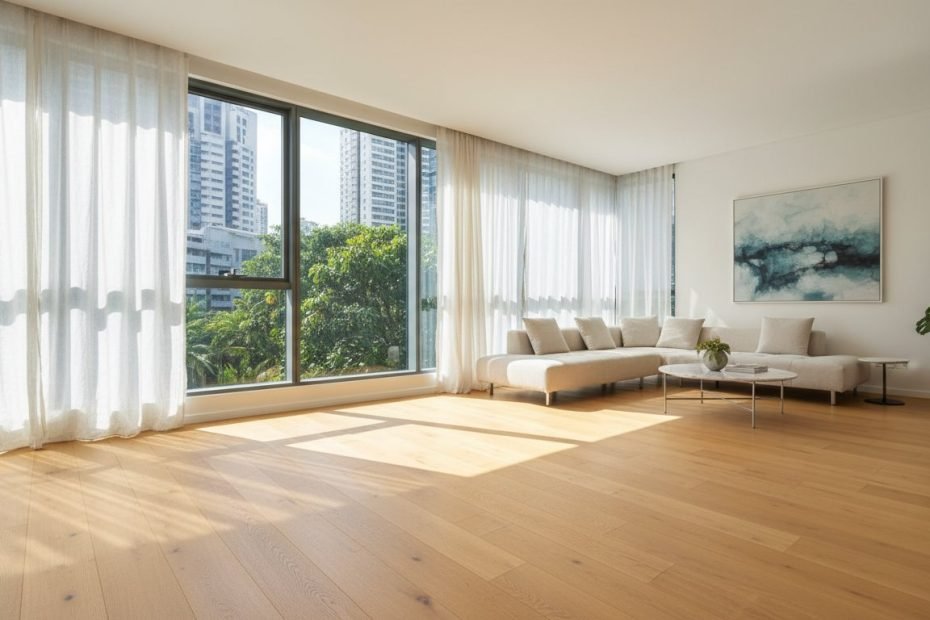
Your floor’s greatest enemy isn’t foot traffic or accidental spills; it’s the very sunlight that makes your Singapore home feel bright and airy. You’ve likely noticed those frustrating, uneven colour patches creeping in near your balcony or floor-to-ceiling windows. It’s a common worry for local homeowners who want to know how to prevent vinyl flooring from fading without keeping their curtains drawn all day.
We understand that you want a home that stays beautiful without the looming threat of an expensive replacement. It’s confusing when you’re met with conflicting cleaning advice or technical jargon about wear layers. You deserve a clear, expert-backed strategy to shield your surfaces from the intense UV radiation we face in the tropics. Our focus is on providing you with the reliability and quality standards needed for a lasting home environment.
This guide promises to simplify your floor care routine with professional-grade protection tactics. You’ll learn which specific vinyl specifications offer the best UV resistance and which common cleaning habits are actually doing more harm than good. We’ll show you how to keep your floor colour consistent and vibrant for the long haul through proven, industry-standard methods.
Key Takeaways
- Understand the science of photodegradation and learn the essential “Shield and Maintain” strategy on how to prevent vinyl flooring from fading in tropical climates.
- Identify the most effective window treatments and structural habits that block high-intensity UV rays before they reach your floor’s surface.
- Learn professional maintenance techniques to protect the factory-applied UV wear layer from abrasive road dust and harsh cleaning chemicals.
- Discover the critical technical specifications and UV-cured coatings to look for when selecting high-quality, fade-resistant vinyl.
- Realise how professional installation and expert subfloor preparation prevent “peaking” and ensure long-term colour consistency across your home.
Why Vinyl Flooring Fades: The Singapore UV Challenge
Your vinyl floor is a significant investment in your home’s comfort and value. While these surfaces are engineered for durability, they aren’t invincible against the relentless energy of the sun. Understanding the root causes of discoloration is the first step in learning how to prevent vinyl flooring from fading and protecting your interior’s aesthetic integrity. In Singapore, where sunlight is a constant presence, the challenge is significantly higher than in temperate climates.
Photodegradation is the primary cause of floor fading. When understanding vinyl composition, it’s clear that the synthetic dyes and pigments used to create wood-look patterns are vulnerable to high-energy light. Ultraviolet (UV) radiation acts as a catalyst, triggering a chemical reaction that breaks the molecular bonds within these pigments. Once these bonds are severed, the colour effectively “evaporates” from the material, leaving behind a washed-out appearance that cannot be reversed by cleaning.
The Science of Photodegradation in Resilient Floors
Both UV-A and UV-B rays play a role in damaging your floors. UV-A rays have a longer wavelength and penetrate deep into the material’s core, while UV-B rays attack the surface wear layer. This constant bombardment leads to oxidation. When oxygen molecules interact with the light-damaged polymers, the vinyl can become brittle and lose its original lustre. This is why high-quality flooring often includes a specific UV-resistant coating to act as a sacrificial barrier, though even these require strategic management in high-exposure areas.
Interestingly, the same UV-A and UV-B rays that degrade vinyl pigments also accelerate skin aging and damage. For those looking to address the long-term effects of sun exposure, you can visit Shapins Clinic to explore advanced, non-surgical treatments that restore and protect your skin’s health.
Why Singapore Homes are at Higher Risk
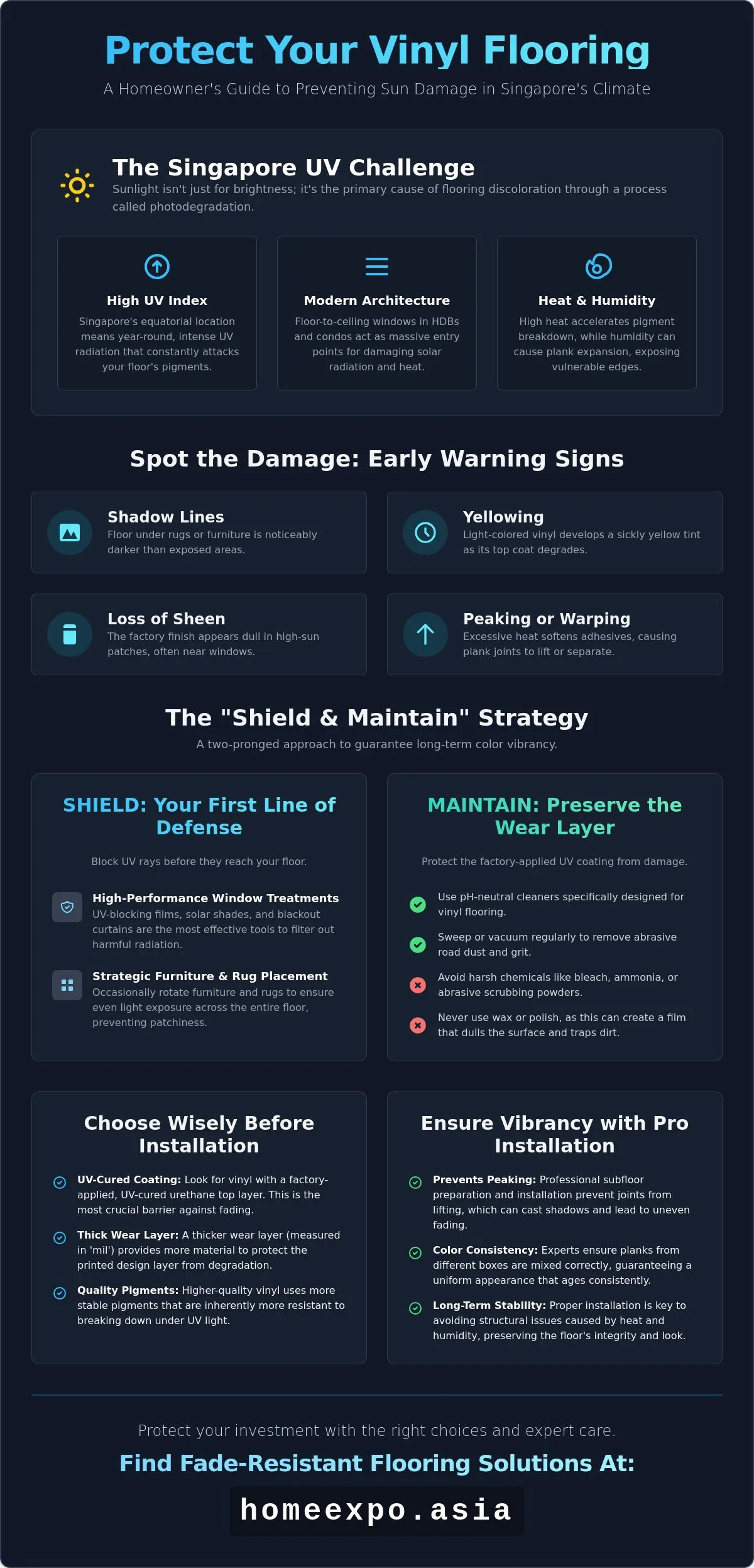
Singapore’s geographic position near the equator means we experience a consistently high UV index year-round. Unlike homes in Europe or North America, our floors don’t get a “break” during winter months. Modern architectural trends in HDBs and condos exacerbate this issue. Large, floor-to-ceiling windows are designed to maximise views, but they also act as massive entry points for solar radiation. High humidity also plays a subtle but destructive role. The moisture in our air can cause slight expansion in vinyl joints, allowing light and heat to penetrate the edges of the planks more easily than in drier environments.
Identifying the early warning signs can save you from a full-room replacement. You should regularly check for the following indicators of sun damage:
- Shadow Lines: Lift up your area rugs or move heavy furniture. If the floor underneath is significantly darker or more vibrant, UV damage is already occurring.
- Yellowing: Light-coloured or white-washed vinyl may take on a sickly yellow tint as the top coat reacts to heat and light.
- Dullness: A loss of the factory sheen in specific high-sun patches, such as near the balcony door, often precedes actual colour loss.
- Layer Separation: Excessive heat from direct sunlight can soften the adhesives or the vinyl itself, leading to warping or “peaking” at the joints.
It’s a common misconception that only light causes fading. Heat is an equally dangerous factor. When sunlight hits a dark vinyl surface, it absorbs thermal energy, raising the floor’s temperature well above the ambient room temperature. This extreme heat stresses the material, accelerating the breakdown of the UV-resistant wear layer and making it even more susceptible to how to prevent vinyl flooring from fading challenges in the long term.
Strategic Ways to Block Direct Sunlight
Protecting your interior starts with a simple truth: the most effective way to maintain your floor’s integrity is to stop UV rays before they ever reach the surface. In Singapore’s high-rise environment, sunlight doesn’t just stream in directly; it often reflects off neighbouring glass facades, intensifying the exposure. This is why many architects turn to specialists like Hawaii Architectural Sales for high-performance systems that manage solar energy. Understanding how to prevent vinyl flooring from fading requires a hierarchy of protection that balances your desire for a bright home with the technical needs of your materials.
The first line of defence is always at the window. For many HDB and condo owners, floor-to-ceiling windows are a prized feature, but they act as gateways for solar energy. High-performance window treatments offer the best return on investment for floor longevity. By managing light entry, you’re directly countering the science of color fading, which relies on the interaction between light energy and the polymers in your floor.
Window Treatments: Films, Blinds, and Solar Shades
UV-blocking window films are an invisible, highly effective shield. These films can reject up to 99% of UV radiation without significantly altering your view or the amount of natural light in the room. If you prefer a more traditional look, solar shades are an excellent alternative to standard curtains. Unlike blackout curtains that plunge a room into darkness, solar shades use a technical weave to filter out harmful rays while maintaining a sense of openness. For a modern tech-integrated home, smart blinds can be programmed to close automatically during peak UV hours, typically between 11 am and 4 pm, ensuring your floors stay protected even when you aren’t home.
Managing Interior Layouts for Even Aging
Furniture and rugs can inadvertently create “tan lines” on your floor. To avoid stark contrast between exposed and covered areas, follow the 3-month rotation rule. Slightly shifting the position of your area rugs or heavy sofas every quarter allows the floor to age at a more uniform rate. This is particularly vital in living rooms with west-facing “afternoon sun” exposure, where the intensity of the light is most damaging.
Strategic placement of floor mats near balcony entrances can also help. These mats act as a buffer, absorbing the brunt of the direct light in the most vulnerable transition zones. If you’re currently planning a home upgrade, selecting professional vinyl installation services ensures you start with materials that feature higher-grade UV-cured topcoats, making these daily habits even more effective. Simple adjustments to your layout don’t just protect the colour; they preserve the factory sheen that makes your home feel new. Consistent, small changes in how you manage your space are the most practical answer to how to prevent vinyl flooring from fading over the next decade.
Proper Maintenance to Protect the UV-Resistant Layer
Every vinyl floor leaves the factory with an invisible, hard-wearing top coat. This layer isn’t just for scratch resistance; it’s your floor’s primary shield against chemical breakdown. If you use the wrong cleaning agents or let abrasive dust build up, you effectively strip away this protection. Once the wear layer is thinned or scratched, UV rays penetrate the core pigments much faster. Learning how to prevent vinyl flooring from fading means understanding that a healthy surface keeps the colours underneath vibrant and safe.
Singaporean homes face a unique challenge with fine construction and road dust. This microscopic grit acts like sandpaper underfoot. Every step you take on a dusty floor creates tiny micro-scratches in the UV-resistant coating. These scratches don’t just look dull; they scatter light and allow UV-A rays to bypass the protective barrier. Industry experts suggest that how to prevent floor fading is as much about mechanical protection as it is about solar blocking.
Choosing the Right Cleaning Agents
Your choice of soap can determine if your floor lasts ten years or thirty. pH-neutral cleaners are non-negotiable for high-quality vinyl. Harsh chemicals like bleach or ammonia are too alkaline; they eat into the protective resins and leave the material vulnerable. Similarly, avoid oil-based soaps or “mop and shine” products that leave a sticky residue. This residue traps UV energy and heat, which can accelerate the discoloration process. If your floor has already lost some of its factory sheen, specialized vinyl polishes can help. These products often contain sacrificial UV inhibitors that temporarily restore a depleted protective layer.
Preventing Abrasive Damage from Local Dust
Standard cotton mops often just push grit around, creating more scratches. Instead, use microfibre mops that use static electricity to trap fine Singaporean dust effectively. When vacuuming, you must disable the beater bar or use a dedicated hard-floor setting. The spinning bristles of a beater bar are designed for carpets; on vinyl, they create high-speed friction that wears down the UV-resistant coating. Finally, high-quality walk-off mats at every entrance are your best defence. By trapping a significant portion of outdoor grit before it hits your main living areas, you reduce the abrasive “sandpaper effect” that leads to premature fading and surface wear.
Choosing Fade-Resistant Vinyl Before Installation
The most effective strategy for how to prevent vinyl flooring from fading begins long before the first plank is laid in your home. Not all vinyl products are engineered to withstand the unique solar intensity found in Southeast Asia. When you’re browsing options for vinyl flooring Singapore, your focus must shift from aesthetics to technical specifications. Choosing a product with built-in UV resistance is a proactive investment that safeguards your home’s interior for decades.
Understanding Wear Layers and UV Coatings
The wear layer is the transparent top coating that protects the photographic print from physical and environmental damage. Standard vinyl often uses a simple PVC wear layer, which offers minimal protection against solar radiation. In contrast, premium options feature UV-cured urethane finishes. These coatings undergo a high-intensity light treatment during manufacturing, creating a cross-linked molecular structure that is far more stable under direct sunlight.
Some advanced products also incorporate ceramic bead technology. This involves embedding microscopic ceramic particles into the wear layer to increase scratch resistance and diffuse incoming light. A thicker wear layer acts as a deeper shield against UV penetration. While a 0.3mm wear layer might suffice for low-traffic bedrooms, a 0.5mm or 0.7mm layer provides the robust barrier necessary for sun-drenched living areas near balconies or large windows.
High-Quality Vinyl vs. Budget Alternatives
Budget-friendly vinyl often cuts costs by reducing the concentration of UV stabilisers in the core and wear layer. This makes the floor susceptible to rapid yellowing and pigment breakdown within just a few years of installation. High-quality flooring Singapore providers prioritise planks with high-definition print layers that are treated with specialised inhibitors. These inhibitors absorb UV energy and dissipate it as harmless heat before it can reach the colour pigments.
Investing in quality materials now prevents the frustration and financial burden of a full floor replacement later. When you choose a product backed by professional testing and official durability certifications, you’re buying peace of mind. If you’re ready to select a floor that stands up to the Singapore sun, view our professional vinyl flooring collections to find a solution that fits your lifestyle. High-spec vinyl doesn’t just look better; it’s physically built to resist the environmental stresses that cause cheaper alternatives to fail.
Ensuring Long-Term Vibrancy with Professional Installation
The final pillar of how to prevent vinyl flooring from fading lies in the precision of the installation itself. Even the highest-grade UV-resistant vinyl can fail prematurely if it isn’t fitted correctly. Professional installation ensures that the material behaves as intended under the stress of Singapore’s heat and light. When planks are laid with expert care, you eliminate the structural vulnerabilities that often lead to localized discoloration and surface degradation.
One of the most overlooked factors in floor aging is subfloor preparation. An uneven base causes “peaking,” where the edges of the vinyl planks lift slightly. These raised edges catch direct sunlight at a more intense angle than the rest of the floor, leading to uneven fading and a visible breakdown of the protective wear layer. By ensuring a perfectly flat surface, professional installers guarantee that UV exposure is distributed uniformly across the entire room.
Why Expert Installation Matters for Floor Longevity
A successful project starts with professional leveling and, where necessary, a high-quality cement screed. This creates the stable foundation required for vinyl to remain flat and secure. Expert installers also understand the critical role of expansion gaps. In our tropical climate, vinyl expands and contracts as it absorbs solar heat. Without precisely calculated gaps at the perimeter, the planks can warp or buckle, creating shadows and “high spots” that are far more susceptible to sun damage.
The integrity of the joints is equally vital. Tight, professional-grade click-lock joints prevent light and moisture from reaching the sensitive core of the plank. While DIY attempts might leave microscopic gaps, a professional installation seals the surface against environmental ingress, providing a secondary layer of protection for the floor’s internal pigments.
Peace of Mind with Home Expo Asia’s Guarantees
At Home Expo Asia, we don’t just provide materials; we deliver long-term security. Our professional installation process is built on years of experience in the local market, ensuring every project meets strict industry standards. We prioritize safety and durability, backing our work with official documentation and transparent service terms. This methodical approach is designed to give you total confidence in your investment.
- Climate-Tested Designs: Our collection of 200+ designs is specifically tested to withstand the high UV index and humidity levels found in Singapore.
- Quantifiable Quality: We rely on reputable testing bodies and industry certifications to validate the fade-resistance of our products.
- Comprehensive Support: Our team provides dedicated after-sales support to help you maintain your floor’s vibrancy for decades.
Don’t leave your home’s aesthetic to chance. Protecting your interior from the sun requires a combination of high-spec materials and expert craftsmanship. If you’re ready to upgrade your space with a floor that’s built to last, get a risk-free quote for your dream flooring today. Our experienced consultants are ready to guide you through the best strategies on how to prevent vinyl flooring from fading while adding lasting value to your property.
Secure Your Home’s Vibrant Future
Your journey to a long-lasting, beautiful floor depends on a proactive “Shield and Maintain” approach. You’ve learned that blocking tropical UV rays with smart window treatments and using pH-neutral cleaners are essential daily habits. Most importantly, you now understand that high-quality, UV-cured materials and professional installation are the foundation of a fade-resistant home. By combining these expert strategies, you have a complete roadmap on how to prevent vinyl flooring from fading effectively in our unique climate.
At Home Expo Asia, we’re dedicated to providing the reliability and quality standards your property deserves. Our professional Singapore-based installation team ensures every plank is fitted with precision to withstand intense heat and light. With over 200 designs available and a comprehensive after-sales warranty, we provide the security and peace of mind you need for a successful home renovation. We’re here to ensure your investment remains protected through every season.
Ready to transform your space with confidence? Browse our 200+ fade-resistant vinyl designs and get a free site assessment today! We look forward to helping you create a vibrant, durable interior that stays looking new for decades to come.
Frequently Asked Questions
Can faded vinyl flooring be restored to its original colour?
No, faded vinyl cannot be restored to its original colour because the chemical bonds in the pigments have been permanently broken by UV exposure. While some high-quality polishes can temporarily improve the surface sheen and make the floor look healthier, they cannot bring back the lost vibrancy. This highlights why understanding how to prevent vinyl flooring from fading through proactive protection is far more effective than attempting a post-damage fix.
Does all vinyl flooring fade in the sun eventually?
Most vinyl will show some signs of aging over several decades, but high-quality planks with UV-cured urethane coatings are designed to resist noticeable fading for much longer. Standard, budget-grade options lack these advanced stabilisers and will likely discolour within a few years of direct sun exposure. Choosing a premium product with a robust wear layer is your best defence against the relentless Singaporean sun.
Is SPC flooring more fade-resistant than standard vinyl?
Fading resistance depends more on the quality of the UV-cured top layer and the concentration of chemical stabilisers rather than the core material alone. Whether you choose a composite core or a high-grade luxury vinyl, you should always check for specific UV-resistance ratings in the manufacturer’s technical data. Professional-grade vinyl with ceramic bead technology often provides superior protection compared to generic alternatives found in the market.
Will window film really stop my floors from fading?
High-quality window films are one of the most effective ways to protect your interior from solar damage. These films can block up to 99% of ultraviolet radiation, which is the primary driver of pigment breakdown. By filtering out these high-energy rays before they reach your floor, you significantly extend the lifespan of your flooring’s colour while also reducing solar heat gain in your living room.
How often should I rotate my furniture to prevent tan lines?
You should aim to shift your area rugs and heavy furniture every three months to ensure the floor ages uniformly. Even a slight movement of a few centimetres can prevent the sharp, high-contrast “tan lines” that occur when one section is permanently shaded. This simple habit is a practical part of how to prevent vinyl flooring from fading in homes with large, west-facing windows.
Are steam mops safe to use on vinyl floors in Singapore?
No, you should avoid using steam mops on any vinyl surface in Singapore. The extreme heat and high-pressure moisture can weaken the adhesive bonds and cause the protective wear layer to delaminate over time. This damage makes the floor’s core more susceptible to UV penetration. Stick to a damp microfibre mop and a pH-neutral cleaner to maintain the integrity of your floor safely.
What is the best cleaner for vinyl floors to prevent dulling?
The best choice is a pH-neutral cleaner specifically formulated for resilient flooring. Avoid using bleach, vinegar, or ammonia-based products, as these can strip away the factory-applied UV coating. A gentle, residue-free cleaner ensures that you remove dirt without leaving a dull film. This film can trap heat and light energy, which eventually accelerates the fading process in high-exposure areas.
Does the colour of the vinyl affect how fast it fades?
Darker vinyl colours generally absorb more thermal energy, which can accelerate the breakdown of the material’s chemical bonds. While dark wood grains are popular, they often show fading more clearly than lighter, neutral tones or highly textured patterns. If your room receives intense afternoon sun, selecting a medium-toned or lighter grey plank can help mask the subtle effects of aging over time.