Imagine sliding your heavy teak dining table just a few centimeters only to discover a deep, permanent gouge in your brand-new flooring. It’s a frustrating moment that often occurs within the first 12 months of a home renovation. While you likely chose vinyl for its durability, even the highest quality SGS-certified planks can suffer from heavy point loads and constant chair movement. Learning how to protect vinyl flooring from furniture is the only way to safeguard your investment and keep your living space looking professional and pristine.
We agree that your home should be a place of comfort, not a zone where you’re constantly worried about moving a chair. You shouldn’t have to settle for ugly, bulky protector pads that ruin your room’s carefully curated aesthetic. This guide provides professional-grade strategies to prevent dents and scuffs while maintaining a high-end look. You’ll discover how to ensure your floor lasts 10 years or more using invisible protection solutions and expert maintenance techniques. We also include a quick guide on fixing minor scuffs to keep your home in top condition.
Key Takeaways
- Understand the science of PSI and why distinguishing between surface scuffs and structural indentations is critical for maintaining your floor’s professional finish.
- Master expert strategies on how to protect vinyl flooring from furniture by using wide-base protectors and strategic rug placement to distribute weight evenly.
- Learn the “never drag” rule and how to utilize specialized gliders to move heavy items safely, preventing permanent and costly gouges in your home.
- Discover how simple maintenance habits, such as removing abrasive grit and applying a sacrificial sealer layer, can significantly extend the life of your vinyl.
- Identify the specific “High Indentation Resistance” ratings you should look for to ensure your next flooring choice is truly furniture-friendly and durable.
The Science of Dents: Why Furniture Damages Vinyl Floors
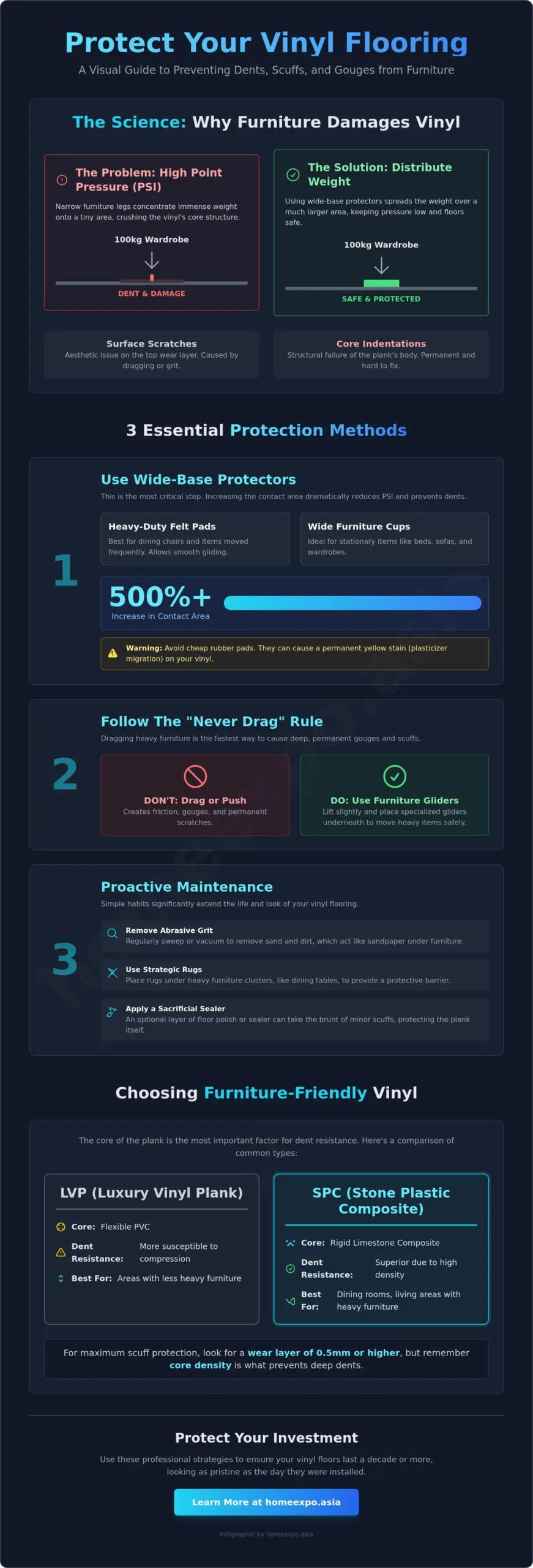
Protecting your home investment starts with understanding basic physics. Many homeowners ask how to protect vinyl flooring from furniture without realizing that damage often happens beneath the surface. It comes down to Pounds per Square Inch (PSI). A heavy wardrobe resting on four tiny, sharp metal legs concentrates hundreds of kilograms into a tiny area. This creates extreme pressure that can bypass the protective wear layer and crush the internal structure of the plank. Professional installers recognize that even “scratch-resistant” floors have limits when physics isn’t on your side.
There’s a major difference between surface scratches and core indentations. Scratches are aesthetic issues on the top coating, often caused by grit or dragging. Core indentations are structural failures where the plank’s body actually deforms. The vinyl flooring composition determines how well a plank recovers from these loads. In Singapore, our consistent 80% humidity levels can also soften certain adhesives over time. This makes floors more prone to shifting or “gapping” when heavy furniture is moved. A thicker wear layer, typically 0.5mm or higher, provides better resistance against scuffs, but the core density is what prevents deep, permanent dents.
- ✓ High PSI from narrow legs causes structural collapse
- ✓ Surface scratches affect look, while dents affect floor integrity
- ✓ Singapore’s humidity can weaken the bond between the plank and subfloor
- ✓ Wear layer thickness is your first line of defense against daily scuffs
High-Point Pressure vs. Distributed Loads
A 100kg sofa on wide, flat legs is much safer for your floor than a 20kg designer chair on thin peg legs. High-risk items in Singapore homes often include heavy upright pianos, solid teak dining tables, and large fish tanks. These items exert constant, unrelenting pressure on specific points. Static load limit is the maximum weight a floor can handle without permanent deformation. To keep your floors safe, you must distribute this weight over a larger surface area using wide furniture cups or heavy-duty pads. This simple step reduces the PSI and keeps the vinyl planks from compressing beyond their recovery point.
The Role of Vinyl Core Density
When choosing vinyl flooring singapore homeowners often decide between traditional Luxury Vinyl Plank (LVP) and Stone Plastic Composite (SPC). LVP is flexible and comfortable, but it’s more susceptible to compression under heavy loads. SPC uses a limestone-based core that is incredibly rigid and stable. This high-density core technology resists heavy furniture loads much better than flexible alternatives. Because SPC doesn’t compress easily, it requires specific protection strategies. High-density felt pads are essential to prevent the rigid core from being forced against the subfloor, ensuring your floor remains level and beautiful for years to come.
3 Essential Methods to Distribute Furniture Weight
Vinyl flooring is incredibly resilient, but it isn’t invincible against the laws of physics. The most common cause of floor damage in Singaporean homes is “point loading.” This happens when the entire weight of a heavy object, like a solid teak wardrobe or a designer sofa, rests on four tiny contact points. To understand how to protect vinyl flooring from furniture, you must focus on increasing the surface area where the furniture meets the floor. Distributing weight effectively prevents the vinyl’s core from compressing, which can lead to permanent pitting or indentations.
This principle of weight distribution is also vital for utility areas; for example, when installing premium boltless storage racks from Zessentials Holdings Pte. Ltd., using protective base plates helps prevent the concentrated pressure of the metal posts from causing permanent floor damage.
Choosing the right material for your protectors is critical. While rubber might seem like a safe choice for grip, many low-quality rubber backers contain chemicals that cause a permanent yellowing of the vinyl. This chemical reaction, known as plasticizer migration, is often irreversible. Instead, look for protectors made from heavy-duty felt or specialized non-staining polymers. If you’re investing in high-quality floors, ensure your protectors meet the same standards for safety and durability.
The Best Furniture Pads for Vinyl
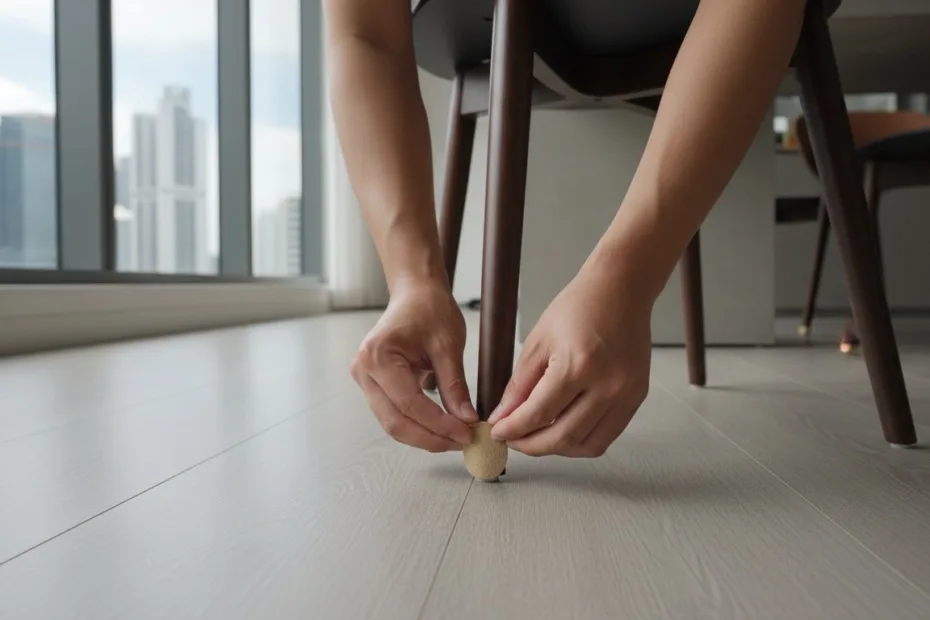
- ✓ Heavy-duty felt pads: These are the gold standard for dining chairs and any items you move frequently. They allow for smooth gliding and prevent surface scratches.
- ✓ Furniture cups: These are best for stationary heavy items like beds and wardrobes. A wide-base cup can increase the contact area by over 500 percent compared to a bare furniture leg.
- ✓ Caster cups: If you use office chairs with wheels, caster cups are mandatory. They prevent “tracking,” which is the repetitive wear and tear that occurs when wheels roll over the same spot daily.
For homeowners who prioritize long-term floor health, selecting certified products is a smart move. Many professional installers recommend accessories that have been SGS tested to ensure they don’t leach harmful chemicals into your living space. It’s a small investment that protects your larger renovation budget.
Area Rugs as a Protective Layer
Area rugs serve as a stylish sacrificial layer in high-traffic zones. In dining areas where chairs are constantly pulled out and pushed in, a rug provides a buffer that absorbs the friction. When shopping for rugs, always look for “colorfast” labels. This prevents synthetic dyes from transferring onto your vinyl during humid Singaporean afternoons. You can find more advice on maintaining your floor’s aesthetic by consulting with a professional flooring expert who understands local climate challenges.
A rug alone isn’t enough; you also need a high-quality rug pad. Without a pad, the underside of the rug can act like sandpaper against the vinyl’s wear layer. Choose a felt or natural rubber rug pad specifically labeled as “non-staining” to ensure your 2026 home remains in pristine condition for years to come. These simple steps ensure your how to protect vinyl flooring from furniture strategy is foolproof and professional.
How to Move Heavy Items Without Scuffing Your Floor
The “never drag” rule is the most vital lesson for any homeowner. Dragging a heavy cabinet even one inch can cause permanent gouges that no cleaning product can fix. When you drag furniture, the concentrated weight on small contact points creates intense friction. This pressure can tear the protective wear layer of your vinyl planks. Learning how to protect vinyl flooring from furniture starts with using the right equipment instead of brute force. Always use professional furniture gliders specifically labeled for hard surfaces. These typically feature a soft felt bottom. Don’t use the hard plastic gliders designed for carpets, as these can leave nasty scuff marks on your smooth vinyl surface.
For extremely heavy items like a piano or a solid wood sideboard, use the plywood trick. Place thin sheets of 3mm or 6mm plywood along your path to create a temporary “road.” This method ensures the furniture weight is distributed across the wood sheets rather than pressing directly onto the vinyl. Before you start any move, perform a quick safety check. Use a damp cloth to wipe the bottom of every furniture leg. A single trapped grain of construction grit or sand acts like a diamond glass cutter, ruining your floor in seconds.
Step-by-Step Moving Guide
- Clear and sweep: Remove all rugs and clutter from the path. Sweep the floor twice to ensure no abrasive dust remains. Even tiny particles can cause scratches under heavy loads.
- Tilt and apply: Have a partner tilt the furniture while you stick heavy-duty felt pads or gliders to every contact point. Ensure the adhesive is centered so the pad doesn’t peel off mid-move.
- Use equipment: For items exceeding 50kg, don’t rely on manual lifting. Use lifting straps to reduce the pressure on your back and the floor, or use a dolly equipped with soft rubber wheels.
Moving Appliances (Fridges and Washing Machines)
Appliances like washing machines pose a double threat. They’re difficult to move and they vibrate during use. This vibration can cause the machine to “walk” across the room, leading to significant surface wear over time. To stop this, place high-density anti-vibration mats under the feet. These mats absorb the kinetic energy and keep the appliance stationary. Understanding how to protect vinyl flooring from furniture and appliances is a priority for long-term durability. Professional flooring singapore installers typically use specialized teflon glide strips when sliding a fridge into a tight cabinetry nook. This professional approach prevents the heavy wheels from denting the vinyl, ensuring your kitchen floor remains in showroom condition for years to come.
Maintenance and Recovery: Fixing Minor Scuffs
Even with the best protective measures, your floor faces daily challenges from moving chairs and heavy decor. Learning how to protect vinyl flooring from furniture involves a two-pronged approach: consistent cleaning and tactical repairs. Dust and grit act like sandpaper under the weight of a sofa or dining chair. When you move a piece of furniture, these tiny particles grind into the wear layer, creating visible haze over time. Regular sweeping prevents 80% of furniture-related micro-scratches by removing these abrasives before they do damage.
For an added level of security, consider applying a high-quality vinyl floor sealer. This product creates a sacrificial layer on top of your floor’s factory finish. If a chair leg drags across the room, the sealer takes the hit instead of the actual vinyl. It’s a professional-grade solution that keeps your floor looking new for years. If you notice black rubber marks from furniture feet or shoes, use the “tennis ball trick.” Rub a clean tennis ball firmly over the scuff; the texture of the felt lifts the rubber residue without the need for harsh chemicals.
- ✓ Daily: Sweep or vacuum with a soft brush attachment to remove grit.
- ✓ Monthly: Check furniture pads for wear and replace flattened felt.
- ✓ Annually: Apply a fresh coat of sealer to high-traffic zones.
Knowing when to DIY and when to call a professional is vital for maintaining your home’s value. You can easily buff out surface scuffs with a specialized vinyl repair kit. However, if a heavy cabinet has gouged through the decorative photographic layer, you’ll need a plank replacement. Our team at Home Expo Asia provides expert installation and repair services to ensure your floor remains seamless and waterproof.
Heat Recovery for Minor Indentations
Vinyl is a resilient material with a degree of “memory.” If a heavy desk leaves a shallow dip, you can often “relax” the fibers back into place. Use a hair dryer on a medium setting or lay a warm, damp towel over the area for 10 to 15 minutes. The gentle heat softens the vinyl, allowing it to expand back to its original shape. Be careful; never use high-heat industrial guns. These can melt the wear layer and cause permanent discoloration. If the core of the plank is crushed, heat won’t fix it, and the plank must be replaced.
Long-term Vinyl Care in Singapore
The intense Singaporean sun can weaken vinyl over time, making it more prone to cracking under furniture weight. Use curtains or UV-resistant window films to manage sunlight exposure during peak hours. While vinyl floor care is easier than maintaining traditional parquet, it still requires discipline. Avoid using “mop and shine” products that leave a waxy buildup, as these actually trap grit and increase the risk of furniture scratches. Stick to pH-neutral cleaners specifically formulated for the Singapore market.
Ready to upgrade your home with the most durable flooring options in the market? Contact Home Expo Asia today for a professional consultation and risk-free quote.
Choosing Furniture-Friendly Vinyl for Your Next Renovation
Your first line of defense against scratches and dents starts before the first plank is laid. Selecting a floor with high indentation resistance is the most effective way to understand how to protect vinyl flooring from furniture. Manufacturers test these products by applying heavy pressure to measure how well the material bounces back. You should look for floors that meet ASTM F1914 standards. These certifications ensure the material can withstand heavy loads without permanent scarring or deep divots that ruin the aesthetic of your room.
For those seeking professional guidance on selecting and installing high-quality materials, you can visit GW Flooring to explore durable options that resist heavy furniture loads.
We believe your home renovation should be stress-free. That’s why Home Expo Asia offers a 10-year material warranty alongside a 1-year installation warranty. It’s Risk Free! This coverage ensures your investment stays protected against manufacturing defects that might make the floor more susceptible to furniture damage. Our products undergo rigorous testing by firms like SGS and TUV SUD to guarantee they meet the highest safety and durability standards in Singapore. Quality Is Our #1 Priority, and we ensure every plank delivered to your doorstep is built to last.
SPC vs. Traditional Vinyl
Stone Plastic Composite (SPC) is the top choice for Singaporean homeowners with heavy teak cabinets or large sofas. Unlike flexible traditional vinyl, SPC features a rigid core made of limestone and stabilizers. This core provides superior dimensional stability. You should always opt for a 0.5mm wear layer. This commercial-grade thickness adds a tough shield against the dragging of chair legs. Choosing a textured wood-grain finish also helps. These designs hide minor micro-scratches much better than high-gloss, smooth surfaces that show every mark under sunlight.
Why Home Expo Asia is Your Best Partner
We don’t just sell planks; we provide a complete solution for your home. Our team includes experts who understand the structural needs of your space. If you’re worried about heavy custom wardrobes, you can get advice from a carpenter singapore through our network to ensure furniture feet are designed for proper weight distribution. We focus on “No Hidden Fee” transparency and provide an official invoice for every job. This direct approach has earned us a 5.0/5.0 rating on Google from satisfied homeowners across the island.
Every home has different humidity levels and subfloor conditions. You can request a free site assessment from us to evaluate your specific needs. Our consultants will help you get a flooring quote singapore that includes tailored protective advice for your specific layout. With over 50 years of combined experience, we’ve completed thousands of jobs using “Safe and Eco-Friendly” certified products. Don’t listen to us, listen to our customers who have seen the durability of our floors firsthand. Book your assessment now to ensure your new floor remains pristine for years to come.
Secure Your Home’s Beauty for the Long Haul
Your floors represent a significant investment in your home’s comfort and market value. Mastering how to protect vinyl flooring from furniture comes down to three simple habits: using wide-base felt protectors to distribute weight, always lifting instead of dragging heavy items, and selecting high-durability materials designed for modern living. These proactive steps prevent deep dents and surface scuffs that can age a room prematurely. You’ve worked hard for your home, so it’s vital to use techniques that keep your surfaces looking brand new.
Home Expo Asia brings over 50 years of combined experience to every installation across Singapore. We maintain a perfect 5.0/5.0 Google Review rating because we prioritize your peace of mind with a 10 years materials warranty. Our team ensures your renovation is completely risk free and professional from start to finish. Don’t leave your interior’s durability to chance when expert help is just a click away.
Protect your investment with the best floors in town. Get a Risk-Free Vinyl Flooring Quote Today!
We look forward to helping you create a beautiful, resilient space you’ll love for decades.
Frequently Asked Questions
Can heavy furniture like a piano stay on vinyl flooring?
Yes, you can place heavy furniture like a piano on vinyl, but you must use wide, non-staining load-bearing cups to distribute the weight. Without these, a 200kg upright piano exerts enough pressure to cause permanent indentations in the planks. This is a critical step in how to protect vinyl flooring from furniture and ensure your floor remains level for years. We recommend using cups with a diameter of at least 5cm to reduce the PSI pressure on the surface.
Do I need a chair mat for my home office if I have vinyl floors?
You definitely need a chair mat if your office chair uses standard plastic casters. Rolling wheels create repetitive friction that wears down the protective wear layer faster than normal foot traffic. Ensure the mat is made of polycarbonate or felt rather than rubber. Avoid rubber-backed mats because they can cause a chemical reaction that permanently discolours the vinyl surface in Singapore’s humid climate.
Will rubber-bottomed rugs damage my vinyl flooring?
Yes, rubber-bottomed rugs will likely damage your vinyl flooring through a process called plasticizer migration. This chemical reaction leaves permanent yellow or brown stains that are impossible to scrub away. To keep your home safe and beautiful, always choose rugs with felt or non-slip backings that are certified safe for luxury vinyl products. This prevents the chemical staining common with cheap latex-backed mats.
How do I remove furniture scuff marks from my vinyl floor?
You can remove most scuff marks by rubbing them gently with a clean, dry tennis ball or a damp microfiber cloth. For deeper marks, a small amount of WD-40 on a rag can help, but you must wash the area with a PH-neutral cleaner immediately after. This simple maintenance routine shows how to protect vinyl flooring from furniture damage without using harsh chemicals that might void your 10 year material warranty.
Can I use steam cleaners on vinyl to fix furniture dents?
You should never use steam cleaners on vinyl flooring to fix dents or for general cleaning. High temperatures, often exceeding 100 degrees Celsius, can weaken the adhesive bonds and cause the planks to warp or delaminate. While some homeowners try using a hair dryer on a low setting to pop out small dents, it’s safer to use felt pads to prevent the pressure from occurring in the first place.
What is the best material for furniture sliders on vinyl?
High-density felt is the best material for furniture sliders on vinyl surfaces. Unlike plastic or hard rubber sliders, felt provides a soft, non-abrasive cushion that allows furniture to glide without scratching the wear layer. In Singapore’s dusty environment, ensure you check these pads regularly. If they feel crunchy or look flat, they are no longer protecting your investment and should be replaced immediately.
Is SPC flooring more resistant to furniture dents than LVP?
Yes, SPC (Stone Plastic Composite) is significantly more resistant to dents than traditional LVP. SPC flooring features a limestone-based core with a density of approximately 2,100 kg/m³, which provides superior structural rigidity. This makes it a better choice for heavy cabinets or sofas compared to standard flexible LVP, which has a much lower core density and is more prone to compression under heavy weight.
How often should I replace the felt pads on my chairs?
You should replace your felt pads every 3 to 6 months depending on how often the furniture moves. In a typical Singaporean household, dining chairs move several times a day and trap grit quickly. This trapped dirt acts like sandpaper against your floor. A quick monthly inspection helps you spot worn-out pads before they cause visible scratches on your high-quality, professional installation.