
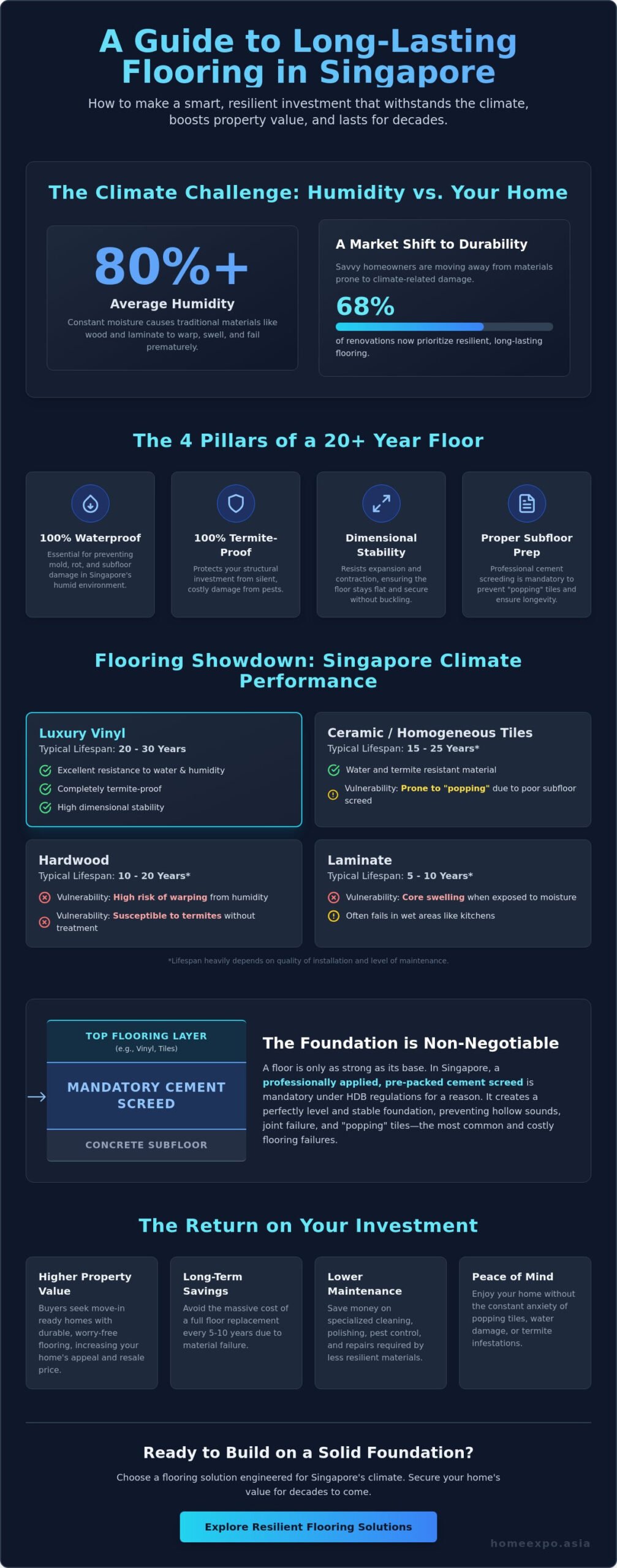
A home’s value is built from the ground up, yet many owners realize too late that their choice of material wasn’t ready for Singapore’s unique environment. With over 68% of local renovations now shifting toward resilient materials, making a long-lasting flooring investment has become the gold standard for savvy property owners. We understand the anxiety behind “popping tiles” or termite threats. These aren’t just minor inconveniences; they are costly disruptions that threaten your peace of mind and your home’s resale potential.
Discover how to choose a flooring solution that withstands 80% humidity while maximizing your property’s long-term value. This 2026 guide provides the clarity you need to navigate HDB regulations and technical standards with confidence. We will preview the most durable vinyl options, explain the necessity of mandatory pre-packed screed, and show you how to achieve a floor that remains pristine for over 20 years. It’s time to move past the confusion of initial costs and invest in a surface that truly lasts.
Key Takeaways
- Understand why 100% waterproof and termite-proof materials are essential for surviving Singapore’s high humidity levels.
- Learn to calculate the total cost of ownership to ensure your long-lasting flooring investment delivers the highest possible ROI.
- Discover the critical role of professional cement screeding and subfloor preparation in preventing “popping” tiles and joint failure.
- Compare the maintenance requirements of different materials to find a solution that stays looking new for 20+ years with minimal effort.
- Identify how the right flooring choice directly impacts your property valuation and long-term renovation savings.
What Defines a Long-Lasting Flooring Investment in Singapore?
A true long-lasting flooring investment isn’t just about how many years a manufacturer prints on a box. In Singapore, longevity is the precise intersection of material life, maintenance ease, and environmental fit. You need a floor that handles heavy foot traffic while remaining completely unfazed by the island’s unique atmospheric conditions. For a comprehensive overview of flooring materials, it’s helpful to understand how different surfaces interact with their surroundings before making a final commitment.
In our local context, “long-lasting” has a very specific set of requirements. Any surface you choose must be 100% waterproof and termite-proof. Anything less is a risk to your renovation budget. Beyond the physical durability, the investment value includes a significant valuation boost for your property. Prospective buyers in 2026 are increasingly looking for homes with move-in ready, resilient flooring that won’t require immediate replacement. However, a 20-year warranty is only as good as the installation behind it. If the subfloor isn’t prepared correctly, even the most expensive material will fail within years.
The Tropical Factor: Why Humidity Changes Everything
Singapore’s humidity often exceeds 80%. This reality changes everything for traditional wood or laminate. These materials are porous; they absorb moisture from the air and the concrete slab below. To see how specialists handle these types of moisture and mould issues in other high-humidity climates, you can check out Subfloor Ventilation Sydney. This moisture absorption often leads to “cupping,” where the edges of the planks rise, or “warping,” where the entire floor buckles and pulls away from the base. Moisture-resilient vinyl has become the gold standard for local homes because it’s dimensionally stable. It doesn’t expand or contract like organic materials. It stays flat, secure, and beautiful regardless of the weather outside.
Material Hardness vs. Structural Integrity
Many homeowners look at the Janka scale to measure surface hardness, but it isn’t the only metric that matters for a long-lasting flooring investment. While a hard surface resists scratches from pets or furniture, structural integrity determines if the floor stays level over time. A floor that can’t breathe or one that is pinned down by poor installation will eventually fail at the joints. This is why your floor is only as good as the cement screed beneath it. Proper foundation work ensures that high-traffic areas don’t develop hollow sounds or joint failures. Dimensional stability is what keeps your home looking pristine for decades.
- Waterproof Performance: Essential for preventing mold and rot in humid environments.
- Termite Resistance: Protects your structural investment from silent, costly damage.
- Professional Installation: Ensures the material performs according to its technical specifications.
- Maintenance Ease: Reduces the long-term cost of specialized cleaning or repairs.
Comparing Lifespans: Hardwood vs. Vinyl vs. Traditional Tiles
Choosing the right material is the most critical step in securing a long-lasting flooring investment. While international design blogs often praise hardwood for its century-long lifespan, the reality in Singapore is quite different. Our tropical climate introduces biological and environmental stressors that can cut that lifespan in half. When you examine flooring ROI data, it’s vital to filter those numbers through the lens of local humidity and maintenance needs. A material that lasts 50 years in a dry climate might fail in ten years here without constant care.
- Hardwood: Offers undeniable prestige but requires constant climate control and professional pest treatments to prevent termite infestations.
- Ceramic/Homogeneous Tiles: These are physically tough but prone to “popping” or debonding if the original cement screed was poorly applied.
- Luxury Vinyl Flooring: This has emerged as the modern 20 to 30 year standard. It offers zero moisture risk and requires no specialized treatments.
- Laminate: While budget-friendly, it often fails in wet areas like kitchens or laundry yards due to core swelling.
Why Vinyl is the Practical Longevity King
Modern vinyl technology in 2026 has narrowed the gap between resilient materials and stone. The latest wear layers provide scratch resistance that rivals traditional tile, making it ideal for high-traffic households. Unlike wood, vinyl offers a “no-refinish” advantage. You won’t need to spend thousands of dollars every decade on sanding and varnishing. This material allows you to achieve high-end aesthetics, such as herringbone flooring, without the inherent risks of rot or water damage. It’s a set-and-forget solution that protects your capital while maintaining a premium look.
The Hidden Risks of Traditional Tiling
Many homeowners view tiles as the ultimate permanent floor. However, “popping tiles” remain a common nightmare in older HDB flats and even some private developments. This occurs when temperature changes cause the tiles to expand and contract against a rigid base, eventually losing their grip. Repairing this often requires expensive, dusty hacking and replacement work. In contrast, overlaying with vinyl is a faster and more cost-effective way to refresh your home. Vinyl also provides a safer, softer surface underfoot. This is a vital consideration for the long-term safety of elderly residents and young children. If you’re ready to explore resilient options for your home, you can view our latest flooring collections to find the perfect fit.
The ROI of Resilience: Calculating Total Cost of Ownership
Smart homeowners know that the lowest price tag often hides the highest long-term cost. When evaluating a long-lasting flooring investment, you must look beyond the initial invoice. A cheap material that requires replacement in five years effectively doubles your renovation expenses. It also creates a logistical nightmare involving moving furniture and finding temporary housing during repairs. High-quality materials aren’t just a luxury; they’re a strategy to protect your household budget from recurring expenses.
Total Cost of Ownership (TCO) includes several hidden factors that define your real expenditure over a decade. You should consider these ongoing costs often overlooked during the selection process:
- Maintenance Expenses: Materials like hardwood require periodic sanding, staining, and professional waxing to stay pristine. These services add up quickly.
- Repair Frequency: Surfaces prone to chipping or water damage necessitate frequent patch jobs that disrupt your daily life.
- Cleaning Requirements: Porous surfaces often require specialized pH-neutral cleaners, whereas resilient vinyl only needs basic mopping with water.
- Replacement Cycle: A low-grade floor may fail within 7 years, while a high-quality installation can last 20 years or more.
Doing it right the first time prevents the “Double Renovation” trap. This is the frustrating cycle where homeowners choose a budget option only to pay for a premium replacement just a few years later. By investing in quality from the start, you secure peace of mind and financial clarity. It’s the most reliable way to ensure your home remains a functional, beautiful asset without the threat of surprise repair bills.
The 10-Year Cost Comparison
While a budget laminate floor often requires a full replacement after just seven years due to moisture swelling, a premium vinyl installation remains pristine for over two decades without needing a single repair. Professional installation and a thorough site assessment are vital parts of this calculation. These steps ensure that the material performs as promised by the manufacturer. Reliable warranties serve as your financial safety net, protecting your capital against manufacturing defects and ensuring your home remains a secure asset for your family.
Impact on Property Valuation
In Singapore’s competitive real estate market, first impressions are everything. The floor is the largest visible surface in any home, and it immediately defines the “renovated” status of the property. With over 68% of new residential renovations in Singapore now utilizing resilient materials, buyers are more likely to offer a premium for a home that features a long-lasting flooring investment. This choice removes the immediate need for a messy, expensive overhaul after the keys are handed over. Neutral designs are particularly effective here. They appeal to the widest range of aesthetic preferences while providing a “show-flat” finish that suggests the home has been meticulously maintained. A professional finish doesn’t just look better; it actively speeds up your property sale by building immediate buyer confidence.
For homeowners aiming to maximize the resale value of premium assets, experts such as Vincent Lim (OrangeTee & Tie) suggest that these strategic renovations are key to distinguishing a property in the competitive luxury market.
Critical Factors That Influence Your Floor’s Lifespan
A long-lasting flooring investment is often won or lost before the first plank is even laid. While many homeowners focus on colors and textures, the technical foundation determines whether those aesthetics remain intact for twenty years or fail in two. Most visible floor issues, such as gaps or buckling, are actually symptoms of subfloor neglect. Understanding these structural requirements is the only way to safeguard your renovation budget and your peace of mind.
Your floor is only as good as the cement screed beneath it. In Singapore, HDB regulations now mandate the use of pre-packed screed to ensure a consistent, high-quality finish. If this base is uneven, it creates “hollow” sounds and puts immense pressure on the click-locking systems of your vinyl planks. This constant stress eventually leads to joint failure. Professional subfloor preparation isn’t an “extra” service; it’s the core of your floor’s structural integrity.
Installation quality is another decisive factor. Opting for DIY or “cheap” labor often leads to improper spacing at the walls. Expansion gaps are a technical necessity for Singapore’s temperature and humidity fluctuations. These small spaces allow the material to breathe as it reacts to heat. Without them, your floor will have nowhere to go but up, resulting in unsightly and dangerous buckling. Expert teams bring the precision needed to calculate these gaps correctly, ensuring your floor stays flat and secure.
The Importance of Professional Cement Screeding
A perfectly level base prevents vinyl planks from unclicking over time, keeping your floor seamless. Professional screeding also acts as a barrier against moisture rising through the concrete slab. This dampness protection is essential for preventing mold growth and adhesive failure in our humid environment. By adhering to the latest flooring Singapore standards, you ensure your home meets all safety and regulatory benchmarks while securing your long-term ROI.
Daily Care for Decades of Use
Once your floor is professionally installed, simple maintenance preserves the wear layer for decades. You don’t need expensive equipment to keep your long-lasting flooring investment looking new. Follow these industry-standard practices to protect your surface:
- Use felt pads: Place these under all heavy furniture to prevent “point load” damage and deep scratches when moving items.
- Avoid harsh chemicals: Steer clear of bleach or abrasive scrubbers that can strip the protective coating off your resilient vinyl flooring.
- Trapping grit: Use high-quality rugs at entryways to catch sand and dirt before they act like sandpaper on your floor’s surface.
- Regular sweeping: A simple daily sweep or vacuum removes abrasive dust that can cause micro-scratches over time.
If you’re planning a renovation and want to ensure your base is perfectly prepared for a lifetime of use, contact us for a professional flooring installation service today.
Home Expo Asia: Your Partner in Long-Lasting Flooring
Home Expo Asia serves as your trusted guide in securing a long-lasting flooring investment. We recognize that a floor is more than just a surface; it’s the foundation of your home’s value and comfort. With over 200 unique designs, we ensure your aesthetic choice remains timeless and never goes out of style. Our extensive catalog allows you to find the perfect match for your interior vision while meeting the rigorous technical standards required for Singapore’s climate. We don’t just provide materials; we provide a complete ecosystem of quality and support.
We back our products with comprehensive warranties. This provides the essential risk-mitigation that every homeowner needs to feel secure. Our professional installation teams are trained to handle the complexities of subfloor preparation and moisture protection. We take the guesswork out of your renovation by offering free site assessments. During these sessions, our experts evaluate your existing subfloor for moisture levels and unevenness. This proactive step prevents the “popping” or “hollow” issues that often plague poorly planned renovations. We provide a clear, transparent roadmap for your project, ensuring there are no hidden costs or technical surprises later.
Expertise You Can Trust
Choosing a vinyl flooring Singapore specialist means you benefit from localized knowledge and proven experience. We focus on three core pillars: quality, affordability, and dedicated after-sales support. Our commitment to certified quality means we only source materials that meet international safety and durability standards. Our services extend beyond the floor to provide a total home solution. Our expert carpenter Singapore services complement your new flooring perfectly. This integrated approach ensures that your cabinetry and flooring work together seamlessly, both in function and design.
Secure Your Investment Today
Reliability is at the heart of everything we do. We provide professional project management to keep your renovation on track and within budget. Our extensive social proof and positive customer testimonials reflect our long-standing commitment to excellence in the local community. We believe in transparency and providing official documentation for every stage of the process. This builds the confidence you need to make a significant long-lasting flooring investment for your home’s future. By choosing a partner who understands both the aesthetic and technical demands of modern Singaporean living, you secure a home that looks new for decades. Book your free site assessment with Home Expo Asia today to start your journey toward a beautiful, durable home.
Build Your Home’s Future from the Ground Up
Securing a long-lasting flooring investment is a strategic decision that protects your property’s future value. You’ve seen how durability in Singapore’s tropical climate depends on the synergy between high-performance materials and expert subfloor preparation. By prioritizing moisture-resilient vinyl and professional cement screeding, you effectively eliminate common local headaches like warped planks or popping tiles. This approach ensures your home remains beautiful and functional for decades without the need for costly, mid-cycle replacements.
We provide the expertise and security you need for a stress-free renovation. With over 200 vinyl designs available and professional installation backed by a comprehensive warranty, we take the risk out of your flooring journey. Our free site assessments offer personalized recommendations tailored to your specific HDB or condominium requirements. It’s time to stop worrying about humidity damage and start enjoying a resilient, high-valuation home that truly lasts.
Get a Risk-Free Quote for Your Long-Lasting Floor Today
Your dream interior deserves a foundation that stands the test of time and enhances your daily life.
Frequently Asked Questions
What is the longest-lasting flooring for a high-traffic home in Singapore?
Homogeneous tiles and high-performance vinyl are the most durable options for local households. While tiles offer extreme hardness, premium vinyl is often preferred for a long-lasting flooring investment because it’s more resilient against impact and completely waterproof. It handles Singapore’s 80% humidity without the risk of warping or termite damage, making it a reliable choice for busy families.
Is vinyl flooring a good investment for HDB resale value?
Yes, installing high-quality vinyl is a strategic move for property valuation. Since over 68% of new renovations in Singapore now feature resilient flooring, buyers actively look for these modern, low-maintenance surfaces. A pristine vinyl floor suggests the home is move-in ready. It removes the immediate need for the buyer to undergo a dusty, expensive hacking process after the sale.
How much does it cost to replace flooring in a typical 4-room HDB flat?
Replacing the floor in a 4-room HDB flat typically ranges from S$3,000 to S$7,000 for vinyl materials and installation. This price varies depending on the total square footage and the specific design chosen. It’s important to get a professional site assessment to understand the full scope of work, including any necessary subfloor preparation or cement screeding required by HDB regulations.
Can vinyl flooring really last 20 years in Singapore’s humidity?
Premium vinyl is specifically engineered to last 20 to 25 years in tropical environments. Because it’s 100% waterproof and non-porous, it doesn’t absorb moisture or swell like traditional laminate or wood. As long as the floor is installed over a level, professionally prepared base, it will maintain its structural integrity and aesthetic appeal for decades without requiring replacement.
What is the difference between cheap vinyl and long-lasting vinyl investment?
The difference lies in the thickness of the wear layer and the quality of the core material. A long-lasting flooring investment uses a high-density core and a robust protective top layer to resist scratches and stains. Cheaper options often have thin wear layers that peel or fade within a few years. Investing in professional-grade materials ensures the floor remains stable and beautiful for the long term.
Do I need to hack my old tiles before installing new vinyl?
Hacking is often unnecessary if your existing tiles are structurally sound and level. You can choose to overlay vinyl directly on top of the old floor, which is a faster and cleaner process. However, you must ensure the total thickness of the floor finishes doesn’t exceed the 50mm HDB limit. A specialist can check the condition of your current tiles to see if an overlay is the right solution.
How do I maintain my floor to ensure it lasts its full lifespan?
Maintenance is straightforward and involves regular cleaning with non-abrasive tools. You should sweep or vacuum daily to remove grit that can act like sandpaper on the surface. Use a damp mop with water or a mild, pH-neutral cleaner for spills. Avoiding harsh chemicals and using felt protectors under furniture legs will prevent unnecessary wear and keep the protective layer intact for years.
What certifications should I look for in a flooring supplier?
You should prioritize suppliers who provide official documentation from recognized testing bodies. Look for low VOC (Volatile Organic Compound) certifications to ensure healthy indoor air quality for your family. Fire safety ratings and slip-resistance certifications are also vital markers of quality. A trustworthy partner will be transparent about these standards and provide clear warranty terms to back up their performance claims.