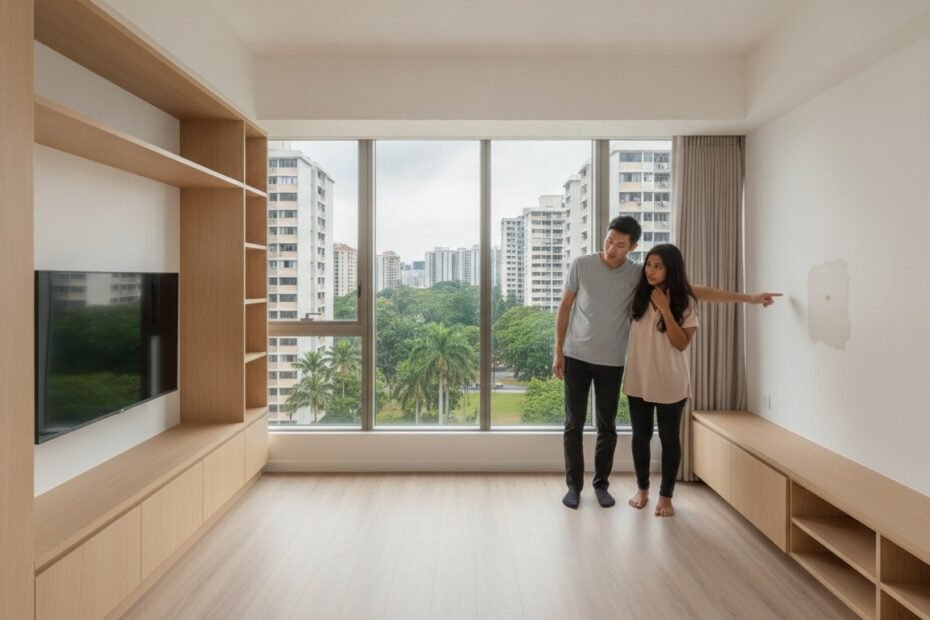
What if the aesthetic choices you’re making today are the exact reason you’ll face expensive repairs in just twenty-four months? It’s a common fear for many. Most Singaporeans approach their first home with a Pinterest board and a dream, only to be hit by the harsh reality of tropical humidity and strict HDB regulations. By understanding the common renovation regrets singapore homeowners have, you can avoid overspending on trends that don’t last. It’s natural to feel anxious about whether your materials will actually hold up or if you’re following the latest 2026 BCA standards correctly.
We’ll show you how to build a space that’s as durable as it is beautiful, ensuring every dollar spent adds long-term value. This guide provides the financial clarity you need to manage your budget while adhering to strict HDB rules on flooring and wall finishes. We’ll preview expert strategies for selecting high-quality vinyl flooring, professional tiling, and custom carpentry that perfectly suit the Singapore lifestyle.
Key Takeaways
- Learn how to navigate the 2026 renovation climate of rising material costs and smaller layouts without succumbing to poor last-minute decisions.
- Identify the most frequent renovation regrets singapore homeowners have, from popping tiles to choosing materials that can’t withstand Singapore’s humidity.
- Discover why prioritizing your daily living habits over visual Pinterest trends is the secret to a functional, long-lasting home.
- Master the technical essentials of electrical planning and lighting layers to prevent common “invisible” regrets in your new flat.
- Find out how professional site assessments and expert material selection can mitigate risks and ensure your home remains durable for a lifetime.
The Landscape of Renovation Regrets in Singapore for 2026
By understanding the renovation process through a technical lens, you can protect your investment from these common pitfalls. It isn’t just about the money; it is about the long-term livability of your space. Singapore’s unique tropical climate, with its high humidity and heat, means that global design trends seen on social media often fail here. Choosing materials based on a Pinterest board without considering local durability is a recipe for expensive repairs within just a few years.
The 66% Statistic: Why Most Homeowners Miss the Mark
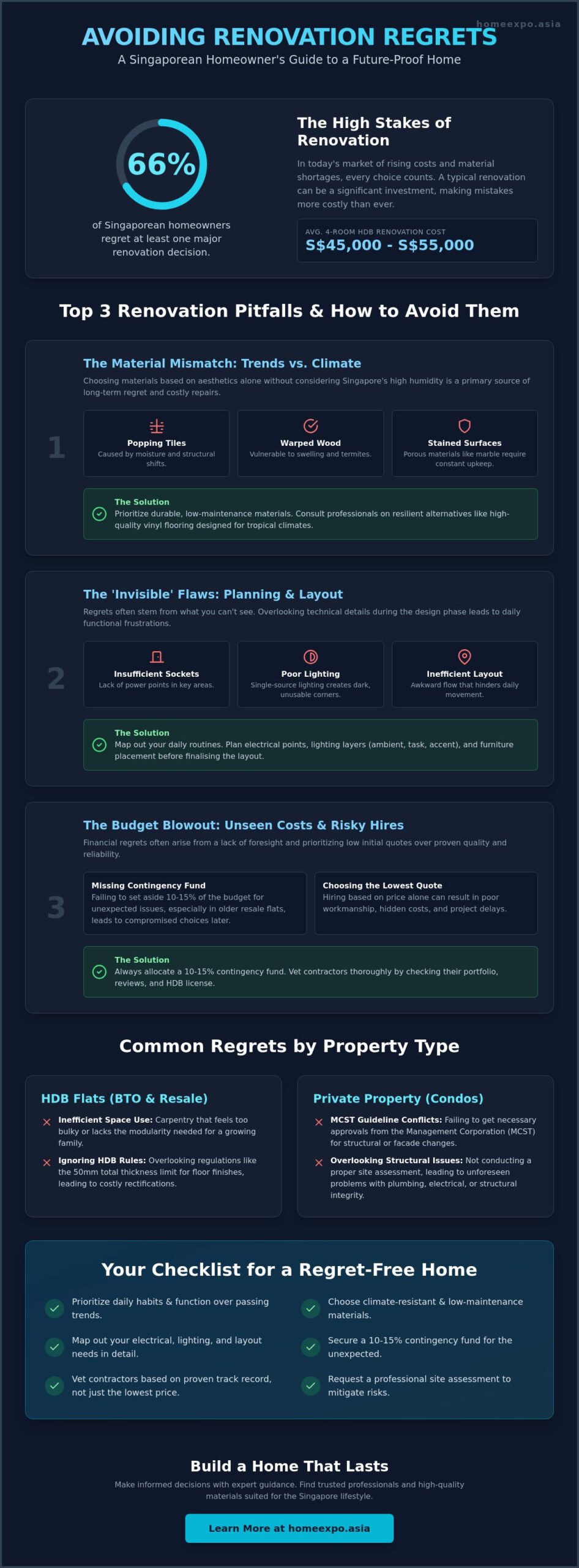
Industry data indicates that approximately 66% of Singaporean homeowners regret at least one major renovation decision. This massive gap usually exists between the glossy 3D renders and the final handover reality. Renders often hide the practical flaws of a layout or the maintenance requirements of certain materials. Social media pressure drives many to choose impractical designs, such as open-concept kitchens that can’t handle heavy Asian cooking or delicate finishes that stain easily. When you prioritize a visual “vibe” over the functional needs of your household, regret is almost guaranteed.
HDB vs. Condo: Differing Regrets Across Property Types
Regrets often vary depending on your property type. In 3-room and 4-room BTOs, the most frequent complaints involve space-saving carpentry that feels too bulky or lacks modularity for a growing family. Homeowners often wish they’d chosen more versatile layouts for smaller BTO units. For private property owners, regrets are more likely to involve structural issues or conflicts with strict management office (MCST) guidelines. Navigating the 2026 HDB renovation rules is also a common pain point. For instance, failing to adhere to the 50mm thickness limit for floor finishes and screed can lead to legal headaches and safety concerns that are costly to rectify.
- Budget Regrets: Not setting aside the recommended 10-15% contingency fund for unexpected resale issues.
- Materiality Regrets: Selecting porous tiles or high-maintenance surfaces that don’t suit a busy lifestyle.
- ID Choice Regrets: Hiring based on the lowest quote rather than a proven track record of quality and reliability.
Design vs. Durability: Why Material Choices Lead to Long-term Regret
Visual appeal often dictates the initial planning phase, yet it is frequently the primary source of the renovation regrets singapore homeowners have after just a few years of living in the space. In a tropical environment, materials behave differently than they do in a climate-controlled showroom. The “popping tile” nightmare remains a significant issue for older flats. Structural movement or moisture trapped beneath the screed can cause traditional ceramic or homogeneous tiles to crack or lift unexpectedly. This technical failure aligns with many expert renovation regrets where homeowners prioritized a specific look over the physical realities of their property’s age and condition.
Natural wood presents another set of challenges. While the warmth of timber is attractive, Singapore’s high humidity levels make it vulnerable to warping, swelling, and termite infestations. High-maintenance surfaces like marble or cement screed might look sophisticated in a portfolio, but they are porous and stain easily. These materials require consistent sealing and specialized care that most busy professionals don’t have time to manage. Choosing materials that demand excessive upkeep often leads to frustration and additional restorative costs. Consulting with experts in flooring installation services can help you identify more resilient alternatives during the design phase.
The Flooring Trap: Maintenance and Longevity
The superior performance of vinyl flooring Singapore has made it a favorite for modern HDB renovations. Unlike traditional tiles, vinyl doesn’t feel icy underfoot and provides a softer impact, which reduces the risk of joint pain or injury from household falls. 5mm vinyl is the optimal choice for HDB overlays in 2026 because it provides the perfect balance of durability and height compliance without exceeding HDB’s 50mm floor finish limit. It’s waterproof, termite-resistant, and requires zero specialized cleaning, making it a truly “set and forget” solution for a functional home.
Carpentry and Built-ins: The ‘Too Much’ vs. ‘Too Little’ Debate
Fixed carpentry is a major investment, but it’s often the top regret five years post-renovation. Households evolve as family needs change; a home office might eventually need to become a nursery. Over-installing built-in cabinets can make a 4-room BTO feel cramped and reduce natural light. Using low-quality laminates in wet areas like the kitchen or bathroom leads to peeling and swelling. It’s vital to balance your storage requirements with the desire for an open, airy living space by using high-quality carpentry services that prioritize moisture-resistant materials. Smart, modular designs often serve homeowners better than floor-to-ceiling built-ins in smaller layouts.
- Resilience: Modern vinyl handles heavy foot traffic and spills without staining or cracking.
- Safety: Slip-resistant textures provide peace of mind for households with children or elderly parents.
- Flexibility: Loose furniture allows you to reconfigure your home as your lifestyle shifts.
The Invisible Regrets: Electrical, Plumbing, and Layout Flaws
Many of the most painful renovation regrets singapore homeowners have aren’t visible at first glance. They manifest months later as tangled extension cords across a beautiful floor or a damp patch on a newly painted ceiling. While aesthetics grab your attention, the technical infrastructure of your home determines your daily comfort. In a digital-heavy 2026 household, failing to plan for your power needs is a recipe for long-term frustration. Rewiring a flat can cost between S$4,000 and S$8,000, so getting it right the first time is a financial necessity.
Lighting is another area where homeowners often miss the mark. Relying on a single, ultra-bright ceiling light often ruins the mood and functionality of a room. Expert design requires layering; you need task lighting for cooking, ambient lighting for relaxing, and accent lighting to highlight features. Similarly, plumbing access is a critical consideration. Concealing every pipe behind a wall looks sleek, but it becomes a logistical nightmare when a leak occurs. Ensure your design includes discreet access panels to avoid hacking up expensive tiles for a simple repair.
Powering Your 2026 Home: Socket and Data Point Planning
Future-proofing is the key to a regret-free electrical plan. With the rise of smart home ecosystems and the increasing need for EV chargers in private estates, your power grid needs to be robust. Many homeowners regret not installing sockets inside cabinets for appliances they haven’t bought yet, such as cordless vacuum docks or air fryers. To avoid cluttered countertops, you should consult a carpenter Singapore to design integrated power solutions within your custom cabinetry. This ensures your devices stay charged and hidden, maintaining a minimalist aesthetic without sacrificing utility.
The Bathroom and Kitchen: High-Stakes Renovation Areas
Waterproofing is the one area where you can never afford to cut costs. For BTO flats, remember that HDB regulations require you to wait three years before removing original wall or floor finishes in toilets to protect the waterproofing membrane. In the kitchen, the layout should prioritize the “Triangle Rule”—the distance between your sink, stove, and fridge. If this workflow is broken, cooking becomes a chore regardless of your cabinet color. Consider these practical factors:
- Wet vs. Dry Kitchens: Ensure your wet kitchen has heavy-duty ventilation and non-porous surfaces to handle high-heat Asian cooking.
- Hard Water Fixtures: Choose high-quality taps and showerheads that can withstand Singapore’s humidity and mineral buildup without corroding.
- Maintenance Access: Never block floor traps or main stopcocks with fixed carpentry.
How to Avoid the ‘Honeymoon Phase’ Trap: A Pre-Renovation Checklist
The “Honeymoon Phase” of a renovation is when you’re dazzled by beautiful mood boards and high-end showrooms. During this stage, logic often takes a backseat to emotion. This is where the most significant renovation regrets singapore homeowners have begin to take root. To build a home that stands the test of time, you must move beyond aesthetics and focus on technical reliability and lifestyle compatibility.
Follow these five essential steps to ensure your 2026 renovation remains a source of joy rather than a financial burden:
- Step 1: Define your ‘Living Style’ first. Before choosing a color palette, map out your daily routines. Do you need a dedicated workspace for hybrid work? Will your kitchen handle daily heavy cooking? Design for how you actually live, not how you want to look on social media.
- Step 2: Vet your partners. Don’t just look at portfolios. Research the top renovation companies in Singapore to understand their technical expertise and after-sales support.
- Step 3: Establish a 20% Buffer. Global material costs are volatile in 2026. While a 10-15% contingency is standard, a 20% buffer provides the security needed to handle sudden price fluctuations or unexpected site issues.
- Step 4: Stress-test your materials. Ask for physical samples of flooring and laminates. Review the technical specifications and warranty documentation to ensure they can withstand Singapore’s humidity.
- Step 5: Conduct a ‘Maintenance Audit’. Be honest about your cleaning habits. If a surface requires weekly polishing or specialized cleaners, it may not be the right fit for a busy household.
Vetting Your Contractors and Suppliers
Trust is built on transparency and official documentation. Look for CaseTrust-RCMA accreditation, which signifies a commitment to ethical business practices and consumer protection. It is also vital to request visits to “Work in Progress” sites. Finished showrooms can hide poor workmanship; seeing a site during the tiling or carpentry phase reveals the true quality of a contractor’s labor. When reviewing quotations, check for hidden costs like haulage fees, debris removal, and protection of existing fixtures. These small items can add thousands to your final bill if not declared upfront.
Budgeting for Long-term Value, Not Just Lowest Price
The cheapest quote often leads to the most expensive repairs later. In a high-inflation environment, prioritize investing in the “bones” of your home. High-quality flooring Singapore serves as the foundation for your property’s value and durability. While you can always replace a lamp or a rug, replacing faulty flooring or substandard plumbing is a massive undertaking. Focus your budget on needs like waterproofing and durable surfaces before spending on wants like decorative wall features or designer lighting. Secure your home’s future by choosing comprehensive renovation services that prioritize durability over short-term trends.
Building a Regret-Free Home with Home Expo Asia
Many of the most persistent renovation regrets singapore homeowners have stem from a lack of technical oversight during the early planning stages. We eliminate this uncertainty by providing professional site assessments before any work begins. This vital step ensures that your chosen materials are perfectly suited for your specific subfloor conditions. Whether you’re dealing with moisture issues in an older resale flat or managing the strict requirements of a new BTO, our experts provide the technical clarity you need to proceed with confidence. We focus on risk mitigation so that your home remains a sanctuary, not a source of stress.
Our collection features over 200 designs that meticulously balance 2026 design trends with timeless durability. We understand that your home is a lifetime investment. That’s why we only offer materials that have passed rigorous safety and quality testing. By combining high-performance vinyl flooring with expert carpentry services, we create spaces that remain functional and beautiful long after the renovation “honeymoon phase” ends. Our materials are selected specifically to withstand the tropical humidity that often ruins lesser products.
Transparency is the cornerstone of our service. We provide detailed, honest quotations that include all necessary technical works, from cement screeding to professional installation. Our comprehensive warranties serve as a final promise of security, ensuring you never have to worry about the “hidden costs” of repairs or material failure. We take pride in our history of successful projects and the extensive social proof from satisfied homeowners across the island. Our methodical approach ensures that every project meets high industry standards for safety and reliability.
Expert Flooring Solutions for Singapore Homes
Our specialized approach to vinyl flooring and tiling and cement works is designed to meet the unique environmental challenges of Singapore. We guide you through every HDB requirement, ensuring your floor finishes stay within legal thickness limits while providing maximum comfort. The Home Expo Asia guarantee centers on quality, safety, and long-term support. We don’t just sell products; we provide a complete renovation ecosystem that prioritizes your peace of mind and financial security.
Start Your Regret-Free Journey Today
Avoiding measurement and material errors is simple when you have a professional guide. Requesting a free site assessment allows our team to identify potential issues before they become expensive regrets. You can also visit our Balestier showroom to experience our 200+ material designs firsthand and speak with our knowledgeable consultants. Home Expo Asia’s mission is to provide professional, trustworthy renovation services that empower Singaporean homeowners to build durable, beautiful spaces with absolute financial and technical clarity.
Build Your Regret-Free Singapore Home Today
You’ve learned that a successful renovation isn’t just about the visual mood board. It’s about choosing high-quality materials that withstand humidity and planning for invisible essentials like electrical sockets and plumbing access. Most renovation regrets singapore homeowners have are entirely preventable when you prioritize technical durability over short-term design trends. By following a methodical pre-renovation checklist and vetting your contractors for technical expertise, you protect both your financial investment and your peace of mind.
Our expert team has extensive experience navigating the specific requirements of both HDB and Condo properties. We offer over 200+ vinyl designs that combine 2026 style with long-term reliability. Every installation is backed by comprehensive warranties to ensure your home remains safe and beautiful for a lifetime. Start your journey with absolute confidence and remove the anxiety of material uncertainty. Book a Free Site Assessment with Home Expo Asia today to secure the professional expertise your dream home deserves. It’s time to build a space you’ll love for decades to come.
Frequently Asked Questions
What is the most common renovation regret for first-time HDB owners?
The most common regret is prioritizing aesthetic trends over practical functionality and long-term storage needs. Many homeowners focus on Pinterest-inspired visuals but forget to plan for their actual daily habits or future family growth. This mismatch often leads to significant renovation regrets singapore homeowners have within the first two years of moving in. You should map out your workflow and storage requirements before finalizing any design renders.
How can I avoid overspending on my Singapore home renovation?
Avoiding overspending requires setting a strict 20% contingency fund and prioritizing “needs” over “wants” from the start. Global material costs are volatile in 2026, so a financial buffer is essential for your peace of mind. Focus your initial budget on high-quality foundations like flooring and plumbing before spending on decorative features. Always request a detailed, itemized quotation to track every dollar spent and prevent budget creep.
Is vinyl flooring better than tiles for preventing long-term regrets?
Vinyl flooring is often superior for preventing regrets related to comfort, installation speed, and maintenance costs. Unlike traditional tiles, vinyl doesn’t feel icy underfoot and provides a softer impact, which is safer for children and the elderly. It also allows for direct overlaying on existing HDB floors, saving you the high cost of hacking. Modern vinyl is waterproof and termite-resistant, making it a durable choice for our climate.
How do I choose the right interior designer or contractor in Singapore?
Choose a partner with CaseTrust-RCMA accreditation and a proven track record of technical reliability and safety. Don’t rely solely on glossy portfolios; instead, ask to visit active “Work in Progress” sites to see their craftsmanship firsthand. A trustworthy contractor provides transparent communication and detailed documentation regarding material certifications. This professional vetting process is the best way to mitigate the risk of poor workmanship or unexpected project delays.
What are the hidden costs in a renovation quotation I should look out for?
Hidden costs often include haulage fees, debris removal, and the protection of existing fixtures during the renovation process. These items can add thousands to your final bill if they aren’t explicitly listed in your initial quotation. Always ask your contractor to clarify if the price includes electrical rewiring or specialized plumbing access. Reviewing these technical details upfront ensures financial clarity and prevents unpleasant surprises during the final handover phase.
Should I prioritize built-in carpentry or loose furniture in a small BTO?
You should prioritize loose furniture over extensive built-in carpentry to maintain flexibility in smaller BTO layouts. Fixed cabinets can make a room feel dark and cramped if they are over-installed. Loose pieces allow you to reconfigure your living space as your family needs change over time. Reserve built-in carpentry for essential areas like kitchen cabinets where custom dimensions are necessary for maximum storage efficiency and workflow.
How does Singapore’s climate affect the choice of renovation materials?
Singapore’s high humidity and heat cause materials like natural wood or low-quality laminates to warp, swell, or develop mold. These environmental factors contribute to many renovation regrets singapore homeowners have when they choose imported designs not suited for the tropics. You must select non-porous, moisture-resistant materials for wet areas and high-traffic zones. Professional testing ensures your materials can withstand the local climate without deteriorating or requiring constant repairs.
What are the essential electrical points I should plan for in my 2026 renovation?
Essential points include dedicated sockets for smart home hubs, high-speed data points, and integrated power for cordless appliance docks. Plan for sockets inside cabinets to keep your countertops clutter-free and ready for future kitchen gadgets. It’s also wise to future-proof your home with higher-capacity wiring to support the growing number of digital devices used in modern households. Proper electrical planning eliminates the need for unsightly extension cords later.