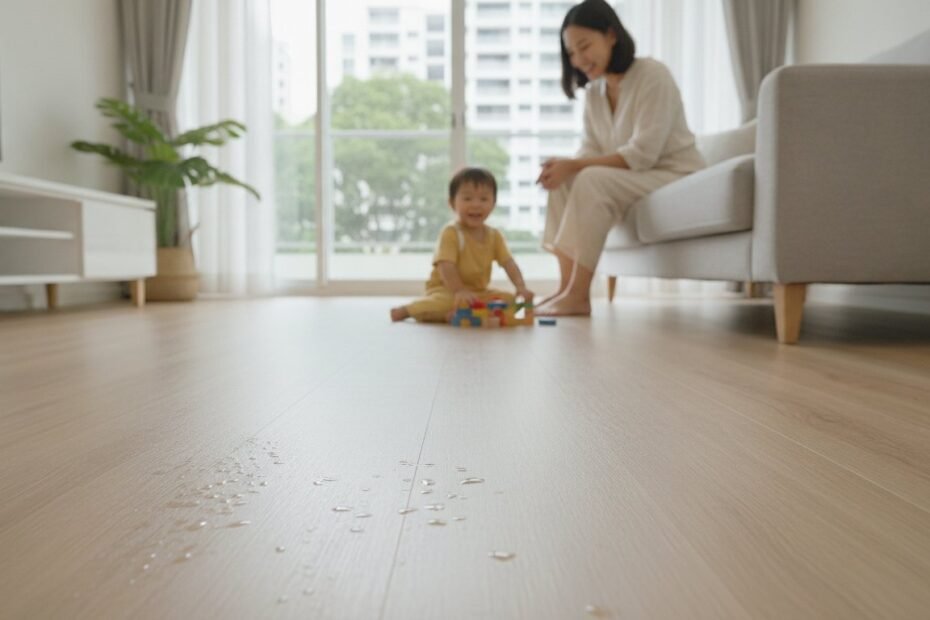
What if the “anti-slip” vinyl you just selected for your kitchen renovation is actually a hidden hazard the moment a single drop of water hits it? It’s a common fear for Singapore homeowners who want to balance modern aesthetics with the absolute safety of their family. You’ve likely felt the frustration of staring at technical labels like R9 or P3 and wondering if they actually mean anything for your daily life. It’s confusing to decode these standards alone, especially when you just want a floor that won’t cause a slip-and-fall accident during a humid monsoon afternoon.
This guide simplifies the technical slip resistance rating for flooring, giving you the expertise needed to secure a truly safe environment. We’ll break down the latest SS 485:2022 standards and explain the difference between Pendulum tests and R-ratings in plain English. By the end, you’ll have the confidence to choose vinyl or tile that complies with all HDB and BCA requirements. You’ll move from uncertainty to total peace of mind, knowing your home is built on a foundation of professional-grade safety and reliability.
Key Takeaways
- Learn to navigate the current SS 485:2022 standards to guarantee your home meets official HDB and BCA safety requirements for 2026.
- Decode technical jargon by distinguishing between R-ratings and Pendulum tests to select the ideal slip resistance rating for flooring in high-risk zones.
- Discover the essential balance between high-grip textures for bathrooms and “cleanability” for your main living areas.
- Master the art of reading technical spec sheets, specifically identifying how deep embossing enhances the safety of your vinyl planks.
- Explore how to choose from certified, safety-first vinyl collections that offer hundreds of designs without compromising on style or reliability.
Understanding Slip Resistance Ratings: Why Safety Matters for Your Singapore Home
Slip resistance isn’t just a technical specification found on a product brochure. It represents the measurable friction between a floor surface and your footwear or bare feet. In simple terms, it’s the force that prevents your foot from sliding out from under you. For Singaporean homeowners, choosing the right slip resistance rating for flooring is a critical decision that directly impacts the daily safety of your household. Whether you’re living in a high-rise HDB flat or a sprawling condo, the floor is the most used surface in your home. It needs to be reliable.
Safety takes on a higher level of urgency when your home includes young children or elderly family members. Seniors often have a different center of gravity and slower reaction times, making a minor slip potentially life-changing. Children, on the other hand, tend to run and play without regard for surface conditions. Singapore’s tropical climate adds another layer of risk. Our high humidity levels often lead to condensation on cool surfaces, creating a thin, invisible layer of moisture that turns a standard floor into a skating rink. Investing in certified flooring provides the peace of mind that your loved ones are protected by rigorous safety standards.
The Legal and Safety Landscape in Singapore
The Building and Construction Authority (BCA) provides clear guidelines to ensure buildings remain safe for all occupants. In Singapore, the gold standard for pedestrian surface materials is SS 485:2022. This standard aligns with international benchmarks to ensure every tile or vinyl plank meets specific safety criteria. When you’re shopping for materials, don’t just ask if a product has been “tested.” You should look for “certified” products. Certification means the material has undergone formal Floor slip resistance testing by accredited third-party bodies. This official documentation is your only guarantee that the floor will perform as promised under pressure.
The Real-World Consequences of Poor Flooring Choice
Many accidents don’t happen in the bathroom. They occur in dry areas like the living room or hallway that occasionally get wet from a spilled drink or rain blowing in through an open window. If your floor lacks the proper texture, even a small amount of liquid can be disastrous. While a rougher texture offers better grip, it can sometimes trap more dirt. The goal is to find a balance between a high slip resistance rating for flooring and ease of maintenance. Professional installation also plays a massive role here. Even the best anti-slip vinyl can fail if it’s not laid perfectly flat, as uneven edges create trip hazards that no amount of surface friction can fix.
The R-Rating vs. Pendulum Test: Decoding Flooring Safety Standards
Safety standards aren’t just abstract numbers on a technical spec sheet; they’re the result of rigorous laboratory testing designed to mimic real-world conditions in your home. When you evaluate a slip resistance rating for flooring, you’ll primarily encounter two global benchmarks: the R-Rating (Ramp Test) and the P-Rating (Pendulum Test). While a higher number generally indicates a more “grippy” surface, the nuances between these two tests determine which material is actually safe for your specific environment. Reliable flooring Singapore specialists always provide these technical data sheets to ensure you make an informed, secure choice for your family.
The Ramp Test (R-Ratings) Explained
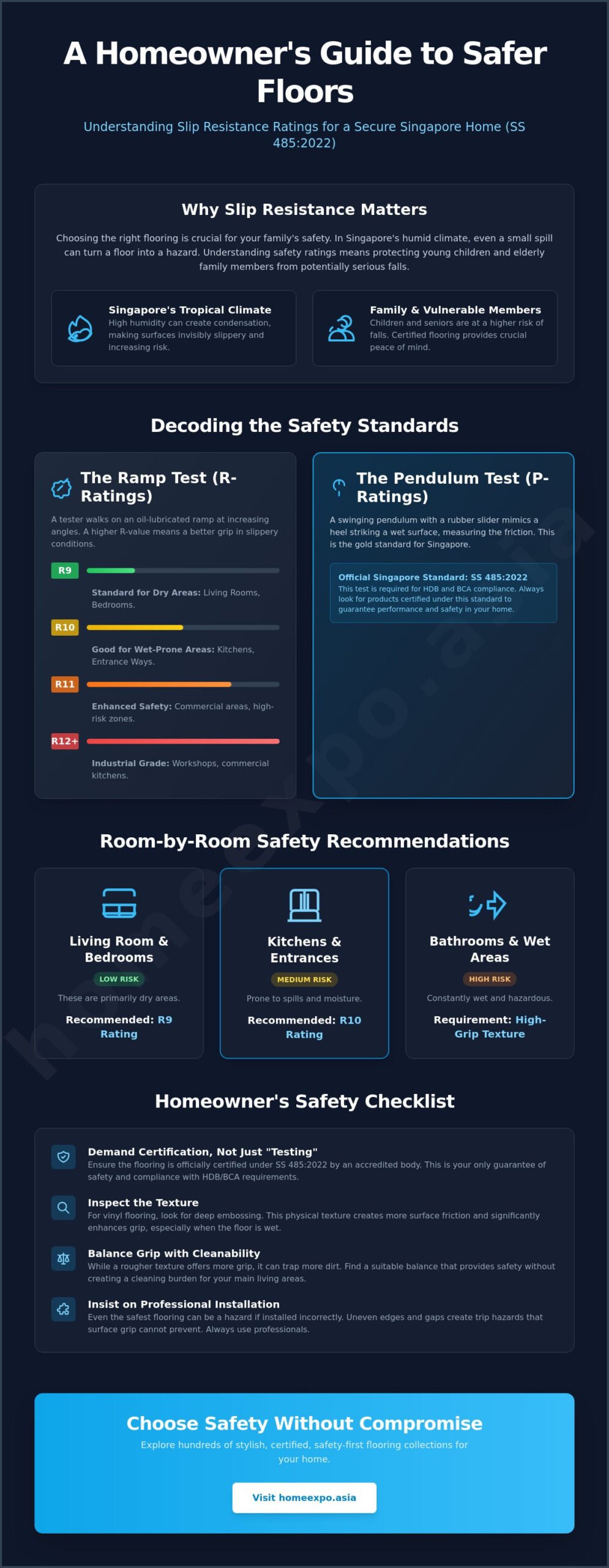
The Ramp Test is the most common classification for tiles and vinyl. It involves a human tester wearing standardized boots walking on an inclined surface lubricated with motor oil. Ratings range from R9 to R13. An R9 rating is the standard baseline for indoor living rooms and bedrooms where the floor remains dry. As the angle of the ramp increases before the tester slips, the rating goes up. R10 is suitable for kitchens, while R12 and R13 are typically reserved for commercial kitchens or industrial workshops where heavy oil spills are constant. For most residential needs, aiming for an R10 provides a solid balance of safety and comfort.
The Wet Pendulum Test (P-Ratings) Explained
The Wet Pendulum test is the gold standard within Singaporean and Australian safety frameworks (SS 485). It uses a swinging mechanical arm with a rubber slider to mimic the action of a slipping heel on a wet surface. The results are classified on a scale from P0 to P5. Because this test specifically measures performance in wet conditions, it’s the preferred method for assessing safety in bathrooms, balconies, or pool decks—areas where Plusco Ceramics specializes in providing certified, high-grip surfaces. A P4 or P5 rating indicates exceptional grip even when the floor is saturated. This data is vital for risk mitigation in homes with elderly residents who are more vulnerable to falls on damp surfaces.
R-Rating vs. Pendulum: Which Should You Trust?
Ramp tests measure “limit of stability” while Pendulum tests measure “dynamic friction.” For homeowners considering vinyl flooring Singapore, manufacturers often provide both ratings to ensure total transparency. It’s similar to how the ANSI A326.3 slip resistance standard categorizes hard surfaces in international markets. You should look for consistency across both ratings for high-traffic areas. If a product has a high R-rating but a low P-rating, it might perform well when dry but fail during a sudden spill. Always prioritize the Wet Pendulum score for any area exposed to moisture. If you’re unsure which rating fits your layout, don’t hesitate to consult with a professional expert who can walk you through the certified test results for each design.
Room-by-Room Guide: Choosing the Right Slip Resistance for Every Space
Every room in a Singapore home has a unique “moisture profile.” You don’t need the same level of grip in a dry bedroom as you do in a bathroom that’s frequently soaked. Selecting the appropriate slip resistance rating for flooring requires a strategic balance between safety and “cleanability.” While a highly textured floor offers maximum grip, it can also trap more dust and grime in its grooves. Finding that sweet spot ensures your home is secure without becoming a maintenance nightmare. We always recommend that homeowners request physical samples to feel the texture themselves before making a final commitment.
Transitional areas deserve special attention. Slips often occur when someone moves from a wet balcony into a dry living room. If the friction levels between these two spaces are too different, your stride can become unstable. Maintaining a consistent safety standard across adjacent zones is a simple way to mitigate risk.
Living Rooms and Bedrooms: The Low-Risk Zones
In areas that typically stay dry, comfort and aesthetics are your primary drivers. We usually recommend R9 or P1/P2 ratings for these spaces. Since you’ll often be walking barefoot or in socks, a smoother surface feels better underfoot and is much easier to keep dust-free. If you’re worried about specific high-traffic paths, using area rugs with non-slip backing can add an extra layer of security without requiring a specialized floor texture throughout the entire room.
Kitchens and Entrance Foyers: The Moderate-Risk Zones
Singaporean homes often feature “wet kitchens” where heavy cooking and occasional spills are the norm. Entrance foyers also face moisture challenges during the monsoon season when wet umbrellas and shoes are brought inside. For these zones, an R10 or P3 rating is the professional standard. High-quality vinyl is a superior choice for these areas. It provides excellent water resistance and a reliable surface that handles oil splashes and water droplets without becoming dangerously slick.
Bathrooms and Balconies: The High-Risk Zones
These are your highest-risk areas, requiring a minimum of R11+ or P4/P5 ratings. Safety here is non-negotiable. For shower areas, professionals often look at “barefoot” slip resistance tests, which use an A, B, and C classification system. To ensure these floors perform correctly, they often undergo the ASTM E303 Pendulum Test to verify their dynamic friction in saturated conditions. Even with the best materials, professional installation is vital in these zones. Proper leveling and sealing prevent water from seeping underneath the planks, which can cause the floor to shift and create new hazards over time.
Practical Tips for Evaluating Vinyl Flooring Safety in 2026
Evaluating vinyl safety goes beyond checking a box on a brochure. In 2026, high-quality vinyl planks use sophisticated manufacturing to ensure grip. When you examine a technical specification sheet, look for the wear layer thickness. A 0.5mm wear layer is the industry standard for durability; it ensures the slip resistance rating for flooring doesn’t vanish after a few months of heavy foot traffic. Thinner layers might look good initially but lose their grip as the surface smooths out over time. You want a floor that remains safe for the next decade, not just the first year.
Embossing is another critical factor. “Deep Embossed” textures mimic natural wood grains and provide physical ridges for your feet to catch. “Handscraped” finishes offer a more rustic, uneven surface that naturally increases friction. When you’re in a showroom, try the “Wet Finger Test.” Dampen your finger and press it firmly against the sample. If your finger glides effortlessly, the floor might be too slick for wet areas. A safe floor should provide noticeable resistance even when moisture is present. If you feel a “catch” or drag on your skin, the material is likely performing well.
Texture vs. Coating: How Vinyl Stays Safe
Some products rely on anti-slip UV coatings, while others use physical texture. High-quality vinyl combines both. The coating provides immediate friction, while the deep embossing ensures long-term safety. If you’re planning a full renovation, finding a trusted carpenter in Singapore can help you design custom cabinetry that integrates perfectly with your safe flooring, ensuring no awkward gaps or trip hazards exist near your kitchen or vanity units. This holistic approach ensures every corner of your home is secure and professionally finished.
Maintenance and Its Impact on Slip Resistance
Your cleaning habits directly impact safety. Avoid wax-based cleaners at all costs. These products leave a slippery film that fills in the microscopic texture of your vinyl, effectively neutralizing its slip resistance rating for flooring. Use pH-neutral cleaners instead. They remove dirt without leaving a residue. Also, keep your floors free of fine dust and grit. These tiny particles act like ball bearings, making even the most textured floor feel like ice. Regular sweeping is a simple but effective safety measure that preserves the original factory grip of your planks.
To see how these textures feel in person and verify their safety, visit our showroom and test our certified vinyl samples for yourself.
Home Expo Asia: Delivering Safe, Certified Vinyl Flooring Solutions
Home Expo Asia puts your family’s safety at the heart of every renovation project. We recognize that choosing a floor is a long-term investment in your home’s security, especially in a high-humidity environment like Singapore. Our commitment to safety-first flooring means we never settle for “standard” materials. Every product in our catalog is selected based on its ability to provide a secure, slip-free environment for children and the elderly. We believe that a home is only as comfortable as it is safe.
You shouldn’t have to sacrifice your design vision for technical compliance. We offer an extensive range of over 200 designs that mimic the natural beauty of premium wood and stone. These styles are engineered to maintain superior friction levels without losing their aesthetic appeal. Whether you need a specific slip resistance rating for flooring for a high-traffic wet kitchen or a softer finish for a nursery, our collection covers every residential requirement. You get the luxury look you want with the technical performance you need.
This commitment to excellence in both form and function is something we admire in all creative industries. If you appreciate high-quality custom work and are looking for inspiration beyond home decor, you might check out Studio One Tattoo Bangkok for their exceptional artistry and professional standards.
Reliability is built on quantifiable proof. Our vinyl collections undergo a rigorous certification process to ensure they meet the latest SS 485:2022 standards. We provide transparent access to all technical data sheets and third-party testing results for our clients. This evidence-based approach removes the guesswork from your renovation journey. When combined with our professional installation service, you get a floor that remains stable and perfectly level. Proper installation is the final step in preventing the minor “popping” or uneven edges that can lead to trip hazards.
Why Our Vinyl Stands Out
Our premium vinyl is designed for the long haul. We focus on high-performance materials that maintain their grip even after years of daily use. Our collections feature:
- High Slip Resistance: Products certified for R10 and P3 ratings as a baseline for residential safety.
- Comprehensive Warranties: Long-term protection that offers peace of mind regarding material integrity and performance.
- Proven Track Record: Thousands of successful installations across Singaporean HDBs and private condos.
- Expert Guidance: Professional consultants who help you match the right texture to your specific room moisture levels.
Start Your Safe Renovation Journey
Start your journey by experiencing our materials firsthand. We invite you to visit our Balestier Road showroom, where you can feel the various embossing textures and see our designs under different lighting conditions. Seeing the products in person is the best way to understand how a specific slip resistance rating for flooring translates to real-world grip. We also offer a free site assessment to evaluate your existing floor conditions and provide tailored recommendations for your home layout. Don’t leave your family’s safety to chance.
Get a professional flooring quote today and build your home on a foundation of safety and style.
Build a Slip-Free Future for Your Singapore Home
Choosing the right slip resistance rating for flooring is a vital step in protecting your loved ones from avoidable accidents. You now have the expertise to decode R-ratings and Pendulum tests to match the moisture levels of every room in your home. From the high-grip requirements of a wet kitchen to the comfort of a dry bedroom, your informed choice ensures that every step taken on your new floor is a secure one. Safety is never an accident; it’s the result of professional standards and quality materials.
We’re here to help you turn this technical knowledge into a beautiful, safe reality. Our collection features over 200 safety-certified designs, backed by a professional Singapore-based installation team that understands local HDB and condo requirements. Every package comes with a comprehensive warranty on all vinyl flooring, providing you with long-term peace of mind and financial security. You don’t have to compromise on style to achieve a reliable, slip-free environment.
Secure Your Home with Certified Slip-Resistant Vinyl; Get a Free Quote Today! Your family deserves a home that’s as safe as it is stylish. Take the first step toward a more secure living space today.
Frequently Asked Questions
What is a good slip resistance rating for a residential kitchen in Singapore?
An R10 or P3 rating is the ideal standard for a residential kitchen in Singapore. These ratings provide sufficient grip to handle the occasional water splash or cooking oil spill common in “wet kitchen” environments. Choosing a certified slip resistance rating for flooring in this zone prevents accidents without making the surface too rough for daily mopping. It’s the perfect balance of household safety and practical maintenance.
Is R10 slip resistant enough for a bathroom?
An R10 rating is typically not enough for a bathroom shower area where the floor is constantly saturated. For these high-risk zones, you should look for a minimum of R11 or a P4/P5 Pendulum rating. These higher classifications ensure the surface remains stable even when covered in soapy water. For barefoot areas, always check for the “C” rating in barefoot ramp tests to ensure maximum security for your family.
Do vinyl floors become more slippery over time?
High-quality vinyl flooring won’t become significantly more slippery if it has a durable 0.5mm wear layer. However, cheaper materials with thin layers can smooth out over years of foot traffic, reducing their original grip. Maintenance also plays a huge role. You should avoid using wax-based cleaners that leave a slick residue. Regular cleaning with pH-neutral solutions preserves the factory-certified slip resistance rating for flooring for the long term.
What is the difference between an R-rating and a P-rating?
The main difference lies in the testing environment and the liquid used. An R-rating comes from an oil-wet ramp test, measuring the “limit of stability” on an incline. A P-rating comes from a wet pendulum test, which uses water to measure dynamic friction. While both are useful, the P-rating is often preferred in Singapore for assessing how a floor performs during our humid, rainy weather conditions.
Does a higher slip resistance rating make the floor harder to clean?
Yes, floors with a higher slip resistance rating often feature deeper textures that can trap more dirt and dust. This is why we don’t recommend using industrial-grade R12 or R13 ratings in a standard bedroom. For living areas, an R9 or R10 provides a smooth enough surface for easy cleaning while still offering basic safety. It’s about matching the specific texture to the unique needs of each room.
Are there specific HDB requirements for slip resistance during renovation?
HDB and BCA guidelines specify that pedestrian surfaces must be safe, especially in wet areas like bathrooms. These requirements align with the Singapore Standard SS 485:2022. During a renovation, your contractor should ensure that the materials used in bathrooms and kitchens meet these anti-slip benchmarks. Using certified materials provides official documentation that your home complies with these essential safety regulations and protects your renovation investment.
Can I improve the slip resistance of my existing floors without replacing them?
You can improve existing floors using chemical anti-slip treatments or specialized coatings. While these are effective short-term solutions, they often require reapplication every 12 to 24 months to remain effective. For a more permanent and reliable fix, replacing old, slippery tiles with modern, safety-certified vinyl is the best option. This ensures the slip resistance is built into the material’s structure rather than just sitting on the surface.
Is a matte finish always more slip-resistant than a glossy finish?
A matte finish is generally more slip-resistant than a glossy finish, but the surface texture is the more important factor. A glossy floor is naturally smoother and more dangerous when wet. However, a matte floor without proper embossing can still be slippery. Always look for a “Deep Embossed” or “Handscraped” texture in vinyl to ensure there is physical friction for your feet, regardless of the sheen level.