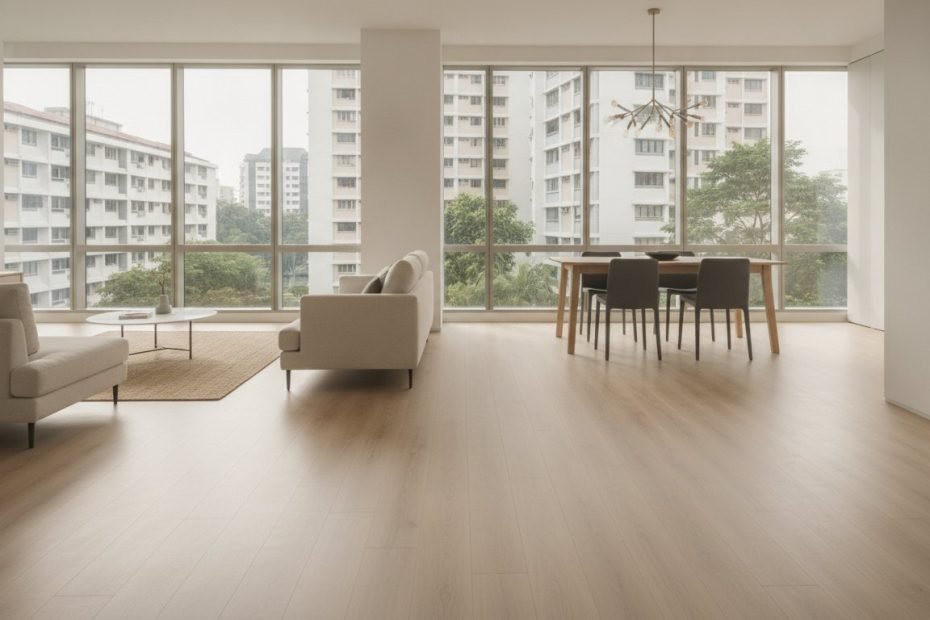
What if the secret to a truly expansive home in Singapore isn’t the square footage, but the uninterrupted flow of the surface beneath your feet? Many homeowners choose an open-concept layout to create space, only to find that mismatched floor transitions or the fear of popping tiles creates more stress than style. Finding the right vinyl flooring for open concept living room projects is the most critical decision you’ll make to ensure your home feels unified rather than fragmented.
We understand that you want a floor that stands up to heavy foot traffic and accidental spills without sacrificing that modern, seamless look. It’s a common concern, especially when you need a surface that’s as easy to clean as it is beautiful. In this 2026 guide, you’ll discover how to select high-performance materials that balance luxury aesthetics with professional durability and safety. We will preview the latest trends in wood-look planks and explain the essential HDB regulations, such as sound insulation and thickness limits, so you can renovate with complete peace of mind and total confidence in your investment.
Key Takeaways
- Understand why the floor acts as the primary design anchor in modern wall-free HDB BTO and resale layouts.
- Learn how the “Golden Rule of Continuity” helps you achieve a spacious, high-end look with vinyl flooring for open concept living room designs.
- Master practical zoning techniques to define your dining and lounge areas without introducing visual clutter or physical barriers.
- Identify why professional site assessments and cement screeding are non-negotiable steps to prevent floor buckling in large areas.
- Compare the latest 2026 material trends to find a high-performance surface that’s easy to clean and stands up to heavy foot traffic.
The Evolution of Open-Concept Living in Singapore
Space is a premium in Singapore. For many homeowners moving into HDB BTO or Resale flats, the first step in renovation is often “hacking.” By removing non-structural walls between the kitchen, dining, and lounge areas, you instantly unlock natural light and ventilation. This shift has fundamentally changed how we view interior design. When you remove partitions, the floor becomes the most dominant surface in your home. It isn’t just something you walk on; it’s the primary design element that ties every functional zone together. Choosing the right vinyl flooring for open concept living room projects is essential to ensure this vast area looks intentional rather than empty.
The psychological impact of a seamless floor shouldn’t be underestimated. In a standard 90sqm flat, visual clutter from different floor materials can make a home feel cramped. A single, continuous material creates a sense of “infinite flow.” This makes your living space feel significantly larger and more cohesive. It provides a calming environment where the eye isn’t constantly interrupted by transitions or T-molds. Professional-grade flooring Singapore solutions prioritize this visual stretch, helping you achieve a luxury look on a practical budget.
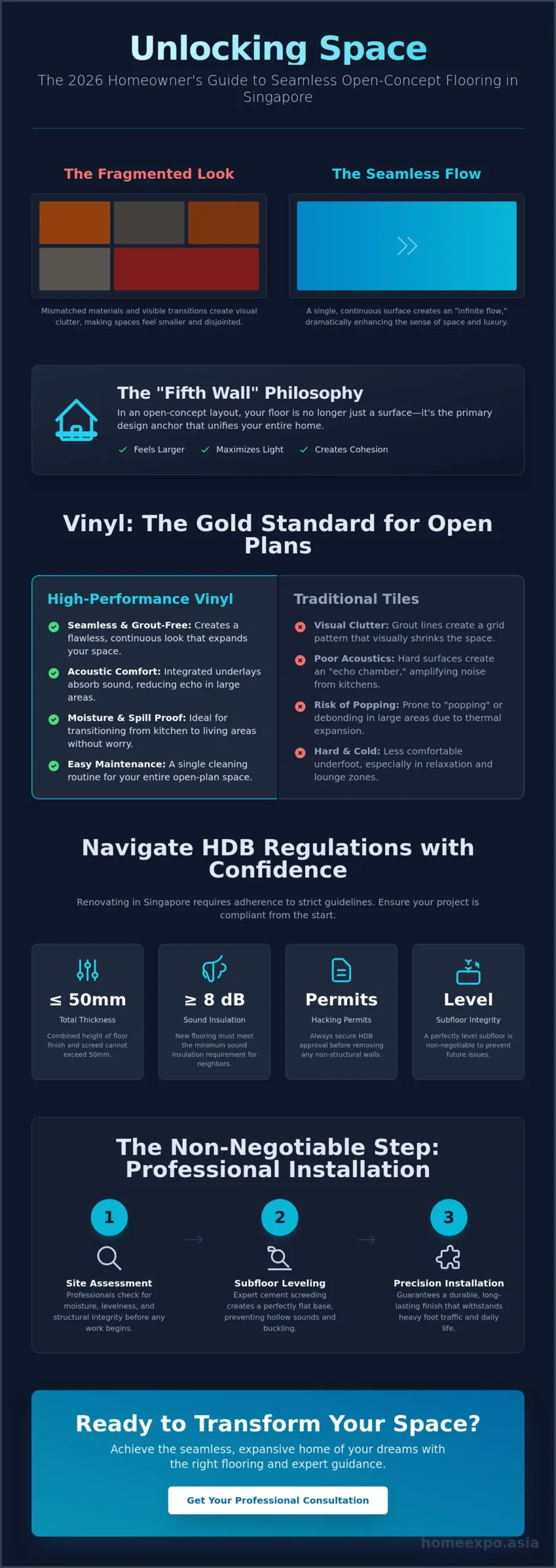
The Fifth Wall Philosophy
Singapore-Specific Constraints
Renovating in Singapore comes with unique challenges. You must navigate strict HDB regulations. For instance, the total thickness of your floor finish and screed cannot exceed 50mm. If you’re doing an overlay, the height limit is 20mm. It’s also vital to address our tropical humidity. Moisture resistance is non-negotiable. Without it, you risk warping or the dreaded “popping tiles” phenomenon. This is especially common in large, unpartitioned areas where thermal expansion occurs. High-quality vinyl flooring for open concept living room installations use advanced core technologies to remain stable despite our heat and moisture levels. Here are a few things to check before starting:
- HDB Hacking Permits: Always ensure your contractor has the necessary approvals before removing walls.
- Subfloor Leveling: Large open areas require a perfectly level subfloor to prevent “hollow” sounds or plank separation.
- Weight Limits: Ensure your chosen material complies with HDB structural load requirements.
- Sound Insulation: New flooring must meet the minimum 8 dB sound insulation requirement to keep neighbors happy.
Top Flooring Options for Open Concept Living Rooms: A 2026 Comparison
Selecting a single surface that transitions from a cooking zone to a relaxation area is a unique challenge. In a large, unpartitioned Singaporean home, acoustics become a major concern. Hard surfaces like marble or ceramic can create an echo chamber, amplifying every clatter from the kitchen. High-quality vinyl flooring for open concept living room installations often includes integrated acoustic underlays. These layers absorb footsteps and ambient noise, making your home feel more intimate and quiet despite the lack of walls. It’s the most practical way to ensure your living area remains a peaceful sanctuary even when someone is busy in the kitchen.
Why has luxury vinyl become the gold standard for Singaporean open plans? It’s the only material that successfully bridges the gap between the rugged durability required for a kitchen and the soft comfort desired for a lounge. Maintaining a single floor type across these zones is much easier than juggling different cleaning routines for tile and wood. For homeowners who value their time, a moisture-resistant, easy-to-clean surface is a game changer. If you’re planning a major renovation, exploring professional flooring installation services can help you identify the best material for your specific layout.
Vinyl Flooring vs. Traditional Tiles
Traditional ceramic or porcelain tiles are a staple in Singapore, but they come with a significant design drawback: grout lines. These lines act as visual speed bumps, breaking the “infinite flow” that makes an open space feel large. Grout also traps dirt and stains, which is a major headache in a high-traffic kitchen area. If you drop a heavy cast-iron pot in an open kitchen, tiles are prone to cracking or chipping. In contrast, vinyl flooring Singapore options offer superior impact resistance. The material is slightly flexible, allowing it to absorb shocks that would shatter traditional masonry.
Engineered Wood vs. Parquet
Natural wood grain looks stunning in a sun-drenched living room, but solid wood and parquet are notoriously temperamental in our tropical humidity. Without walls to contain the floor, large expanses of wood are more susceptible to warping or “cupping” as they react to moisture levels. Modern vinyl flooring for open concept living room designs replicate the intricate textures of oak and walnut with incredible realism. They provide that warm, organic aesthetic without the maintenance burden of constant sanding and varnishing. You get the high-end look of timber with a modern wear layer that stands up to pets, children, and heavy furniture.
The Golden Rule of Continuity: Creating a Seamless Flow
Continuity is the secret to a high-end interior. In the context of flooring, it means using a single material across multiple functional zones without interruption. When you install vinyl flooring for open concept living room projects, you’re creating a unified foundation that ties the kitchen, dining, and lounge areas together. Traditional homes often use different materials to mark boundaries, such as tiles in the kitchen and wood in the living room. However, this creates visual “speed bumps.” These T-molds and transition strips break the visual stretch of a room, making even a large flat feel fragmented and smaller than it actually is.
To maximize the illusion of depth, we recommend the “Long Plank” advantage. By directing the planks parallel to the longest wall or toward the primary light source, you lead the eye across the entire length of the home. This simple orientation creates an immediate sense of scale. Because modern vinyl is completely waterproof and highly durable, you don’t need to change materials at the kitchen entrance. You can maintain a perfectly level surface with zero height differences, which is safer for elderly family members and creates a much cleaner aesthetic.
Eliminating Thresholds and Dividers
Achieving a professional, flush floor across your entire home requires technical precision. The most important factor is the subfloor. Professional cement screeding is non-negotiable to ensure the base is perfectly level. In 2026, Singaporean design trends have moved away from bulky metal divider strips. Homeowners now prefer “hidden transitions” or seamless joins that allow the vinyl to run right up to the cabinetry or walls. This level of detail requires an expert hand but results in a sleek, modern finish that defines luxury living.
Matching Styles Across Zones
Since the same floor will serve different purposes, you must choose a versatile color palette. Neutral tones like light oak, warm sand, or soft greys work beautifully under different lighting conditions. A single flooring material also allows you to be more creative with your vertical surfaces. Many homeowners now complement their floor with strategic wall paneling Singapore to create a cohesive theme. Consider how your lighting changes throughout the day. A consistent floor material will reflect natural morning light in the dining area and warm evening lamps in the lounge with the same organic texture, reinforcing the sense of a singular, harmonious space.
Practical Zoning Techniques: Defining Spaces Without Walls
While we’ve established that continuity is the foundation of a modern home, an unpartitioned space can sometimes feel unanchored or cold. The challenge with vinyl flooring for open concept living room projects is ensuring the area has clear functional “zones” without reintroducing physical walls. You want your lounge to feel cozy and your dining area to feel intimate, even if they share the same floor. Strategic zoning is the solution that transforms a vast, empty room into a collection of purposeful living spaces.
One of the most effective ways to define a zone is through “rug islands.” By placing a large area rug under your sofa set, you create a visual boundary that anchors the furniture. This prevents your lounge pieces from appearing as if they’re “floating” in a sea of vinyl. Similarly, furniture placement acts as a soft boundary. Positioning the back of a sofa toward the dining area or using a low-profile console table can subtly signal a change in function. These techniques allow you to keep the visual stretch of the floor while providing the structure your home needs.
Pattern Play and Directionality
You can also use the floor itself to create boundaries through the “Border” technique. This involves using the same material but changing the laying pattern for specific areas. For example, using herringbone flooring to define a dining nook or an entryway creates a sophisticated feature zone. The texture shift provides a clear visual cue that you’ve entered a different space, even though the material remains consistent. For L-shaped open plans, running planks diagonally can help connect awkward corners and make the transition between the kitchen and living room feel more organic.
The Role of Lighting and Carpentry
Lighting and carpentry work in tandem with your floor to define zones. Cove lighting in a false ceiling can delineate the living area, casting a soft glow that reflects off your vinyl planks to create a warm ambiance. Custom carpentry, such as a built-in shoe cabinet or a breakfast bar, acts as a functional bridge between zones. These elements provide vertical interest that complements your horizontal flooring. Strategic zoning prevents an open-concept room from feeling like a gymnasium. If you’re ready to transform your flat, our team provides professional flooring installation services to help you execute these complex layouts with precision and style.
When selecting your vinyl flooring for open concept living room, consider how the light hits different areas. A zone near a large balcony window will reflect light differently than a darker hallway. By choosing a versatile, high-quality vinyl with a realistic texture, you ensure that every zone looks premium, regardless of the lighting or furniture layout. This balanced approach creates a home that is both spacious and incredibly functional. For those who want to maximize the potential of their open space for hosting special gatherings, you can visit Audiologic to learn more about professional audio and lighting systems.
Professional Installation: Why Quality Matters for Large Areas
While the design of your open-concept home is exciting, the technical execution is where the long-term value lies. Large, unpartitioned areas are particularly sensitive to Singapore’s tropical climate. Because we experience high humidity levels year-round, materials naturally expand and contract. In a small bedroom, this movement is negligible. However, when installing vinyl flooring for open concept living room layouts, the cumulative expansion across a large surface can lead to buckling or “tenting” if not handled by experts. Professional installation ensures that the correct expansion gaps are maintained around the perimeter, hidden discreetly under skirting or cabinetry, to mitigate these risks effectively.
In the kitchen portion of your open plan, a 100% waterproof seal is essential. Even though vinyl is inherently moisture-resistant, water can seep through poorly installed joints and damage the subfloor. Our team focuses on creating a watertight barrier that withstands the spills and heavy cleaning typical of a Singaporean kitchen. This level of precision is why we offer a comprehensive guarantee on our work. We want you to feel total confidence in your investment, knowing your floor is protected against the unique challenges of a large-scale renovation.
Subfloor Preparation and Screeding
A high-end finish is only as good as the surface beneath it. For vinyl, professional subfloor preparation is mandatory. This often involves cement screeding to create a perfectly level base. In HDB flats, we must strictly adhere to the 50mm total thickness limit for floor finishes and screed. A level floor prevents the “hollow” sound often associated with DIY projects and ensures that the click-lock system of your vinyl remains secure for decades. Additionally, we use moisture barriers to prevent mold growth. This is a common issue in our humid environment that can ruin a floor from the bottom up if not addressed during the initial phase.
Choosing a Trusted Singapore Supplier
Choosing the right partner for your renovation means looking beyond the price tag. You need a supplier who understands the nuances of the Singapore market and specific HDB requirements. When evaluating warranties, look for comprehensive coverage that includes wear resistance and structural integrity. It’s also vital to see large-format samples in a showroom before committing. Small swatches don’t reveal the true grain variation of a wood-look plank across a vast living area. Seeing the material at scale helps you visualize the final result with much better accuracy. Book a free site measurement with Home Expo Asia today to ensure your vinyl flooring for open concept living room is installed with the expertise your home deserves.
Elevate Your Living Space with Seamless Design
Achieving a spacious and modern home starts with the right foundation. By prioritizing the golden rule of continuity, you can eliminate visual clutter and make your flat feel significantly larger. Choosing high-performance vinyl flooring for open concept living room projects ensures that your home remains durable, easy to clean, and visually stunning for years to come. Remember that professional subfloor preparation is the secret to preventing buckling in large areas; don’t overlook the technical details that protect your investment. We’ve seen how strategic zoning and the right material choice can transform a standard layout into a luxury experience.
We provide everything you need for a successful renovation. With over 200+ designs available and specialized HDB and Condo installation teams, we ensure a flawless finish every time. You’ll benefit from our comprehensive after-sales support and industry-standard warranties for total peace of mind. Transform your open-concept home with Singapore’s leading vinyl experts and Get a Quote. Your dream home is just one seamless floor away. We look forward to helping you build a space that you’ll love for a lifetime.
Frequently Asked Questions
Is vinyl flooring really durable enough for an open-concept kitchen and living room?
Modern luxury vinyl is specifically engineered to withstand high-traffic residential environments. It features a heavy-duty wear layer that resists scratches, stains, and impact damage from dropped kitchenware. Since it is 100% waterproof, it handles kitchen spills and frequent mopping without warping or swelling. This makes it a superior choice for a unified floor that spans both cooking and relaxation zones in a busy Singaporean home.
Can I use different flooring materials in an open-concept space without it looking messy?
It is possible, but you must prioritize flush transitions to avoid a cluttered look. If you choose to mix materials, use neutral color palettes that share similar undertones to maintain visual harmony. Avoid bulky transition strips; instead, request professional joins where materials meet. However, using a single vinyl flooring for open concept living room layout remains the most effective way to ensure a clean, spacious aesthetic.
How do I prevent my open-concept floor from sounding hollow when walking?
The key to eliminating hollow sounds is professional subfloor leveling and the use of high-quality underlays. Ensure your installer performs cement screeding to remove any gaps between the vinyl and the concrete base. Additionally, selecting planks with integrated acoustic foam backing significantly reduces footfall noise. This is essential for meeting HDB sound insulation requirements while improving your home’s overall comfort and quietness.
Do I need HDB permits to change the flooring in my open-concept living room?
You generally need an HDB renovation permit if your project involves hacking existing tiles or altering the floor’s structural thickness. However, if you are performing a direct overlay with vinyl, a permit is often not required. Always check the latest HDB guidelines, as rules regarding waterproofing in wet areas and total floor height limits are strictly enforced to ensure building safety and neighborly peace.
What is the best floor color for making a small open-concept flat look bigger?
Light tones like Scandinavian oak, soft greys, or warm beige are the most effective for expanding a space visually. These colors reflect more natural light, making a standard flat feel airy and less confined. Pair these with a matte finish to hide dust and footprints. Consistent light coloring across the entire open-concept area creates an “infinite flow” that tricks the eye into perceiving more square footage.
How do I maintain a seamless look when transitioning from the living room to the balcony?
Use a flush-level approach by ensuring the balcony floor height matches the living room exactly. While you can use vinyl indoors, balconies often require weather-resistant materials like outdoor decking. To maintain the seamless look, choose an outdoor material that matches the color and texture of your indoor vinyl as closely as possible. This creates a visual extension of your living space into the outdoors without a jarring break.
Is herringbone or straight plank better for a large open-plan area?
Straight planks are generally better for maximizing the feeling of space in large areas as they create long, uninterrupted lines. They are also more cost-effective and faster to install for most layouts. Herringbone patterns are excellent for defining specific feature zones, such as a dining nook, but can sometimes make a very large room feel visually busy if used across every square inch of the flat.
How long does it take to install vinyl flooring in a standard 4-room HDB open-concept area?
A professional installation for a standard 4-room HDB flat typically takes between one to three days. This timeline assumes the subfloor is already prepared and level. If your project requires cement screeding or the removal of old tiles, the process may extend by an additional two to four days to allow for drying and preparation. Our specialized teams prioritize efficiency to minimize disruption to your home life.