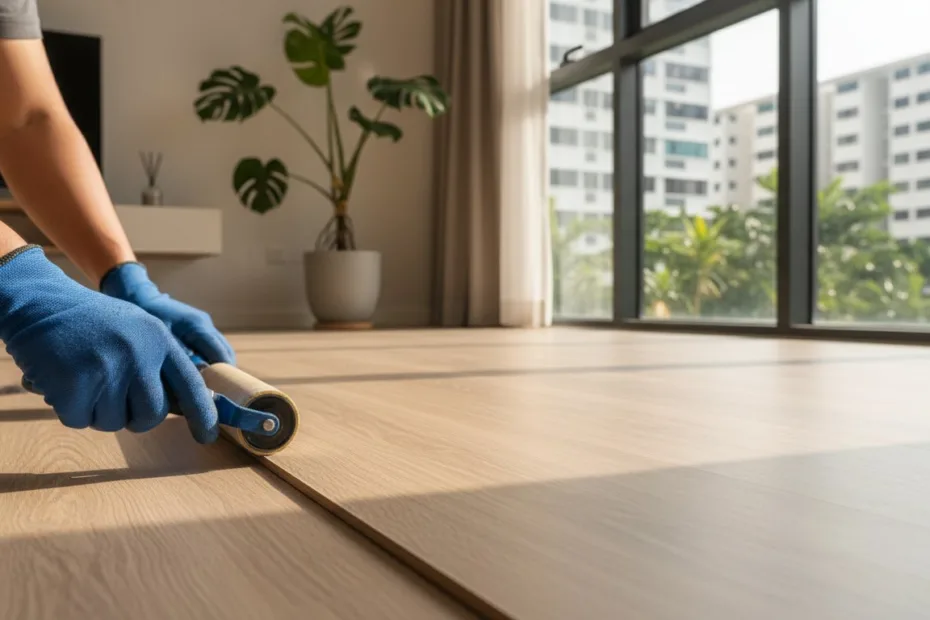
That lifted edge in your living room isn’t just an eyesore; it’s a safety hazard that often signals a deeper moisture issue beneath your feet. You might notice dust trapping under the material or feel a slight trip every time you walk into the kitchen. It’s frustrating. You’ve worked hard to maintain a beautiful home, and seeing gaps appear can feel like a major setback.
We’re here to help you regain your peace of mind. This 2026 guide provides a professional vinyl flooring peeling at edges fix that addresses the root cause rather than just patching the surface. Our goal is to provide the expert knowledge you need to restore your floors to a seamless finish and prevent future lifting.
We’ll walk you through identifying moisture triggers, applying industry-standard adhesives, and understanding HDB requirements for subfloor preparation. From eco-certified material choices like the Singapore Green Label to professional-grade repair techniques, you’ll learn exactly how to secure your investment for the long term. Whether your floor is salvageable or requires a more robust intervention, we have the reliable answers you need.
Key Takeaways
- Identify the primary culprits behind lifting edges, from adhesive degradation to the absence of essential expansion gaps.
- Learn a professional-grade vinyl flooring peeling at edges fix using simple tools like a hair dryer and seam roller to restore your floor’s flush appearance.
- Understand how Singapore’s high humidity and cement screed conditions impact vinyl adhesion and how to mitigate these environmental risks.
- Evaluate the severity of the damage to determine if a quick DIY repair is sufficient or if the floor requires a professional-grade restoration.
- Discover how expert subfloor preparation and high-standard installation techniques provide a permanent solution to persistent peeling issues.
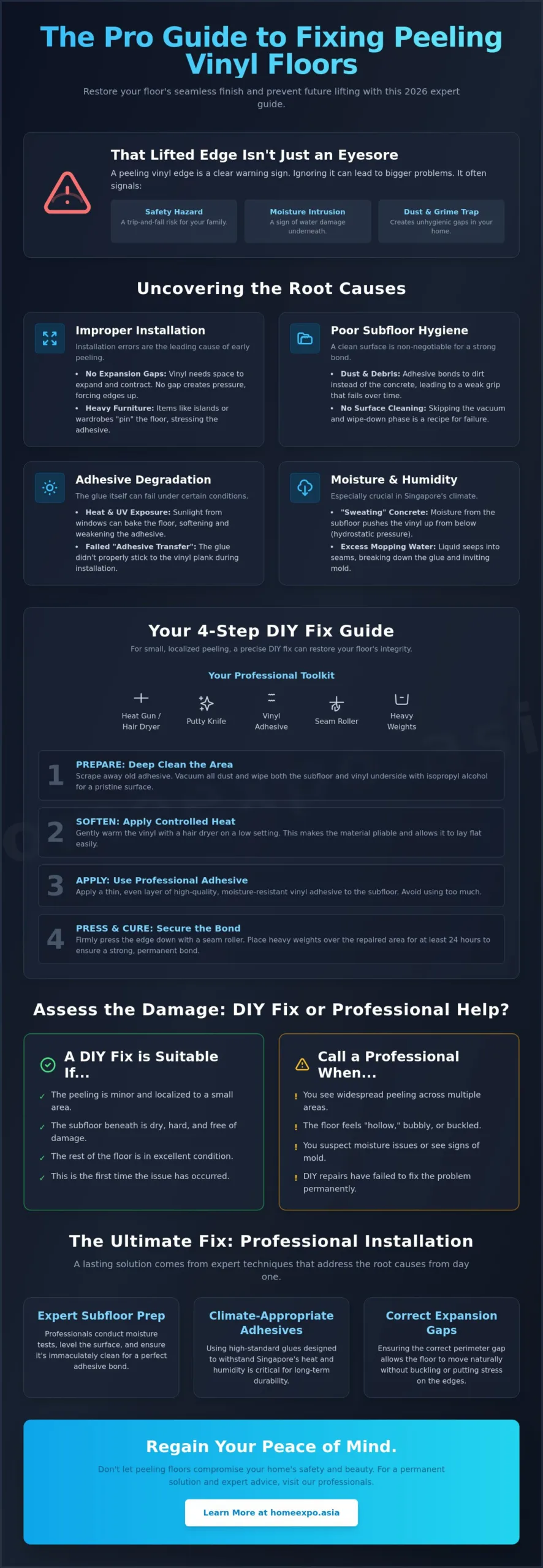
Common Causes: Why is Your Vinyl Flooring Peeling at the Edges?
Understanding why your floor is lifting is the first step toward a permanent vinyl flooring peeling at edges fix. Most homeowners assume it’s just a “bad batch” of glue, but the reality is often more complex. In Singapore, environmental factors and installation oversights are the leading causes of perimeter failure. If you don’t address these root issues, any repair you attempt will likely fail within months.
One frequent culprit is the lack of proper expansion gaps. Vinyl expands and contracts with temperature changes. If the flooring is installed flush against the wall without a small gap, it has nowhere to go. This creates internal pressure that forces the edges to buckle and peel. Similarly, placing heavy furniture like wardrobes or kitchen islands too close to the perimeter can “pin” the floor in place. This prevents natural movement and puts immense stress on the adhesive bond at the edges. It’s a common mistake that leads to unnecessary repairs.
Poor subfloor hygiene during the initial installation also plays a major role. If the concrete wasn’t vacuumed or wiped down before the sheet vinyl flooring or planks were laid, the glue bonds to dust rather than the floor. This leads to early peeling as the adhesive loses its grip over time. A clean surface is non-negotiable for a professional finish.
The Role of Adhesive Degradation
Singapore’s intense heat and UV exposure can be brutal on flooring. Large windows often allow sunlight to bake specific areas of the floor, causing the adhesive to soften and lose its tackiness. Most modern installations use pressure-sensitive adhesives, which stay slightly tacky to allow for movement. However, extreme heat can cause these to fail prematurely. In contrast, hard-set glues offer a more rigid bond but can become brittle if exposed to constant temperature swings. A critical concept to understand is “adhesive transfer.” This occurs when the glue successfully sticks to both the subfloor and the vinyl. If you lift a peeling edge and the back of the plank is clean, the adhesive failed to transfer during the initial press.
Moisture and Subfloor Issues
Concrete slabs in HDB flats are notorious for “sweating.” This occurs when moisture trapped inside the slab rises to the surface, a process known as hydrostatic pressure. This invisible force can push the vinyl away from the subfloor, starting at the weakest points: the edges. You might notice tiny bubbles or a “hollow” sound before the peeling becomes visible. Be careful with your maintenance routine too. Using excessive water while mopping near the skirting boards allows liquid to seep into the seams. Once water gets under the vinyl, it breaks down the adhesive bond and creates a breeding ground for mold. This makes a simple vinyl flooring peeling at edges fix much more difficult to achieve without professional help.
Vinyl Flooring Peeling at Edges Fix: A Step-by-Step DIY Guide
Achieving a flush finish requires more than just a squeeze of glue. Precision is your best friend when attempting a vinyl flooring peeling at edges fix. A simple patch job often fails because homeowners skip the vital preparation stages. By following a methodical approach, you can restore your floor’s integrity and safety without calling in a full renovation team immediately. Before you begin, ensure you have the right tools for a professional result.
- Handheld hair dryer or heat gun (on low setting)
- High-quality, moisture-resistant vinyl adhesive
- Handheld seam roller
- Heavy weights, such as large books or weighted containers
- Small putty knife or scraper
Step 1 involves deep cleaning. You must remove every speck of dust and old residue from both the subfloor and the underside of the vinyl. Use a vacuum followed by a damp cloth with a bit of isopropyl alcohol to ensure a pristine surface. Step 2 requires controlled heat. Use your hair dryer to gently warm the vinyl until it becomes soft and pliable. This allows the material to lay flat without resisting the new adhesive. Step 3 is the application of a professional-grade, moisture-resistant adhesive. Apply it sparingly to avoid mess. Finally, Step 4 is the curing phase. Use a seam roller to press the edge down firmly; then place heavy weights over the area for at least 24 hours.
Preparing the Peeling Area
Old, brittle adhesive is the enemy of a new bond. Use a putty knife to carefully scrape away the dried glue without gouging the subfloor. Once the area is clear, perform a “dry-fit.” Press the heated vinyl down to see if it sits perfectly flush. If it still resists, apply more heat. For tight corners near door frames or built-in cabinets, a small brush can help apply adhesive into the narrowest gaps where a nozzle cannot reach.
The Gluing and Sealing Process
For small, localized repairs, double-sided vinyl tape is a quick option. However, for a long-term vinyl flooring peeling at edges fix, liquid moisture-resistant adhesive is superior. To avoid “adhesive ooze” that can ruin your floor’s finish, apply the glue about half an inch away from the very edge. When you roll the floor, the glue will spread to the perimeter without spilling over. Most professional-grade adhesives require a full 24-hour curing period. Keep the repair zone free of foot traffic during this time to ensure the bond remains undisturbed. If the damage is widespread, it might be time to consider a professional flooring installation service to ensure your subfloor is properly leveled and sealed.
The Singapore Factor: Humidity and Cement Screed Challenges
Singapore’s tropical climate isn’t just tough on people; it’s a major stress test for your home’s surfaces. Standard flooring adhesives often struggle when relative humidity consistently exceeds 80%. This moisture doesn’t just stay in the air. It can become trapped between the vinyl and the underlying cement screed. When moisture vapor rises from the slab, it creates a “greenhouse effect” that weakens the chemical bond of the glue. This is why a vinyl flooring peeling at edges fix in Singapore requires a more robust approach than in drier climates.
In older HDB flats, we often see the “popping tile” phenomenon. If your vinyl was laid over existing ceramic tiles, any delamination of those tiles will immediately affect the top layer. As the old tiles lift or buckle due to age, they push against the vinyl perimeter. This makes a localized vinyl flooring peeling at edges fix nearly impossible without first addressing the structural issues of the subfloor. Maintaining a dry indoor environment is your first line of defense. Use dehumidifiers during the monsoon season and avoid leaving windows open during heavy rain to keep moisture levels stable.
HDB and Condo Subfloor Specifics
New BTO flats present a unique challenge. Even if the floor looks dry to the naked eye, the concrete might still hold deep-seated moisture. Professional installers in Singapore use specialized moisture meters to ensure the screed is fully cured before installation begins. Another factor is the frequent use of air-conditioning. Switching your AC on and off creates rapid temperature swings. This causes the vinyl to expand and contract multiple times a day, which puts immense pressure on the edge bonds. Reliable experts mitigate this by using high-tack, temperature-stable adhesives designed for commercial-grade performance.
Preventing Edge Lifting in High-Humidity Areas
Kitchens and areas near balcony sliding doors are high-risk zones. These spots face direct sunlight and frequent spills. Instead of relying only on adhesive, consider using silicone sealing at the perimeters to create a waterproof barrier. This prevents liquid from seeping under the planks and rotting the glue. For a successful outcome, the acclimation period is vital; vinyl must sit in your Singapore home for at least 48 hours to adjust to the local humidity before installation. Using transition strips at doorways also helps by allowing the floor to move independently without pulling at the edges.
Assess the Damage: When is a Fix Not Enough?
Not every lifted edge can be saved with a tube of adhesive. Before committing to a vinyl flooring peeling at edges fix, you must perform a thorough inspection. If the peeling is limited to a single corner near a heavy piece of furniture, a DIY repair is likely sufficient. However, if you notice lifting across the entire room perimeter, the underlying cause is probably systemic. This often points to widespread moisture infiltration or a failure in the original installation process. You don’t want to spend hours on a repair only for the next plank to fail a week later.
You should also distinguish between “peeling” and “peaking.” Peeling is simply the adhesive losing its grip. Peaking occurs when the planks expand and press against each other, forcing the edges upward into a “V” shape. Glue won’t solve peaking; the floor needs more space to breathe. Additionally, check the underside of the lifted material for mold or mildew. If you find dark spots or a musty odor, the health of your home is at risk. In these cases, a simple patch won’t suffice. Finally, test the flexibility of the vinyl. If it feels brittle or cracks when you gently lift it, the material has reached the end of its lifespan.
Signs of Irreparable Damage
- Warping and Cupping: If the vinyl has developed a permanent “memory” of being curved, it will constantly pull away from even the strongest glue.
- Wear Layer Separation: When the decorative top layer peels away from the core material, the plank is structurally compromised and cannot be restored.
- Subfloor Failure: If the underlying concrete is damp or crumbling, you need a more permanent flooring singapore solution to protect your property.
Cost-Benefit Analysis: Repair vs. Partial Replacement
Repairing a few edges is cost-effective, but extensive DIY work consumes significant time and money. One major challenge with partial replacement is color matching. Vinyl batches change over time, and even the same product name might look different after a few years of UV exposure in your home. A patched floor often looks disjointed, which can negatively impact your property’s resale value. If more than 20% of your floor is showing signs of distress, a full replacement is usually the smarter long-term investment. For a result that stands the test of time, consider a professional vinyl flooring installation to ensure your subfloor is perfectly prepared and your edges are sealed for life.
The Ultimate Fix: Professional Vinyl Flooring Installation
A DIY vinyl flooring peeling at edges fix is an excellent short-term solution for minor lifts. However, when the damage is widespread or recurring, a professional installation is the only way to ensure long-term peace of mind. At Home Expo Asia, we don’t just lay planks; we engineer a flooring system designed to thrive in Singapore’s unique environment. Our team adheres to the highest vinyl flooring singapore standards, ensuring every square foot is secure, safe, and beautiful.
Professional installation eliminates the root causes of edge peeling before they even begin. We start with rigorous subfloor preparation, which includes moisture testing and precision leveling of the cement screed. By creating a perfectly flat and dry foundation, we ensure the adhesive achieves a 100% transfer rate. We use industrial-grade, climate-specific adhesives that are formulated to resist the high humidity levels typical of our local climate. This creates a bond that store-bought glues simply can’t match. When you choose an expert service, you aren’t just buying a floor; you’re investing in a comprehensive after-sales warranty and dedicated support.
Why Home Expo Asia is the Trusted Choice
We believe in transparency and external validation. Our materials undergo rigorous testing by professional bodies to certify their durability and eco-safety. With over 200 designs to choose from, you don’t have to sacrifice style for stability. Our process includes:
- Expert Site Assessment: We identify potential moisture traps and structural risks before work starts.
- Integrated Carpentry: Our carpenter singapore partners ensure that skirting and edge finishes are perfectly fitted to block dust and moisture.
- Certified Quality: We prioritize materials with the Singapore Green Label and Green Guard Gold Certification for a healthier home.
Ensuring Your New Floor Lasts a Decade
Longevity is built into our methodical installation rhythm. We never rush a job because we know that quality takes time. Our technicians use advanced perimeter sealing techniques that create a waterproof barrier at the edges, preventing the moisture infiltration that leads to peeling. This meticulous attention to detail ensures that your floor remains flush and seamless for years to come. We take the guesswork out of home renovation by providing official documentation and clear financial clarity from day one. Ready to restore your home’s value and safety? Get a risk-free quote for your dream flooring today and experience the difference of professional craftsmanship.
Secure Your Flooring Investment for the Long Term
Your home deserves a floor that is both safe and visually stunning. We have explored how environmental stressors like Singapore’s humidity and improper subfloor preparation lead to lifting. While a vinyl flooring peeling at edges fix can address immediate tripping hazards, the most reliable way to prevent future issues is through expert installation. Choosing high-quality materials and climate-specific adhesives ensures your surfaces remain flush and secure for years to come.
At Home Expo Asia, we provide the expertise needed to transform your living space with confidence. Our team offers expert site assessments for Singaporean homeowners to identify potential risks before they become costly repairs. With over 200+ designs available and comprehensive warranties on installation, you can rest easy knowing your project is in professional hands. We prioritize safety and durability in every plank we lay.
Don’t let peeling edges diminish the beauty of your home. Restore your home with professional vinyl flooring installation from Home Expo Asia. We are ready to help you create a seamless, high-quality finish that stands the test of time.
Frequently Asked Questions
Can I use super glue to fix peeling vinyl flooring edges?
You should avoid using standard super glue for a vinyl flooring peeling at edges fix. Super glue dries into a brittle state that cannot handle the natural expansion and contraction of your floor. This often leads to the bond cracking or damaging the vinyl backing. Instead, choose a specialized pressure-sensitive or hard-set vinyl adhesive that maintains flexibility over time.
How long does a vinyl floor repair typically last?
A properly executed repair can last for several years if the root cause, such as moisture or lack of expansion gaps, is addressed. However, a quick surface-level patch without cleaning the subfloor might only hold for a few months. For a permanent solution, ensure the area is completely dry and free of old residue before applying new adhesive.
Will my landlord deduct my deposit for peeling vinyl edges in an HDB flat?
Peeling edges are often classified as fair wear and tear in HDB flats, but this depends on your specific tenancy agreement. If the damage is caused by negligence, such as using a soaking wet mop, the landlord might have grounds to deduct from your deposit. It’s best to document the condition and attempt a professional-looking repair or consult your landlord early to avoid disputes.
Is peeling vinyl a sign of termites or water damage?
Peeling is most commonly a sign of moisture infiltration or adhesive failure rather than termites. Since vinyl is a synthetic material, it doesn’t attract termites, though they may travel underneath it to reach wooden structures. If you notice swelling or a musty odor alongside the peeling, it’s a strong indicator of water damage or hydrostatic pressure from the concrete slab.
What is the best adhesive for fixing loose vinyl planks in Singapore?
The best choice for the Singaporean climate is a high-tack, moisture-resistant pressure-sensitive adhesive. These products are specifically formulated to handle the high humidity levels that standard glues cannot withstand. Look for adhesives that offer a strong initial grab while remaining flexible enough to accommodate the temperature swings caused by air-conditioning cycles in local homes.
How much does it cost to professionally fix a peeling vinyl floor?
Professional repair costs depend on the extent of the damage and whether the subfloor requires treatment. While minor edge repairs are relatively affordable, a full room perimeter restoration involves more labor and specialized materials. You should check with a local flooring specialist for a site assessment to determine if a localized vinyl flooring peeling at edges fix or a partial replacement is more cost-effective.
Can I fix peeling vinyl without a hair dryer?
You can attempt a repair without a hair dryer, but it’s significantly more difficult to get the vinyl to lay perfectly flush. Heat softens the material and makes it pliable, which is essential if the plank has developed a “curl” from being lifted. If you don’t have a hair dryer, you’ll need to apply much heavier weights for a longer period to force the material back into place.
Does humidity make vinyl flooring expand or shrink?
High humidity levels cause vinyl flooring to expand, while drier air from air-conditioning can cause it to shrink slightly. In Singapore, the constant high humidity often leads to expansion, which puts pressure on the edges if proper gaps weren’t left during installation. This cycle of movement is one of the primary reasons why edges eventually lose their bond and begin to lift.