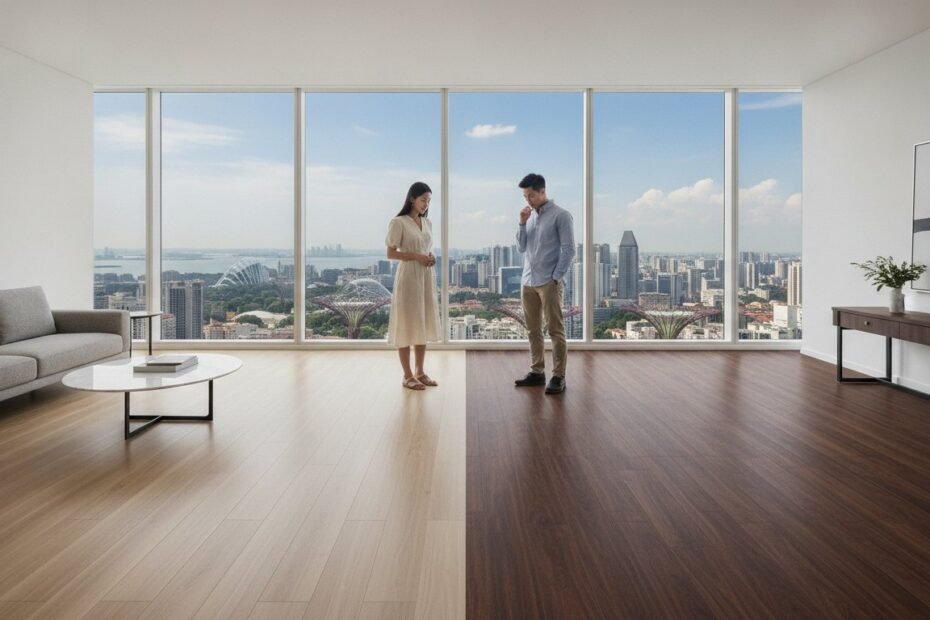
What if the stunning wood-look floor you just installed in your HDB flat is actually a ticking time bomb for humidity damage and termite infestations? When weighing the pros and cons of vinyl vs laminate flooring singapore homeowners often find themselves caught between aesthetic appeal and the harsh reality of our tropical climate. While both options offer a premium timber appearance without the high cost of solid wood, the wrong choice can lead to warped planks and costly repairs within just a few years.
We believe your home is your sanctuary, and you deserve a flooring solution that provides total peace of mind for the next decade. It’s stressful to worry about hidden installation costs or materials that swell at the first sign of a kitchen spill. This 2026 guide compares the durability, moisture resistance, and latest market pricing for these popular materials to ensure you make a safe investment. You’ll learn how to achieve a 100% waterproof result that meets all HDB regulations and safety standards. We’ll preview the technical performance and maintenance benefits that help you choose the best flooring for your specific lifestyle and budget.
Key Takeaways
- Understand why 100% moisture resistance is critical for Singapore’s humidity and which materials offer total protection against warping.
- Compare the 2026 vinyl vs laminate flooring singapore pricing landscape to identify hidden installation fees before you commit to a renovation.
- Learn how to safeguard your property against termite infestations by selecting flooring with inorganic, resilient core technology.
- Discover the acoustic differences between flooring types to maintain a peaceful home environment in high-density HDB or condo living.
- Evaluate the long-term maintenance requirements of different materials to achieve a premium wood-look without the hassle of traditional timber.
Understanding the Basics: What is Vinyl vs Laminate Flooring?
Selecting the right surface for your home involves more than just picking a pretty pattern. For those comparing vinyl vs laminate flooring singapore residential projects usually focus on two specific material compositions. Vinyl is a fully synthetic product designed for maximum resilience. Laminate is a multi-layer flooring product fused together with a lamination process. While they look similar on the surface, their internal structures are fundamentally different. These two remain the premier choices for flooring in Singapore because they offer a high-end wood aesthetic at a fraction of the cost of natural timber.
The primary distinction lies in the core material. Vinyl uses a stone-plastic composite core, making it immune to moisture. Laminate uses a wood-pulp core, which provides a rigid feel but remains susceptible to water damage. Understanding these Flooring materials helps you identify which one will survive the humidity of a local HDB or condo environment over the next 15 years without warping or attracting pests.
The Anatomy of Modern Vinyl (SPC)
Modern vinyl has transitioned into Stone Polymer Composite (SPC) technology. This rigid core construction is engineered for stability, safety, and long-term performance. It typically consists of several high-performance layers that work together to protect your investment. The UV coating acts as a shield against fading, which is essential for Singapore homes with large windows. Below that, a transparent wear layer guards against daily foot traffic. The limestone-based core is the standout feature; it’s 100% waterproof and won’t expand or contract with temperature changes. Many premium designs also include an integrated underlayment. This built-in layer is crucial for HDB owners as it reduces noise transmission to neighbors downstairs and provides a comfortable, cushioned walking experience.
The Structure of Laminate Planks
Laminate flooring is constructed using a High-Density Fibreboard (HDF) core. This core is made from highly compressed wood fibers and resin, which gives the floor a sturdy, solid walking feel that closely mimics real hardwood. The surface is protected by a melamine resin and an aluminium oxide top layer. This specific coating provides exceptional resistance to surface scratches from heavy furniture or active pets. However, the organic wood-pulp base is the material’s greatest vulnerability. Because the core is wood-based, it naturally absorbs liquid ingress. If humidity levels are high or water seeps through the joints, the HDF core can swell. This often leads to permanent warping, making it a riskier choice for kitchens or areas prone to spills.
The Tropical Durability Test: Humidity, Water, and Termites
Singapore’s climate presents a unique set of challenges that standard flooring guides often ignore. With average humidity levels frequently exceeding 80%, the choice between vinyl vs laminate flooring singapore becomes a matter of long-term structural integrity. While both materials can look identical on day one, our tropical environment acts as a stress test that reveals their true durability. Vinyl is engineered as a 100% waterproof solution, whereas laminate remains inherently sensitive to liquid and moisture ingress due to its organic components.
A common but overlooked issue in local condos and HDBs is air-con condensation. When you blast the air-conditioning in a bedroom, the temperature difference between the cooled room and the warmer sub-floor can cause moisture to collect beneath the planks. For wood-based materials, this trapped moisture is a recipe for disaster. Vinyl’s synthetic SPC core doesn’t react to these shifts, providing a stable foundation that won’t rot or grow mold in hidden corners. If you’re planning a renovation, it’s wise to consult with professional installation experts who understand these local sub-floor conditions.
Why Humidity is the Silent Killer of Laminate
Laminate flooring relies on a High-Density Fibreboard (HDF) core. In Singapore’s relentless heat and humidity, these wood fibers naturally absorb airborne moisture, causing the planks to swell. If the installation didn’t include sufficient expansion gaps, you might experience “peaking.” This is where the planks push against each other and lift at the joints, creating unsightly ridges. Vinyl remains completely stable in these conditions, making it the superior choice for high-moisture areas like kitchens or rooms adjacent to open balconies.
Pest Resistance and Peace of Mind
Termites are a significant concern in mature Singapore estates and landed properties. While modern laminate is treated with resins to deter pests, its wood-pulp core still contains cellulose, which is a food source for termites. In contrast, vinyl is entirely inorganic. Its stone-polymer composition offers no nutritional value to insects, making it a “fit and forget” solution for homeowners who want to avoid the nightmare of a pest infestation.
- Vinyl: 100% waterproof, termite-proof, and stable under air-con condensation.
- Laminate: Water-resistant surface only; prone to swelling at the joints and marginal pest risk.
- Climate Fit: Vinyl is the safer investment for Singapore’s high-humidity environment.
Cost Analysis: Initial PSF vs. Long-Term Value in 2026
Financial clarity is the foundation of a successful home renovation. When evaluating vinyl vs laminate flooring singapore homeowners often look at the price per square foot (PSF) as the primary deciding factor. In 2026, the market has shifted. While laminate remains the entry-level choice with prices starting from approximately S$4.80 to S$10.00 PSF, high-quality vinyl flooring typically ranges from S$6.00 to S$13.00 PSF. However, focusing solely on the material cost can be a costly mistake. You must account for the total investment, including preparation and longevity, to find the true value.
Hidden costs often surprise HDB and condo owners during the final billing phase. These typically include sub-floor cement screeding, professional skirting installation, and door trimming. Because vinyl is thinner and more flexible, it often requires a perfectly level sub-floor, which might add to your screeding costs. Conversely, laminate’s thickness can necessitate door trimming to ensure proper clearance. Despite these variables, vinyl holds a significant edge in lifespan. A professional vinyl installation lasts between 10 to 20 years, whereas laminate often requires replacement within 7 to 12 years due to wear and moisture issues.
Upfront Costs and Installation Speed
One of the biggest financial advantages of choosing vinyl flooring in Singapore is the ability to overlay. For a standard 4-room HDB flat, overlaying vinyl directly onto existing tiles can save you between S$1,500 and S$2,500 in hacking fees and permit costs. Laminate also uses a click-lock system, but it requires a high-quality moisture-resistant underlay to protect its wood-based core. This adds another layer of material cost that many owners forget to budget for. Vinyl’s rapid installation means lower labor costs and less downtime for your family.
Maintenance and Replacement ROI
The return on investment (ROI) for flooring is measured in maintenance hours and replacement frequency. Vinyl offers a “zero-cost” maintenance profile. It only requires simple sweeping and damp mopping with standard household cleaners. It doesn’t need specialized waxes or protective coatings. Laminate is more temperamental; if a single plank in the middle of your living room swells due to a spill, replacing it often involves dismantling large sections of the floor. This labor-intensive process makes minor repairs expensive. Over a decade, the total cost of ownership for vinyl is almost always lower for active Singaporean households.
- Resale Value: Modern buyers in Singapore prioritize “move-in ready” homes.
- Durability: Floors that are 100% waterproof and termite-resistant add tangible value to your property valuation.
- Peace of Mind: Investing slightly more upfront for vinyl eliminates the risk of emergency repairs caused by humidity.
Aesthetics, Comfort, and the ‘Feel’ Underfoot
Visual appeal is often the first thing homeowners notice, but the daily tactile experience is what truly defines your living space. When comparing vinyl vs laminate flooring singapore residents frequently ask about the “plastic” feel associated with older materials. In 2026, technology has bridged this gap. Modern vinyl uses high-definition decorative layers that replicate the intricate knots and grains of natural timber. While laminate has historically been praised for its rigid, wood-like melamine texture, the latest vinyl collections offer a sophisticated finish that is indistinguishable from real wood to the untrained eye.
Beyond the look, the acoustic performance of your floor affects your home’s tranquility. Laminate is known for a distinct “click-clack” sound when walking in heels or hard-soled shoes. This is due to its rigid HDF core and the air gap often found in floating floor installations. Vinyl provides a much quieter footfall. It stays cooler in non-aircon rooms, making it a practical choice for Singapore’s tropical heat. If you want to see these textures in person, you can explore our design gallery to feel the difference for yourself.
The Evolution of Vinyl Aesthetics
Modern manufacturing now utilizes Embossed-In-Register (EIR) technology. This process aligns the surface texture perfectly with the printed wood grain, so your fingers feel exactly what your eyes see. This realism has made premium vinyl a favorite for complex layouts. With over 200 designs available, homeowners can easily achieve trendy herringbone flooring patterns that were once reserved for expensive parquet. Unlike laminate, which often features micro-bevelled edges that can trap dust, modern vinyl offers a more seamless joint for a cleaner, contemporary aesthetic.
Walking Comfort and Acoustic Performance
Comfort is a primary concern for families with toddlers or elderly members. Vinyl planks often come with an integrated IXPE underlayment. This closed-cell foam provides superior cushioning and shock absorption compared to the hard, unforgiving surface of laminate. It’s not just about comfort; it’s about being a good neighbor. In multi-storey HDB flats, the sound-dampening properties of vinyl help you meet acoustic standards by reducing impact noise transmission to the units below.
- Visuals: Vinyl offers high-definition realism with EIR texture matching.
- Sound: Vinyl is significantly quieter than the resonant “hollow” sound of laminate.
- Temperature: Vinyl stays naturally cooler underfoot in humid conditions.
- Seamlessness: Tighter joints in vinyl prevent dirt buildup compared to bevelled laminate.
Final Verdict: Which Flooring Should You Choose in 2026?
Making the final call on vinyl vs laminate flooring singapore depends on your household’s specific needs and the long-term plans for your property. For the majority of Singaporean homeowners in 2026, premium vinyl has become the gold standard. Its 100% waterproof nature and immunity to tropical humidity make it a safer, more reliable investment for active families. However, laminate still holds a place for those on a strict budget who prioritize surface hardness in dry, low-moisture areas like guest bedrooms or home offices.
Before you sign a renovation contract, use this quick checklist to ensure your choice aligns with your lifestyle. Choose laminate if you require maximum scratch resistance for heavy furniture and don’t mind the risk of moisture sensitivity. Choose vinyl if you have children or pets, want a floor that can be damp-moped daily, or seek a “fit and forget” solution that lasts up to 20 years. Our final recommendation for 2026 is to prioritize Stone Plastic Composite (SPC) vinyl for its superior stability in our local climate.
HDB and MCST Regulatory Considerations
Compliance is just as important as aesthetics. For HDB BTO renovations, the total thickness of your floor finishes and screed must not exceed 50mm. If you’re opting for an overlay using adhesive, the new layer must be 13mm or thinner to meet safety standards. Condo owners must also navigate MCST requirements; many management committees mandate specific acoustic underlays to reduce impact noise transmission. Professional installation is critical here. An experienced team ensures that your flooring meets these technical benchmarks, protecting your warranty and preventing disputes with building management.
Why Home Expo Asia is Your Ideal Flooring Partner
Selecting the right material is only half the battle. The quality of the installation determines whether your floor lasts two years or twenty. We specialize in high-quality vinyl flooring designed specifically for the unique demands of Singaporean homes. With over 200 designs available, you can achieve any look from rustic oak to modern concrete without the maintenance headaches of traditional materials. Our team provides professional installation backed by comprehensive warranties, ensuring your home remains beautiful and safe for a decade or more.
We believe in transparency and financial clarity. This is why we offer a free site assessment to check your sub-floor condition and provide an accurate, no-hidden-cost quotation. Don’t leave your home’s foundation to chance. High-quality materials and expert craftsmanship are the keys to a stress-free renovation. Contact Home Expo Asia for your free flooring quote today and take the first step toward a more durable, beautiful home.
- Expert Guidance: Over a decade of experience in HDB and condo renovations.
- Design Variety: Access over 200 premium wood-look and stone-look designs.
- Risk Mitigation: Professional installation that adheres to all HDB and MCST regulations.
- Long-Term Support: Comprehensive warranties and dedicated after-sales service.
Secure Your Home’s Value with the Right Flooring Choice
Choosing between vinyl vs laminate flooring singapore boils down to balancing your lifestyle needs with our unique tropical climate. While laminate offers impressive scratch resistance, modern SPC vinyl provides the 100% waterproof security and termite protection essential for long-term peace of mind in HDB and condo environments. Investing in a resilient material now prevents costly warping and moisture-related maintenance issues in the decade to come.
We are here to ensure your renovation is a success from the very first plank. With over 200 designs available, our expert Singapore installation team delivers quality results backed by a comprehensive warranty and after-sales support. Take the guesswork out of your renovation by speaking with a professional who understands the specific technical requirements of your property. We’ll help you navigate HDB regulations and MCST rules to ensure a smooth, worry-free experience.
Get Your Free Site Assessment and Flooring Quote from Home Expo Asia
Your dream home deserves a foundation that looks premium and performs perfectly under pressure. We look forward to helping you create a space that stays beautiful for years to come.
Frequently Asked Questions
Is vinyl flooring cheaper than laminate in Singapore for 2026?
Laminate usually has a lower upfront material cost, but vinyl is often more cost-effective when you consider the total installation. While laminate starts around S$4.80 per square foot, vinyl typically starts at S$6.00. However, vinyl allows you to overlay existing tiles, which can save you up to S$2,500 in hacking fees and permit costs. This makes the total project cost for vinyl vs laminate flooring singapore comparable or even cheaper for vinyl in many renovation scenarios.
Can I install laminate flooring in my HDB kitchen?
We strongly advise against installing laminate in your kitchen. The wood-based core is highly sensitive to moisture and will likely warp or swell if exposed to common kitchen spills or frequent mopping. Vinyl is the industry standard for wet areas because it’s 100% waterproof. It provides a safer, more durable surface that handles the humidity and splashes of a busy Singaporean kitchen without any long-term structural damage.
Do I need to worry about termites with laminate flooring?
Termite risk is a valid concern for any wood-based material in Singapore. Since laminate uses a High-Density Fibreboard core made of wood pulp, it contains cellulose that can attract pests. While modern resins offer some protection, the risk isn’t zero. Vinyl is the “fit and forget” alternative. It uses a stone-polymer composite core that’s entirely inorganic, making it naturally termite-proof and safer for older estates or landed properties.
How long does vinyl flooring last compared to laminate in a humid climate?
Vinyl flooring generally offers a longer lifespan of 10 to 20 years in our tropical climate. Laminate typically lasts between 7 and 12 years before moisture ingress causes the joints to peak or the core to swell. Singapore’s high humidity levels act as a constant stressor on wood-pulp materials. Vinyl’s synthetic construction remains stable regardless of the moisture in the air, ensuring your investment stays beautiful and functional for much longer.
Which flooring is better for homes with heavy furniture and pets?
Laminate provides excellent surface scratch resistance due to its hard melamine top layer, making it suitable for heavy furniture. However, for pet owners, vinyl is often the smarter choice. It’s completely waterproof, so accidental puddles or water bowl spills won’t cause permanent damage. Modern SPC vinyl is also designed with a reinforced wear layer that handles pet claws while remaining much quieter underfoot than resonant, loud laminate planks.
Can I install vinyl flooring directly over my existing tiles?
You can definitely install vinyl directly over existing tiles in most HDB and condo units. This “no-hacking” method is a popular way to refresh a home quickly and cleanly. You must ensure the total thickness of the new layer stays within the 13mm HDB limit for overlays using adhesive. This process saves significant time and money while avoiding the heavy dust and noise associated with traditional floor removal and cement works.
Does vinyl flooring emit harmful VOCs in enclosed Singapore rooms?
High-quality vinyl is engineered to be safe for enclosed, air-conditioned environments. While some low-grade products might off-gas, professional-grade vinyl undergoes rigorous testing for VOC emissions. Always check for safety certifications such as the Singapore Green Label. This ensures your indoor air quality remains healthy for children and elderly family members. We prioritize materials that meet these strict international and local safety standards for every residential project.
Is laminate flooring noisier than vinyl when walking?
Laminate is noticeably noisier because its rigid core and floating installation create a resonant chamber. This often results in a “hollow” sound when walking in shoes. Vinyl is significantly quieter. Most premium vinyl planks include a built-in IXPE acoustic underlayment. This layer absorbs impact noise and prevents the sharp “click-clack” sound, making it the preferred choice for maintaining a peaceful environment in high-density Singaporean apartment blocks.