
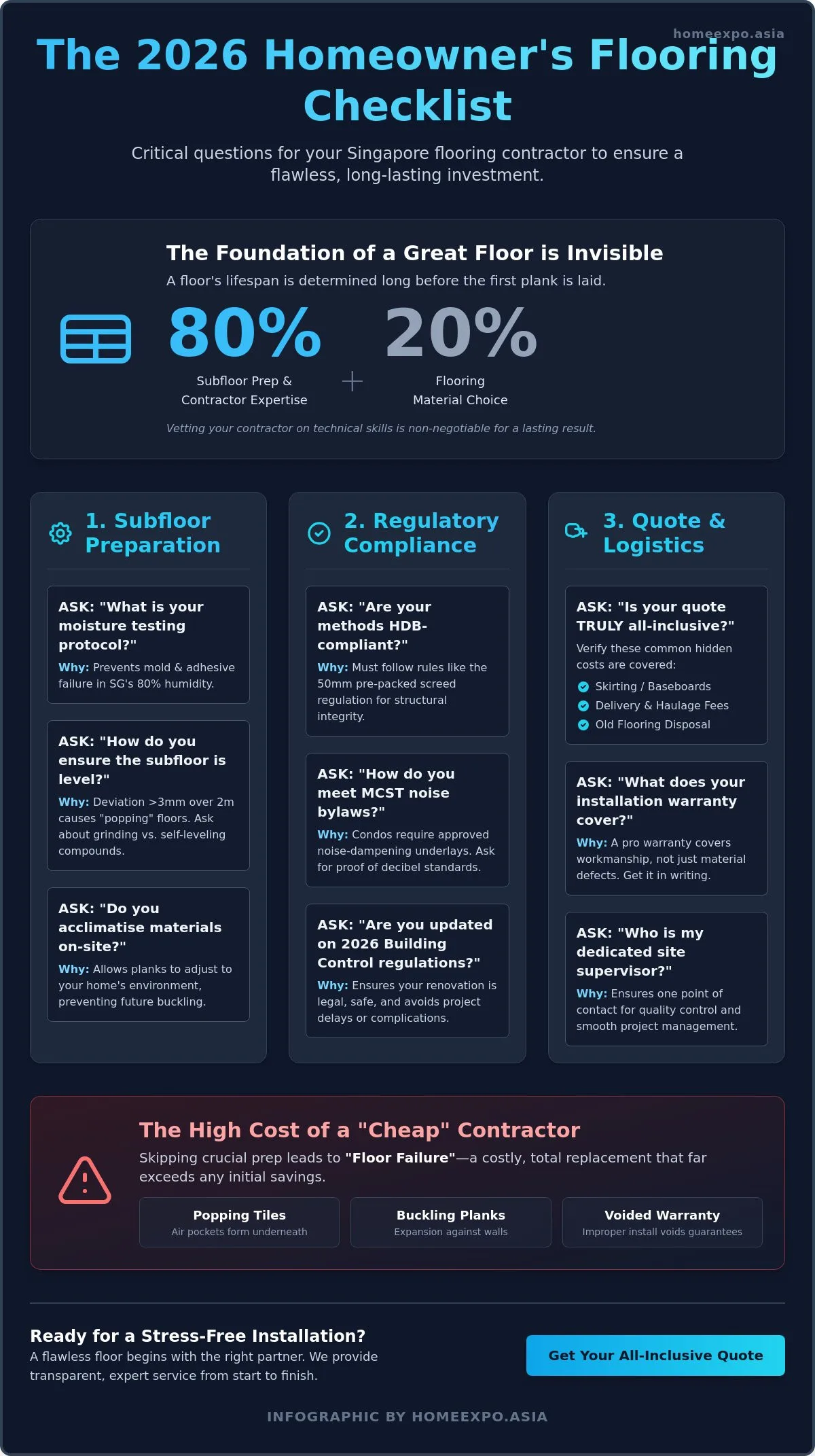
Did you know that 80% of a floor’s lifespan depends on subfloor preparation and local regulatory knowledge rather than the material itself? While picking out beautiful vinyl or tiles is the exciting part; the fear of hidden costs surfacing mid-project or planks buckling under Singapore’s humidity can be overwhelming. You’re likely feeling the pressure of navigating the Building Control (Amendment No. 2) Regulations 2026 or meeting strict MCST requirements for your condo renovation. It’s a lot to manage; and you deserve a result that is both stunning and structurally sound.
We’ve created this guide to show you exactly what to ask a flooring contractor to guarantee a transparent, all-inclusive quote and a stress-free installation process. By mastering the right questions; you’ll gain the assurance that your new floor will withstand the elements and come with a valid warranty. This 2026 hiring checklist covers everything from subfloor leveling techniques to verifying professional standards; ensuring your Singapore home gets the expert care it needs for a flawless, long-lasting finish.
Key Takeaways
- Identify the critical technical steps, such as subfloor moisture testing and leveling, that prevent long-term issues like floor popping or buckling.
- Discover exactly what to ask a flooring contractor to uncover hidden fees for skirting or delivery and ensure your quote is truly all-inclusive.
- Navigate the latest 2026 HDB flooring regulations and MCST requirements with confidence to avoid project delays or legal complications.
- Secure your home investment by learning how to vet professional installation warranties and verify the expertise of your dedicated site supervisor.
Why Vetting Your Flooring Contractor is Critical for Your Singapore Home
Choosing a flooring contractor is one of the most significant decisions for your home renovation. Many homeowners focus solely on the aesthetic of the material; but the technical execution determines whether that beauty lasts six months or sixteen years. A professional contractor acts as a project manager, a technical consultant, and a regulatory expert. Understanding Flooring basics helps you grasp the terminology; however, you need a specialist who understands the specific challenges of the Singaporean climate. It’s not just about laying planks. It is about ensuring the foundation of your home is secure.
Knowing exactly what to ask a flooring contractor before signing a contract protects you from the common “cheap contractor” trap. In 2026, over 68% of residential renovations in Singapore favor resilient vinyl and other high-performance materials. These products are durable, but they require precise installation to handle our 80% average humidity levels. Without proper adhesive selection and meticulous subfloor preparation, even the most expensive vinyl will eventually fail. A vetted professional ensures your investment is protected from the start.
The Real Cost of Poor Installation
Low-cost installers often skip moisture testing or use inferior adhesives to save time. This leads to “popping” tiles, where air pockets form underneath, or buckling planks that expand and push against your walls. Premium vinyl floors require specific expansion gaps and a period of acclimatisation in the room’s actual environment to settle. If these steps are ignored, the result is floor failure. We define floor failure as a total loss of structural integrity caused by subfloor negligence; requiring a complete and costly redo that far exceeds the initial savings of a “budget” hire.
Regulatory Compliance and Peace of Mind
Singapore’s housing landscape is strictly regulated to ensure safety and neighborly harmony. For HDB flats, contractors must follow specific guidelines, such as the 50mm pre-packed screed rules to ensure structural safety. Condominium owners face even tighter MCST by-laws regarding noise-dampening underlays that must meet specific decibel reduction standards. When researching top renovation companies in singapore, look for those who provide official documentation for every stage of the work. This transparency is vital for insurance claims and maintaining your property’s future resale value.
- Verification of HDB-approved materials and methods.
- Compliance with Building Control (Amendment No. 2) Regulations 2026.
- Provision of clear warranty documents for long-term security.
- Proof of MCST permit approvals and adherence to renovation hours.
Essential Questions About Technical Skills and Subfloor Preparation
The success of your renovation depends on the invisible work done before a single plank is laid. When interviewing professionals; you must dig deeper than aesthetic choices. One of the most critical things regarding what to ask a flooring contractor is their specific protocol for moisture testing. Singapore’s tropical climate means concrete slabs often retain high moisture levels. If a contractor skips this step; your new floor could trap vapor; leading to mold growth or adhesive failure. Ask for their threshold readings and what specific equipment they use to verify the subfloor is dry enough for installation.
You should also inquire about their approach to uneven surfaces. A deviation of more than 3mm over a 2-meter radius is enough to cause “popping” sounds or joint separation. Check if they include floor grinding to remove high spots or if they suggest a full cement screed service for older resale flats. In HDB environments; this often involves adhering to the 50mm pre-packed screed regulations to maintain structural integrity. A contractor who ignores these details isn’t just cutting corners; they’re risking your home’s safety.
Mastering the Subfloor: Leveling and Screeding
A flat floor is the non-negotiable foundation of any successful vinyl flooring singapore installation. Ask your contractor whether they utilize self-leveling compounds or traditional screeding methods. Self-leveling is often superior for minor dips; as it creates a glass-smooth surface that prevents “hollow” sounds when you walk. Ensure your quote specifically mentions floor grinding; as many budget contractors leave this out; only to charge it as an “unforeseen” extra once the project has started.
Material Knowledge and Acclimatisation
Professionalism shows in the details of material handling. High-quality vinyl planks must sit in your home for at least 48 hours before installation begins. This allows the material to adjust to your home’s specific temperature and humidity. Ask your contractor how they plan to manage expansion gaps. These small spaces near walls and door frames are essential; they allow the floor to breathe without buckling during peak heat. Finally; verify their choice of underlayment. Ask if they use IXPE (Irradiated Cross-Linked Polyethylene) for superior sound dampening. If you want to ensure your home meets these high standards; consider booking a professional flooring consultation to review your site conditions.
Understanding the Quote: How to Spot Hidden Costs and Inclusions
Financial clarity is the cornerstone of a stress-free renovation. When reviewing a proposal; the most vital part of what to ask a flooring contractor is whether the figure represents a truly all-inclusive price. Many initial estimates look attractive because they omit essential finishing touches like skirting; door trimmings; and transition strips. These “extras” can inflate your final bill significantly if not disclosed upfront. A professional quote should clearly break down costs for materials; labor; and delivery to ensure there are no surprises on the final invoice.
High-rise living in Singapore introduces unique logistical challenges that can lead to hidden fees. You must clarify how the contractor handles the disposal of old materials. Many HDB estates and condominiums have strict rules about using service lifts or specific hours for debris removal. Ask if your quote includes the cost of hauling waste to approved disposal sites. Without this confirmation; you might find yourself responsible for a pile of old tiles and a hefty fine from the town council or MCST.
The “Overlay” vs. “Hacking” Debate
Choosing between overlaying and hacking is a major cost driver for your project. If you choose to overlay vinyl on existing tiles; ask about the resulting height difference. A floor that’s too high might prevent your doors from opening; requiring trimmings that add to the labor cost. Conversely; hacking requires specific HDB permits and involves significant “wet works” like cement screeding to level the subfloor. A full-service supplier handles these logistics and permit applications; whereas a labor-only contractor might leave the paperwork and disposal to you. This is why it’s essential to understand what to ask a flooring contractor regarding their experience with HDB-compliant hacking and screeding.
Logistics and Site Management Fees
Site management is often where “hidden” costs emerge. Clarify fees for moving heavy furniture; such as wardrobes or pianos; before the work begins. Some contractors apply “staircase charges” if the lift is unavailable or if items are too large for the elevator. Ensure that dust management and post-installation cleanup are part of the written service agreement. A reliable expert will provide a transparent plan for protecting your home during the process; including:
- Detailed breakdown of skirting and transition strip costs.
- Clear policies on furniture moving and protection.
- Documented disposal plans that comply with HDB and condo regulations.
- Confirmation of door trimming services if floor height changes.
Project Logistics: Timeline, Warranties, and Post-Installation Support
A successful flooring project is a feat of coordination. Even the best materials fail if the schedule is chaotic or accountability is missing. When determining what to ask a flooring contractor, you must prioritize the logistical framework of the project. For a standard 3-bedroom HDB flat; a professional team should complete a vinyl overlay within two to four working days. This timeline assumes the subfloor is ready; but you should always ask how they manage delays caused by other trades; such as painters or carpenters; who might still be on-site. Coordination is the key to preventing project bloat.
Accountability starts with a single point of contact. Ask specifically: “Who is the dedicated site supervisor for my project?” You don’t want to communicate through a revolving door of sales staff and subcontractors. A permanent supervisor ensures that the technical standards discussed earlier; like moisture testing and expansion gaps; are actually enforced on the ground. They’re also your primary contact for handling defects found after the final payment; ensuring you aren’t left stranded once the installers leave the site. For homeowners seeking an independent, professional audit of their property’s overall condition; Prime Defectors provides expert inspection services to identify any hidden issues in new BTOs or recently renovated condos.
Managing the Renovation Timeline
Precision takes time. If you’ve chosen intricate herringbone flooring patterns; expect the installation phase to extend by at least 30% compared to standard layouts. These designs require meticulous cutting and alignment that cannot be rushed. For larger commercial projects or full-home renovations; request a daily schedule. This document should outline when the subfloor preparation ends and when the final trimmings begin. A transparent schedule allows you to coordinate other renovation works without overlapping and causing site congestion.
Decoding the Warranty Terms
There’s a massive difference between a product warranty and a labor warranty. Most manufacturers provide a 10-year or 15-year warranty against material defects like color fading. However; these don’t cover installation errors. You must ensure your contractor provides a comprehensive workmanship guarantee. This protects you against joint separation; “hollow” sounds; or planks lifting due to poor adhesive application. For instance; a reliable professional will offer a 1-year installation warranty alongside their 10-year material coverage to provide complete security.
Verify the specific process for claiming a warranty. Ask: “If I find a defect two years from now; who do I call?” A trustworthy partner will have a documented post-installation support system. This should include:
- A clear distinction between material defects and installation errors.
- Protection against joint separation and moisture-related buckling.
- A defined response time for addressing reported defects.
- Official documentation that remains valid even if the original salesperson leaves the company.
Ready to ensure your home is protected by industry-leading standards? View our professional installation guarantees and secure your peace of mind today.
Why Home Expo Asia is the Right Choice for Your Flooring Needs
Choosing the right partner for your home renovation is about more than just finding a competitive price. It is about securing a team that understands the technical nuances of the Singaporean environment. When you are finalizing what to ask a flooring contractor; ensure they can match the variety and reliability we offer. With a collection of over 200+ vinyl designs and a professional Singapore-based installation team; we provide the expertise needed to transform any space. Our deep understanding of local housing layouts allows us to deliver results that are both aesthetically stunning and structurally resilient.
Transparency is the foundation of our service. We believe in an honest; no-hidden-fee pricing model that eliminates the stress of mid-project “surprises” often found with budget contractors. Our commitment to HDB compliance and safety standards is absolute. We’ve successfully completed over 1,000 projects across the island; backed by verified customer testimonials that speak to our reliability. You can visit our Balestier showroom to see our materials in person and receive a free; no-obligation site assessment tailored to your specific home requirements.
The Home Expo Asia Guarantee
We don’t just lay floors; we provide long-term security. Our comprehensive warranty covers both our premium materials and our professional labor; ensuring you’re protected against installation defects and material failure alike. This dual-layer protection is a hallmark of our expert service. Beyond flooring; we offer integrated solutions including tiling and cement works; as well as expert carpenter singapore services for custom cabinetry. This holistic approach ensures your full home renovation is handled by a single; accountable expert team. We invite you to view our official certifications and safety standards at our showroom to see our commitment to quality firsthand.
Start Your Flooring Journey Today
Taking the first step toward a beautiful home is simple and risk-free. When you visit us for a consultation; we recommend bringing your floor plan and any mood boards you’ve created. This helps our consultants provide the most accurate advice regarding material quantities and layout designs. We will walk you through the technical checklist and answer every question you have about what to ask a flooring contractor to ensure you feel 100% confident in your choice. Our methodical process ensures your project moves from initial concept to final installation without unnecessary delays.
- Explore 200+ premium vinyl designs curated for Singaporean homes.
- Benefit from a dedicated Singapore-based team with 1,000+ projects of experience.
- Ensure full compliance with HDB and MCST renovation regulations.
- Receive a transparent; all-inclusive quote with no hidden costs.
Get a Risk-Free Flooring Quote for Your Dream Home and experience the peace of mind that comes with professional expertise.
Secure Your Perfect Floor with Confidence
Your flooring is the foundation of your home’s comfort and style. By following this 2026 checklist; you’ve gained the technical and logistical knowledge needed to navigate the renovation process safely. You now understand that a successful floor depends on meticulous subfloor preparation and a deep understanding of Singapore’s specific humidity challenges. Knowing what to ask a flooring contractor is the most powerful tool you have to avoid the pitfalls of poor installation and hidden mid-project fees.
We’re here to make your vision a reality with absolute certainty. At Home Expo Asia; we combine 200+ Designs Available with HDB-Compliant Installation to ensure your home meets the highest industry standards. We provide 100% Transparent Quotes so you can plan your renovation budget without fear of surprise costs. Don’t leave your investment to chance when professional expertise and long-term warranties are just a click away.
Request a Free Site Assessment from Home Expo Asia today. We look forward to helping you build a beautiful; resilient; and long-lasting home for your family.
Frequently Asked Questions
Do I need to hack my existing tiles before installing vinyl?
No; you don’t need to hack existing tiles if they are structurally sound and level. Overlaying vinyl is a popular 2026 trend because it saves on hacking costs and messy wet works. However; you must check if the added height interferes with your doors or built-in cabinets. If your tiles are “popping” or hollow; hacking and a new cement screed layer are necessary to ensure a stable foundation.
How long does a typical vinyl flooring installation take in Singapore?
A typical vinyl installation for a single room takes about one working day. For a full 4-room HDB flat; the process usually spans three to four days; including subfloor preparation and skirting installation. Larger projects or intricate layouts like herringbone will naturally take longer. Always clarify the schedule when deciding what to ask a flooring contractor to ensure it aligns with your move-in date.
Can I install vinyl flooring myself to save on contractor costs?
While DIY is possible; professional installation is highly recommended to avoid common failures like buckling or joint separation. Subfloor preparation requires specialized tools for moisture testing and grinding that most homeowners don’t possess. Saving on labor costs often leads to higher long-term expenses if the floor fails and voids the material warranty. Professional installers ensure your home meets the Building Control (Amendment No. 2) Regulations 2026.
What should I do if my floor is not level?
If your floor has a deviation of more than 3mm over a 2-meter radius; you must apply a self-leveling compound or cement screed. Installing vinyl over an uneven surface causes the click-locks to break under pressure; leading to “hollow” sounds and visible gaps. A qualified contractor will use a straightedge tool to identify these dips and peaks before any planks are laid to ensure a flat finish.
Is vinyl flooring suitable for kitchens and bathrooms in Singapore?
Vinyl is excellent for kitchens due to its water resistance and ease of cleaning; but it isn’t recommended for wet shower areas. For bathrooms; professional tiling and cement works remain the standard for long-term waterproofing. In the kitchen; ensure your contractor uses a high-quality sealant around the edges to prevent water from seeping under the planks during heavy cleaning or spills.
What is the standard warranty for flooring installation in 2026?
The industry standard in 2026 typically includes a 1-year workmanship warranty and a 10 to 15-year material warranty. This ensures that any installation defects; such as lifting planks or joint separation; are corrected at no cost within the first year. Understanding these terms is a vital part of what to ask a flooring contractor during your initial consultation to protect your home investment and ensure peace of mind.
Do flooring contractors in Singapore handle HDB permit applications?
Most reputable flooring contractors will manage the HDB permit application process for you if they are HDB-registered. Hacking works and certain cement screeding projects require official approval to ensure structural integrity isn’t compromised. Always verify that your contractor is listed on the HDB Directory of Renovation Contractors (DRC) before they begin any work on your flat to avoid legal complications or fines.
How do I check if a flooring contractor is licensed?
You can verify a contractor’s legitimacy by checking the HDB Directory of Renovation Contractors or looking for CaseTrust accreditation. These certifications indicate that the business adheres to strict ethical and professional standards. Reliable experts will also be happy to show you their BizSafe certifications and proof of insurance; which protects you from liability if accidents occur during the renovation process in your home.