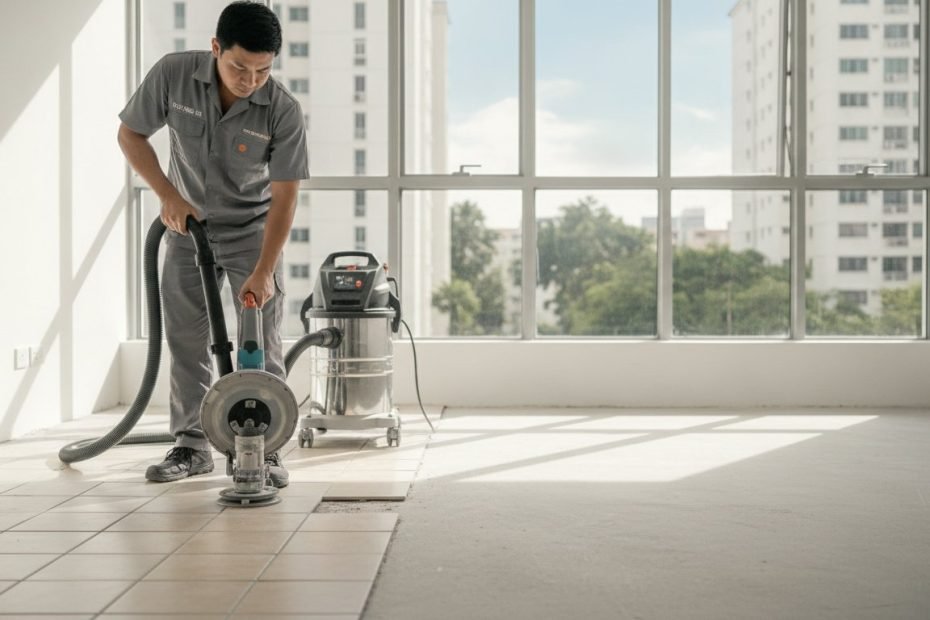
What if you could strip away your old, dated floors without a suffocating cloud of silica dust invading your bedrooms and aircon units? For many homeowners, the thought of renovation is overshadowed by the fear of fine particles affecting their family’s health or the daunting cost of professional deep-cleaning once the workers leave. Choosing dust-free tile hacking in Singapore isn’t just about convenience; it’s a critical safety measure for your 2026 home upgrade. We understand that you want a clean, level subfloor that’s ready for your new vinyl or tiles without the risk of damaging the concrete slab or upsetting your neighbors.
It’s a complex process that requires precision and the right equipment to get right. This guide will show you how advanced dust-mitigation technology protects your living space and ensures your project stays fully compliant with HDB and MCST rules. You’ll learn about integrated HEPA vacuum systems, wet-cutting techniques, and the essential steps to achieve a flawless finish with minimal disruption to your daily life. Let’s explore how to build a safer, cleaner foundation for your dream home.
Key Takeaways
- Learn how dust-free tile hacking in Singapore utilizes specialized vacuum-shrouded tools to eliminate 99.97% of hazardous silica dust at the source.
- Discover the industrial-grade HEPA filtration systems that protect your family’s respiratory health and keep your home clean during renovation.
- Understand the 2026 pricing factors for professional hacking and how different tile materials impact your overall labor costs.
- Explore why a precision-hacked subfloor is the essential foundation for a durable floor, preventing common issues like hollow sounds or popping tiles.
- Find out how a comprehensive one-stop service simplifies your renovation by coordinating hacking, debris disposal, and subsequent flooring installation.
What is Dust-Free Tile Hacking and Why Does it Matter in Singapore?
Dust-free tile hacking in Singapore is a specialized demolition process designed to remove old flooring without the chaotic mess of traditional methods. It uses industrial-grade, vacuum-shrouded tools that capture debris the moment it’s created. In the past, hacking meant covering every surface in plastic and still finding white powder in your kitchen cabinets months later. By 2026, homeowners expect a “live-in” friendly experience. This technology ensures that up to 99.97% of fine particles never even enter your air, providing a clean start for your renovation.
This method has become the industry standard for high-density living. Whether you’re in a resale HDB or a luxury condo, the goal is to strip away the old tiles while keeping the rest of your home pristine. It’s about safety, speed, and structural integrity. Using dust-controlled tools allows work to proceed faster because there’s no “white fog” obstructing the worker’s view, leading to more precise results.
The Health Hazards of Traditional Tile Removal
Traditional hacking methods release massive amounts of crystalline silica into the air. When these microscopic particles are inhaled, they can lead to an incurable lung disease known as silicosis. In the enclosed environment of a typical Singaporean home, this dust doesn’t just settle on the floor. It enters your central air-conditioning vents and circulates throughout every room. This poses a significant risk to children, the elderly, and family pets who are far more sensitive to respiratory irritants.
Protecting Your Property Investment
Precision is the key to a successful renovation. When you invest in dust-free tile hacking in Singapore, you’re prioritizing the longevity of your home. Traditional jackhammers produce heavy vibrations that can travel through the concrete slab, potentially causing hairline cracks in your neighbor’s ceiling or damaging your own subfloor. Precision tools used in dust-free methods minimize these structural shocks, ensuring the slab remains intact and level.
There’s also a clear financial benefit. Without the pervasive dust clouds of old-school hacking, you won’t need to hire a professional deep-cleaning service to scrub your walls and ceilings after the workers leave. You get a clean, level subfloor that’s ready for your new vinyl or tiles immediately. This streamlined approach reduces the total renovation timeline and prevents the hidden costs associated with messy, aggressive demolition.
The Technology Behind Dust-Free Hacking: How It Works
Dust-free tile hacking in Singapore relies on a high-performance ecosystem of tools designed to neutralize debris at the moment of impact. It’s a fundamental shift from traditional demolition. The core of this technology is the vacuum-shrouded tool head. Whether it’s a jackhammer or a grinder, the tool is fitted with a custom attachment that creates a tight seal around the work area. This ensures that dust is “swallowed” into a high-powered suction line before it ever escapes into your living room or bedrooms.
To ensure a completely clean environment, professional contractors use industrial HEPA-filtration vacuums. These aren’t your standard household cleaners. These machines are certified to capture 99.97% of particles as small as 0.3 microns, which includes the hazardous silica dust that traditional hacking releases. By using this systematic approach, the best providers of dust-free tile hacking in Singapore maintain a workspace that is safe for both the workers and your family.
Source Capture vs. Air Scrubbing
Capturing dust at the point of origin is significantly more effective than trying to clean the air after the fact. While opening windows might seem helpful, it often just spreads fine silica particles into common corridors or neighbor units. Professional setups utilize negative air pressure to keep any stray particles trapped within the work zone. This proactive approach aligns with the stringent standards found in Singapore’s Workplace Safety and Health Regulations, which emphasize the control of hazardous substances at the source. HEPA-filtration efficiency in masonry work means that the exhaust air from the vacuum is often cleaner than the ambient air in the room.
The 5-Step Dust-Free Process
A reliable renovation begins with a methodical approach to demolition. Here is how the process typically unfolds:
- Step 1: Site Protection. Workers install floor-to-ceiling plastic hoarding as a secondary containment layer to protect non-renovated areas.
- Step 2: Equipment Calibration. Tools are adjusted for specific tile types, such as thick homogeneous slabs or thinner ceramic pieces, to ensure maximum suction.
- Step 3: Systematic Hacking. The removal begins with integrated vacuum suction active every second the tool is in contact with the floor.
- Step 4: Immediate Bagging. All debris goes directly into industrial-strength, sealed bags to prevent mess in elevators and corridors.
- Step 5: Final Industrial Vacuuming. The raw concrete base is scrubbed with HEPA vacuums to ensure a perfect, dust-free bond for your new flooring.
If you’re planning a full home renovation, you can consult our experts to see how this technology can be integrated into your specific project timeline for a cleaner, safer experience.
Evaluating Tile Hacking Costs and Factors in Singapore (2026)
Understanding the financial layout of your renovation is essential for a stress-free experience. While basic hacking might seem like a simple demolition task, the long-term value of dust-free tile hacking in Singapore comes from the elimination of hidden costs. You won’t need to budget for professional deep-cleaning services or deal with the fallout of silica dust in your aircon ducts. Industry data for 2026 shows that standard floor tile removal typically ranges from S$3.50 to S$6.00 per square foot. Dust-free methods often sit at the higher end of this range because they require specialized HEPA equipment and advanced site containment.
Several technical factors influence your final quote. Thick homogeneous tiles are much denser and harder to break than thin ceramic tiles, which increases labor hours. If your previous renovation involved “double-layer” flooring, where new tiles were overlaid on the originals, the volume of debris doubles. This significantly impacts disposal and haulage fees, which generally range from S$500 to S$1,200 depending on the total weight of the waste.
Key Cost Drivers for Hacking Projects
Labor costs are often dictated by the physical constraints of your property. Units located far from the service lift or apartments in older walk-up blocks require more manual effort to transport debris, leading to higher fees. Another critical factor is the cement screed thickness. HDB regulations in 2026 strictly limit the total thickness of new floor finishes and screed to 50mm. If your existing floor is too thick, we must hack down to the raw concrete slab to ensure your new floor meets these safety standards.
Time management also plays a role in pricing. Noisy renovation works are strictly limited to weekdays between 9:00 AM and 5:00 PM. These tight windows mean contractors must work efficiently to complete the hacking within the permitted timeframe without incurring overtime costs.
Navigating Permits and Regulations
You cannot simply start hacking the moment you get your keys. All hacking and demolition works require a formal permit from the Housing & Development Board (HDB). Approval typically takes 1-2 weeks, so early application is vital to keep your project on schedule. For private property owners, MCST rules often require a renovation deposit and specific insurance coverage before work can commence.
Managing these administrative hurdles can be overwhelming for busy homeowners. As part of a full home renovation, we take over the entire process. We ensure all contractors are registered with the HDB’s Directory of Renovation Contractors (DRC) and handle the necessary paperwork, insurance, and compliance checks so you can focus on choosing your new floors.

Preparing for Perfection: Why Hacking Quality Dictates Your New Floor
The quality of your demolition dictates the success of your entire renovation. While many focus on the aesthetic of the final surface, the hidden value lies in the subfloor. A precision-led approach, specifically through dust-free tile hacking in Singapore, ensures that your property is stripped down to a clean, stable concrete slab. This isn’t just about removing old materials. It’s about creating a perfectly flat canvas for your next investment. If the hacking is rushed, you’re left with a bumpy, compromised base that will eventually ruin your new floors.
Poor hacking often leaves behind old mortar or uneven concrete ridges. These imperfections are the primary cause of “popping” tiles or hollow sounds in a newly renovated home. By utilizing controlled, dust-free methods, we can remove every trace of the old flooring while maintaining the structural integrity of the slab. This meticulous preparation is what separates a professional renovation from a DIY-style demolition job.
Hacking vs. Overlaying: Which is Better?
Overlaying vinyl directly over old tiles is a common “no-hacking” alternative. It’s fast and avoids the noise of demolition. However, hacking to the slab is often the superior choice for long-term durability. Overlaying adds 5mm to 10mm of height to your floor. This often requires trimming your doors or creating awkward, uneven transitions between rooms. If your existing tiles are hollow or delaminating, overlaying won’t fix the underlying structural issues. Hacking preserves your original ceiling height and allows you to inspect the concrete for water seepage or cracks before you install your new vinyl flooring Singapore homeowners trust for longevity.
The Importance of a Level Subfloor
Modern flooring systems rely on precision click-lock mechanisms. These locks are designed to sit on a perfectly flat surface. If your subfloor has minor bumps or dips left over from a rushed hacking job, the pressure from walking will eventually snap those locks. This leads to gaps and floor failure within just a few years. Achieving a level base requires professional flooring Singapore screeding methods. After the dust-free tile hacking in Singapore is complete, a fresh layer of cement screed or self-leveling compound is applied. This creates a moisture-free, smooth foundation that protects your investment.
- Resets the floor height to original HDB or Condo specifications.
- Eliminates the risk of “hollow” sounds from old, delaminated tiles.
- Provides an opportunity to fix sub-surface water seepage issues.
- Ensures a better bond for the new cement screed.
Ready to start your renovation with a clean slate? Get a professional hacking quote today and ensure your new floors last a lifetime.
Why Choose Home Expo Asia for Your Hacking and Flooring Needs?
Choosing a contractor who only specializes in demolition often leads to a disconnect during your renovation. At Home Expo Asia, we bridge that gap by providing a comprehensive one-stop solution. We manage the entire lifecycle of your floor, from the initial dust-free tile hacking in Singapore to the final plank of vinyl. This integrated approach ensures that the team hacking your floor is fully aware of the precision required for the subsequent installation. You won’t have to worry about one contractor blaming another for an uneven subfloor.
Our service extends beyond just floors. We provide seamless carpenter Singapore coordination to ensure your new cabinetry and skirting boards fit perfectly against your fresh subfloor. By handling the hacking, debris disposal, and carpentry in-house, we eliminate the scheduling conflicts and hidden transport fees that often plague multi-contractor projects. You get a single point of contact and total financial clarity from start to finish.
Our Professional Standards and Certifications
We believe that a successful renovation is built on trust and technical excellence. Our experienced team has a proven history of managing complex residential projects in HDB flats and private condos across Singapore. We don’t just follow the rules; we set the standard for site cleanliness. By strictly adhering to noise and dust protocols, we significantly reduce the likelihood of neighbor complaints and MCST disputes. Our commitment to quality means using only industrial-grade equipment for every dust-free tile hacking in Singapore project.
This expertise is especially critical if you’ve chosen a complex layout like herringbone flooring. These patterns require a subfloor that is perfectly level to within millimeters. Our hacking and screeding teams work in tandem to ensure your foundation is ready for premium finishes without the risk of hollow spots or uneven joints.
Get Started with a Free Site Assessment
Every home has unique structural requirements. That’s why we offer a comprehensive free site assessment before providing a quote. During this visit, our specialists perform professional moisture tests and level checks to identify potential issues before they become expensive problems. We provide personalized recommendations based on your specific HDB or Condo layout, ensuring your renovation is both beautiful and compliant with all 2026 regulations.
- Detailed moisture assessment to prevent future floor bubbling or warping.
- Laser-level checks to ensure a flat foundation for vinyl or tiles.
- Transparent, itemized quotes with no hidden disposal or haulage fees.
- Expert advice on HDB and MCST permit applications to speed up your timeline.
Don’t leave your home’s foundation to chance. Get a risk-free quote for your hacking and flooring today and discover the peace of mind that comes with a professional, dust-free renovation.
Secure the Foundation of Your Dream Home Today
Investing in your property requires more than just picking beautiful finishes. It demands a commitment to safety and structural integrity. By prioritizing dust-free tile hacking in Singapore, you eliminate the risks of silica dust and ensure your family’s health remains protected throughout the renovation process. A precision-hacked subfloor provides the essential level base needed for a flawless installation, preventing future issues like hollow sounds or floor failure. This methodical preparation is the secret to a high-quality, durable home upgrade.
Home Expo Asia is your trusted partner in this journey. We combine HDB-compliant hacking protocols with 5-star rated customer service in Singapore to deliver total peace of mind. Once your foundation is ready, you can explore our extensive collection of over 200+ vinyl designs to find the perfect match for your aesthetic. Our team handles the technical heavy lifting, the permits, and the debris disposal so you don’t have to. It’s time to build a space that is as safe as it is stunning.
Ready to take the first step toward a cleaner, safer renovation? Book Your Free On-Site Assessment with Home Expo Asia today. We look forward to helping you create the perfect foundation for your new life at home.
Common Questions About Dust-Free Hacking
Is dust-free tile hacking 100% dust-free?
No, a completely dust-free process is not realistic for any demolition work. However, dust-free tile hacking in Singapore utilizes industrial-grade HEPA vacuums and vacuum-shrouded tools to capture up to 99.97% of particles at the source. This significantly reduces airborne silica dust compared to traditional methods. While a tiny amount of residue is inevitable, it’s a manageable level that doesn’t invade your entire home or ventilation system.
How much does tile hacking cost per square foot in Singapore for 2026?
The cost of tile hacking in 2026 depends on several technical factors rather than a single fixed rate. Prices are influenced by the total floor area, the density of the tile material, and whether we’re removing a single or double layer of flooring. Homogeneous tiles generally require more labor hours than ceramic ones. We recommend a site assessment to provide an accurate quote that covers hacking, disposal, and haulage fees.
Can I stay in my house during the dust-free hacking process?
You can technically stay in your home, but we generally advise against it during the active hacking hours. Even with dust-controlled technology, the noise levels from jackhammers and grinders are significant. HDB rules limit noisy works to weekdays between 9:00 AM and 5:00 PM. If you work from home or have young children, it’s much more comfortable to be elsewhere during these specific times to avoid the disruption.
How long does it take to hack the tiles of a 4-room HDB flat?
Hacking the floor tiles of a standard 4-room HDB flat usually takes between 2 and 4 working days. This timeline includes the initial site protection and hoarding, the systematic removal of tiles, and the final debris haulage. If you’re also hacking wall tiles in the kitchen or bathrooms, the process may extend by another few days. We provide a specific schedule after the site assessment to help you plan.
Do I need an HDB permit for floor hacking?
Yes, all hacking and demolition works in HDB flats require a formal permit before any work begins. This includes floor tile removal and wall hacking. Only contractors registered with the HDB’s Directory of Renovation Contractors (DRC) are allowed to perform these works. The approval process typically takes 1 to 2 weeks. We handle the permit application on your behalf to ensure all technical details meet HDB’s structural safety requirements.
What is the difference between hacking and overlaying?
Hacking involves the complete removal of existing tiles and the cement screed down to the concrete slab. This is the best way to ensure a level, durable foundation. Overlaying is the process of installing new vinyl or tiles directly on top of the old floor. While overlaying is faster and creates less noise, it increases the floor height and isn’t suitable if your existing tiles are hollow, cracked, or uneven.
Will dust-free hacking damage my existing furniture?
Our dust-free tile hacking in Singapore process is designed specifically to protect your property. We install floor-to-ceiling plastic hoarding and seal off non-renovation areas to prevent dust migration. However, we recommend moving smaller decorative items and sensitive electronics out of the work zone. While the risk of damage is minimal, the vibrations and movement of heavy debris mean a clear workspace is always the safest option for your furniture.
How do you dispose of the hacked tile debris?
We use a systematic debris management process to keep your home and common corridors clean. All hacked tiles and concrete are immediately placed into industrial-strength, sealed bags. These bags are then transported via the service lift to a designated haulage truck for proper disposal at an approved recycling facility. This prevents dust from leaking in elevators and ensures compliance with HDB and Condo MCST cleanliness rules for renovation sites.