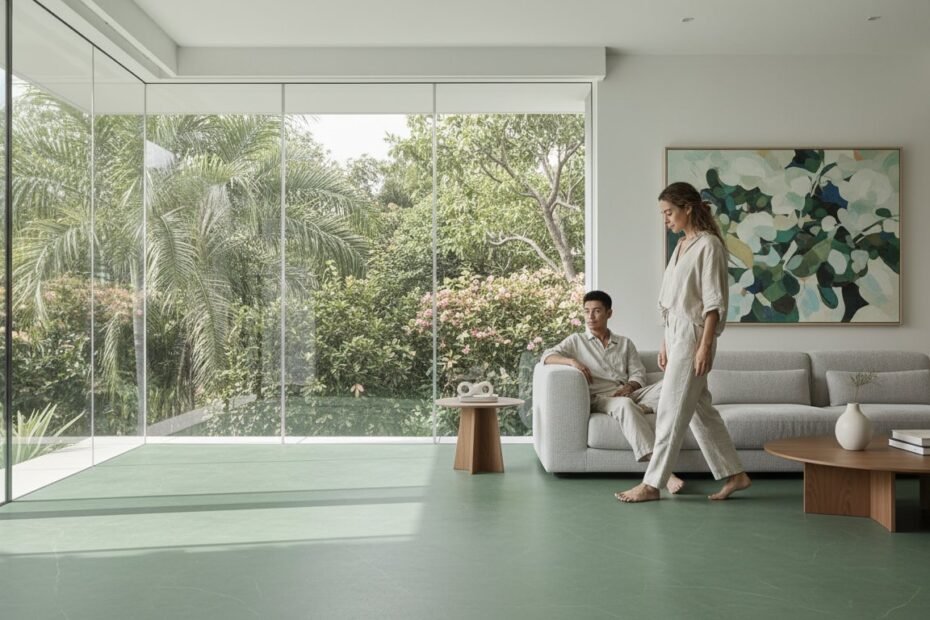
When you hear the term linoleum flooring, what comes to mind? For many Singaporean homeowners, it brings up images of old-school kitchens, often mistaken for its synthetic counterpart, vinyl. Is it a dated material that can’t withstand our country’s high humidity? Or is it a hidden gem in the world of home renovation? This confusion can make choosing the right floor a frustrating process, especially when you’re looking for a safe, durable, and long-lasting solution for your family.
As your trusted flooring experts, we’re here to set the record straight. In this comprehensive 2026 guide, we dive deep into what modern linoleum is all about. You will discover its surprising eco-friendly origins, get a clear breakdown of its pros and cons in the Singaporean climate, and see a direct, no-nonsense comparison against today’s popular vinyl options. Get ready to move past the myths and make a confident, well-informed decision for your home.
What Exactly Is Linoleum Flooring? (And What It Isn’t)
When Singaporean homeowners hear the term “linoleum,” they often picture the floors of their grandparents’ homes or old school hallways. While it has a long and proven history, modern linoleum flooring is a durable, stylish, and surprisingly eco-friendly choice that is making a major comeback. However, the first and most important thing to clarify is a common misconception: linoleum is not the same as vinyl.
For over 150 years, linoleum has been a trusted flooring material precisely because of what it’s made from. It is a natural product from start to finish, making it an excellent option for families who prioritise a healthy, non-toxic home environment. At the end of its long life, it is also biodegradable-a quality that synthetic floors simply cannot offer. This commitment to sustainability is what truly sets it apart.
The Natural Ingredients of Linoleum
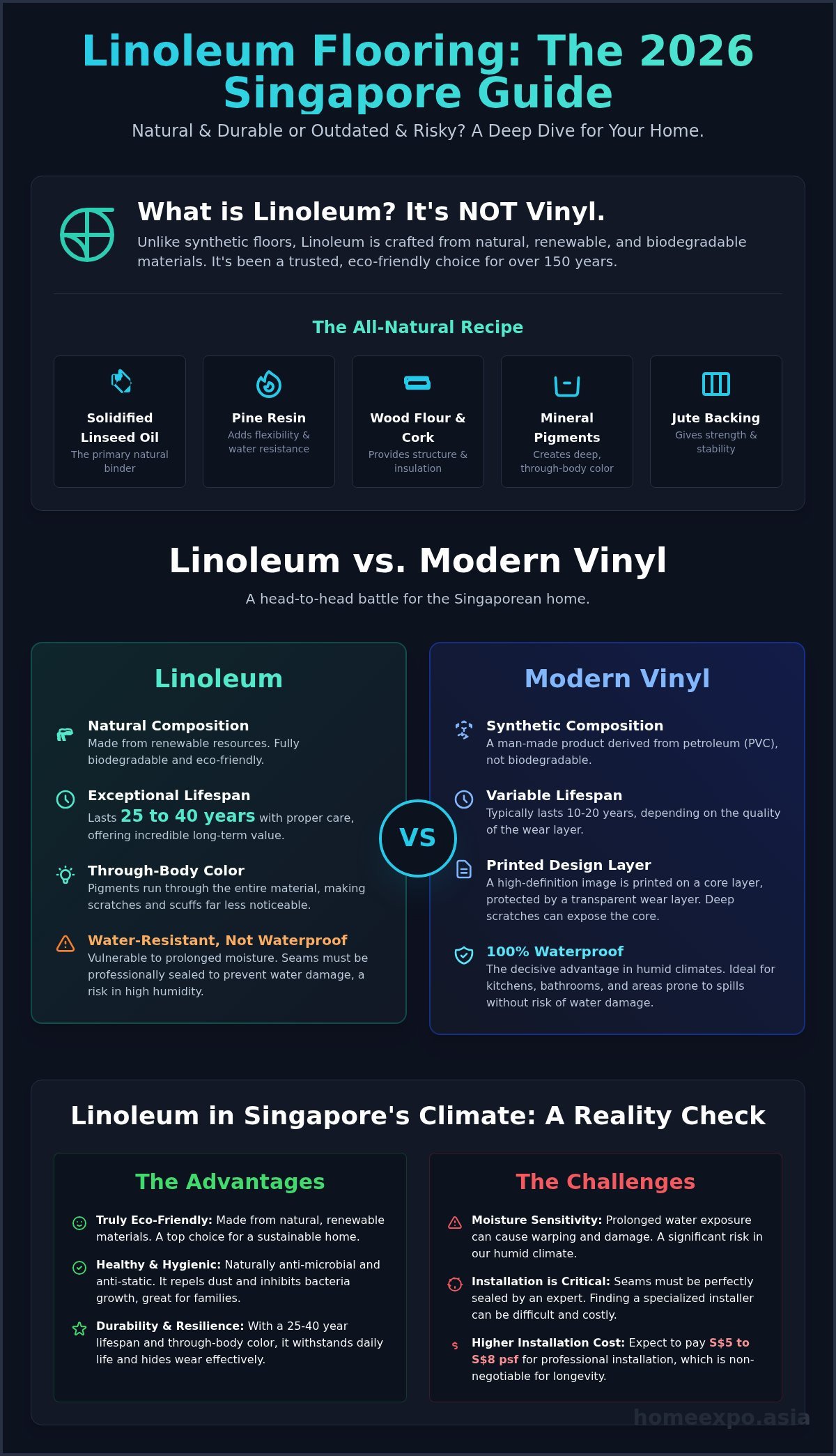
Unlike synthetic flooring, linoleum’s composition is simple, safe, and derived from nature. Its durability and unique character come from a time-tested recipe of renewable materials. For a deeper look into what linoleum is made from, its core components are entirely plant-based and mineral-based, ensuring a safe indoor air quality for your home. The key ingredients include:
- Solidified Linseed Oil: The primary binder, which gives linoleum its name (from the Latin linum for linen and oleum for oil).
- Pine Resin: Adds flexibility and water-resistant properties.
- Wood Flour & Ground Cork Dust: Provide structure, insulation, and a comfortable cushioning underfoot.
- Mineral Pigments: These natural pigments are mixed throughout the material, meaning the colour runs deep and won’t fade or wear away like a printed top layer.
- Jute or Canvas Backing: A natural woven backing that gives the flooring its strength and stability.
The Great Mix-Up: Linoleum vs. Vinyl Flooring
The confusion between linoleum and vinyl is understandable, as both were historically sold in similar sheet formats. However, their composition is fundamentally different. The key distinction is simple: linoleum is natural, while vinyl is synthetic. Vinyl flooring is a man-made product manufactured from PVC (polyvinyl chloride), a type of plastic derived from petroleum.
While modern high-quality vinyl offers a wider range of realistic printed designs that mimic wood and stone, linoleum’s colour is inherent to the material itself. This means scratches and scuffs are less noticeable on linoleum, as there is no separate wear layer to peel or scratch through. Understanding this core difference is the first step in deciding which material is right for your home.
Pros and Cons of Linoleum in a Singaporean Context
Choosing the right flooring for your HDB flat or condo requires balancing style, durability, and suitability for our tropical climate. While often confused with vinyl, true linoleum has a unique set of characteristics. To make a confident choice, it’s essential to weigh its strengths and weaknesses in the context of a busy Singaporean household.
The Advantages: Why People Consider Linoleum
Linoleum flooring presents several compelling benefits that align with the values of modern homeowners, focusing on health, sustainability, and long-term value.
- Truly Eco-Friendly: Unlike synthetic options, linoleum is made from natural, renewable materials like linseed oil, cork dust, and jute. It is fully biodegradable, making it a top choice for an environmentally conscious home.
- Exceptional Durability: With professional installation and proper care, a quality linoleum floor can last an incredible 25 to 40 years. Its robust nature stands up well to the daily wear and tear of family life.
- Health and Hygiene: Linoleum is naturally anti-microbial and anti-static. It repels dust and dirt and actively inhibits the growth of bacteria, creating a healthier indoor environment for your family, especially those with allergies or young children.
- Colour-Fast and Resilient: The pigments in linoleum run through the entire thickness of the material. This means scratches and scuffs are far less noticeable, as the colour remains consistent, keeping your floor looking great for years.
The Disadvantages: Practical Challenges in High Humidity
Despite its benefits, linoleum has practical challenges, particularly concerning moisture and installation-two critical factors in Singapore’s humid environment.
- Water Resistance, Not Waterproof: Linoleum can withstand spills if they are wiped up quickly, but it is not waterproof. Prolonged exposure to standing water can cause the edges to curl or the material to warp, a significant risk in kitchens, bathrooms, or areas prone to moisture.
- Installation is Critical: The seams of linoleum sheets must be perfectly sealed by a professional. In Singapore’s high humidity, any gap or improper seal can allow moisture to seep underneath, potentially damaging the subfloor and the linoleum itself.
- Requires Specialised Installers: Proper installation is a craft that requires experience. Finding a certified, professional installer can be more difficult and costly (with installation fees potentially ranging from S$5 to S$8 per square foot) compared to more common flooring types.
- Susceptible to Dents: While durable against foot traffic, linoleum is a softer material that can be dented by heavy furniture or damaged by sharp objects. Protective pads under furniture legs are a must.
Linoleum vs. Modern Vinyl Flooring: A Head-to-Head Comparison
In the Singaporean market, homeowners often confuse linoleum and vinyl. While they seem similar, their core differences in performance, especially in our climate, are significant. Making the right choice is crucial for a long-lasting, beautiful floor. Here’s a clear, head-to-head comparison to help you decide.
Battle of a Humid Climate: Water Resistance
Singapore’s high humidity demands a flooring solution that can handle moisture. This is where vinyl flooring has a decisive advantage. While linoleum flooring is water-resistant, its seams are vulnerable. Prolonged exposure to moisture or spills can cause water to seep underneath, leading to damage, curling, or mould growth. In contrast, modern luxury vinyl is 100% waterproof, making it the superior choice for kitchens, bathrooms, and any area prone to dampness.
Winner for Singapore: Vinyl flooring offers complete peace of mind against water damage.
Design, Style, and Versatility
Your floor is a major part of your home’s aesthetic. The design potential between these two materials varies greatly.
- Linoleum: Offers rich, solid colours that run through the entire material. This means scratches are less visible. However, its pattern and design options are quite limited and can sometimes look dated.
- Vinyl: Utilises advanced 3D printing technology, offering virtually limitless design possibilities. It can realistically mimic high-end materials like natural hardwood, marble, and slate, complete with authentic textures. This versatility allows it to fit perfectly into any modern interior design scheme.
Installation and Maintenance
The practicalities of installation and upkeep are key factors in any renovation budget. Linoleum is a stiffer, more difficult material to work with, typically requiring professional installers and special adhesives for a seamless finish. This can increase both the time and cost of your project.
Modern vinyl, especially with its click-lock system, is far easier and faster to install. It can often be laid directly over existing level flooring like old tiles, saving you from messy and costly hacking work. Both floors are easy to clean, but linoleum may require periodic polishing or sealing to maintain its protective layer, adding to its long-term maintenance needs. For a durable, stylish, and waterproof solution perfect for Singapore homes, explore the certified options at homeexpo.asia.
Why High-Quality Vinyl is Often the Smarter Choice for Singapore Homes
While traditional linoleum flooring has its merits, the unique challenges of Singapore’s climate and modern lifestyle demand a more resilient solution. When homeowners weigh their options based on water resistance, cost, and style, high-quality vinyl flooring consistently emerges as the superior, worry-free choice for HDB flats and condos alike.
Unbeatable Performance in Tropical Weather
Singapore’s constant high humidity can be punishing on floors. Vinyl’s key advantage is its construction. Unlike linoleum, which is water-resistant but can swell or warp with prolonged moisture exposure, our vinyl is 100% waterproof. This makes it a perfect, long-lasting solution for every room in your home, from the living room to moisture-prone kitchens.
- ✓ Prevents warping, swelling, and damage from humidity and spills.
- ✓ Resists the growth of mould and mildew, promoting a healthier home environment.
- ✓ The ideal, durable choice for the demands of HDB and condominium living.
A World of Design at an Affordable Price
Achieving a premium look doesn’t have to come with a premium price tag. Vinyl flooring offers incredible design versatility, allowing you to replicate the luxurious appearance of expensive hardwood, marble, or stone at a fraction of the cost. With over 200 designs available at Home Expo Asia, you can find the perfect match for any interior theme, from minimalist to modern classic. When factoring in professional installation, vinyl often proves to be the more cost-effective investment.
Risk-Free Installation and Certified Quality
Your peace of mind is our priority. At Home Expo Asia, we ensure your flooring journey is completely risk-free. Our professional in-house teams guarantee a flawless and efficient installation process, backed by comprehensive warranties on both materials and workmanship. We believe in providing products that are not only beautiful and durable but also safe for your family. That’s why our floors are rigorously tested and certified by leading international bodies.
- ✓ Certified safe and eco-friendly (FloorScore®, Singapore Green Label).
- ✓ Backed by a 1-year installation and 10-year materials warranty.
- ✓ Installed by experienced professionals for a perfect finish.
Ready to explore a modern, practical, and beautiful flooring solution built for Singapore? See our range of certified waterproof vinyl flooring.
The Final Verdict: Choosing the Right Floor for Your Singapore Home
Ultimately, the best flooring for your Singapore home is one that can withstand our unique tropical climate. While traditional linoleum flooring has its eco-friendly appeal, its vulnerability to high humidity and moisture poses a significant risk. In contrast, modern high-quality vinyl offers a superior solution, combining stunning aesthetics with the practical durability needed for daily life in Singapore.
For a floor that truly delivers peace of mind, consider the proven performance of our 100% waterproof vinyl. At Home Expo Asia, quality is our #1 priority. With over 50 years of combined experience, our team ensures a flawless installation. Our products are not only beautiful but also safe, backed by FloorScore and Singapore Green Label certifications. Your investment is fully protected with our 10-year materials warranty and 1-year installation warranty.
Get a risk-free quote for our 100% waterproof vinyl flooring today! Make a confident choice and build a beautiful, lasting foundation for your home.
Frequently Asked Questions About Linoleum Flooring
Is linoleum completely waterproof?
While linoleum is highly water-resistant, it is not 100% waterproof. The material itself stands up well to moisture, but the seams between sheets or tiles can be vulnerable. If water seeps through, it can damage the subfloor or the backing of the linoleum. For this reason, professional installation with properly sealed seams is essential, especially in moisture-prone areas like kitchens. For bathrooms, fully waterproof options are generally recommended over linoleum.
Does linoleum flooring have a smell?
Yes, new linoleum has a distinct but temporary smell. This odour comes from the natural oxidation of linseed oil, a primary ingredient. It is a normal part of the curing process and is completely safe and non-toxic. The smell typically dissipates within a few weeks of installation. Ensuring good ventilation in the room after installation will help the scent fade much faster. This natural scent is a sign of its eco-friendly composition.
Can you install linoleum flooring in an HDB flat?
Absolutely. Linoleum is an excellent and HDB-approved flooring choice for Singaporean homes. Its durability, eco-friendly properties, and wide range of designs make it a practical and stylish option for living rooms, bedrooms, and kitchens in HDB flats. To ensure compliance, it is crucial that the installation is handled by a professional who is familiar with HDB renovation guidelines, particularly regarding floor levelling and installation methods.
How long does linoleum flooring last compared to vinyl?
With professional installation and proper care, high-quality linoleum flooring can last an impressive 25 to 40 years, often outlasting vinyl. Most vinyl flooring has a typical lifespan of 10 to 20 years. Linoleum’s longevity comes from its through-body construction, where the colour and pattern extend through the entire thickness of the material. This means scratches are less visible and the floor retains its appearance for decades.
Is linoleum cheaper than vinyl flooring in Singapore?
Generally, the upfront cost for linoleum is higher than for most standard vinyl flooring options in Singapore. You can expect the supply and installation costs for linoleum to range from approximately S$8 to S$15 per square foot. While vinyl may be cheaper initially, linoleum’s superior durability and much longer lifespan can make it a more cost-effective and valuable investment for your home in the long run.
Does linoleum require special cleaning or maintenance?
Linoleum maintenance is straightforward but requires the correct products. Regular sweeping or vacuuming is sufficient for daily care. For mopping, it is crucial to use a pH-neutral cleaning solution, as harsh or highly alkaline detergents like ammonia can damage the surface. To protect its finish and enhance water resistance, it is recommended to apply a manufacturer-approved sealant or polish periodically, ensuring it remains in top condition for years.