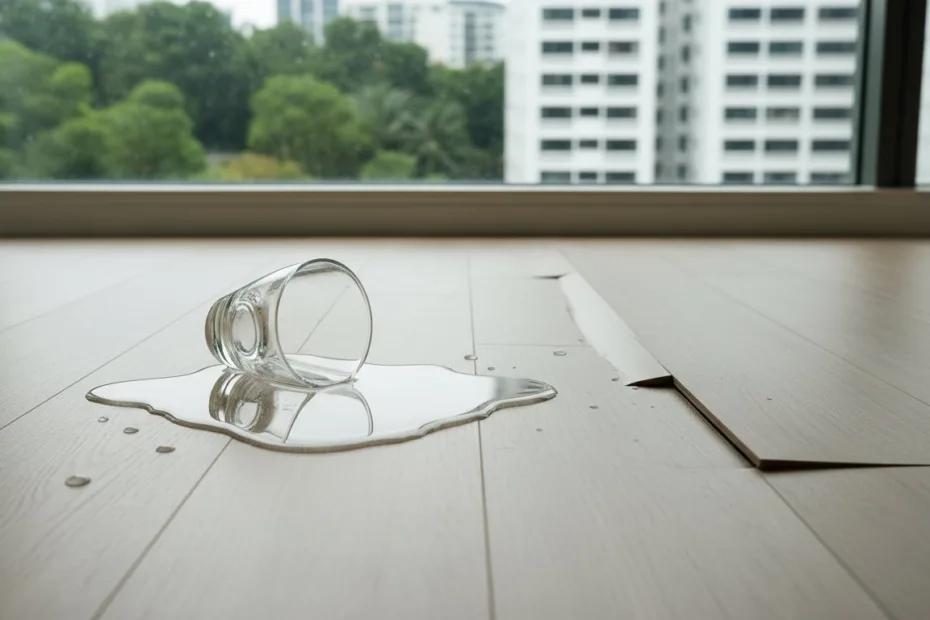
Mrs. Tan spent S$4,500 on new flooring last year, only to find the edges of her boards “popping” after just 13 months of exposure to Singapore’s relentless humidity. This common heartbreak happens because the debate over vinyl vs laminate flooring water resistance is often clouded by confusing marketing terms like “water resistant surface” that don’t explain what happens when moisture hits the core. You likely already feel the anxiety of mopping your floors, fearing that a damp cloth might trigger permanent swelling or rot. It’s a valid concern in a climate where relative humidity levels frequently hit 90% or higher.
We’re here to provide professional clarity so you can make a safe, informed choice for your family. You’ll discover the specific science behind why certain floors fail in high-moisture areas and identify the materials that actually survive our tropical environment. This guide breaks down core compositions and testing certifications to reveal the clear winner for a durable, worry-free home. Let’s ensure your next renovation is a long-term investment rather than a temporary fix.
Key Takeaways
- Understand the technical distinction between waterproof and water-resistant labels to ensure your flooring choice provides genuine protection against spills.
- Learn the science behind how High-Density Fiberboard (HDF) cores react to moisture and why material composition is the biggest factor in floorboard expansion.
- Discover how Singapore’s 80% relative humidity and indoor air conditioning usage impact the stability and longevity of your flooring.
- Compare vinyl vs laminate flooring water resistance to determine the most durable and cost-effective solution for moisture-prone areas like kitchens and entryways.
- Master professional maintenance tips and learn how to identify early signs of water damage to protect your investment and avoid costly replacements.
Defining Water Resistance vs. Waterproofing in Flooring
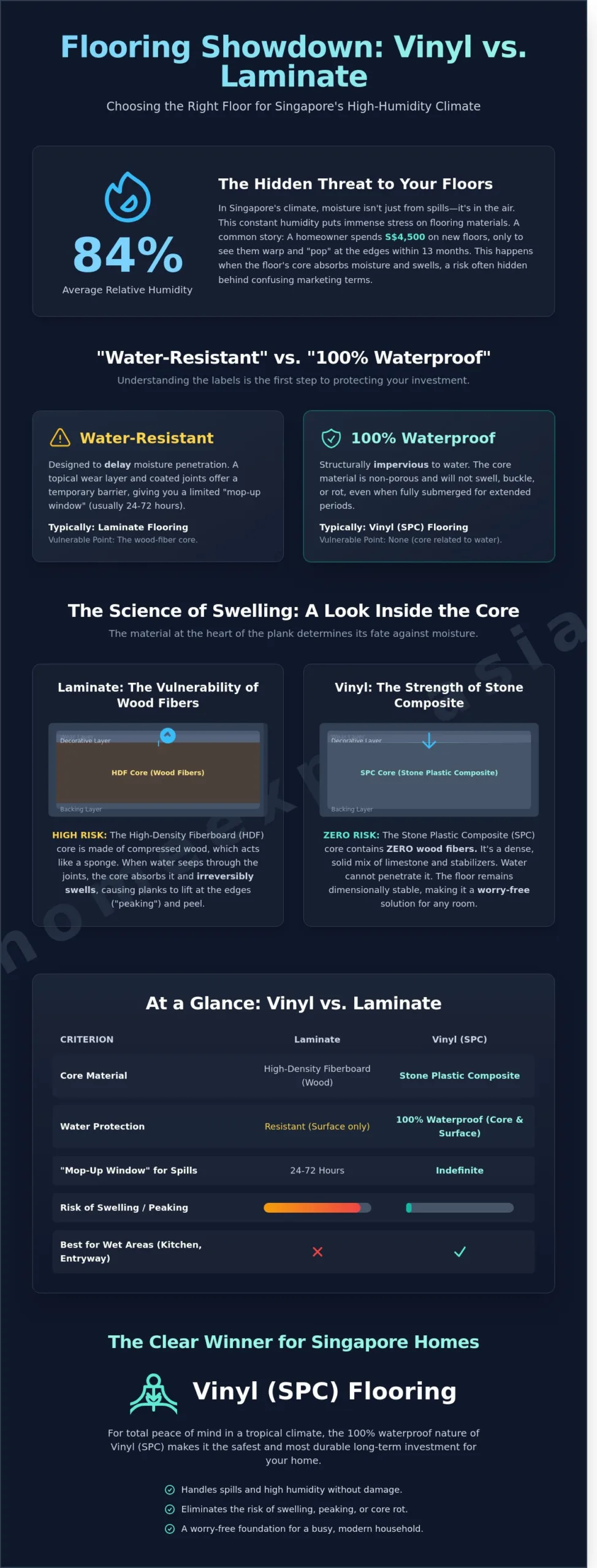
Choosing the right material for your HDB or condo involves more than just picking a color. You need to understand the technical gap between water-resistant and waterproof. In Singapore, where humidity levels average 84% year-round, this choice impacts your home’s longevity. When comparing vinyl vs laminate flooring water resistance, the difference lies in the core materials and how they react to liquid exposure.
Water-resistant flooring is designed to delay moisture penetration. It buys you time. Waterproof flooring is structurally impervious. It won’t lose its shape even if submerged. For a flooring Singapore investment to last 10 to 15 years, you must decide if you want a floor that merely resists spills or one that survives them entirely. Our experience shows that many homeowners confuse these terms, leading to avoidable floor warping during the monsoon season.
- ✓ Quality Is Our #1 Priority: We only recommend materials tested for Singapore’s tropical climate.
- ✓ Certified and Tested: Our products meet FloorScore and SGS standards for safety and durability.
- ✓ No Hidden Fee: The price you see for waterproof solutions includes professional installation.
The “Water-Resistant” Label Explained
Laminate flooring is typically water-resistant rather than waterproof. This resistance comes from a topical wear layer and a wax-coated click system. These features create a temporary barrier against spills. However, the Laminate flooring composition relies on a High-Density Fiberboard (HDF) core made of compressed wood fibers. Wood naturally absorbs water.
If you choose laminate, you must respect the “mop-up window.” Most manufacturers specify a 24 to 72-hour window to clear spills. If water sits longer, it seeps into the joints. Once moisture reaches the HDF core, the planks swell and the edges may peel. This makes edge-sealed laminate a risky choice for wet areas like kitchens or near balcony glass doors where rain splashes occur frequently.
The “100% Waterproof” Promise
Vinyl flooring, specifically Stone Plastic Composite (SPC), is 100% waterproof. It contains zero wood fibers. The core consists of natural limestone powder and stabilizers, creating a dense, rigid plank that water molecules cannot penetrate. This structural integrity is why vinyl is a premier choice for flooring Singapore residents use in high-moisture zones.
Vinyl can withstand standing water for indefinite periods without structural change. It won’t buckle, swell, or rot. This is a critical distinction for long-term value. While laminate might look great on day one, vinyl’s ability to handle a leaking aircon or a spilled bucket makes it a safer, risk-free investment for busy households. When evaluating vinyl vs laminate flooring water resistance, vinyl is the clear winner for total peace of mind.
Core Composition: Why Vinyl and Laminate React Differently to Liquid
To truly understand vinyl vs laminate flooring water resistance, you have to look beneath the decorative surface. The fundamental difference lies in the core materials. Laminate relies on organic wood byproducts, while modern vinyl utilizes inorganic composites. This distinction determines whether your floor survives a kitchen pipe leak or requires a total replacement after a single flood event.
Most laminate floors utilize High-Density Fiberboard (HDF) as their backbone. HDF consists of compressed wood fibers bonded with adhesive resins. Because wood is naturally porous, these fibers retain their biological urge to absorb moisture. According to a Forbes comparison of vinyl and laminate, this organic composition is the primary reason laminate remains susceptible to swelling and structural failure when exposed to standing water for more than 4 to 24 hours.
Laminate: The Vulnerability of Wood Fibers
In Singapore, where relative humidity levels often hover around 80%, laminate faces a constant battle. Natural wood fibers in the HDF core expand as they pull moisture from the air or from accidental spills. This expansion leads to “peaking,” a phenomenon where the edges of the planks push against each other and lift upward at the joints. Once the core absorbs water, it rarely returns to its original shape. Even high-quality laminate with wax-coated edges has a limit. If water seeps into the click-lock system, the internal pressure can reach levels that crack the protective wear layer from the inside out.
- ✓ Organic HDF cores act like sponges when seals are breached.
- ✓ Joint peaking occurs when moisture causes internal thickness swelling.
- ✓ Mold growth can start within 48 hours in damp wood-based cores.
Vinyl: The Synthetic Advantage of SPC and PVC
Modern vinyl flooring Singapore homeowners prefer often utilizes Stone Plastic Composite (SPC) technology. This core is a blend of approximately 60% to 70% natural limestone powder (calcium carbonate) and polyvinyl chloride (PVC) stabilizers. This mixture creates a rigid, 100% waterproof foundation that’s entirely inorganic. Because there are no wood fibers present, the material cannot rot, swell, or support the growth of mildew.
The synthetic nature of SPC provides a massive advantage in tropical climates. While heat and moisture cause organic materials to warp, vinyl remains dimensionally stable. Our SPC products are tested by firms like SGS and TUV SUD to ensure they meet rigorous safety and durability standards. If you’re worried about accidental spills in the kitchen or bathroom, you can browse our waterproof collections to see how synthetic cores provide long-term peace of mind. It’s a risk-free way to ensure your home stays beautiful regardless of humidity levels or plumbing mishaps.
Real-World Performance in Singapore’s Tropical Climate
Singapore’s climate is notoriously harsh on interior finishes. With an average daily relative humidity of 84%, moisture is always present in the air. This environmental factor is the biggest differentiator when evaluating vinyl vs laminate flooring water resistance in local homes. While laminate might perform well in dry, temperate climates, Singaporean HDB units and condos face unique challenges like “sweating” floors and high termite risks. High humidity causes organic materials to expand and contract, leading to warping in traditional wood-based products.
- ✓ 100% Waterproof SPC Core for maximum stability
- ✓ Termite resistant materials that don’t attract pests
- ✓ Certified Safe and Eco-Friendly (Green Label Singapore)
- ✓ Risk-free installation with professional warranties
The threat of termites is a reality for many homeowners here. Damp environments attract subterranean termites, which can cause thousands of S$ in property damage. Since laminate features a High-Density Fiberboard (HDF) core made of wood fibers, it becomes a food source once moisture seeps in. SPC vinyl is composed of limestone and PVC, offering no nutritional value to pests and keeping your investment secure for the long term.
Combatting High Humidity and Condensation
Condensation often occurs when you blast the air conditioning at 22°C while the tropical air outside remains at 30°C. This temperature gap creates “sweating” on the floor surface and underneath the boards. In many HDB flats, this moisture gets trapped between the slab and the flooring. For laminate, this trapped vapor leads to “peaking,” where the edges of the planks push against each other and lift.
Our professional installers prioritize vapor barriers in every project to mitigate this risk. However, the core material remains the final line of defense. Stone Plastic Composite (SPC) vinyl is engineered to maintain its shape despite these extreme temperature fluctuations. It’s a professional-grade solution that ensures your floor stays flat and beautiful, even if you run the AC all night and open the windows all day.
Kitchen and Bathroom Splash Zones
The kitchen is the heart of the Singaporean home, but it’s also a high-risk zone for flooring. Asian cooking styles often involve heavy steam, oil splatters, and occasional spills during food preparation. When considering vinyl vs laminate flooring water resistance, vinyl is the gold standard for both wet and dry kitchens. It handles direct water contact without swelling, whereas even “water-resistant” laminate can fail if a spill isn’t wiped up within minutes.
Bathroom-adjacent hallways are another critical area. Steamy showers and wet feet exiting the bathroom create a micro-environment of high moisture. Choosing waterproof materials for these transition zones is essential to prevent mold growth. Our vinyl flooring is FloorScore certified, ensuring that even in damp conditions, your home’s air quality remains safe and free from harmful VOCs. It’s a durable, easy-to-clean choice that fits the practical needs of a busy Singaporean household.
Maintenance, Longevity, and the Risk of Swelling
Managing floors in Singapore’s typical 80% humidity requires a clear understanding of material limits. When evaluating vinyl vs laminate flooring water resistance, the differences become clear during your weekly cleaning routine. Laminate floors rely on a high-density fiberboard (HDF) core. This wood-based material acts like a sponge if moisture lingers too long. Vinyl uses synthetic polymers that stay completely inert when they touch water. This fundamental difference dictates how long your floors will look new before signs of wear appear.
Cleaning Protocols for Maximum Lifespan
- ✓ Laminate Care: Use only a damp, well-wrung microfiber mop. Excess water sitting on the surface for more than 30 minutes can seep into the seams.
- ✓ Vinyl Care: These floors handle traditional wet mopping without issue, making them ideal for Singaporean kitchens where heavy cooking spills are common.
- ✓ Agent Selection: Always use pH-neutral cleaners. Harsh chemicals can strip the protective wear layer of both materials over time.
Steam mops are a major risk factor for laminate. The high-pressure steam reaches temperatures over 100°C and forces moisture deep into the HDF core, causing immediate delamination. While some premium vinyl products with FloorScore certification are more resilient, we generally advise against steam for any floating floor system. If a major flooding event occurs, such as a burst aircon pipe, laminate usually requires a total replacement. Vinyl can often be salvaged if the planks are unclicked, dried, and reinstalled by a professional.
Identifying and Fixing Water Damage
Water damage in laminate is usually structural and irreversible. You’ll first notice “peaking,” where the edges of the planks push upward and create sharp ridges. If the core absorbs enough liquid, the entire board will “buckle,” lifting off the subfloor. Because laminate uses a complex interlocking system, you can’t just “patch” a middle section easily. Replacing a damaged area often involves dismantling the floor from the nearest wall, which significantly increases labor costs.
Vinyl is much more forgiving. If a single plank is scratched or damaged, a skilled installer can often replace that specific piece without disturbing the rest of the room. In Singapore, a professional repair for a small section of laminate can cost between S$400 and S$700 when factoring in labor and matching old batches. Vinyl offers a much lower long-term maintenance risk. Our team uses 50 years of combined experience to ensure your subfloor is moisture-tested before any planks go down, preventing “bottom-up” water damage that warranties rarely cover.
Don’t risk your renovation budget on materials that can’t handle a spill. Get a professional quote for waterproof vinyl flooring and enjoy peace of mind for years to come.
Standard “waterproof” warranties for laminate usually only cover topical spills for 24 to 48 hours. They don’t protect against rising dampness or high humidity levels common in HDB flats. High-quality vinyl typically comes with a 10-year material warranty that specifically covers structural integrity against water, providing a much safer investment for local homeowners.
Choosing the Right Solution for Your Singapore Home
Deciding on the best material involves more than just picking a color. You must weigh vinyl vs laminate flooring water resistance against the specific needs of your household. Singapore’s average humidity often exceeds 80 percent, which means your floors are constantly battling moisture. Choosing the wrong material can lead to costly repairs within just 2 to 3 years.
The Room-by-Room Decision Matrix
- Living rooms: Laminate remains a viable, cozy option here. If you prefer the authentic feel of wood and don’t expect frequent spills, it provides a premium look for your main social area.
- Kitchens and Balconies: Vinyl is the only logical choice. Kitchens face daily liquid exposure, and balconies often deal with rain splashes. 100 percent waterproof vinyl ensures your floor won’t swell or warp.
- Commercial spaces: For shops and cafes, we recommend heavy-duty waterproof vinyl. It stands up to heavy foot traffic and frequent mopping without degrading.
Why Professional Installation is Non-Negotiable
Even premium materials can’t save a floor from poor workmanship. Tiny gaps in clicking systems allow water to reach the subfloor. This trapped moisture often leads to subfloor mold, which is a health hazard and smells terrible. Professional installation ensures every plank is locked tight.
Expert installers use specialized tools to maintain waterproof integrity. They focus on critical details like precision-cut skirting and professional-grade silicone sealing. These steps create a barrier that prevents water from seeping under the edges. Our team brings more than 50 years of combined experience to every job, ensuring your home stays safe and beautiful.
✓ Quality Is Our #1 Priority
✓ No Hidden Fee
✓ Official Invoice Given
Get a Risk-Free Quote for Your Professional Vinyl Installation
Before you commit to a renovation, use this final checklist to vet your contractor. It’s the best way to ensure you receive the quality you’re paying for. Ask these four questions:
- Does the material carry certifications from SGS, TUV SUD, or FloorScore?
- Is there a clear, written warranty for both materials and installation?
- Does the quote include all necessary sealing and skirting work?
- Can you provide testimonials from other Singapore homeowners?
By focusing on vinyl vs laminate flooring water resistance and choosing professional installers, you protect your home from Singapore’s harsh tropical climate. It’s a smart investment that provides peace of mind for years to come. We make sure the process is risk-free for you by providing tested, eco-friendly materials that stand the test of time.
Secure Your Home With Singapore’s Most Reliable Flooring
Choosing between vinyl vs laminate flooring water resistance depends on how your floor handles Singapore’s 80% average humidity levels. While laminate offers a beautiful aesthetic, its wood-fiber core remains susceptible to swelling if moisture seeps into the joints. In contrast, premium vinyl provides a 100% waterproof synthetic core that’s specifically engineered for our tropical environment. Safety and health shouldn’t be compromised for price. You should always verify that your flooring carries FloorScore and Green Label Singapore certifications to ensure it’s eco-friendly and safe for your family.
We make your renovation journey simple and transparent. With over 200+ designs available, you’ll find the perfect match for your interior style without any hidden fees. Our 5.0/5.0 Google Reviews reflect our commitment to excellence and professional service for every local homeowner. We provide an official invoice and a clear warranty because your peace of mind is our priority. It’s a risk-free way to upgrade your living space with durable, high-quality materials that stand the test of time.
Book a Free Site Assessment for Your Vinyl Flooring Today
Your dream home deserves a foundation that stays beautiful regardless of the weather.
Frequently Asked Questions
Is vinyl flooring 100% waterproof?
Yes, high-quality vinyl flooring is 100% waterproof because it’s crafted from synthetic materials like PVC and stone powder. These materials don’t absorb moisture, so the planks won’t swell or warp even during a pipe leak. This core stability is the main advantage of vinyl vs laminate flooring water resistance for Singaporean homeowners. It’s a risk-free choice for areas prone to spills and heavy moisture.
Can I use a wet mop on laminate flooring?
No, you shouldn’t use a soaking wet mop on laminate flooring because the excess water can seep into the HDF core. Even water-resistant laminate has a wood-based center that can swell by 15% if moisture penetrates the seams. We recommend using a damp, well-wrung microfiber mop instead. This ensures your floor stays beautiful while protecting your 10-year material warranty and keeping the surface safe.
What happens if water gets under my vinyl floor?
Trapped water under vinyl flooring can lead to mold and mildew growth on your subfloor within 24 to 48 hours. While the vinyl planks are waterproof, the concrete or timber subfloor underneath isn’t. If a major flood occurs, you must engage a professional to lift the planks and dry the area completely. This prevents odors and protects the 1-year installation warranty we provide for every job.
Is SPC vinyl better than laminate for Singapore kitchens?
Yes, SPC vinyl is the superior choice for Singapore kitchens because it’s 100% waterproof and highly durable. Kitchens face daily spills and high foot traffic that can damage sensitive materials. SPC vinyl handles these challenges without the risk of bubbling, which affects 30% of laminate floors in wet areas. Our SPC options are FloorScore certified, ensuring your kitchen remains a safe and eco-friendly environment.
How long can water sit on a water-resistant laminate floor?
Standard laminate can only resist water for about 30 minutes before moisture starts penetrating the seams. High-end water-resistant versions are tested to withstand standing liquid for 24 to 72 hours depending on the brand. To be safe, you should always wipe up spills within 15 minutes. This simple habit prevents the wood-fiber core from absorbing moisture and ensures your floor remains professional and flat.
Does high humidity in Singapore cause laminate floors to swell?
Yes, Singapore’s high average humidity of 84% can cause laminate floors to expand and contract throughout the day. Without a 10mm expansion gap around the room’s perimeter, the boards may buckle or lift at the joints. Our experienced installers use professional techniques to account for these tropical conditions. This meticulous approach is why we’ve earned 5.0/5.0 reviews on Google from hundreds of satisfied Singaporean homeowners.
Can vinyl flooring be installed in bathrooms?
You can install SPC vinyl in dry bathroom areas, but it’s not suitable for wet shower zones where water is constant. Since it’s 100% waterproof and SGS tested, it handles splashes from a sink or toilet perfectly. It’s a great, affordable alternative to tiles for a quick bathroom refresh. Just ensure the subfloor is level to maintain the integrity of the click-lock system during use.
Which flooring is more scratch-resistant, vinyl or laminate?
Laminate flooring is generally more scratch-resistant than vinyl because of its tough aluminum oxide top layer. Most quality laminates carry an AC4 or AC5 rating, making them 20% more resistant to scratches from pets or heavy furniture. While vinyl is durable, it’s a softer material and can be gouged by sharp objects. For high-traffic living rooms, laminate often provides better long-term surface protection against daily wear.