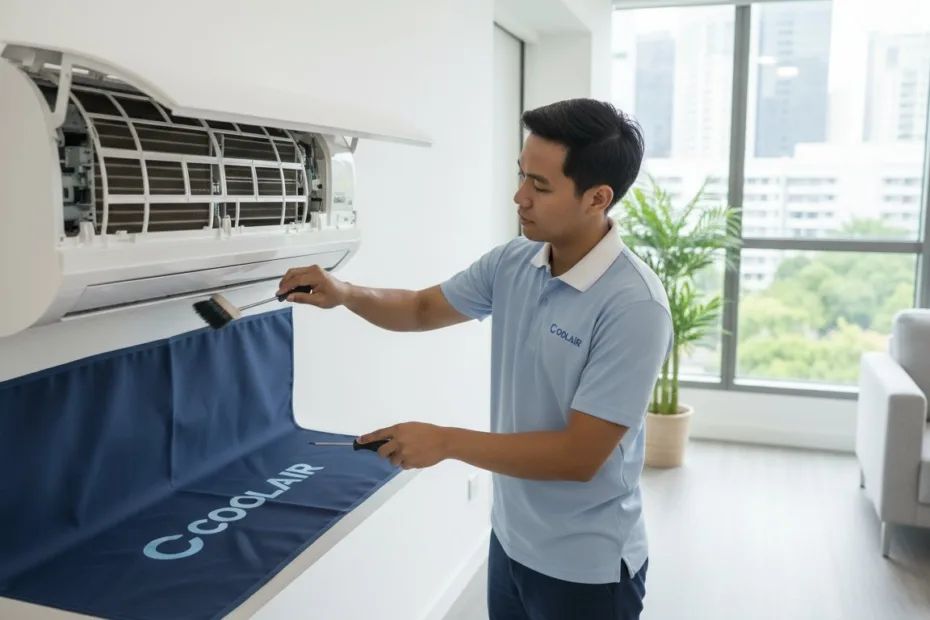
Did you know that air conditioning accounts for up to 50% of your household electricity bill, especially with the Q1 2026 tariff at 29.11 cents/kWh? Keeping your system efficient through regular aircon servicing is the only way to stop your hard-earned money from vanishing into thin air. We understand the frustration of dealing with technicians who don’t show up or finding water leaks that ruin your expensive vinyl flooring and built-in carpentry. You deserve a home that stays cool during 2026’s heatwaves without the fear of hidden costs or a $20,000 fine for poor maintenance under HDB regulations.
This guide shows you how to protect your home assets and ensure your system meets the latest SS 554:2026 indoor air quality standards. You’ll learn how to identify fair pricing for chemical washes and why the shift to R32 refrigerant matters for your wallet. We’ve compiled the essential maintenance schedule and expert tips you need to keep your electricity bills low, your air pure, and your cooling system running like new.
Key Takeaways
- Understand how Singapore’s humidity impacts your evaporator coils and learn to prevent energy spikes before they hit your wallet.
- Distinguish between general aircon servicing, chemical washes, and overhauls so you only pay for the maintenance your unit actually needs.
- Master our homeowner’s checklist to prepare your space and protect your expensive vinyl flooring from accidental damage during service calls.
- Identify the root causes of common issues like water leaks and strange odors to stop minor glitches from becoming major repairs.
- Discover how professional cooling maintenance protects your home’s renovation investment by preventing floor warping and mold growth.
Why Regular Aircon Servicing is Essential for Singapore Homes in 2026
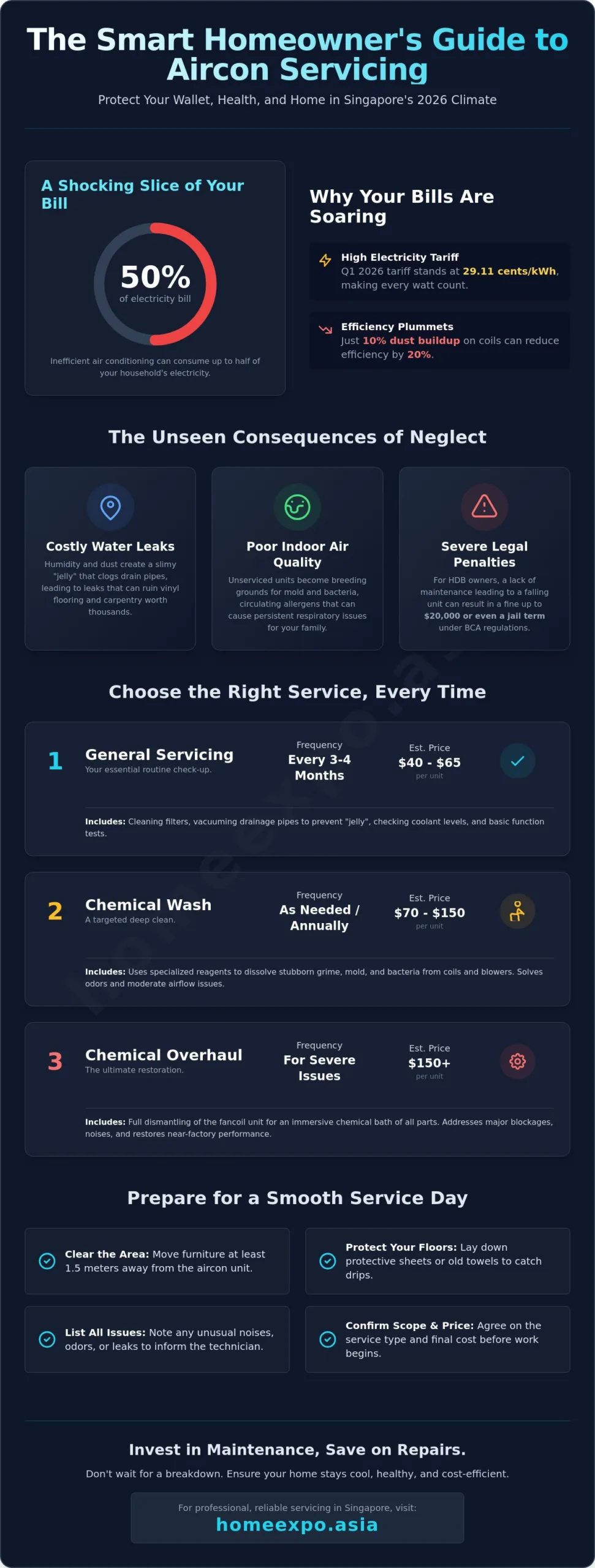
Living in Singapore means relying on cooling systems almost 24/7. However, understanding What is Air Conditioning? goes beyond just pushing a button on a remote. In 2026, air conditioning accounts for approximately 40% to 50% of your total household electricity consumption. With the Q1 2026 electricity tariff sitting at 29.11 cents/kWh, an unserviced unit isn’t just a minor annoyance; it’s a significant financial drain. Professional aircon servicing ensures your system doesn’t have to fight against the relentless tropical humidity that defines our island’s climate.
The high humidity in Singapore creates a perfect breeding ground for bacteria and mold inside your fancoil. When moisture on the evaporator coils mixes with common household dust, it forms a thick, slimy substance often called “jelly” in the drainage tray. This blockage is the primary cause of water leakage that can ruin your built-in carpentry. Beyond structural damage, unserviced units circulate allergens and mold spores, which can lead to persistent respiratory issues for your family. Regular maintenance is the only way to keep your indoor air safe and clean.
Property type also dictates your maintenance responsibilities. HDB dwellers must comply with strict BCA regulations. As of March 19, 2026, if an air-conditioning unit or its supporting structures fall due to a lack of maintenance, flat owners can face a maximum fine of $20,000 or even a jail term. Condo owners face different challenges, such as restricted access to compressor ledges or complex centralized drainage systems that require specialized equipment to flush effectively. Regardless of where you live, staying compliant with these standards is essential for your safety and legal protection.
Combating Singapore’s Humidity and Dust
The 2026 heatwaves have pushed cooling systems to their absolute limits. This increased load means dust accumulates much faster than in previous years. When this dust combines with condensate water, it creates the “jelly” that clogs your pipes. Regular aircon servicing prevents this buildup, ensuring your indoor air quality remains high and your drainage flows freely. You’ll find that clear pipes prevent the dreaded water “dripping” that often occurs at the most inconvenient times.
Energy Efficiency and Cost Savings
A mere 10% dust buildup on your coils can reduce your system’s operating efficiency by as much as 20%.
Clean condensers allow for optimal heat exchange, which means your compressor doesn’t have to run at maximum power to reach your desired temperature. While emergency repairs for a failed compressor can exceed $600 in 2026, preventative maintenance offers a much higher ROI. It keeps your monthly bills predictable and extends the lifespan of your unit by several years. Investing in routine checks is simply the most cost-effective way to manage your home’s utility expenses.
Types of Aircon Servicing: General, Chemical Wash, and Overhaul
Choosing the right level of care for your cooling system is the difference between a minor tune-up and an expensive, unnecessary repair. In Singapore’s 2026 climate, where electricity costs 29.11 cents/kWh, a mismatched service can leave you with a unit that still draws excessive power. Understanding the difference between a routine checkup and a deep chemical restoration is the first step toward long-term savings. Professional aircon servicing should always be tailored to the specific condition of your unit rather than a one-size-fits-all approach.
General Servicing vs. Chemical Cleaning
General servicing is your routine 3 to 4-month preventive measure. This service typically starts from $40 to $65 per unit and includes cleaning filters, flushing drainage pipes, and checking the coolant levels. While DIY filter cleaning is helpful, it doesn’t replace professional vacuuming of the drainage line to prevent the “jelly” buildup discussed in previous sections. Experts recommend following official maintenance guidelines to ensure the evaporator coils remain free of debris. For high-usage areas like master bedrooms, this quarterly schedule is non-negotiable, while living rooms used only in the evenings might stretch to every 5 or 6 months.
A chemical wash becomes necessary when general cleaning no longer solves odors or moderate airflow blockages. At $70 to $150 per unit, this service uses specialized reagents to dissolve stubborn grime that water alone cannot touch. It’s a targeted solution for units that have been neglected for over six months or those operating in dusty environments.
When is a Chemical Overhaul Necessary?
If your unit is blowing warm air or has visible mold growth deep inside the fancoil, a chemical overhaul is the gold standard. Unlike a wash, an overhaul involves fully dismantling the fancoil from the wall to clean the back of the heat exchanger and the internal fan blower. This is essential for units with severe cooling issues or those that haven’t been serviced in years. With overhaul prices starting from $150, you should weigh this against the cost of a new unit. If your system is over 8 years old and uses the phased-out R410A refrigerant, upgrading to a 5-tick R32 model might be the more “Risk Free” long-term investment.
Gas top-ups remain the most misunderstood part of maintenance. Modern systems are closed loops; if you need gas, you likely have a leak. In 2026, R32 gas top-ups range from $60 to $150. Before paying, ensure your technician identifies the leak source. If you’re looking for high-quality home solutions, consider how professional interior care can help you integrate better air management from the start. Our team ensures that every job is done with “Quality Is Our #1 Priority” in mind.
- ✓ General Servicing: Best for routine efficiency and preventing leaks ($40 to $65).
- ✓ Chemical Wash: Best for removing odors and moderate clogs ($70 to $150).
- ✓ Chemical Overhaul: Best for severe mold and complete cooling restoration ($150+).
- ✓ No Hidden Fee: Always request an official invoice before any work begins.
The Homeowner’s Checklist: Preparing for Your Servicing Appointment
A successful aircon servicing appointment starts long before the technician knocks on your door. Proper preparation ensures the job is done safely, efficiently, and without leaving a mess behind. You should clear at least 1 meter of space directly beneath the fancoil unit. This gives the technician enough room to set up a ladder and work without risking damage to your furniture. It’s also wise to run your unit for 10 minutes before the appointment. This helps you establish a baseline for cooling performance and identify any existing noises to report immediately.
Verifying credentials is another vital step for your peace of mind. As of April 5, 2026, all regulated appliances must be handled by trained professionals. Ask to see their BCA or NEA certifications. This ensures they’re qualified to handle modern R32 refrigerants and follow Singapore Standard SS 553:2026 for mechanical ventilation. Taking these small steps builds a foundation of trust and quality for every service call.
Protecting Your Interior Investment
Chemical splashes and water runoff are the biggest risks to your home’s aesthetic. High-pressure cleaning can occasionally cause overspray on feature walls or fluted panels. You’ll want to ensure the technician uses a high-quality water bag to catch every drop of runoff. This is especially critical if you’ve invested in vinyl flooring Singapore homeowners often choose for its durability. While vinyl is water-resistant, prolonged exposure to chemical cleaning agents can dull the finish. For parquet or laminate floors, even a small leak can lead to warping or “popping” within 24 hours. Using plastic sheets to cover the immediate area is a simple way to keep your home “Risk Free” from accidental damage.
Communication with the Technician
Clear communication prevents misunderstandings and ensures you get the value you paid for. Don’t be afraid to ask for specific data points during the visit. A professional should provide pre-service and post-service temperature readings to prove the efficiency gain. You can also request a photo of the drainage tray before it’s cleaned. This visual evidence helps you understand the level of “jelly” buildup in your system. Finally, always verify the warranty period. Most reputable firms offer a 30 to 90-day guarantee on their workmanship. Getting an official invoice is essential, as it acts as your proof of service for HDB compliance or future warranty claims.
- ✓ Clear 1 meter of space for ladder access.
- ✓ Run the AC 10 minutes prior to establish a baseline.
- ✓ Verify NEA/BCA certifications for safety.
- ✓ Use plastic sheets to protect walls and flooring.
- ✓ Request temperature readings and photos of the drainage tray.
Addressing Common Aircon Problems: Leaks, Noise, and Odors
Aircon issues often strike at the most inconvenient times. Whether it’s a midnight leak dripping onto your bed or a rattling noise during an important meeting, these symptoms indicate your system is under stress. Ignoring these signs doesn’t just lead to discomfort; it can result in expensive repairs that exceed $500 in 2026. Regular aircon servicing is your best defense. However, understanding what these sounds and smells mean helps you communicate better with your technician and avoid being overcharged for unnecessary parts.
One of the most concerning sights is ice formation on the fancoil. If you see white frost appearing on the cooling fins, turn the unit off immediately. This is usually caused by restricted airflow from severely dirty filters or a refrigerant leak. Since new 2026 models predominantly use R32 gas, maintaining the correct pressure is vital. R32 systems are 10% to 20% more energy-efficient than older R410A units, but only when the refrigerant levels are precise. Professional intervention is required to identify the leak source before a gas top-up is performed.
Troubleshooting Water Leaks
Water leakage remains the #1 complaint for Singapore homeowners. This problem is almost always tied to the “sludge” that develops in the 1/2 inch PVC drainage pipe. When household dust meets condensate water, it creates a thick, biological blockage. If the water cannot flow out, it overflows the internal tray. Interestingly, your home’s layout plays a role. Improper sloping or alignment during flooring Singapore installations can sometimes subtly shift the external drainage path. A professional vacuuming of the drainage line is the only permanent solution to prevent water from damaging your walls and floors.
Understanding Aircon Odors
A ‘sour’ or musty smell is a clear warning of organic buildup. This occurs when Volatile Organic Compounds (VOCs) from cooking or cleaning products interact with the damp environment of the cooling coils. High indoor humidity levels in 2026’s heatwaves accelerate this process, turning your aircon into a breeding ground for mold. While anti-bacterial sprays provide a temporary scent boost, they don’t remove the root cause. A full chemical overhaul is often the only way to deep-clean the heat exchanger and restore a fresh, safe environment for your family. If you notice persistent odors, you can book a professional inspection to ensure your indoor air quality meets SS 554:2026 standards.
- ✓ Water Leaks: Usually caused by sludge in the 1/2 inch PVC pipe.
- ✓ Rattling Noises: Often point to loose fan motors or vibrating copper pipes.
- ✓ Sour Smells: A sign of VOCs and mold buildup on the cooling coils.
- ✓ Ice Formation: Indicates a gas leak or critical airflow blockage.
- ✓ No Hidden Fee: Always get a quote for the specific problem before work starts.
Integrating Aircon Maintenance into Your Home Renovation Strategy
Renovating a home in 2026 involves much more than just selecting aesthetics. It requires a strategic approach to climate control that protects your investment for the next decade. When you sit down for a consultation with the top renovation companies in Singapore, aircon placement and drainage routing must be on the agenda. Poorly planned trunking can lead to stagnant water in pipes, which eventually results in the leaks and “jelly” clogs we discussed earlier. Integrating aircon servicing into your long-term home care plan ensures that your brand-new interior stays as pristine as the day the contractors handed over the keys.
At Home Expo Asia, our commitment to quality extends beyond just the products we install. We believe in a holistic approach to home longevity. A well-maintained cooling system isn’t just about comfort; it’s about asset protection. By maintaining a consistent temperature and a humidity level of approximately 50%, you prevent the natural expansion and contraction that causes wood and vinyl floors to warp or gap. This is the “Risk Free” promise we strive for: a home where every element works in harmony to save you money and stress.
Post-Renovation Aircon Care
Construction dust is a silent killer for modern AC units. If you’ve recently completed cement screeding, hacking, or extensive carpentry work, you must book a professional service immediately. Microscopic particles from these activities bypass standard mesh filters and settle deep within the internal motors and evaporator coils. This grit acts like sandpaper, causing premature wear on moving parts. You’ll also want to ensure the technician clears the drainage pipes of any construction debris or fine sawdust that might have entered the system during the renovation phase. Skipping this step often leads to immediate leaks that can ruin your fresh paintwork.
Protecting Your Carpentry and Floors
A single overlooked leak can cause catastrophic damage to custom built-in furniture. If your AC is positioned above a wardrobe or vanity, a drainage failure can lead to mold growth inside the carcass of the wood. This is why choosing a skilled carpenter Singapore homeowners trust is only half the battle; you must also ensure the appliances above their work are functioning perfectly. Consistent aircon servicing keeps the moisture levels in check, preventing the dampness that attracts pests and destroys high-end finishes. Building a relationship with a certified maintenance partner is the final, essential step in your 2026 renovation journey.
- ✓ Plan AC trunking during the initial renovation consultation.
- ✓ Schedule a deep clean immediately after all dusty construction work.
- ✓ Maintain 50% humidity to protect vinyl and wood floor integrity.
- ✓ Ensure AC units are never placed directly above sensitive electrical points.
- ✓ Quality Is Our #1 Priority: Always use certified technicians for post-reno checks.
Securing Your Home’s Comfort and Value for 2026
Maintaining your cooling system is about protecting your home’s integrity and your wallet. We’ve explored how routine aircon servicing prevents the biological clogs that ruin built-in carpentry and ensures your system handles 2026’s heatwaves without spiking your energy bills. By choosing the right service level and following our homeowner’s checklist, you keep your indoor air quality high and your maintenance costs predictable. Protecting your flooring and carpentry starts with a commitment to consistent, professional care.
Quality home care requires a holistic approach to your living space. With over 50 years of combined renovation experience and a perfect 5.0/5.0 rating on Google Reviews, our team understands exactly how to build and maintain a durable home. We back our professional work with a comprehensive 1-year installation warranty to ensure every project is completely “Risk Free” for you. It’s time to stop worrying about hidden costs or unreliable technicians and start investing in long-term quality. Your home is your most valuable asset, and it deserves the highest standard of protection.
Book a Risk-Free Renovation Consultation with Home Expo Asia today. Let’s work together to ensure your home remains a cool, safe, and beautiful sanctuary for years to come.
Frequently Asked Questions
How often should I service my aircon in Singapore?
You should schedule professional aircon servicing every 3 to 4 months for standard residential units. This frequency prevents the biological “jelly” buildup in drainage trays that leads to leaks. For units in master bedrooms used every night, a quarterly schedule is essential to maintain air quality. Living room units used less frequently can sometimes wait 6 months between checks. Consistent maintenance ensures your system remains compliant with Singapore Standard SS 553:2026.
Is it necessary to top up aircon gas every time I service?
No, it’s not necessary to top up gas during every service. Modern air conditioning systems are closed loops; refrigerant should not deplete unless there is a physical leak in the copper pipes. If a technician suggests a top-up during every visit, you should request a leak test. In 2026, R32 gas systems are the market standard, and unnecessary top-ups are both a financial waste and potentially harmful to the environment.
Why is my aircon still not cold after servicing?
Your unit may still feel warm if there’s a refrigerant leak, a faulty compressor, or a damaged fan motor. While general aircon servicing cleans the filters and coils, it doesn’t fix underlying hardware failures. If the airflow is strong but the temperature isn’t dropping, a technician must check the gas pressure levels. A chemical overhaul might be required if the internal cooling fins are still choked with deep-seated grime that a surface wash cannot reach.
What is the difference between a chemical wash and a chemical overhaul?
A chemical wash involves cleaning the internal components while the fancoil remains mounted on the wall. In contrast, a chemical overhaul requires the technician to fully dismantle the unit from the wall. This allows for a 360-degree cleaning of the heat exchanger and the hidden back of the fan blower. Overhauls are necessary for units with severe mold growth or those that haven’t been professionally cleaned in over 12 months.
Can a dirty aircon cause a high electricity bill?
Yes, a dirty unit can increase your electricity consumption by up to 20%. When dust coats the evaporator coils, the system must work harder and longer to reach your set temperature. With the Q1 2026 electricity tariff at 29.11 cents/kWh, this inefficiency translates directly into higher monthly costs. Keeping your condenser and fancoil clean ensures the heat exchange process remains optimal, protecting both your comfort and your wallet.
How long does a typical aircon general servicing take?
A standard general service for a single wall-mounted unit usually takes between 30 and 45 minutes. This timeframe includes the technician inspecting electrical components, cleaning the filters, and vacuuming the drainage pipes. If you have a multi-split system with three or four indoor units, expect the appointment to last about 1.5 to 2 hours. More intensive services, such as a full chemical overhaul, will naturally require more time for dismantling and reassembly.
What should I do if my aircon starts leaking water suddenly?
Turn off the power immediately to prevent water from damaging your flooring or built-in carpentry. Most sudden leaks are caused by a “sludge” blockage in the 1/2 inch PVC drainage pipe. While you can check if the external pipe is visibly clogged, a professional vacuuming is usually required to clear the internal tray. Don’t use the unit until the blockage is cleared to prevent mold growth and potential electrical short circuits.
Is it worth signing an annual aircon servicing contract?
Yes, an annual contract is highly beneficial for most Singapore homeowners. These packages often offer a 15% to 20% discount compared to ad-hoc bookings throughout the year. More importantly, contract customers usually receive priority scheduling during peak heatwaves when technicians are fully booked. It also ensures you maintain a consistent maintenance history, which is vital for HDB compliance and validating warranty claims on newer 2026 R32 models.