
Most Singapore homeowners believe a thicker plank always equals a better floor, but that extra millimeter could be a total waste of your renovation budget if you ignore the wear layer. It’s a common misconception that often leads to overspending or, worse, floor failure. You’ve likely spent hours comparing samples, feeling caught between technical specs while worrying if your HDB’s uneven cement screed will cause future warping or clicking sounds. It’s stressful to balance design goals with strict requirements like the 50mm HDB overlay limit and the need for acoustic harmony in high-density blocks.
We believe your home deserves a foundation built on safety and reliability. This guide will teach you exactly how to choose the right thickness for vinyl flooring by breaking down the industry standards that prevent common installation pitfalls. You’ll gain the expert knowledge needed to distinguish between core stability and surface protection. We provide a clear decision framework for every room in your house, ensuring you get maximum value and a floor that remains beautiful and quiet for years to come. By the end of this guide, you’ll have the confidence to select a floor that meets professional testing standards for your specific lifestyle.
Key Takeaways
- Distinguish between total plank thickness and the protective wear layer to ensure you’re paying for durability rather than just height.
- Master how to choose the right thickness for vinyl flooring to successfully mask subfloor imperfections like uneven cement screed.
- Determine the specific millimeter requirements for different zones in your home to balance your budget with heavy traffic needs.
- Learn why material quality and professional installation provide better long-term security than simply picking the thickest plank available.
- Gain peace of mind by understanding how a professional site assessment protects your renovation from common issues like floor warping.
Understanding Vinyl Thickness (mm) vs. Wear Layer (mil)
Many homeowners focus only on the total height of a plank when shopping, but that single number only tells half the story. Learning how to choose the right thickness for vinyl flooring requires a clear understanding of two distinct technical specifications: total thickness and the wear layer. These two measurements work in tandem to provide a floor that is both comfortable to walk on and resilient against daily life. A thick plank might feel luxurious underfoot, but if the protective top layer is too thin, the beautiful wood-grain design won’t survive more than a few years of foot traffic.
Think of the total thickness as the foundation of the plank and the wear layer as its protective shield. High-quality flooring relies on a balance between these layers. By Understanding Vinyl Flooring Composition, you can see how different materials are stacked to create a stable product. Choosing a thick floor with a poor wear layer is a common mistake that leads to a “hollow” sounding floor that scratches easily. Conversely, a thinner, high-density plank with a robust wear layer often provides much better value and longevity for a busy Singaporean household.
What is Total Thickness (mm)?
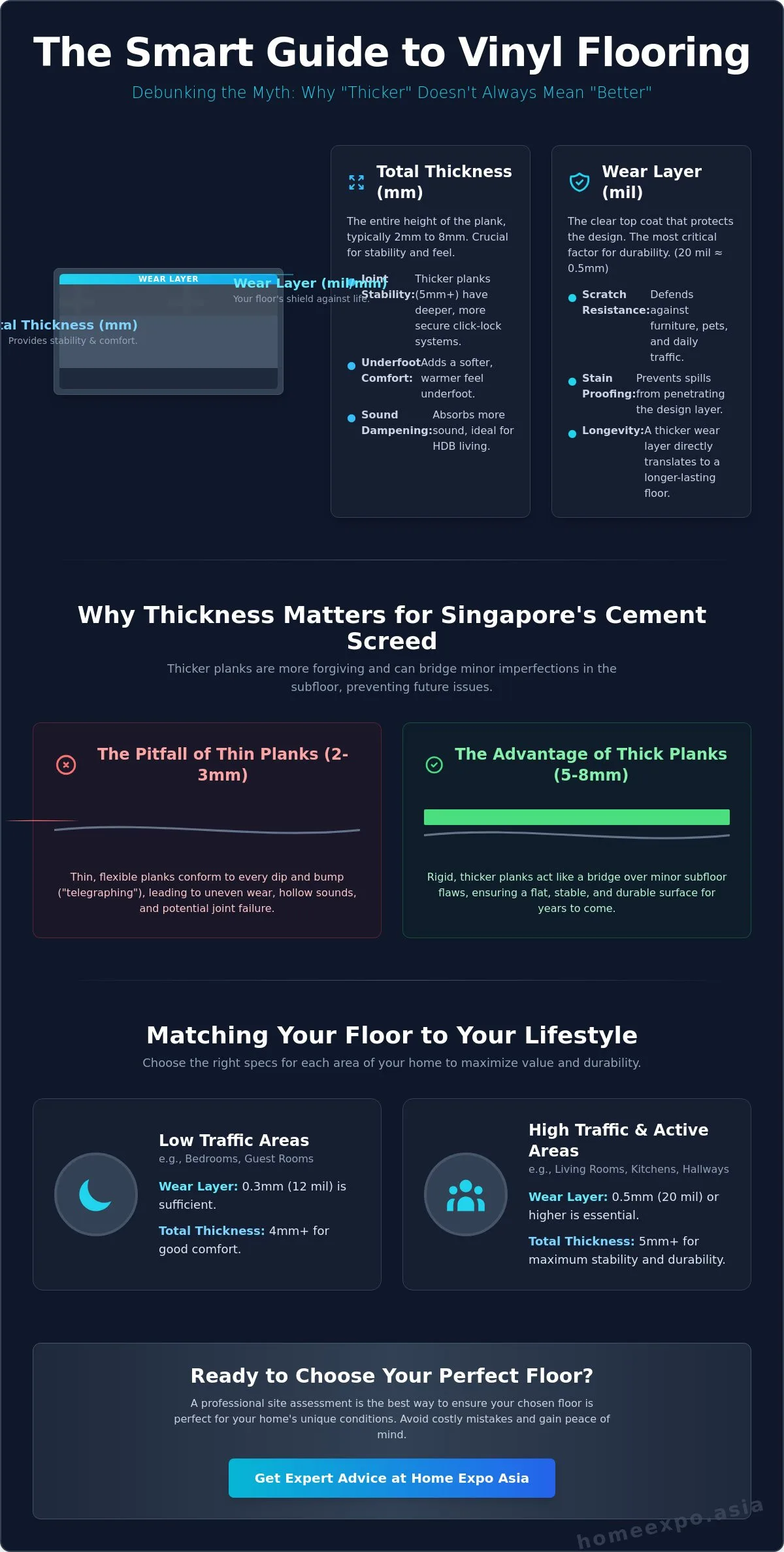
Total thickness refers to the entire height of the plank, from the backing to the top surface. In most Singapore showrooms, you’ll find ranges from 2mm to 8mm. This measurement is critical for several reasons:
- Joint Stability: Thicker planks (5mm and above) allow for a deeper, more secure click-lock system. This reduces the risk of the planks “popping” or separating over time.
- Underfoot Comfort: Added thickness often translates to a softer feel. It provides better “warmth” and mimics the acoustic properties of real wood.
- Sound Dampening: Thicker materials naturally absorb more sound, which is vital for maintaining good relations with neighbors in HDB blocks.
What is the Wear Layer (mil)?
The wear layer is the clear, urethane-based top coating that sits above the printed design. It’s often measured in “mil” (one-thousandth of an inch) or microns. To make shopping easier, you can translate these units: 20 mil is roughly equivalent to 0.5mm. This layer is the primary defense against scratches, stains, and scuffs.
For a standard bedroom with low traffic, a 0.3mm wear layer is usually sufficient. However, for high-traffic areas like the living room or kitchen, we recommend a minimum of 0.5mm. This “commercial-grade” spec ensures your floor can handle heavy furniture, pets, and the occasional dropped kitchen utensil without permanent damage. Always prioritize a higher wear layer over a thicker plank if your budget forces a choice between the two.
Subfloor Compatibility: Why Singapore’s Cement Screed Matters
In Singapore, the foundation of your renovation is almost always a cement screed base. While it looks solid, the reality is that many subfloors have minor dips, peaks, or waves that aren’t visible to the naked eye. When you’re deciding how to choose the right thickness for vinyl flooring, you must consider how well the material can bridge these imperfections. A thin 2mm or 3mm vinyl plank acts like a skin; it’s flexible and will eventually “telegraph” every bump or hollow spot underneath. Over time, this causes the vinyl to wear unevenly and may even lead to the click-joints snapping under pressure.
Thicker vinyl planks, specifically those in the 5mm to 8mm range, offer much more structural rigidity. These planks act more like a bridge than a skin, smoothing over minor subfloor discrepancies without conforming to every dip. This is why a high-quality cement screed is vital. If your base is poorly prepared, even the most expensive flooring won’t look or feel right. Investing in a thicker plank provides a safety net, ensuring your floor remains flat and stable even if the subfloor isn’t 100% perfect.
HDB Regulations and Floor Leveling
HDB guidelines generally require a floor flatness of 3mm over a 2-metre distance. Achieving this level of precision with manual cement works can be difficult. Thicker planks are significantly more forgiving for budget-conscious renovations where a full self-leveling compound treatment might not be feasible. When you pair a 5mm plank with a high-density IXPE underlayment, you create a robust system that compensates for the natural limitations of local masonry work. This combination ensures a professional finish that won’t warp or buckle as the building settles.
Preventing the ‘Hollow’ Sound
Living in a high-density HDB block or condominium means acoustic performance is a top priority. Thin vinyl flooring often produces a sharp, “clicky” sound when walked on, which can feel cheap and disturb your neighbors below. The thickness of the plank directly affects its acoustic resonance. A thicker core absorbs more impact energy, resulting in a muted, solid thud similar to real timber. If you’re concerned about noise complaints or simply want a more premium feel, opting for a thicker plank is the most reliable way to achieve acoustic harmony. To ensure your subfloor is ready for your chosen material, it’s wise to request a professional site assessment before making a final purchase.
The Ideal Thickness for Every Room in Your Singapore Home
Every space in your home serves a different purpose, which means a “one-size-fits-all” approach to flooring usually leads to unnecessary costs or premature wear. Understanding how to choose the right thickness for vinyl flooring requires a room-by-room analysis of foot traffic, furniture weight, and lifestyle needs. In a typical Singaporean flat, your living room faces much harsher conditions than a guest bedroom. By matching the technical specifications to the actual usage of the space, you ensure long-term reliability and safety for your family.
The living room is the heart of the home, often housing heavy TV consoles, large sofas, and constant activity. For this area, a 5mm plank is widely considered the “Goldilocks” zone. It provides the structural rigidity needed to support heavy furniture without the risk of the click-lock system failing—a crucial consideration for those planning to showcase designer furniture from the Kartell Singapore Flagship Store by Lifestorey. In contrast, bedrooms prioritize underfoot comfort and acoustic insulation. While you can use a 4mm plank here to save on costs, many homeowners still opt for 5mm to maintain a consistent feel and better sound dampening for neighbors living below.
Kitchens and home offices present unique challenges. Heavy refrigerators and washing machines can cause indentations in thinner, softer vinyl. Similarly, rolling office chairs exert intense point-pressure that can delaminate poor-quality floors. For these high-stress zones, we recommend a minimum thickness of 5mm paired with a commercial-grade wear layer. This combination provides the “shield” your floor needs to remain pristine despite the daily grind of a modern home office or a busy kitchen.
Thickness Recommendation Table
| Room Type | Recommended mm | Wear Layer | Primary Reason |
|---|---|---|---|
| Living & Dining | 5mm | 0.5mm | High traffic and heavy furniture support. |
| Kitchen | 5mm+ | 0.5mm | Appliance weight and spill resistance. |
| Bedrooms | 4mm to 5mm | 0.3mm to 0.5mm | Comfort and acoustic insulation. |
| Home Office | 5mm+ | 0.5mm | Resistance to rolling chair casters. |
| Commercial/Ground Floor | 6mm+ | 0.7mm | Maximum durability for extreme use. |
Managing Transitions Between Rooms
Maintaining a consistent thickness throughout your home simplifies the installation process and creates a seamless visual flow. If you choose a 5mm plank for the living room but a 4mm plank for the bedrooms, you’ll face small height discrepancies at the doorways. These tiny “lips” can become trip hazards and trap dust. While professional transition strips can bridge these gaps, it’s often more efficient to stick to a single thickness across all connected areas.
Always keep the HDB 50mm total overlay limit in mind when planning your floor height. If you’re overlaying vinyl on existing tiles, a 5mm plank is well within safety margins. This leaves plenty of room for the underlayment while ensuring your doors can still swing freely without needing significant trimming. Choosing a consistent height ensures your renovation looks professional and stays within regulatory standards.
Debunking the ‘Thicker is Always Better’ Myth
It’s easy to fall into the trap of thinking a thicker plank automatically means a higher quality floor. However, thickness is often a poor proxy for durability. When you’re researching how to choose the right thickness for vinyl flooring, you’ll find that a premium 5mm plank made from high-density materials often outperforms a budget 8mm plank filled with recycled plastics. A bulky but low-quality core is more prone to warping and structural failure than a slimmer, well-engineered alternative.
The real secret to a long-lasting floor lies in its core density and material purity. High-quality vinyl flooring singapore homeowners trust is typically made from virgin vinyl. This material is far more stable in Singapore’s high humidity compared to recycled fillers, which can expand and contract unpredictably. If you’ve heard horror stories about “popping” tiles, it’s rarely a thickness issue. Instead, these failures usually stem from poor installation, lack of expansion gaps, or a weak locking system that can’t handle environmental changes.
Material Quality vs. Quantity
The integrity of the locking system is the real failure point for most floors. A precision-engineered click-lock on a 5mm plank is significantly stronger than a poorly cut joint on a thicker, cheaper board. You should prioritize material quality over sheer height for several reasons:
- Virgin Vinyl Stability: Planks made from 100% virgin vinyl are less likely to shrink or buckle in our tropical climate.
- Core Density: A high-density rigid core provides better dent resistance than a thick, soft core that compresses under heavy furniture.
- Locking Strength: Professional-grade planks feature patented locking profiles that stay secure even with minor subfloor movement.
Cost-Benefit Analysis
Is it ever worth paying for extra thickness? For most residential HDB renovations, 5mm is the sweet spot for performance and price. You might consider 6mm or 8mm if you’re dealing with extreme subfloor irregularities or if you’re renovating a high-traffic commercial unit. However, for a rental property or a low-traffic guest room, a high-quality 4mm plank is perfectly adequate and helps keep your budget in check.
Thicker flooring doesn’t necessarily require more expensive installation, but it can complicate door clearances and transitions if not planned correctly. Choosing the right material involves looking past the millimeter count to the actual certifications and material safety. We recommend focusing on products that have passed rigorous local lab tests for dimensional stability and toxic emissions. If you’re ready to see the difference between thickness and quality, view our curated range of professional-grade flooring and find the perfect match for your home.
Choosing Your Perfect Floor with Home Expo Asia
Home Expo Asia understands that every Singapore home is unique. With over 200 curated designs, we help you navigate the technical details of how to choose the right thickness for vinyl flooring without the stress. We don’t just supply materials. Our team provides a comprehensive flooring installation service that begins with a mandatory site assessment. This step is vital. It allows us to identify subfloor issues like moisture levels or uneven screed that might affect your chosen plank’s performance. By addressing these factors early, we protect your investment and prevent future issues like warping or joint separation.
We prioritize your safety and long-term satisfaction. Our professional installation teams are trained to handle the specific challenges of HDB and Condominium layouts. We manage everything from the 50mm overlay limit to ensuring perfect room-to-room transitions without trip hazards. By choosing one of our tailored full home renovation packages, you eliminate the guesswork. We’ve already curated the ideal thickness and wear layer combinations that meet the highest industry standards for durability and indoor air quality. This methodical approach ensures your new floor remains a source of pride for years to come.
Expert Consultation for Singapore Homeowners
Our experts take the time to understand your lifestyle before making a recommendation. Do you have pets? Are you a frequent host? We match these factors to the right plank specifications to ensure your floor lasts for decades. We believe in total financial clarity. You’ll never encounter hidden “thickness surcharges” or unexpected fees. Our reputation is built on thousands of successful SG installations. We back our work with risk-mitigation warranties that offer you true peace of mind. Every project is handled with the same commitment to quality, safety, and reliability that has made us a trusted name in the local industry.
Next Steps for Your Renovation
The best way to decide on your flooring is to experience it in person. We invite you to visit our Balestier showroom. Here, you can feel the physical difference between 4mm, 5mm, and 6mm planks. Seeing the textures and hearing the acoustic properties firsthand makes the decision much easier. Once you’ve narrowed down your choices, our team will visit your home for a free site measurement. This allows us to provide a final, professional recommendation based on your actual subfloor condition. We ensure your chosen thickness is the perfect fit for your specific space and budget.
Get a Risk-Free Quote for Your Dream Flooring Today and take the first step toward a beautiful, worry-free home renovation.
Secure Your Home’s Foundation with Expert Precision
Choosing the perfect floor doesn’t have to be a stressful guessing game for your 2026 renovation. You now understand that while thickness provides vital underfoot comfort and structural stability, the wear layer is your primary shield against daily wear and tear. Mastering how to choose the right thickness for vinyl flooring ensures your HDB or Condo renovation stays within regulatory limits while providing maximum acoustic harmony for your neighbors below. It’s about balancing technical specs with the unique reality of Singapore’s humid climate and cement screed subfloors.
At Home Expo Asia, we back our professional expertise with a curated selection of over 200+ designs and a specialized focus on high-density residential installations. Our commitment to your long-term peace of mind includes comprehensive after-sales support and robust warranties that protect your investment for years to come. Don’t leave your floor’s longevity to chance when expert guidance is just a click away. Book Your Free Site Assessment & Flooring Consultation Now to ensure your home’s foundation is safe, reliable, and perfectly suited to your lifestyle. We look forward to helping you create a space you’ll love coming home to.
Frequently Asked Questions
Is 5mm vinyl flooring thick enough for a living room in Singapore?
Yes, 5mm is widely considered the “Goldilocks” zone for Singaporean living rooms. It provides the structural rigidity required to support heavy TV consoles and large sofas without the risk of the click-lock system failing. This thickness also ensures your floor remains stable under the high foot traffic typical of a family home.
What is the best wear layer thickness for a home with pets?
A 0.5mm (20 mil) wear layer is the professional recommendation for households with pets. This commercial-grade coating provides a superior shield against scratches from claws and heavy play. Choosing this specification ensures your floor’s design remains pristine despite the daily activity of your furry companions.
Does thicker vinyl flooring reduce noise for my downstairs neighbors?
Thicker vinyl planks significantly improve acoustic performance by absorbing more impact energy. This reduces the sharp, “clicky” noise often heard in HDB flats when walking in heels or hard-soled shoes. It’s a reliable way to maintain peace with your downstairs neighbors while enhancing the premium, solid feel of your own home.
Can I install 4mm vinyl over existing floor tiles?
You can install 4mm vinyl over existing tiles, provided the subfloor is clean, dry, and flat. However, thinner planks are less forgiving of deep grout lines or cracked tiles. A professional site assessment is the best way to determine if your existing tiles are suitable for a thin overlay without the risk of imperfections “telegraphing” through the surface.
What is the difference between mil and mm in vinyl flooring?
Total thickness is measured in millimeters (mm), while the wear layer is often measured in mils, which are thousandths of an inch. When you’re researching how to choose the right thickness for vinyl flooring, remember that a higher mm count improves underfoot comfort, while a higher mil count, like 20 mil, increases surface scratch resistance.
Will thicker vinyl flooring help hide an uneven cement screed?
Thicker rigid core planks are much better at masking minor dips and peaks in a cement screed. Because they are less flexible than 2mm or 3mm options, they act as a bridge over small imperfections rather than conforming to them. This results in a flatter, more stable surface even if the base isn’t perfectly level.
Is 12 mil or 20 mil better for a high-traffic kitchen?
A 20 mil wear layer is the superior choice for high-traffic kitchens. This area faces constant movement and the risk of dropped heavy objects or spills. The extra protection of a 20 mil layer ensures your kitchen floor can withstand these daily stresses without showing signs of premature wear or permanent staining.
Does thicker vinyl flooring last longer than thin vinyl?
Longevity is determined by the quality of the wear layer and core material, not just sheer thickness. A high-density 5mm plank with a 0.5mm wear layer will likely outlast a low-quality 8mm plank with a thin 0.2mm coating. Focus on material purity and professional installation to ensure your flooring lasts for its full 10 to 15-year lifespan.