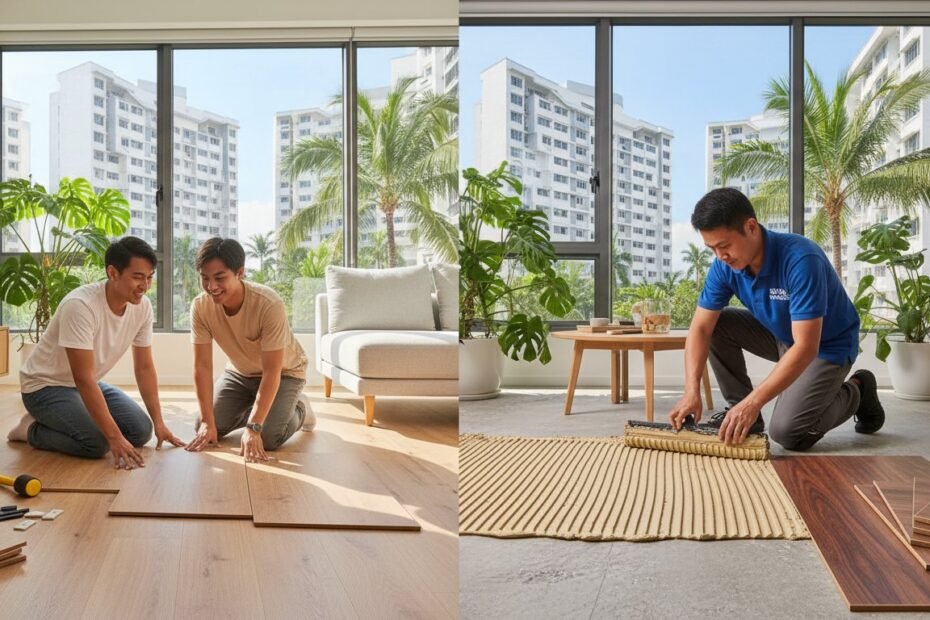
Will your new floor survive the next five years of Singapore’s relentless humidity without warping or popping? Many homeowners assume all vinyl is created equal, but the debate between click lock vs glue down vinyl flooring is actually about structural integrity and long-term peace of mind. It’s frustrating to invest in a beautiful renovation only to worry about tiles shifting underfoot or hidden subfloor issues that compromise your home’s safety. You deserve a floor that remains stable, silent, and easy to maintain.
We understand the pressure of choosing materials that meet HDB regulations while staying within your budget. This 2026 comparison provides the professional clarity you need to choose between a floating system and a permanent bond. We’ll explore critical factors like subfloor preparation, moisture resistance, and the reality of future repairs in a tropical climate. You’ll learn how to navigate technical standards and SGBC certifications to ensure your choice is both durable and eco-friendly. This guide gives you a transparent look at the total installation process so you can build your home on a reliable, high-quality foundation.
Key Takeaways
- Understand the fundamental mechanical differences between floating click-lock systems and permanent adhesive-based glue-down methods.
- Discover why click-lock systems are often the preferred choice for rapid BTO installations and superior moisture resistance in humid environments.
- Learn how glue-down vinyl provides unmatched structural stability and eliminates the “hollow” sound in high-traffic residential areas.
- Compare the total investment of click lock vs glue down vinyl flooring, accounting for material costs and professional subfloor preparation.
- Identify the most reliable flooring solution for your specific property type, whether you are renovating an HDB flat, a resale unit, or a landed home.
Understanding the Basics: What is Click Lock vs Glue Down Vinyl?
Vinyl flooring has undergone a significant transformation over the last decade. It evolved from basic, thin sheets and traditional Vinyl composition tile (VCT) into the high-performance Luxury Vinyl Planks (LVP) we see today. While modern designs can mimic almost any wood or stone texture, the real difference in performance lies beneath the surface. Choosing between click lock vs glue down vinyl flooring isn’t just a matter of preference; it’s a technical decision that dictates how your floor handles weight, moisture, and daily wear in a Singaporean home.
The installation method you select impacts the long-term durability of your renovation more than the color or pattern. A beautiful floor that gaps or lifts after six months is a failure of engineering, not aesthetics. By understanding the core mechanics of these two systems, you can ensure your investment remains stable and secure for years to come.
The Mechanics of Click-Lock (Floating Floors)
Click-lock systems are often referred to as floating floors because they don’t attach directly to the subfloor. Instead, each plank features a precision-engineered interlocking profile. This tongue-and-groove system allows the planks to “click” into place, creating a single, unified surface that stays down due to its own weight and the friction of the joints.
- No Adhesives Required: This system eliminates the need for chemical glues, making the installation cleaner and faster.
- Thermal Expansion: Because it isn’t bonded to the ground, the floor can expand and contract slightly during Singapore’s hottest months without buckling.
- Subfloor Forgiveness: The floating nature allows it to bridge very minor imperfections in the existing floor, though a level surface is still professional standard.
The Mechanics of Glue-Down Installation
Glue-down vinyl represents a more permanent approach to flooring. In this method, professional installers apply a high-strength adhesive across the entire subfloor before laying the vinyl planks or tiles. This creates an unbreakable bond that prevents any movement between the flooring and the building’s structure.
The success of this method depends heavily on subfloor preparation. Any bump or dip in the concrete will “telegraph” through the vinyl, showing up as a visible imperfection on the surface. For a successful result, the subfloor must be “dead-flat” and free of dust. Professionals typically use pressure-sensitive adhesives for residential areas or hard-set glues for heavy-duty applications. This method ensures the floor feels incredibly solid and grounded, with zero “bounce” when you walk across the room.
The Case for Click-Lock: Flexibility and Speed
For many Singaporean homeowners, especially those moving into new BTO flats, the renovation timeline is often tight. Click-lock systems have become the gold standard for rapid transformations because they bypass the messy, time-consuming adhesive process. This method allows for a “floating” installation where planks lock together securely without being bonded to the concrete. It’s a clean, efficient approach that minimizes downtime and allows you to move furniture back into your space almost immediately.
When comparing click lock vs glue down vinyl flooring, the “forgiveness” of the click system is a major technical advantage. New concrete screeds in HDB flats can sometimes have microscopic unevenness. A click-lock system bridges these minor imperfections, preventing them from “telegraphing” or showing through to the surface. Professional installers can often complete an entire living area in a single day, making it the fastest way to achieve a premium look. If you’re planning a full home renovation, choosing a high-performance vinyl flooring system ensures your project stays on schedule without sacrificing quality.
Moisture resistance is another critical factor in our tropical climate. In areas with 80% average humidity, click-lock planks featuring rigid core technologies, such as Stone Plastic Composite (SPC), provide exceptional stability. These cores are engineered to resist swelling and warping, even when exposed to the dampness often found near balcony entrances or kitchen sinks. This structural rigidity ensures your floor remains flat and beautiful for years.
Underlayment and Acoustic Benefits
Most premium click-lock options come with a pre-attached underlayment, which is essential for high-rise living. This built-in layer provides superior sound dampening, significantly reducing the “hollow” sound sometimes associated with floating floors. It acts as a cushion that absorbs impact noise from footsteps or dropped objects, which your downstairs neighbors will certainly appreciate. This layer also serves as a secondary moisture barrier, protecting the core of the plank from any residual dampness in the subfloor.
Ease of Repair and Reusability
Accidents are inevitable in a busy household. If a heavy tool is dropped and gouges a plank, the “un-click” mechanism allows a professional to replace that specific piece without destroying the surrounding floor. This is a massive advantage over permanent installations where repairs can be visible and destructive. While moving an entire floor to a new house isn’t common, the ability to dismantle the floor makes it an ideal choice for temporary commercial pop-ups or tenants who want a high-end look that can be removed without damaging the original tiles underneath.
The Case for Glue-Down: Durability and Stability
While the speed of click-lock systems is impressive, many homeowners prioritize a floor that feels as solid as the foundation itself. Glue-down vinyl is the industry standard for high-traffic commercial environments and large-scale residential projects because it eliminates the slight vertical movement, or “bounce,” often felt in floating systems. When evaluating click lock vs glue down vinyl flooring, the primary advantage of adhesive is the absolute stability it provides. Once bonded, the planks won’t shift, gap, or creak, even after a decade of heavy use.
This method is particularly beneficial for large, open-concept layouts. Floating floors often require transition strips or expansion gaps between large rooms to prevent buckling. Glue-down installations bypass this requirement, allowing for a seamless, continuous look across your entire home. For property owners managing large-scale renovations, the lower material cost of glue-down planks often offsets the increased labor requirements, making it a highly cost-efficient long-term investment.
The Critical Role of Subfloor Preparation
The success of a glue-down installation depends entirely on what lies beneath. Your cement screed must be perfectly level and smooth. Unlike click-lock systems that can hide minor dips, glue-down vinyl is susceptible to the “telegraphing” effect. This occurs when even the smallest grain of sand or a tiny ridge in the concrete shows through the vinyl surface over time. To prevent this, professional installers often use self-levelling compounds. While this is an additional step, it’s a necessary investment to ensure a flawless, professional finish that won’t reveal subfloor flaws years later.
Longevity in High-Traffic Zones
Adhesive-fixed floors excel in areas where furniture is frequently moved or where heavy loads are present. If you have a home office with a heavy rolling chair or a dining area with large, heavy cabinets, glue-down vinyl won’t pinch or pull at the joints. It’s also remarkably stable in rooms with direct, intense sunlight. In Singapore’s climate, heat from floor-to-ceiling windows can cause some materials to expand. Because glue-down planks are restricted by high-strength adhesive, they resist the thermal expansion that can sometimes lead to joint failure in other systems. It’s a “set and forget” solution for those who want maximum durability.
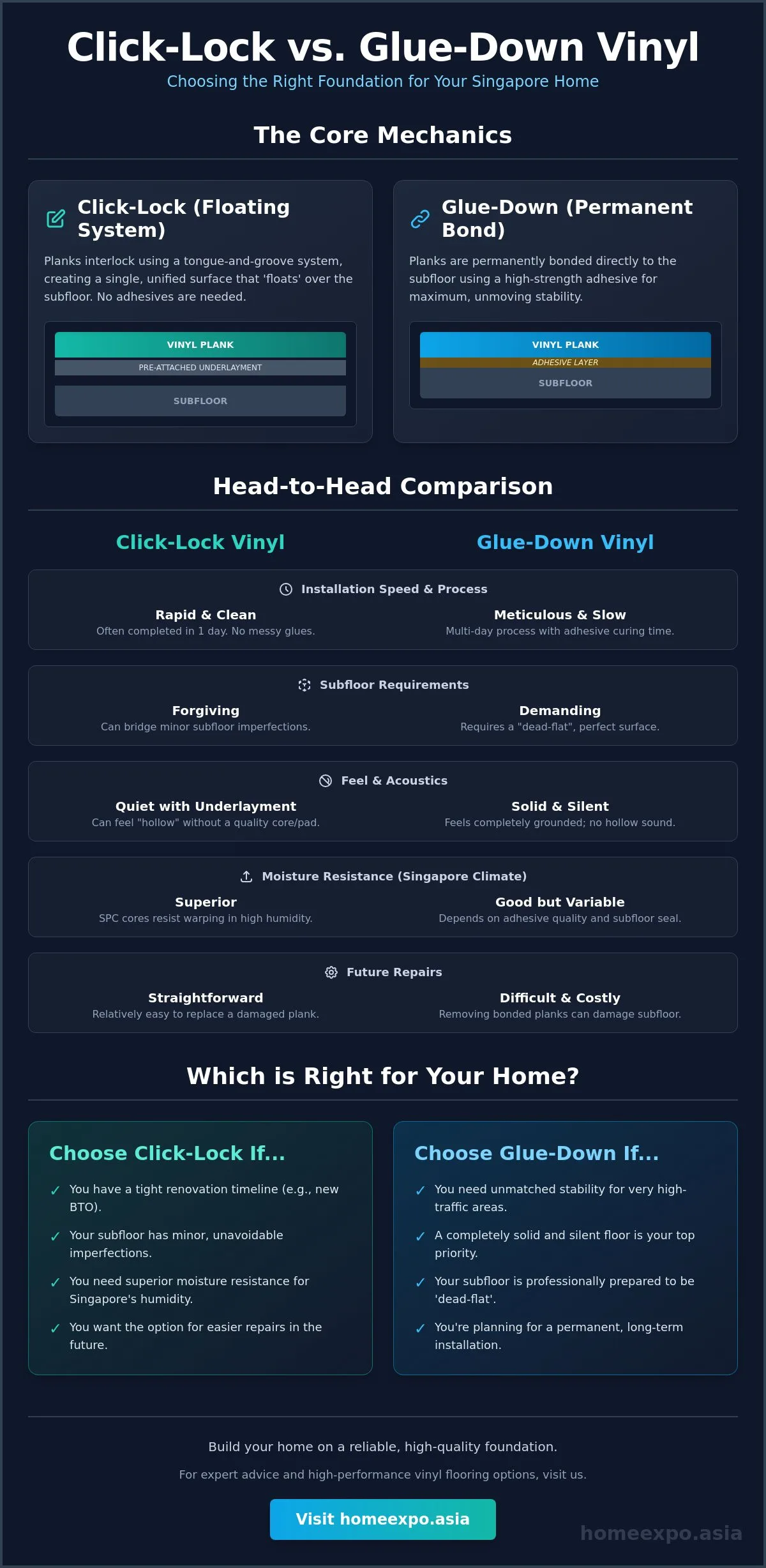
Head-to-Head Comparison: 5 Key Decision Factors
Choosing between click lock vs glue down vinyl flooring requires a look at more than just the surface texture. You need to consider how each system interacts with your specific home environment over several years. While both options provide a beautiful wood-look finish, their performance in a high-traffic family home differs significantly. Factors like foot traffic, acoustic comfort, and the presence of heavy furniture will determine which method provides the best value for your investment.
Maintenance for both systems is relatively straightforward, but the long-term integrity of the floor depends on the installation quality. Click-lock systems are often marketed as DIY-friendly, but professional installation is recommended to ensure the perimeter expansion gaps are sized correctly for our tropical weather. Glue-down systems, conversely, require a level of precision in adhesive application that is nearly impossible for an amateur to replicate. Ensuring a professional flooring installation service handles the technical details will protect your home from future issues like buckling or lifting.
The Total Cost of Ownership in Singapore
The financial decision involves balancing material prices against professional labor. Click-lock planks generally carry a higher material cost due to the complexity of the locking joints. However, the installation is faster and requires less subfloor preparation. Glue-down vinyl features more affordable planks, but the total bill increases due to the specialized adhesives and the intensive labor required to prep the concrete surface. You must also account for hidden costs; click-lock often requires transition strips at every doorway, while glue-down requires a perfectly smooth cement base. In the current local market, the total price gap between the two methods often narrows to a marginal difference once professional labor and subfloor preparation are fully accounted for.
Performance in Singapore’s Climate
Our local environment presents unique challenges with humidity levels often exceeding 90%. This moisture can affect the bond of low-grade adhesives in glue-down installations if the subfloor wasn’t properly sealed. High-quality click-lock systems are generally more resilient to these fluctuations because they rely on mechanical tension rather than chemical bonds. However, in non-air-conditioned rooms that experience direct sunlight, glue-down vinyl remains the more stable choice as it prevents the planks from expanding and creating pressure on the joints. For high-moisture areas like kitchens, a professionally installed glue-down floor offers a tighter seal against surface spills, while click-lock is the superior choice for bedrooms where acoustic comfort and a cushioned feel are priorities.
- Acoustics: Click-lock with underlayment is quieter for multi-story living.
- Stability: Glue-down is better for heavy furniture and rolling loads.
- Repairability: Click-lock allows for easier individual plank replacement.
- Seamlessness: Glue-down allows for large areas without transition gaps.
Making the Right Choice for Your Singapore Home
Finalizing your decision between click lock vs glue down vinyl flooring involves matching technical specs with your daily lifestyle. Every home in Singapore has unique requirements based on the property type and the specific usage of each room. While technical data provides the foundation, the right choice ultimately depends on whether you value immediate flexibility or long-term, non-shifting permanence. Your floor is the most used surface in your home; it’s the foundation of your daily comfort and safety.
Property types play a significant role in this selection. For HDB BTO flats, click-lock systems are often the most efficient way to meet strict renovation timelines and height regulations. Resale units or landed properties, where existing floors might be hacked or leveled with a fresh cement screed, provide the perfect opportunity for a glue-down installation. Professional site assessments are the only way to ensure your subfloor is compatible with your chosen method, preventing future issues like popping tiles or joint failure.
When to Choose Click-Lock Vinyl
Click-lock is the ideal solution for homeowners who want a fast, clean refresh without the mess of adhesives. It’s particularly effective in bedrooms where you want a slightly cushioned feel and excellent acoustic properties. If you’re dealing with a subfloor that has very minor unevenness, the rigid core of modern SPC flooring acts as the king of this category, bridging those gaps with ease. You can even pair these floors with matching wall paneling to create a seamless, high-end aesthetic throughout your living space. It’s a versatile choice for those who might want to update their look again in a few years.
When to Choose Glue-Down Vinyl
Glue-down vinyl is the professional’s choice for areas that demand absolute stability. This includes large, open-concept living halls where you want to avoid transition strips, or kitchens where a tight seal against spills is vital. Because it’s bonded directly to the ground, it’s the best option for homes with heavy, built-in furniture. When planning these permanent fixtures, finding a trusted carpenter is essential to ensure your cabinetry and flooring work together perfectly. Glue-down systems are built to last a decade or more, making them a superior investment for long-term residents and commercial units.
The Final Verdict and Next Steps
The core trade-off in the click lock vs glue down vinyl flooring debate is simple: choose click-lock for speed, acoustic comfort, and ease of repair; choose glue-down for unmatched stability and a seamless, grounded feel. At Home Expo Asia, we prioritize your peace of mind by providing high-quality materials backed by expert installation services. We don’t just sell flooring; we provide a reliable foundation for your home’s future. Our team is ready to help you navigate these technical choices with a professional site measurement and clear, honest advice.
While you focus on building a better home, don’t forget to invest in your professional growth. For those looking to sharpen their expertise in the corporate sphere, you can discover ClickAcademy Asia for industry-leading sales and marketing training.
Get a risk-free quote for your dream flooring today!
Build Your Perfect Home Foundation Today
Selecting the right flooring is a critical step in ensuring your home remains a sanctuary of comfort and style. The decision between click lock vs glue down vinyl flooring hinges on your specific needs for stability, acoustic performance, and installation speed. Choosing the right system means balancing the rapid, flexible application of a floating floor against the rock-solid permanence of an adhesive bond. Professional site assessments are the only way to guarantee subfloor compatibility in Singapore’s humidity.
Home Expo Asia makes that choice simple and secure. We offer over 200 vinyl designs to match any interior vision. Our professional Singapore-based installation team handles every technical detail, from subfloor preparation to the final trim. We provide a comprehensive warranty and dedicated after-sales support because we believe in the quality of our craftsmanship. Take the first step toward a worry-free renovation by letting our experts evaluate your space with a precision site measurement.
Book Your Free Site Assessment with Home Expo Asia
Your dream home deserves a foundation that’s as reliable as it’s beautiful. We’re ready to help you create a space you’ll love coming home to every single day.
Frequently Asked Questions
Is click-lock or glue-down vinyl better for HDB flats?
Click-lock is generally the preferred choice for new HDB BTO flats because it offers a fast, clean installation. It easily complies with HDB’s 50mm total floor thickness regulation for new screeds. Glue-down is an excellent alternative for resale flats where the original flooring is hacked away. It provides a permanent, silent surface that feels incredibly solid once a fresh, level cement screed is applied to the base.
Can I install click-lock vinyl over existing tiles in Singapore?
Yes, you can overlay click-lock vinyl directly on top of existing ceramic or homogenous tiles. This is a common practice in Singapore to save on hacking costs. However, HDB regulations state that the new layer, including adhesive and underlay, must not exceed 13mm in thickness. If the existing tiles are uneven, a professional installer will need to level the surface first to ensure the click joints remain secure.
Does glue-down vinyl flooring smell or emit VOCs?
Modern glue-down installations use advanced, water-based adhesives that have very low Volatile Organic Compound (VOC) emissions. While you might notice a faint “new floor” scent for a day or two, it isn’t harmful if you choose SGBC-certified materials. We recommend keeping the area well-ventilated during the first 48 hours to ensure a safe and comfortable environment for your family. Our team prioritizes your safety by using industry-standard, professional adhesives.
Which vinyl flooring type is easier to repair if a plank gets scratched?
Click-lock vinyl is technically easier to repair because damaged planks can be unclicked and replaced without dealing with sticky residue. However, this often requires removing planks from the nearest wall to reach the damaged piece. Glue-down repairs involve heating the specific plank to loosen the bond, which is faster for a professional but requires more precision to ensure the new plank sits perfectly flush with the rest of the floor.
How long does it take to install 1000 sq ft of vinyl flooring?
A professional team can typically install 1000 square feet of click-lock vinyl in about one to two days. The process is faster because it bypasses the adhesive application and drying stages. For a glue-down project of the same size, expect the timeline to extend to two or three days. This allows for the necessary subfloor preparation, adhesive spreading, and the setting time required for a secure, permanent bond.
Will the glue in glue-down vinyl fail because of Singapore’s humidity?
High-quality, professional-grade adhesives are specifically engineered to withstand Singapore’s tropical climate. Glue failure is rare if the subfloor is properly sealed and the moisture content is checked before installation. When comparing click lock vs glue down vinyl flooring, the glue-down method actually provides superior stability in non-air-conditioned rooms where high temperatures might otherwise cause floating floors to expand or buckle under the heat.
Do I need a transition strip for my click-lock vinyl floor?
Yes, you’ll generally need transition strips at doorways and in large open areas exceeding 10 meters in length. These strips cover the essential expansion gaps that allow the floating floor to move slightly as temperatures fluctuate. One of the main aesthetic benefits of glue-down vinyl is that it doesn’t require these strips. It allows for a completely seamless look across your entire home, even between different rooms or large living halls.
Is click-lock vinyl really waterproof?
The planks themselves are 100% waterproof, especially those with an SPC core. They won’t swell or rot if they get wet. However, it’s important to remember that the joints aren’t hermetically sealed. If a large spill is left standing for a long time, moisture can eventually seep through the gaps and reach the subfloor. For the best protection when choosing between click lock vs glue down vinyl flooring, always wipe up spills promptly to maintain your floor’s integrity.