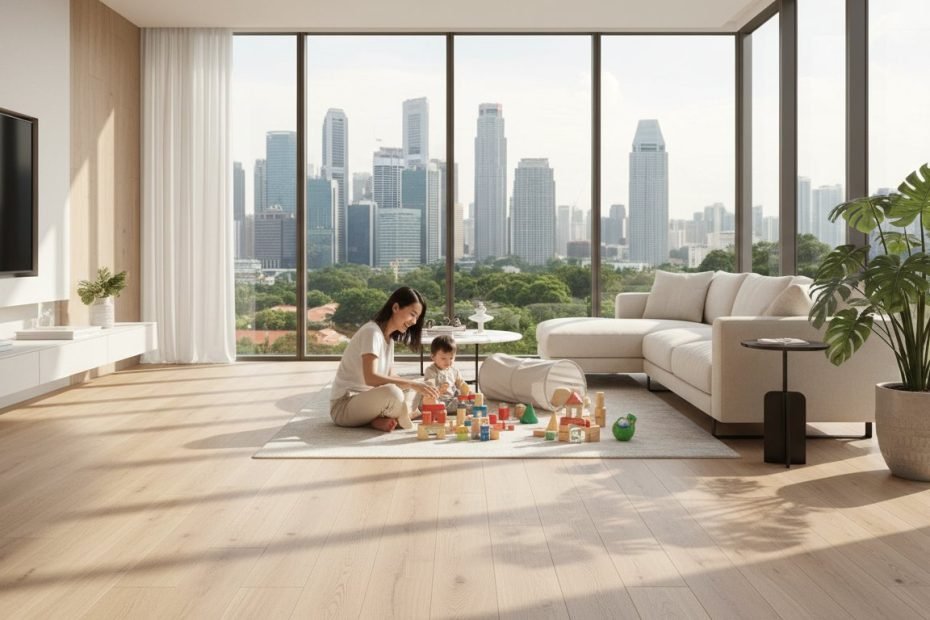
Can a floor really handle Singapore’s intense humidity without warping, or are you just setting yourself up for a costly replacement in two years? Most homeowners want the high-end look of timber without the heavy price tag, but they often worry about toxic VOC emissions and confusing technical jargon like the difference between LVT and other composites. You deserve a home that stays safe for your kids and pets while remaining effortless to clean after a busy day. That is why it’s essential to weigh the pros and cons of vinyl flooring in singapore before you commit to your 2026 renovation.
We understand that choosing the right material is about more than just aesthetics; it’s about long-term reliability and professional quality. This guide will help you determine if vinyl is the right investment for your space by comparing tropical performance against practical limitations. We will preview current HDB regulations, including the 50mm total thickness limit for floor finishes, and explain how to achieve a trendy look that fits your budget. By the end, you will have the expert clarity needed to choose a floor that stands up to both the heat and heavy daily foot traffic.
Key Takeaways
- Discover why 100% waterproof vinyl is the superior choice for Singapore’s tropical climate and termite-prone environments.
- Weigh the critical pros and cons of vinyl flooring in singapore to understand its performance under intense afternoon sun and high humidity.
- Learn why professional moisture testing and site assessments are non-negotiable steps for a secure, gap-free installation.
- Compare vinyl with homogeneous tiles to find the perfect match for your home’s maintenance needs and aesthetic goals.
- Identify the key differences between modern high-tech vinyl and traditional alternatives to ensure a safe, kid-friendly renovation.
Why Vinyl Flooring is Singapore’s Top Choice in 2026
Modern vinyl has undergone a massive transformation. It is no longer the “cheap plastic” of previous decades. Instead, it is now a sophisticated, multi-layered synthetic material engineered for high-performance durability. To understand its resilience, you can look at what vinyl flooring is made of, which typically includes a core of polyvinyl chloride (PVC) combined with various stabilizers. In 2026, these architectural surfaces provide a level of realism that rivals natural materials while offering superior performance in tropical climates. Professional testing ensures these products meet the highest safety standards for your home.
Singapore’s extreme humidity makes traditional hardwood a risky investment. Natural timber often warps, swells, or attracts termites when exposed to our moisture-heavy air. High-tech vinyl solves these issues completely. It remains dimensionally stable even during the wettest monsoon seasons. When evaluating the pros and cons of vinyl flooring in singapore, its moisture resistance is a primary advantage that keeps your home safe and beautiful for years. The local market is currently dominated by two main types: Luxury Vinyl Tiles (LVT) and Stone Plastic Composite (SPC). Both provide high-end aesthetics without the maintenance headaches of organic wood.
The Rise of Resilient Flooring in Local Interior Design
Vinyl has become the gold standard for popular HDB themes like ‘Scandi’ and ‘Industrial’. Its aesthetic versatility is unmatched. You can choose from hyper-realistic wood grains, sleek marble textures, or raw concrete finishes. In 2026, homeowners prioritize efficiency. Our professional flooring installation service focuses on ‘overlay’ solutions. These allow you to install new material directly over existing tiles. This saves significant renovation time. It also eliminates the mess and noise of hacking. It is a reliable way to refresh your space without the stress of a long construction period.
Understanding the Singapore Context: HDB and Condo Requirements
The Compelling Pros: Why Vinyl Flooring Wins in Tropical Climates
Singapore’s tropical climate demands materials that can handle constant moisture and high humidity. One of the standout benefits in the list of pros and cons of vinyl flooring in singapore is its 100% waterproof nature. Unlike natural wood, which often swells or warps in moist air, vinyl remains completely stable in kitchens and service yards. It also provides total termite resistance. This is a massive advantage over natural timber in our region, where pests can quietly destroy expensive parquet floors from the inside out.
You can achieve a high-end, luxury aesthetic without the premium costs associated with marble or solid wood. For homeowners on a tight schedule, the installation speed is a significant benefit. A professional team can often complete a standard 4-room HDB flat in as little as two days. This efficiency reduces renovation stress while delivering a beautiful, durable result that looks expensive but remains practical for everyday living.
Unmatched Durability and Maintenance for Busy Households
Busy households require flooring that stands up to daily chaos. Modern vinyl features advanced scratch-resistant wear layers that easily handle pets and heavy foot traffic. Spills in the kitchen are no longer a disaster because the material is highly stain-resistant. Most Singaporeans prefer this “mop-and-go” lifestyle, as it requires minimal effort to keep the home looking pristine. If you want to ensure your home meets these high standards, consider a professional vinyl flooring installation to guarantee a safe and reliable result.
Safety, Comfort, and Acoustic Performance
Safety is a priority, especially for seniors and young children. Vinyl provides excellent slip resistance, making it much safer than polished homogeneous tiles. It also offers a cushioned feel that reduces joint fatigue during long household chores. To keep your neighbors happy, high-quality underlayment provides essential sound dampening. This helps meet local requirements for reducing noise transmission between units. When considering how vinyl compares to laminate, its superior water resistance and acoustic properties make it the logical choice for local flats.
Health and Safety Standards: VOCs and the Green Label
Indoor air quality is vital for a healthy home. You should always look for “Low VOC” certifications like the Singapore Green Label or FloorScore. VOCs, or Volatile Organic Compounds, are chemicals that off-gas from synthetic materials and can accumulate in Singaporean flats if ventilation is poor. By understanding the full range of pros and cons of vinyl flooring in singapore, you can make a choice that balances trendy style with long-term health safety for your kids and pets.
The Honest Cons: Challenges of Vinyl Flooring in Singapore
A transparent evaluation of the pros and cons of vinyl flooring in singapore requires discussing its limitations. One significant challenge in local homes is sensitivity to extreme heat. If you live in a West-facing unit, direct afternoon sun can cause planks to expand significantly. Without proper expansion gaps or high-quality stabilizers, this often leads to buckling or “popping” of the floor surface. Reliable installation teams account for this during the site assessment, but it remains a physical property of PVC-based materials that homeowners must manage.
Another practical consideration is the inability to refinish the surface. Unlike traditional parquet, which you can sand and restain multiple times, vinyl has a fixed wear layer. Once this layer is deeply scratched or worn through, you cannot restore it. You must replace the individual planks or the entire floor. While replacing a plank is easier than hacking tiles, it means the floor has a finite lifespan compared to solid timber. You should choose a product with a thick wear layer to ensure long-term reliability.
Your new floor is only as good as the surface beneath it. Vinyl is a relatively thin material, meaning it will “telegraph” any bumps or dips in your subfloor. This makes professional tiling and cement works essential to ensure a perfectly level base. If the cement screed is uneven, the click-lock joints may eventually fail under pressure. This leads to unsightly gaps or “springy” spots that compromise the feeling of quality in your home.
Sustainability is also a topic of concern for eco-conscious homeowners. Traditional PVC-based vinyl is difficult to recycle compared to natural materials. While modern brands are improving their environmental footprint, the production and disposal of synthetic flooring remain a challenge. We encourage clients to look for reputable certifications to mitigate these environmental impacts. Understanding these pros and cons of vinyl flooring in singapore helps you set realistic expectations for your renovation.
Vulnerability to Sharp Objects and Heavy Loads
Vinyl is resilient but not indestructible. Heavy wardrobes or pianos can cause permanent “denting” over long periods if the weight isn’t distributed. Sharp furniture legs can also gouge the surface if you don’t use protective pads. In humid laundry areas, lower-quality vinyl is prone to delamination. This is where the layers of the plank begin to peel apart due to constant moisture exposure. Choosing professional-grade materials is the best way to mitigate these risks.
The ‘Hollow’ Sound and Aesthetic Limitations
Lower-quality floating floors often produce a distinct “click-clack” sound when walked upon. This “hollow” noise can be distracting in a quiet HDB flat. While high-quality underlayment helps, it never feels exactly like solid wood or stone. There is also the “repetition” problem. Because the patterns are printed, you might see the same wood grain pattern repeated across a large living room. This can break the illusion of natural material if the installation isn’t planned carefully to randomize the planks.

Vinyl vs. The Alternatives: Which Flooring is Right for You?
Choosing the right material requires a clear understanding of the pros and cons of vinyl flooring in singapore relative to traditional options. Homogeneous tiles have long been the default for local homes due to their cooling effect. However, they require extensive grout maintenance and can feel icy underfoot. Vinyl offers a warmer, more comfortable surface that eliminates grout lines entirely. This makes it much easier to keep clean in a busy household. It is a reliable solution for those who want a high-end look without the constant upkeep of stone.
When comparing vinyl to laminate, the choice is simple for tropical environments. Laminate typically uses a wood-fiber core that is highly susceptible to swelling in Singapore’s humidity. Vinyl’s synthetic core is 100% waterproof. This ensures your floor stays flat and secure even in damp conditions. Parquet flooring offers undeniable luxury, but it is prone to scratches and termite attacks. Vinyl provides that same high-end timber look with significantly more durability and a much lower maintenance requirement. Our professional team ensures every plank is laid with precision to maximize these benefits.
Your final decision should depend on your specific property type and lifestyle needs. Use this quick decision matrix to guide your choice:
- Budget-conscious HDB owners: Vinyl is the clear winner due to the “no-hacking” overlay option.
- Landed property owners: Vinyl works best in bedrooms and playrooms where comfort is prioritized.
- Pet owners: The scratch-resistant wear layer of vinyl outperforms both parquet and laminate.
- Busy professionals: The “mop-and-go” nature of vinyl saves hours of cleaning every month.
When to Choose Vinyl Over Traditional Tiling
The “No-Hacking” advantage is a major factor for resale HDB owners. Choosing an overlay solution can save you thousands of dollars in demolition and disposal fees. It also reduces the mess and noise of a traditional renovation. Families with toddlers often prefer vinyl because it is softer and warmer than cold stone or ceramic. It provides a safer environment for little ones learning to crawl or walk. For a deeper dive into all your options, read our Flooring Singapore: The Ultimate 2026 Homeowner’s Guide.
Cost Analysis: Short-term Savings vs. Long-term Value
Initial costs for vinyl are generally lower than those for high-end tiles or solid wood. You also save on labor because the installation process is much faster. Long-term value comes from the lack of specialized maintenance. You don’t need to worry about regrouting or professional sanding. In the 2026 property market, a well-maintained vinyl floor can boost the appeal of a 5-year MOP flat. Buyers appreciate move-in-ready homes with trendy, durable surfaces. Understanding the pros and cons of vinyl flooring in singapore helps you invest your renovation budget wisely. If you are ready to upgrade your space, contact us for a professional flooring installation service today.
Choosing Your Vinyl Supplier: Ensuring a Risk-Free Installation
Selecting the right supplier is the final and most critical step in your renovation journey. Many homeowners are tempted by the “cheapest quote” available, but this often leads to significant issues like joint gaps and warping within just six months. A low price usually indicates a compromise on material density or the skill level of the installers. When you weigh the pros and cons of vinyl flooring in singapore, the biggest “con” is almost always related to poor installation rather than the material itself. Choosing a reliable partner ensures your investment remains a “pro” for years to other.
A professional site assessment is non-negotiable. Our experienced team conducts rigorous moisture testing before any planks are laid. Singapore’s high humidity means that moisture trapped in the cement screed can cause adhesive failure or mold growth over time. We also evaluate the levelness of your subfloor. If the base is uneven, our experts can provide the necessary tiling and cement works to create a perfectly flat surface. This methodical approach mitigates risks and guarantees a flawless finish that stands up to daily wear and tear.
You should also demand a comprehensive warranty that is tailored to the Singapore market. A trustworthy supplier provides official documentation covering both material defects and installation workmanship. This gives you peace of mind that your floor is protected against unexpected buckling or delamination. At Home Expo Asia, we bridge the gap between high-quality supply and expert craftsmanship. We don’t just sell flooring; we provide a complete, risk-free service that integrates seamlessly with your full home renovation goals.
The Home Expo Asia Difference: Quality and Trust
We take pride in our curated collection of over 200 designs, all of which have been tested for performance in the Singaporean climate. Our professional installation team focuses on “zero-gap” click-lock precision to prevent dirt accumulation and water seepage. This commitment to quality is backed by quantifiable success. We have completed thousands of successful HDB and Condo transformations. Our reputation is built on transparency, financial clarity, and the consistent delivery of excellence that our community appreciates.
Next Steps for Your Home Transformation
Ready to start? Preparing for your transformation is simple. You can schedule a free site assessment where our experts will take precise measurements and check your subfloor condition. You might also consider how your new floor will match your existing wall paneling to create a cohesive interior look. Use this final checklist to stay on track:
- Select a wear layer thickness that matches your household’s foot traffic.
- Verify the low-VOC certifications for your chosen design.
- Confirm your preferred installation date to minimize living disruptions.
- Review the final quote for complete financial transparency.
Don’t leave your home’s safety and style to chance. Get a risk-free quote for your dream flooring today!
Step Into a Durable and Stylish Home Today
Navigating the pros and cons of vinyl flooring in singapore empowers you to make the best choice for your 2026 renovation. You’ve learned that while vinyl offers unmatched moisture resistance and easy maintenance, its long-term success depends on professional installation and high-quality stabilizers. By prioritizing expert site assessments and moisture testing, you can avoid common issues like buckling or joint gaps caused by our tropical heat. Choosing the right material is about more than just looks; it’s about lasting safety for your family.
Home Expo Asia provides the professional guidance and reliability your home deserves. We offer over 200 premium designs and installation expertise to ensure a flawless, long-lasting finish. Every project is backed by our comprehensive 2026 warranty packages, so you can enjoy your new floor with absolute peace of mind. Our team is ready to help you achieve a trendy, kid-friendly look without the high costs of traditional materials. Your dream home is within reach.
Book a Free On-Site Consultation with Home Expo Asia today. We look forward to helping you create a space that is as practical as it is beautiful.
Frequently Asked Questions
Is vinyl flooring suitable for bathrooms in Singapore?
How long does vinyl flooring typically last in an HDB flat?
A high-quality vinyl floor usually lasts between 10 to 20 years when maintained correctly. Its lifespan depends heavily on the thickness of the wear layer and the quality of the initial installation. Choosing a professional flooring installation service ensures that the planks are laid with precision. This prevents premature wear and keeps the floor looking new throughout your stay in the flat.
Can I install vinyl flooring over my existing tiles?
Yes, you can install vinyl directly over existing ceramic or homogeneous tiles in most resale flats. This “overlay” method is a reliable way to save on hacking costs and renovation time. Our team will first conduct a site assessment to ensure your current tiles are level and secure. If the surface is uneven, we provide the necessary cement works to create a smooth base for the new layer.
Does vinyl flooring emit toxic gases (VOCs)?
Premium vinyl products are tested to ensure they don’t emit harmful levels of Volatile Organic Compounds. You should always check for reputable certifications like the Singapore Green Label or FloorScore to guarantee indoor air quality. These standards provide assurance that the material is safe for kids and pets. Understanding these health factors is a vital part of weighing the pros and cons of vinyl flooring in singapore for your home.
How do I prevent my vinyl floor from buckling in the heat?
Professional installers prevent buckling by leaving specific expansion gaps around the perimeter of the room. These gaps allow the material to expand and contract naturally as temperatures change. For West-facing units with intense afternoon sun, using curtains or solar films helps regulate the floor’s temperature. This proactive approach mitigates the risk of planks “popping” or warping over time.
Is vinyl flooring scratch-proof if I have big dogs?
No flooring is entirely scratch-proof, but high-grade vinyl is extremely scratch-resistant. It features a heavy-duty wear layer designed to withstand the claws of large pets and heavy foot traffic. We recommend choosing a textured finish with a higher wear layer rating for homes with active dogs. This durability is one of the main reasons many homeowners prefer vinyl over more delicate materials like parquet.
Which is better for Singapore homes: LVT or SPC vinyl?
SPC is often the preferred choice for local homes because its rigid core offers superior stability in humid conditions. It is less likely to expand or contract compared to traditional LVT. While LVT provides a softer feel underfoot, SPC handles heavy furniture and high temperatures more effectively. Both options are excellent, but SPC’s durability makes it a very reliable investment for long-term HDB living.
Does vinyl flooring require special cleaning agents?
You don’t need expensive or specialized chemicals to keep your vinyl floor clean. A simple damp mop with a pH-neutral cleaner is sufficient for daily maintenance. Avoid using steam mops or harsh abrasive cleaners like bleach, as these can damage the protective wear layer over time. This effortless “mop-and-go” cleaning routine is a major factor when considering the pros and cons of vinyl flooring in singapore for a busy lifestyle.