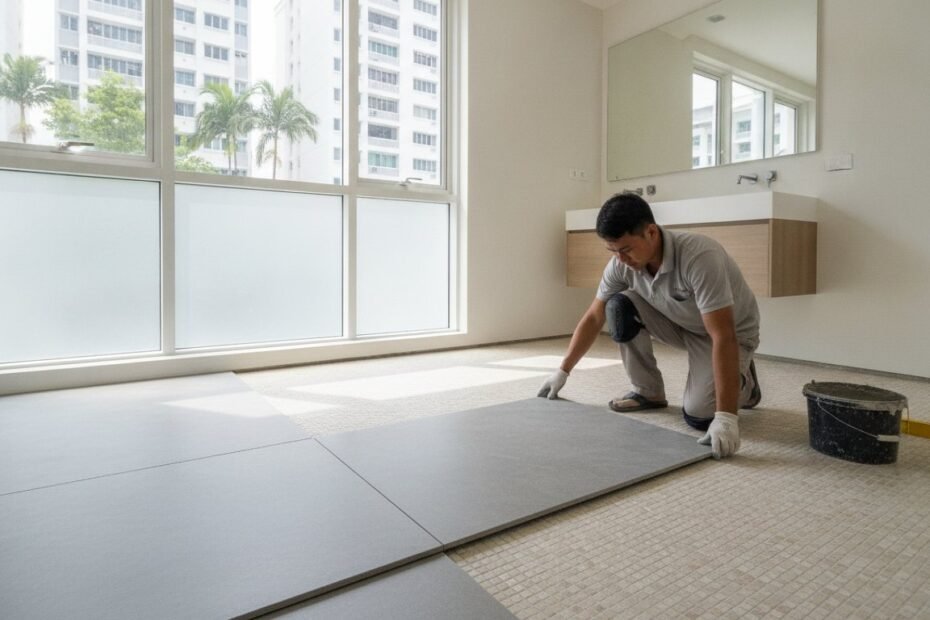
What if you could achieve a designer bathroom makeover in just 48 hours without the deafening noise of jackhammers or the risk of damaging your home’s waterproofing? Many homeowners feel stuck with dated, slippery tiles because they dread the high cost and massive mess of a traditional renovation. It’s a valid concern; you want to avoid the stress of potential leaks and the danger of falls on wet surfaces. Protecting your home and your family is the top priority.
You don’t have to settle for an outdated space or compromise on safety. Discover the most reliable bathroom overlay flooring options that deliver a premium, modern look while keeping your original flooring structure completely intact. This guide explores high-performance waterproof materials that meet R10 and R11 slip resistance standards for maximum security. You’ll learn how to transform your bathroom into a stylish, non-slip sanctuary in just one to two days. We’ll show you how to achieve a beautiful result backed by professional industry standards and total peace of mind.
Key Takeaways
- Learn how to achieve a premium bathroom makeover in as little as 48 hours without the mess, noise, or high costs of hacking.
- Discover the best bathroom overlay flooring options that combine modern aesthetics with high-performance moisture resistance.
- Understand the importance of slip resistance ratings like R10 and R11 to guarantee a safe environment for children and seniors.
- Find out how a professional installation process identifies hidden issues like hollow tiles to ensure a durable, leak-free finish.
- Save on renovation expenses while successfully bypassing HDB’s 3-year hacking restriction for new BTO developments.
Why Choose Bathroom Overlay Flooring? (The No-Hacking Revolution)
Home renovation in Singapore often feels like a battle against time and strict regulations. Choosing bathroom overlay flooring options allows you to sidestep the most stressful part of a makeover: the hacking. Overlay flooring is the process of applying a new, high-quality surface directly over your existing tiles. This method eliminates the need for heavy machinery and jackhammers. You won’t have to deal with deafening noise, clouds of fine dust, or the high costs associated with debris disposal. It’s a cleaner, faster alternative that respects your home environment and your neighbors’ peace.
Beyond the lack of mess, there’s a significant regulatory advantage. HDB has a strict 3-year restriction on hacking bathroom tiles in new BTO flats. This rule exists to protect the building’s original waterproofing membrane. If you want a fresh look before that period ends, overlaying is your only legal and safe path. It doesn’t require a hacking permit, which streamlines the administrative process. When considering different types of flooring materials, homeowners often find that overlaying offers a superior balance of aesthetics and compliance. It’s also a highly cost-effective strategy, often saving owners up to 40% compared to the total cost of hacking, retiling, and specialized disposal services.
The Time-Saving Factor for Singapore Homeowners
Speed is a luxury in urban living. A traditional bathroom overhaul involving hacking and retiling can easily take 5 to 7 days of intensive labor. In contrast, a professional overlay installation is typically completed within 24 to 48 hours. This is a massive benefit for families living in units with only one or two bathrooms. You don’t have to relocate or manage a construction site for a full week. (delete this sentence)
Preserving Your Waterproofing Membrane
Hacking is a violent process that can lead to unforeseen complications. Even the most skilled contractors risk accidentally puncturing the original waterproofing layer during tile removal. Once that membrane is breached, the risk of water seepage into the unit below increases significantly. Overlaying acts as a protective second skin. It reinforces the floor without disturbing the underlying structural integrity. This provides immense peace of mind, especially for owners of older resale flats where the original waterproofing might already be aging. By selecting reliable bathroom overlay flooring options, you’re adding a layer of security to your home’s long-term health.
Top Bathroom Overlay Flooring Options in Singapore for 2026
Selecting the right material for your renovation is about balancing visual appeal with technical performance. In 2026, the variety of bathroom overlay flooring options has expanded to include materials that mimic natural stone and wood with incredible accuracy while maintaining 100% moisture resistance. Whether you’re looking for the warmth of a wood-look finish or the sleekness of a seamless industrial floor, there’s a solution that avoids the need for hacking entirely.
Vinyl Flooring: Not Recommended for Bathrooms
Vinyl flooring is a popular overlay for living rooms, bedrooms and kitchens, but we strictly do not recommend it in bathrooms. The planks themselves are waterproof, but a click-lock floor sits on top of the old one, and in a room that gets soaked every day water can seep in at the edges, joints and floor trap and get trapped underneath. For bathrooms, choose a tile overlay, epoxy or microcement instead. For living rooms, bedrooms and kitchens, see our guide to vinyl flooring Singapore.
This applies to the “dry zone” around your vanity and toilet as well as the shower area. Whatever bathroom overlay you choose, check its slip resistance: for dry areas, a rating of R10 is standard, and for the shower area, look for an R11 rating to prevent accidents.
Epoxy and Microcement: The Seamless Alternatives
For homeowners who despise scrubbing grout lines, epoxy and microcement are the ultimate “hotel-luxe” solutions. Epoxy coating is a liquid resin applied over your existing tiles, creating a hard, plastic-like surface that’s completely seamless. This eliminates the gaps where mould and mildew typically thrive. Microcement offers a similar grout-free experience but provides a matte, textured concrete aesthetic that fits perfectly with minimalist or industrial interior themes.
Resin-based systems are exceptionally durable but require professional precision during the curing phase. In Singapore’s tropical humidity, the application must be carefully managed to prevent bubbles or uneven drying. These systems are industrial-strength, meaning they’ll resist scratches and heavy impact for decades; for those interested in industrial-grade quality, you can discover Polished Concrete Atlanta to see how these finishes are applied in professional settings.
- Homogeneous Tile Overlay: This involves laying thin, heavy-duty porcelain or ceramic tiles over the old ones. It’s the most traditional choice, offering maximum scratch resistance and a classic feel.
- Luxury Vinyl: Not recommended for bathrooms. Keep it for living rooms, bedrooms and kitchens.
- Microcement: Ideal for a continuous, expansive look that makes small HDB bathrooms appear larger.
Choosing between these bathroom overlay flooring options depends on your priority: speed, cost, or a specific aesthetic. Each material provides a reliable way to refresh your space without the structural risks associated with removing your original floor tiles.
Comparing Performance: Slip Resistance, Durability, and Cost
Choosing between different bathroom overlay flooring options requires a clear understanding of how materials perform under daily stress. A bathroom is a high-stakes environment where moisture, heat, and safety concerns intersect. Evaluating these factors side-by-side ensures your renovation remains a long-term asset rather than a temporary fix. It’s not just about the initial look; it’s about how the floor handles the rigours of a busy household over the next decade.
The Safety Standard: Slip Resistance Ratings
Safety is non-negotiable in wet areas. In Singapore, professional contractors use the “R-rating” system to measure slip resistance. For residential bathrooms, an R10 rating is the recommended minimum to prevent slips on damp surfaces. If you’re planning an overlay for a shower area, upgrading to an R11 rating is a smarter choice for family safety. While smooth, glossy tiles can become slick when wet, anti-slip rated tiles and textured microcement surfaces provide grip that remains effective even under soapy water.
Investment Breakdown: Upfront Cost vs. Longevity
Finding the right balance between design and affordability is key to a successful project. A homogeneous tile overlay is the most traditional choice. Epoxy and microcement typically sit in a higher pricing tier due to the specialised labour required for a seamless application, and these liquid-applied systems offer an industrial lifespan.
Durability isn’t just about hardness; it’s about resilience. High-moisture areas can cause inferior materials to warp or delaminate. Whatever you lay on top, the existing floor must be level and solid first, or thin overlay tiles might crack. Meanwhile, epoxy offers an industrial-strength surface that stands up to heavy impact, though it can be more susceptible to surface scratches than porcelain. Consider these performance markers when making your final decision:
- Maintenance: Seamless surfaces like epoxy eliminate grout lines, making them easier to wipe clean and resistant to mould growth.
- Durability: Homogeneous tiles resist heavy impact best and offer maximum scratch resistance.
- Waterproofing: Most premium bathroom overlay flooring options are 100% waterproof, but the quality of the installation determines the final seal.
Maintenance is where seamless options truly shine. Traditional tiled floors are notorious for grout discolouration. Over time, porous grout absorbs moisture and soap scum, leading to stubborn mould that’s difficult to scrub away. By choosing a seamless epoxy or microcement finish, you significantly reduce the surface area where bacteria can hide. Most of these modern materials require nothing more than a quick wipe with a pH-neutral cleaner to maintain their premium look for years.
The Professional Installation Process: What to Expect
Even the most premium bathroom overlay flooring options will only perform as well as they are installed. While the “no-hacking” approach is significantly faster and cleaner, it still requires technical precision to ensure a leak-free and durable result. A professional installation transforms your existing space by treating the old floor as a foundation rather than just a surface to cover. This methodical approach guarantees that your new floor remains beautiful and functional for years to come.
Before any overlay is applied, experts conduct a thorough site assessment. They check for hollow tiles that could compromise the stability of the overlay. If a tile is loose, it must be secured or filled to create a solid base. Precision floor levelling is the next step. Any dips or peaks in the existing floor are smoothed out to ensure the new surface is perfectly flat. Once the foundation is ready, the existing tiles are degreased and scrubbed. This removes years of soap scum and oils that could otherwise prevent the overlay from bonding correctly.
Why Professional Installation is Non-Negotiable
DIY projects in wet areas carry high risks. Poor sealing around the edges often leads to trapped moisture, which eventually causes mould and unpleasant odours. Professional installers make sure every edge and joint is properly sealed. They also pay close attention to the drainage slope. Water must flow naturally toward the floor trap rather than pooling in corners. Experts use high-grade moisture barriers and specialised adhesives designed for high-humidity environments. If you want a result that stands up to daily use, you can book a professional installation service to ensure every detail is handled with care.
Managing Door Clearances and Floor Traps
A common concern for homeowners is whether the bathroom door will still close after an overlay. Adding a new layer naturally increases the floor height. Professional teams handle this by precisely trimming the bottom of the door, ensuring a smooth swing without compromising the seal. They also standardise floor trap heights. Instead of leaving a “sunken” hole, installers use extension rings to bring the trap flush with the new flooring. This creates a high-end, seamless look that is easy to clean. For a deeper look at installation benchmarks and quality standards in the local market, refer to this comprehensive guide on Flooring Singapore.
The final phase involves precision cutting around toilets and pipes, followed by the application of high-quality silicone sealant. This final barrier is what prevents water from creeping under the overlay. It’s a meticulous process that requires a steady hand and the right materials to ensure a long-lasting, watertight finish.
Transforming Your Space with Home Expo Asia’s Premium Solutions
Selecting from the best bathroom overlay flooring options is only the first step toward a successful renovation. The real value lies in the expertise behind the installation and the quality of the materials used. Home Expo Asia offers a comprehensive approach that prioritises your family’s safety and your home’s long-term durability. For bathrooms, we recommend tiles, and we do bathroom retiling too. Our vinyl range is for your living room, bedrooms and kitchen.
Our specialized installation teams are trained specifically for high-moisture environments. They understand the unique challenges of Singapore’s humidity and the technical requirements of HDB and Condo layouts. We don’t just provide a new surface; we provide a complete moisture-management solution. Every project begins with a free site assessment. Our experts visit your home to check for hollow tiles, assess floor levelling needs, and provide personalised recommendations tailored to your existing space. This transparent process ensures there are no surprises once the work begins.
The Home Expo Asia Quality Guarantee
We believe that a beautiful bathroom must also be a safe one. Our commitment to quality is backed by rigorous safety certifications and the use of non-toxic, eco-friendly materials. (delete this sentence) Our track record of satisfied clients across the island serves as a testament to our reliability and professional standards. We offer:
- Strict Safety Standards: Materials that meet international slip-resistance and fire-safety benchmarks.
- Risk Mitigation: Comprehensive warranties that protect your investment against Singapore’s tropical climate.
- Expert Craftsmanship: Teams that handle complex drainage slopes and door adjustments with precision.
- Financial Clarity: Transparent terms and official documentation for every project.
Start Your Bathroom Transformation Today
Your dream bathroom is closer than you think. You can explore our full range of textures and patterns by visiting our Balestier showroom for a hands-on experience. Seeing the materials in person allows you to feel the micro-textures and observe the high-definition prints that make our bathroom overlay flooring options stand out. Our consultants are ready to help you customise your floor to match your existing carpentry and wall tiles perfectly. For those interested in further modernising their space, you can check out Magic Glass Singapore to discover innovative privacy solutions for your bathroom partitions.
If you’re planning a larger home makeover, it’s helpful to see how your bathroom fits into the bigger picture. You can learn more about industry leaders in our guide to the Top Renovation Companies in Singapore. We’re here to guide you through every stage of the process, ensuring a smooth, stress-free experience from the initial consultation to the final walkthrough. Book your free site assessment today and take the first step toward a safer, more stylish home.
Secure Your Safe and Stylish Bathroom Future
Upgrading your home shouldn’t involve the stress of structural damage or weeks of construction mess. By choosing modern bathroom overlay flooring options, you’ve learned how to bypass the risks of hacking while securing a beautiful, non-slip surface for your family. Remember that prioritising R10 or R11 safety ratings and ensuring a professional, watertight installation are the keys to a successful renovation. These strategic choices protect your home’s original waterproofing membrane and offer long-term peace of mind in Singapore’s humid climate.
You can achieve a premium look with total confidence. For bathrooms, we recommend tiles rather than vinyl, and we do bathroom retiling too. We’re here to help you navigate the technical details, from floor trap adjustments to perfect door clearances. Start your journey toward a safer, more modern bathroom by booking a free on-site assessment with our experts. It’s time to enjoy a beautiful space without the compromise of noise and dust.
Get a Free Bathroom Overlay Quote from Home Expo Asia Today
Frequently Asked Questions
Can I overlay vinyl in the shower area or only the dry area?
Neither. We strictly do not recommend vinyl flooring anywhere in a bathroom, including the shower area and the dry zone. The planks themselves are waterproof, but a click-lock floor sits on top of the old one, and in a room that gets soaked every day water can seep in at the edges, joints and floor trap and get trapped underneath. For bathrooms, choose a tile overlay, epoxy or microcement, with an R11 slip resistance rating for the shower zone.
Is bathroom overlay flooring safe for elderly family members?
It can be, if you choose the right finish. Look for an R10 slip resistance rating for dry areas and R11 for the shower zone, which reduces the risk of falls compared to smooth original floor tiles. Vinyl is not recommended for bathrooms, so choose anti-slip tiles or a textured microcement finish.
How much higher will the floor be after an overlay?
An overlay raises your existing floor height by the thickness of the new layer. This is well within the HDB mandatory limit, which states that the total thickness of new floor finishes and screed must not exceed 50mm. Professional installers will trim your bathroom doors to ensure they swing freely and adjust floor traps to remain flush with the new surface.
Will overlay flooring cause a “hollow” sound when walking?
No, a professional installation prevents the hollow drum sound often associated with DIY projects. Experts conduct a site assessment to identify and secure any hollow existing tiles before starting. By using high-density materials and ensuring a perfectly level sub-floor, the resulting surface feels solid and quiet underfoot. This attention to detail is what separates a premium overlay from a temporary fix.
How do I clean and maintain my bathroom overlay floor?
Maintenance is straightforward and requires nothing more than regular sweeping and mopping with a pH-neutral cleaner. You should avoid using abrasive scrubbing pads or harsh chemicals like bleach, which can dull the protective wear layer over time. Seamless options such as epoxy and microcement have no porous grout to scrub, making it much harder for mould to grow.
What happens if there is a leak under the overlay flooring?
If a pre-existing pipe leak or waterproofing failure occurs, the overlay must be removed to access the underlying structure. Overlaying is a cosmetic and safety upgrade; it’s not a solution for active structural leaks. However, because the process involves no hacking, it preserves your original waterproofing membrane. This significantly reduces the risk of causing new leaks during your bathroom renovation process.
Do I need HDB approval for bathroom overlay flooring?
HDB approval is generally not required for overlaying existing floor tiles. This makes it an ideal solution for new BTO flats where hacking is strictly prohibited for the first three years to protect the waterproofing warranty. While you don’t need a permit for the overlay itself, any work involving the replacement of tiles or cement screeding after the 3-year period would require official authorisation.
How long does a typical bathroom overlay last in Singapore?
A high-quality bathroom overlay can last between 10 and 15 years when installed by experienced professionals. The lifespan depends on the quality of the wear layer and how well the edges are sealed against moisture. In Singapore’s tropical climate, using materials specifically tested for high humidity ensures the floor remains stable without warping or delaminating over time.