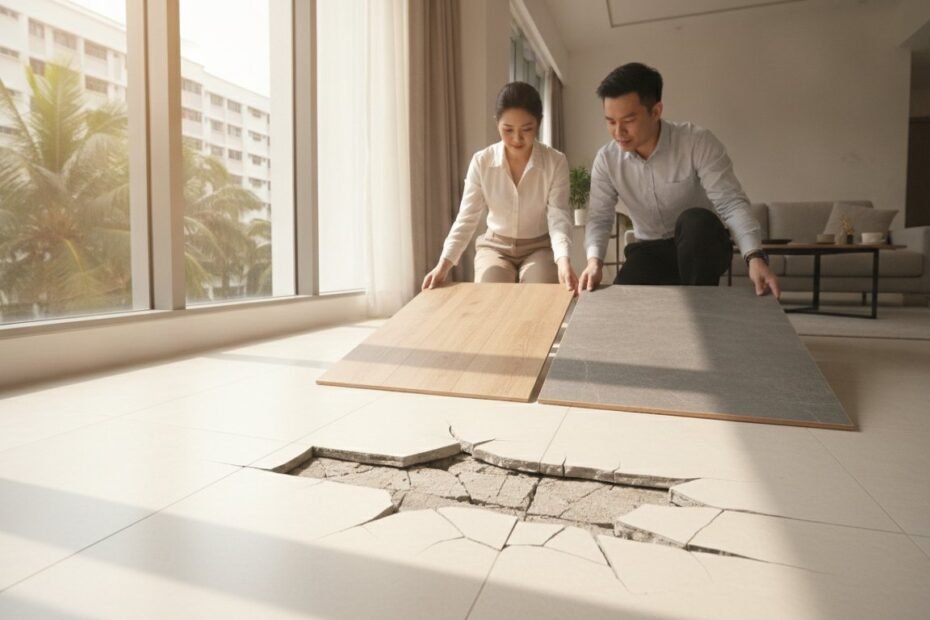
Imagine waking up to a sudden, loud “pop” only to find your living room floor buckled into a sharp, ceramic ridge. This sight often triggers immediate anxiety about structural safety, noise complaints from neighbors, and the complex web of HDB renovation permits. You want a safe, flat floor without the stress of hidden costs or long delays. We understand that the choice between hacking everything away or opting for a modern overlay is a significant decision for any homeowner.
This guide is designed to simplify your hdb floor tiles replacement journey in 2026. You will learn the best ways to handle buckled tiles while staying compliant with the latest HDB regulations. We will explore the mandatory 50mm thickness limits for new finishes and the specific 13mm rule for adhesive overlays. From understanding HDB goodwill repairs to choosing high-performance vinyl for a fresh look, this article provides the clarity you need. We cover permit timelines, waterproofing requirements for bathrooms, and how to achieve a premium finish without the traditional tiling hassle. By the end, you will have a clear roadmap to a beautiful, durable home.
Key Takeaways
- Identify the primary causes of tile buckling and thermal expansion to protect your home’s long-term structural integrity.
- Navigate the latest 2026 HDB permit requirements and the 15-year goodwill repair policy for a stress-free hdb floor tiles replacement.
- Compare the benefits of full hacking versus modern vinyl overlays to find the most efficient path for your renovation timeline.
- Uncover hidden expenses like haulage and debris disposal fees to maintain total financial clarity throughout your flooring project.
- Learn how expert site assessments help you choose between structural cement repairs and a stylish upgrade from over 200 vinyl designs.
Why HDB Floor Tiles Pop and Crack: Understanding the Causes
Hearing a series of sharp, explosive cracks in your living room is a terrifying experience. This phenomenon, known locally as “tile buckling” or “popping,” occurs when floor tiles lose their bond with the subfloor and lift upward. It isn’t just an aesthetic issue. It’s a structural failure that demands an immediate hdb floor tiles replacement strategy to keep your family safe. Most homeowners describe the sound as similar to firecrackers, which is the sound of the ceramic material snapping under intense pressure.
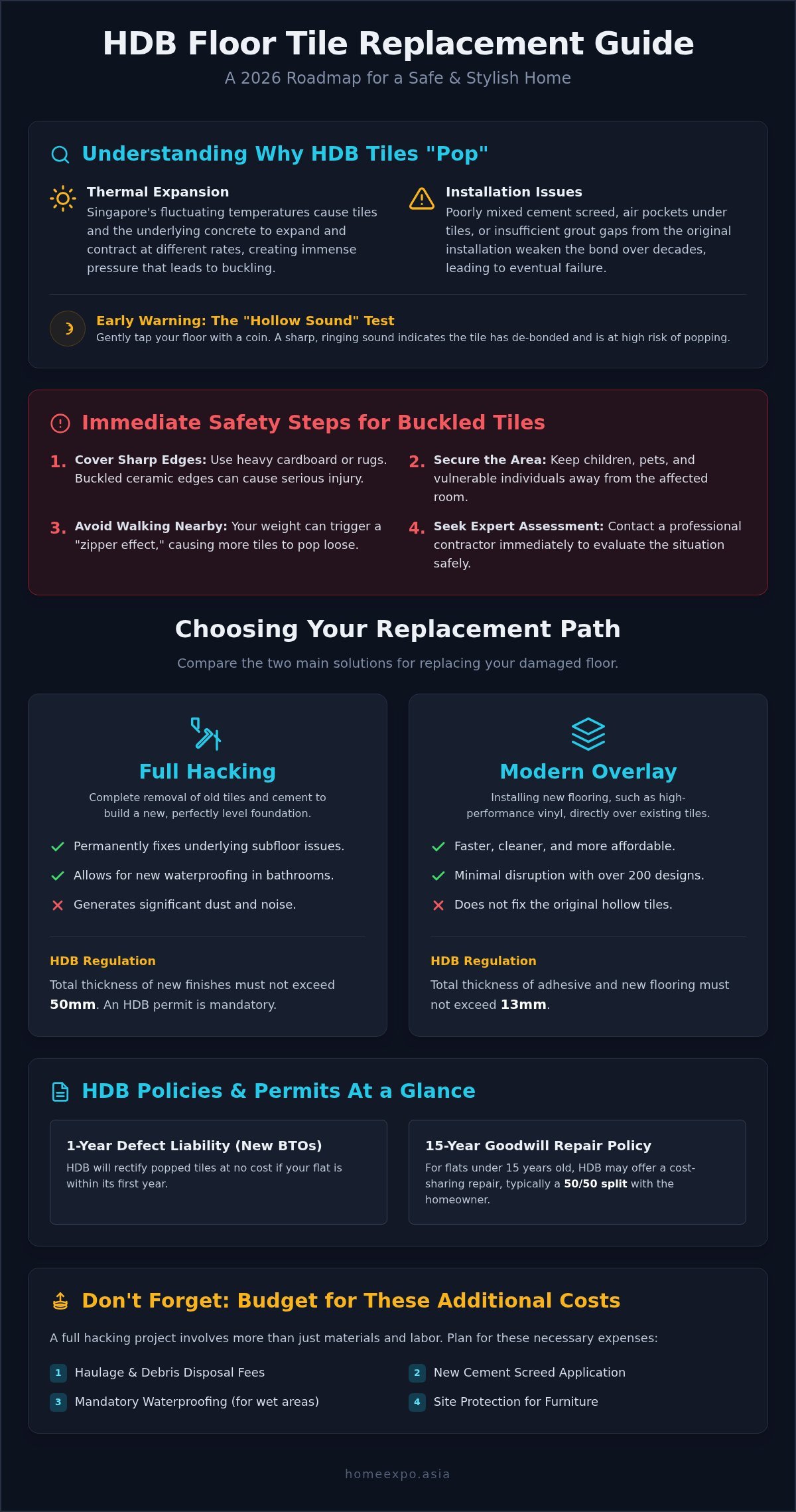
Thermal expansion is the primary culprit in Singapore’s tropical climate. As temperatures fluctuate, your tiles and the underlying concrete slab expand and contract at different rates. If the tiles were laid too closely together without sufficient grout gaps, the pressure has nowhere to go but up. Over time, this constant stress weakens the adhesive bond until the tiles finally give way. This is especially common in rooms that receive direct afternoon sun, where the temperature swings are most extreme.
The quality of the original installation plays a massive role in these failures. Many older flats suffer from poor cement screed application. What is screed exactly? It is the layer of material laid over the structural concrete to create a smooth, level surface for your tiles. If the mix was too dry or applied inconsistently, air pockets form. By 2026, decades of high humidity and natural building movement have pushed these weak points to their limit. This leads to widespread floor failure in aging estates where the bond has simply reached its expiration date.
The “Hollow Sound” Test: Spotting Trouble Early
You don’t have to wait for a floor explosion to identify a problem. Use a coin or a broom handle to gently tap across your floor. A solid “thud” means the bond is secure, while a sharp, ringing “clink” indicates a hollow space.
- Hollow sounds mean the tile is already “de-bonded.”
- One hollow tile often signals that the surrounding cement is also failing.
- Ignoring these spots leads to sudden buckling during the next heatwave.
Early detection allows you to plan your hdb floor tiles replacement before the situation becomes an emergency.
Immediate Safety Steps for Buckled Tiles
If your tiles have already popped, treat the area as a hazard zone. Buckled ceramic edges are as sharp as glass and can cause deep lacerations. Safety is your first priority.
- Cover sharp ridges with thick cardboard, heavy rugs, or plywood.
- Tape down the edges of the covering to prevent it from shifting.
- Keep children and pets away from the affected room.
- Avoid walking on nearby tiles. Your weight can trigger a “zipper effect,” causing more tiles to pop.
Contacting an expert for an emergency assessment is the safest next step. Professional contractors can determine if you need a localized repair or a full-scale renovation to prevent future incidents.
HDB Renovation Rules: Permits and Warranties in 2026
Understanding HDB regulations is the first step toward a successful hdb floor tiles replacement. For new BTO homeowners, the 1-year defect liability period covers any initial workmanship issues. If your tiles pop within this timeframe, HDB will typically rectify the issue at no cost to you. For those living in older flats, the rules shift toward the 15-year goodwill repair policy. This long-term support is designed to address structural dislodgement that happens well after the initial handover, providing a vital safety net for Singaporean families.
Hiring an HDB-registered contractor is a legal requirement that protects your investment. These professionals are trained to follow strict safety protocols that maintain your home’s structural integrity. Working with an unlisted contractor can lead to hefty fines and potential damage to your neighbor’s unit. You can verify a firm’s status through the HDB e-Services portal to ensure your hdb floor tiles replacement is handled by qualified experts who understand 2026 building standards.
Checking Your Eligibility for HDB Goodwill Repairs
If your flat is over a year old but under the 15-year mark, you might qualify for a cost-sharing repair scheme. You should first contact your local HDB Branch or Town Council to arrange a technical inspection. In 2026, the standard cost-sharing ratio remains a 50/50 split between HDB and the homeowner for dislodged tiles. Keep in mind that lead times for HDB-appointed contractors can vary. It often takes several weeks for an appointment, so reporting the issue early is essential for a fast resolution.
Permit Requirements for Full Floor Replacement
A formal HDB permit is mandatory if you plan to hack existing tiles and screed. This oversight ensures that the total thickness of your new floor and screed does not exceed the 50mm limit. Standard permit approvals usually take 2 to 5 working days. You must also display a “Commencement of Work” notice outside your unit to inform neighbors of the upcoming noise. Remember that loud hacking works are strictly restricted to weekdays between 9:00 AM and 5:00 PM to minimize community disruption. If you’re unsure whether your project needs a permit, obtaining a professional site assessment can clarify your next steps immediately.
Hacking vs. Overlaying: Choosing Your Replacement Path
Deciding on the right path for your hdb floor tiles replacement depends entirely on the current health of your subfloor. You generally have two choices: the traditional “hacking” route or the modern “overlay” method. While hacking provides a complete structural reset, overlaying offers a faster way to achieve a premium look. Your choice will be dictated by the condition of your existing tiles and your specific renovation goals for 2026.
The hacking route involves the systematic removal of your old tiles and the underlying cement layer. This process is necessary if you want to change the floor level or if the original installation has failed beyond simple repair. It is a labor-intensive journey that requires careful coordination with HDB-approved contractors to ensure the structural integrity of your flat remains intact. If your tiles are still in good condition but look dated, you might prefer the efficiency of an overlay.
An overlay involves installing new material directly over your existing tiles using specialized adhesives. This is where vinyl flooring singapore solutions become highly attractive. They allow you to bypass the dust, noise, and high costs of a full demolition while still staying within HDB’s 13mm thickness limit for overlay projects.
When Hacking is Mandatory
There are situations where hacking is the only safe and professional option. If more than 30% of your floor area sounds hollow during a tap test, the bond between the tile and the screed has failed systemically. You must also hack if your tiles are severely buckled or if you detect moisture issues like “spalling” concrete. This process includes a full re-screeding of the floor to ensure a perfectly level surface that meets current building standards. It’s a “do it once, do it right” approach that prevents future popping incidents.
The Benefits of Vinyl Overlay for HDB Flats
For many Singaporean homeowners, the overlay path is the most sensible choice for a modern home transformation.
- Unmatched Speed: A professional team can often complete a full 4-room flat installation in just 1 to 2 days.
- Financial Clarity: You avoid the high costs of hacking labor and the S$100 to S$200 fees typically charged for debris disposal and haulage.
- Design Versatility: Home Expo Asia provides access to over 200 modern designs, allowing you to achieve the look of natural wood or stone with high-durability vinyl.
It’s a risk-free way to upgrade your living space without the stress of a long-term construction project in your home.
Cost and Timeline Expectations for HDB Flooring
Planning for an hdb floor tiles replacement requires a clear understanding of the financial and time commitments involved. In 2026, costs are influenced by global supply chain shifts and local labor availability. Your total investment depends on three primary factors: the total floor area, your choice of material, and whether you require full hacking works. While material costs for porcelain or ceramic tiles vary, the labor involved in hacking often represents a significant portion of the budget.
Hidden costs frequently surprise homeowners during the renovation process. For instance, hacking existing tiles for a resale flat typically costs between S$400 and S$700 per area. You must also factor in debris disposal permits, which generally range from S$100 to S$200. These fees ensure that all old materials are removed safely and legally according to HDB environmental standards. Choosing a professional service helps you avoid these unexpected financial spikes.
Timelines vary based on the scale of the project. A standard 4-room HDB flat usually takes about 4 to 7 days for a vinyl overlay. If you opt for full hacking and re-screeding, the process can extend to 14 or 18 days. Larger 5-room flats may require up to 24 days for a complete structural replacement. We recommend planning your renovation at least a month in advance to secure your preferred dates.
Breaking Down the Quotation
A professional flooring quote should be transparent and easy to read. Most contractors provide pricing on a “per square foot” (psf) basis. For a deeper look at getting the best value for your money, consult our comprehensive flooring singapore guide. Always ensure your quote includes the following:
- Detailed material specifications and design codes.
- Breakdown of labor costs for hacking and cement works.
- Permit application fees and haulage charges.
- Warranty terms for both material and installation.
Financial clarity is the cornerstone of a stress-free renovation experience.
How to Minimise Renovation Downtime
Preparation is the best way to keep your project on track. You should clear all furniture and personal belongings from the work area before the team arrives. Use heavy-duty plastic sheets to protect built-in carpentry from dust. If you’re renovating a tenanted unit, vinyl overlay is often the preferred choice because it minimizes disruption to the occupants. To avoid the busiest periods, try to schedule your work outside of the peak months leading up to Chinese New Year. You can start your journey today by requesting a risk-free quote to lock in 2026 rates.
Professional HDB Floor Solutions with Home Expo Asia
Home Expo Asia stands as a reliable partner for Singaporean homeowners facing the stress of damaged or buckled floors. We provide a methodical, expert approach to every hdb floor tiles replacement, ensuring your home remains a safe and beautiful sanctuary. Our team specializes in addressing the “popping tiles” phenomenon through a combination of precision cement works and high-performance tiling. We don’t just fix surfaces. We restore the structural integrity of your living space using industry-standard techniques and professional-grade materials.
Our comprehensive services cover every aspect of a modern renovation. Whether you need a full structural reset with new tiling and cement works or a stylish transformation using premium vinyl installation, we have the expertise to deliver. We prioritize safety and quality above all else, adhering strictly to HDB renovation guidelines. Our professional installations are backed by comprehensive warranties, providing the long-term reassurance you need to invest in your home with total confidence. We believe in transparent service, providing official documentation and financial clarity for every project.
Our Seamless Installation Process
We believe that a successful renovation starts with an accurate diagnosis. Our process is designed to be customer-centric and stress-free from start to finish.
- Free Site Assessment: Our experts conduct a thorough check for hollow tiles and subfloor moisture issues using professional diagnostic tools.
- Expert Guidance: We provide honest, data-driven advice on whether your floor requires full hacking or if a modern overlay is a viable, cost-effective option.
- Integrated Craftsmanship: We offer skilled carpenter singapore support to manage complex floor-to-wall transitions and skirting adjustments.
This holistic approach ensures that your new floor integrates perfectly with your existing carpentry and home layout.
Transform Your Home Today
The 2026 collection at Home Expo Asia features over 200 resilient vinyl designs, ranging from classic wood grains to modern stone finishes. These materials are tested for durability and safety, ensuring they withstand the demands of a busy Singaporean household. We focus on providing a risk-free experience by eliminating hidden costs and offering clear, upfront project timelines. Your hdb floor tiles replacement doesn’t have to be a source of anxiety. With our experienced team, you can achieve a modern, flat floor without the traditional tiling hassle. Take the first step toward a safer, more beautiful home by connecting with our consultants. Get a Risk-Free Quote for Your Dream Flooring Today and discover the Home Expo Asia difference.
Secure Your Home’s Foundation and Style Today
Managing dislodged or buckled tiles requires a balance of technical expertise and compliance with 2026 HDB regulations. You’ve learned that whether your floor is suffering from thermal expansion or aging cement screed, the right choice between hacking and overlaying depends on your subfloor’s health. A successful hdb floor tiles replacement isn’t just about a fresh look; it’s about ensuring safety and structural integrity for your family. By understanding the 15-year goodwill policy and the mandatory permit requirements, you can navigate your renovation with total confidence.
Home Expo Asia is here to simplify this journey with HDB-compliant installation practices and a massive selection of over 200+ vinyl designs. Every project is backed by a comprehensive after-sales warranty to guarantee your peace of mind. Don’t let hollow tiles become a safety hazard in your living room. Book Your Free HDB Floor Assessment and Quote to get professional clarity on your renovation needs. We look forward to helping you create a beautiful, durable home that stands the test of time.
Frequently Asked Questions
Does HDB pay for floor tile replacement?
HDB covers the full cost of replacement only during the initial 1-year defect liability period for new flats. For units up to 15 years old, homeowners can apply for a goodwill repair scheme where costs are typically shared 50/50 between HDB and the owner. If your flat is older than 15 years, you are responsible for the full expense of any hdb floor tiles replacement or structural repairs.
Can I overlay vinyl on popping HDB tiles?
You cannot install vinyl directly over tiles that are currently popping or buckled. The base layer must be flat, dry, and structurally sound to prevent the new floor from failing. Our experts recommend hacking the affected tiles and applying a fresh layer of cement screed before overlaying. This ensures a smooth, professional finish that won’t shift or crack over time, providing long-term peace of mind.
How long does it take to replace HDB floor tiles?
The timeline depends on the complexity of the work. A vinyl overlay for a 4-room flat is very fast, often taking only 1 to 2 days. If you require a full hdb floor tiles replacement involving hacking and re-screeding, expect the project to take between 14 and 18 days. Larger 5-room flats or units with extensive moisture issues may require up to 24 days for a complete structural reset.
Do I need an HDB permit to change my floor tiles?
A formal permit is mandatory if you intend to hack existing tiles or the underlying cement screed. This regulation ensures the total floor thickness stays under the 50mm limit to protect the building’s integrity. However, a permit isn’t required for a simple vinyl overlay using only adhesive, provided the new material is less than 13mm thick. Always check with an HDB-registered contractor to ensure your project stays compliant.
What is the most cost-effective flooring for HDB flats?
Vinyl flooring is the most budget-friendly choice for modern HDB flats. It allows you to skip expensive hacking labor and hidden costs like debris disposal fees. With over 200 designs available, you can achieve a high-end look without the price tag of marble or natural wood. It’s a durable, low-maintenance solution that provides excellent value for homeowners looking to refresh their space quickly and efficiently.
Why do HDB tiles pop up after many years?
Popping usually happens because of thermal expansion and contraction. Singapore’s high humidity and temperature swings cause tiles to expand over many years. If the original grout gaps were too narrow or the cement screed was applied poorly, the tiles eventually lose their bond. This pressure builds up until the tiles finally buckle or “pop” upward, often making a loud cracking sound that signals a structural failure.
Is it safe to live in the flat while floor tiles are being replaced?
While it’s technically possible, it’s often uncomfortable due to the significant dust and noise generated during hacking. Hacking works are strictly limited to weekdays between 9:00 AM and 5:00 PM to minimize community disruption. If you’re sensitive to noise or have young children, you might consider staying elsewhere. A vinyl overlay is a much cleaner alternative that minimizes disruption, allowing many families to stay home during the installation.