
What if your dream renovation starts with a legal nightmare instead of a fresh floor? For many homeowners, the thought of flooring hacking singapore projects brings immediate anxiety over HDB fines, noise complaints from neighbors, or hidden debris disposal fees. You don’t want to risk damaging underlying pipes or voiding your waterproofing warranty. It’s natural to feel overwhelmed by the technical requirements and the messy reality of demolition.
We’ve created this ultimate 2026 checklist to help you master the complexities of flooring hacking singapore with total confidence. You’ll learn how to secure HDB permits, manage costs transparently, and ensure your subfloor is perfectly prepared for a new installation. We provide a clear roadmap for flooring hacking singapore that guarantees a clean, level surface and approval from HDB or MCST without delays. From understanding the “3-year rule” to achieving a Level 0 subfloor, this guide ensures your home transformation is safe, professional, and entirely stress-free.
Key Takeaways
- Secure your HDB renovation permit at least two weeks in advance to avoid legal delays and ensure your project complies with 2026 regulations.
- Learn how material types like marble or ceramic influence flooring hacking singapore costs so you can budget accurately using industry-standard PSF rates.
- Identify when hacking is non-negotiable versus when overlaying is a viable cost-saving alternative for your specific property type.
- Protect your home’s infrastructure by understanding the professional hacking process, from heavy demolition to delicate manual chiseling around pipes.
- Master the post-hacking transition by allowing for essential rest periods and professional cement screeding before installing high-quality vinyl flooring.
Understanding Flooring Hacking in Singapore: When is it Necessary?
Flooring hacking in Singapore is the controlled demolition of existing floor finishes such as ceramic tiles, parquet, or the underlying floor screed. It isn’t just about breaking things; it’s a precise engineering task that prepares your home for a fresh start. The Building and Construction Authority (BCA) regulates these works to ensure that structural integrity isn’t compromised. While it’s tempting to think of it as mere demolition, professional flooring hacking singapore services ensure your home’s foundation is safe before any new materials are laid down.
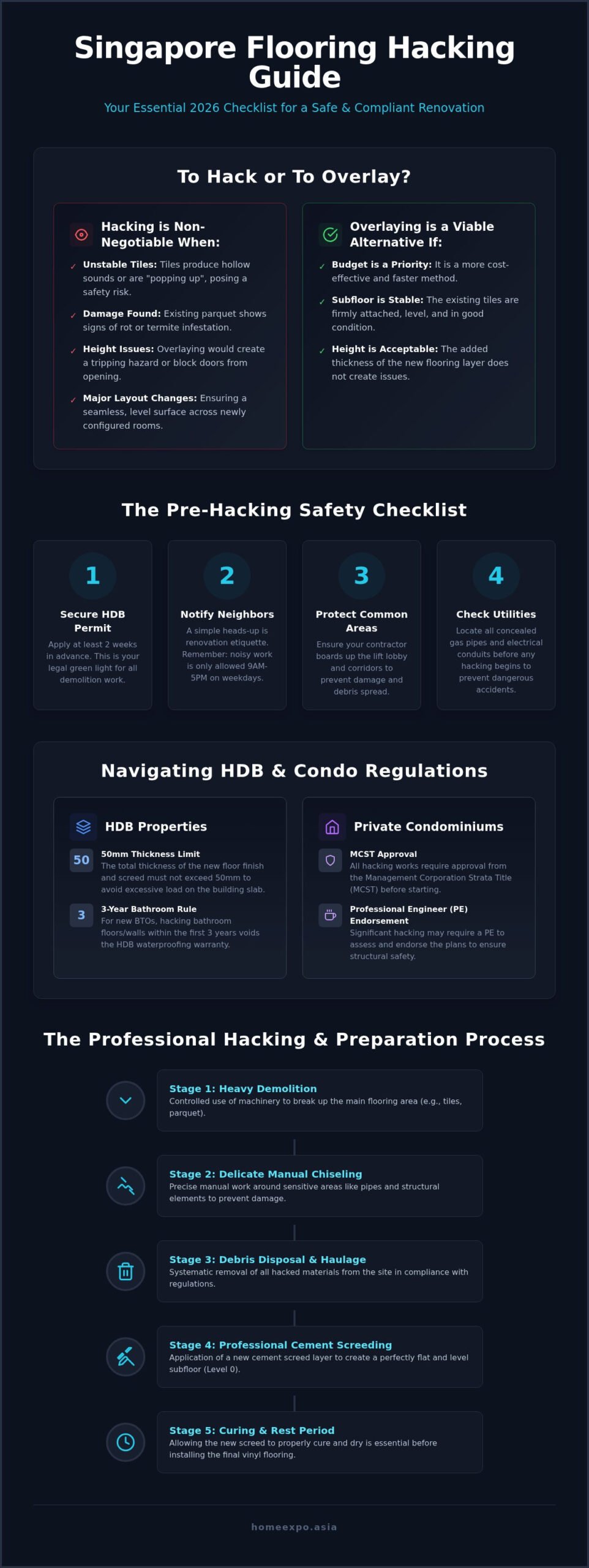
Choosing between hacking and overlaying often comes down to your budget and the current condition of your subfloor. Overlaying is a popular cost-effective alternative where new vinyl is placed directly over old tiles, but it isn’t always a viable option. If your existing tiles are unstable or the cumulative floor height becomes a tripping hazard, hacking is non-negotiable. Starting from a bare concrete base allows for a level, durable finish that simply cannot be achieved through shortcuts. It’s the essential first step for a perfect vinyl floor installation that lasts for decades.
Signs Your Floor Needs Hacking
Safety is the primary concern when you notice “popping” or hollow sounds when walking across your home. These air pockets suggest the adhesive has failed, creating a risk of sharp tiles suddenly cracking under pressure. In older estates, legacy parquet often suffers from rot or termite damage that requires a complete overhaul to prevent the spread of pests. If you’re planning a major layout change for a 2026 renovation, removing the old layers is essential. This ensures a seamless transition between rooms without awkward height differences or uneven surfaces.
The HDB vs. Condo Hacking Landscape
HDB flats have strict regulations regarding structural safety that every homeowner must follow. The total thickness of your new floor finish and screed must not exceed 50mm to prevent excessive weight on the building slab. For private apartments, you’ll need to navigate MCST rules, which often require a Professional Engineer’s (PE) endorsement for significant hacking works. It’s also vital to remember the 3-year “no hacking” rule for new HDB BTO bathrooms. Hacking these areas within the warranty period will void the mandatory waterproofing protection provided by HDB, potentially leading to costly water leakage issues and legal complications with neighbors.
The Ultimate Singapore Flooring Hacking Checklist
Successful flooring hacking in Singapore requires more than just heavy machinery; it demands a meticulous plan. Without a structured approach, you risk legal fines, damaged utilities, or strained relationships with your neighbors. This checklist serves as your pre-renovation roadmap to ensure every hammer swing is compliant and safe. Preparation is the only way to avoid the hidden costs of project delays.
- Step 1: Secure the HDB Renovation Permit. This is your legal green light. All major demolition works must adhere to the safety standards outlined in the Building Control Act.
- Step 2: Neighbor Notification. Informing those around you is the golden rule of Singapore renovation etiquette. A simple heads-up prevents friction before the noise begins.
- Step 3: Protective Layering. Your contractor must board up the lift lobby and common corridors using thick plastic or plywood. This prevents debris from scratching public property or clogging lift tracks.
- Step 4: Utility Check. Before work begins, locate all gas pipes and electrical conduits. Accidentally hitting a live wire or gas line can turn a routine flooring hacking singapore project into a dangerous emergency.
HDB Permit Requirements for 2026
Your contractor must submit the permit application through the HDB e-Service portal using their registered credentials. In 2026, approval typically takes one to two weeks depending on the complexity of the request. Once approved, you must display the official “Notice of Renovation” outside your flat until all works are finished. Remember that hacking structural walls or load-bearing beams is strictly prohibited. If you’re unsure about your flat’s layout, request a free site assessment to identify which areas are safe to hack before you submit your application.
Neighbor Management and Noise Control
Hacking is the loudest part of any renovation. HDB regulations restrict noisy work to weekdays between 9:00 AM and 5:00 PM. No hacking is allowed on weekends, school holidays, or public holidays. To maintain peace, place a “Notice of Hacking” flyer in your neighbors’ mailboxes at least three days before starting. If a neighbor complains, listen professionally and ensure your team is strictly following the permitted hours. Clear communication often diffuses tension before it escalates into a formal dispute with the authorities.
Calculating Flooring Hacking Costs in Singapore
Understanding the financial layout is vital before the first tile is chipped away. In the local industry, flooring hacking singapore services are typically quoted using a Per Square Foot (PSF) standard. This allows for a transparent breakdown based on the actual surface area of your home. However, don’t assume every square foot costs the same. The material of your existing floor dictates the labor intensity. Ceramic and homogeneous tiles are standard removals, but hacking heavy marble or granite requires specialized equipment and more effort. Parquet flooring, often glued down with strong adhesives, might even require manual scraping to ensure a clean concrete base.
Beware of the cheapest quote trap. Some contractors provide an attractive base price but omit essential services like haulage and debris disposal. If these aren’t explicitly listed, you could face unexpected bills mid-renovation. A professional quote should be comprehensive, covering every stage from demolition to the final cleanup. Choosing a firm that emphasizes financial clarity protects you from the stress of hidden markups.
Factors That Inflate Your Hacking Bill
Several variables can quickly increase your final invoice. Accessibility is a major factor; walk-up apartments without lift access require workers to manually carry debris down flights of stairs, which significantly raises labor costs. Another common nightmare is discovering double-layer tiles. In older resale flats, previous owners may have tiled over the original floor. Hacking through two layers of stone and cement doubles the labor and the volume of waste. Additionally, the thickness of the original cement screed plays a role. Thicker layers mean more weight, which translates directly into higher disposal fees.
Debris Disposal and Haulage Fees
Getting tons of broken concrete out of a high-rise HDB or condo unit is a complex logistical feat. Haulage fees cover the labor of bagging the debris and transporting it to the ground level. Once there, it must be moved to an authorized NEA disposal site using heavy vehicles. Ensure your contractor uses these legal channels to avoid heavy fines for illegal dumping. The total volume of waste generated will heavily influence your overall flooring singapore project cost. Accurate waste estimation is a hallmark of a reliable expert who values transparency and professional standards.
The Professional Hacking Process: What to Expect
The professional hacking phase is the most transformative part of your renovation. For a standard 4-room HDB flat, the entire demolition process typically takes about four working days. This timeline ensures that work is thorough without causing unnecessary disruption to your neighbors. Professional flooring hacking singapore teams use a combination of heavy-duty jackhammers for large open areas and manual chiseling for delicate zones around pipes or electrical points. Using the right tool for the specific area prevents structural vibrations that could cause cracks in your neighbor’s ceiling.
Dust is the biggest challenge in high-rise demolition. Expert crews employ industrial-grade vacuums and wet-hacking techniques to keep fine particles contained. They also seal off internal doorways with heavy-duty plastic sheets to protect rooms that aren’t being renovated. A final inspection is mandatory once the dust settles. Your contractor must verify that the concrete base is completely bare, level, and free of old adhesive residues. This clean slate is the only way to ensure your new floor reflects the high quality you expect.
Day-by-Day Hacking Timeline
- Day 1: Protection and initial demolition. The team boards up the common areas and begins hacking the living room and bedrooms.
- Day 2-3: Kitchen and bathroom hacking. These are the most labor-intensive parts because of the thick cement screed and the presence of underlying pipes.
- Day 4: Haulage and final site clearing. All debris is bagged and transported to NEA-approved sites, leaving the unit ready for the next trade.
Safety Protocols and Risk Mitigation
Safety isn’t just about the workers; it’s about protecting your investment. You should always verify that your hacking crew or carpenter singapore partner holds BizSafe certification. This ensures they follow strict risk-management protocols to prevent accidents. A certified team is trained to identify potential hazards before they become expensive problems.
Protection extends to your existing home features. If you’re keeping your built-in wardrobes or feature walls, they must be double-wrapped in protective film and plywood. The most critical risk is compromising the waterproofing in adjacent wet areas. A professional team knows exactly where to stop hacking to maintain the integrity of the surrounding structure. If you want a team that prioritizes safety and precision, book a professional site assessment today to discuss your hacking needs.
Post-Hacking: Preparing for Your New Vinyl Floor
Once the jackhammers stop, your home enters a critical phase that many homeowners overlook. Don’t rush the installation of your new surface immediately after finishing your flooring hacking singapore works. Your subfloor needs a “Rest Period” to settle and release trapped moisture. Skipping this step is a recipe for disaster. Trapped dampness can lead to mold growth or cause your new floor to warp within months. A professional contractor will always check moisture levels before proceeding to ensure the foundation is bone-dry and stable.
Preparing the subfloor is about more than just cleaning up debris. It’s about engineering a surface that is perfectly flat. While hacking removes the old, cement screeding builds the new. This transition is where many DIY-managed projects fail. A unified approach ensures that the messy demolition phase leads directly into a flawless finish. We bridge this gap by handling the heavy labor and the technical preparation in one seamless flow.
The Importance of Cement Screeding
You cannot install vinyl directly onto a raw, hacked concrete slab. The surface is simply too uneven. In 2026, HDB regulations strictly require the use of pre-packed screed for all floor leveling works. This material provides a much more consistent and durable base than traditional site-mixed cement. A smooth, level surface is the secret to long-lasting vinyl flooring singapore. If the subfloor has even a 3mm deviation, the click-lock joints of your vinyl planks will eventually snap under the weight of foot traffic. For high-end finishes, we often recommend self-leveling compounds. These liquid-state mixtures flow into the tiniest dips, creating a “Level 0” subfloor that is as smooth as glass.
Choosing Your Next Floor Finish
Transitioning to vinyl is the most popular choice for Singaporean homeowners after a full hacking project. It offers a perfect balance of durability, water resistance, and aesthetic appeal. The mess and noise of hacking become a distant memory once you see the final result. We simplify this entire journey by managing both the heavy tiling and cement works and the final flooring installation. With over 200 vinyl designs available, you can achieve any look from warm oak to industrial stone without the maintenance required by natural materials.
Don’t let the complexities of renovation overwhelm you. Our experienced team is here to guide you through every permit, disposal fee, and installation detail. Ready to transform your space? Get a risk-free flooring quote today and start your journey toward a beautiful, professionally installed home.
Start Your Home Transformation with Confidence
Navigating the complexities of flooring hacking singapore doesn’t have to be a source of stress. By following a structured checklist, you ensure your renovation stays compliant with HDB regulations while protecting your neighbors and your property’s structural integrity. A successful floor starts long before the first vinyl plank is laid; it begins with precise demolition and a perfectly leveled cement screed foundation. Taking the time to secure the right permits and allowing for essential rest periods will prevent costly repairs and legal headaches in the future.
We specialize in bridging the gap between messy demolition and a beautiful final finish. Our team provides HDB-registered tiling and cement works with transparent, no-middleman pricing, ensuring you get the best value for your 2026 renovation. With over 200 vinyl flooring designs to choose from, we help you turn a bare concrete base into a stylish, durable home. Don’t leave your subfloor to chance. Book Your Free Site Assessment & Hacking Consultation today to ensure your project is handled with professional expertise. Your dream home is just one well-planned renovation away.
Frequently Asked Questions
Do I need a permit to hack only a small portion of my floor?
Yes, a permit is mandatory for all floor hacking works in HDB flats, regardless of the area size. Your HDB-registered contractor must submit the application through the e-Service portal before any work begins. This ensures that the structural integrity of the building slab is not compromised. Failing to secure this permit can lead to heavy fines and a mandatory order to reinstate the original flooring at your own expense.
How much does tile hacking cost per square foot in Singapore for 2026?
Hacking costs for specific areas like a living room or kitchen generally range between S$400 and S$700 per area in 2026. For a complete 4-room flat renovation, total hacking and demolition fees can range from S$3,000 to S$7,000 depending on the material. Always request a PSF breakdown for flooring hacking singapore to ensure you are receiving a transparent, competitive quote without hidden middleman markups.
Can I stay in my house while the floor hacking is in progress?
It’s best to vacate your home during the hacking process due to extreme noise and dust. Hacking generates significant debris and fine particles that can irritate the respiratory system even with dust sheets in place. Since work is restricted to weekdays from 9:00 AM to 5:00 PM, the environment is unsuitable for working from home or daily living. Most homeowners choose to stay with relatives or in temporary accommodation.
What is the “3-year rule” for hacking in new BTO flats?
The 3-year rule is a restriction that prevents homeowners from hacking bathroom floor or wall tiles in new BTO flats. HDB provides a three-year warranty against water leakage in these wet areas from the date of key collection. If you perform any hacking within this period, the warranty becomes void. If you experience leaks after hacking, you’ll be solely responsible for the repair costs and any damage caused to the unit below.
Does floor hacking include the removal of the cement screed underneath?
Yes, professional hacking typically involves removing both the top finish and the underlying cement screed to reach the bare concrete slab. This is often necessary to comply with HDB’s 50mm maximum thickness rule for new floor finishes. Removing the old screed allows for a fresh layer of pre-packed screed, which provides a much more stable and level foundation for your new vinyl flooring installation in the next phase.
How do I find an HDB-registered hacking contractor?
You can verify a contractor’s status through the HDB Directory of Renovation Contractors (DRC) available on the HDB website. It’s essential to only engage firms that are currently registered and have a clean track record. We recommend checking for additional certifications like BizSafe, which indicate that the crew follows strict safety protocols during the labor-intensive flooring hacking singapore phase to protect your property and ensure a smooth renovation journey.
What happens if my contractor accidentally damages a pipe during hacking?
If a pipe is damaged, a professional contractor will immediately activate their risk-mitigation protocols. They’ll shut off the main water valve to prevent flooding and engage a licensed plumber to perform an urgent repair. This is why hiring an insured, experienced team is vital. They take full responsibility for the rectification works, ensuring that the incident doesn’t cause long-term water damage or structural issues to your home or your neighbor’s unit.
Can I just overlay new tiles instead of hacking to save money?
Overlaying is a viable cost-saving option only if your existing tiles are structurally sound and not “popping” or hollow. While it avoids the mess of hacking, it adds about 5mm to 10mm to your floor height. You might need to trim the bottom of your doors to ensure they still swing freely. If your subfloor is uneven, damp, or damaged, hacking is always the better long-term investment for a flawless finish.