Your vinyl floors should look just as flawless in ten years as they did on the day of installation. Most Singapore homeowners live in constant fear of that first deep gouge from a heavy sofa or a sharp pet claw, thinking it’s an inevitable part of daily life. You’ve invested significant effort into creating a beautiful home, so it’s natural to feel anxious about which cleaning products are truly safe or how to move furniture without leaving a permanent trail. We understand that your floor is the foundation of your living space, and keeping it pristine shouldn’t feel like a source of constant stress.
Learning how to prevent scratches on vinyl flooring is simpler than you might think when you use professional-grade strategies tailored for the unique conditions of Singaporean homes. This 2026 guide provides a reliable roadmap to maintaining a scratch-free surface for over a decade through expert grit management and specialized furniture protection techniques. We’ll walk you through the essential habits that mitigate risks from heavy furniture and pets, ensuring you have total confidence in your home’s durability. From selecting the right wear layer to implementing low-maintenance protective shields, you’re about to discover how to keep your investment safe and beautiful.
Key Takeaways
- Understand that a high-quality wear layer is your first line of defense, providing a protective shield against daily wear and tear.
- Master the art of how to prevent scratches on vinyl flooring by adopting daily dust-mopping habits and avoiding vacuums with abrasive beater bars.
- Protect your investment by applying heavy-duty felt pads and specialized furniture cups to prevent indentations and dragging marks from heavy sofas.
- Learn why regular pet nail trimming and strategic rug placement at “pivot points” are essential for maintaining a flawless surface in high-traffic zones.
- Discover how professional installation and meticulous subfloor preparation eliminate the unevenness that often leads to premature surface damage.
Understanding the Science of Scratch Resistance in Vinyl Flooring
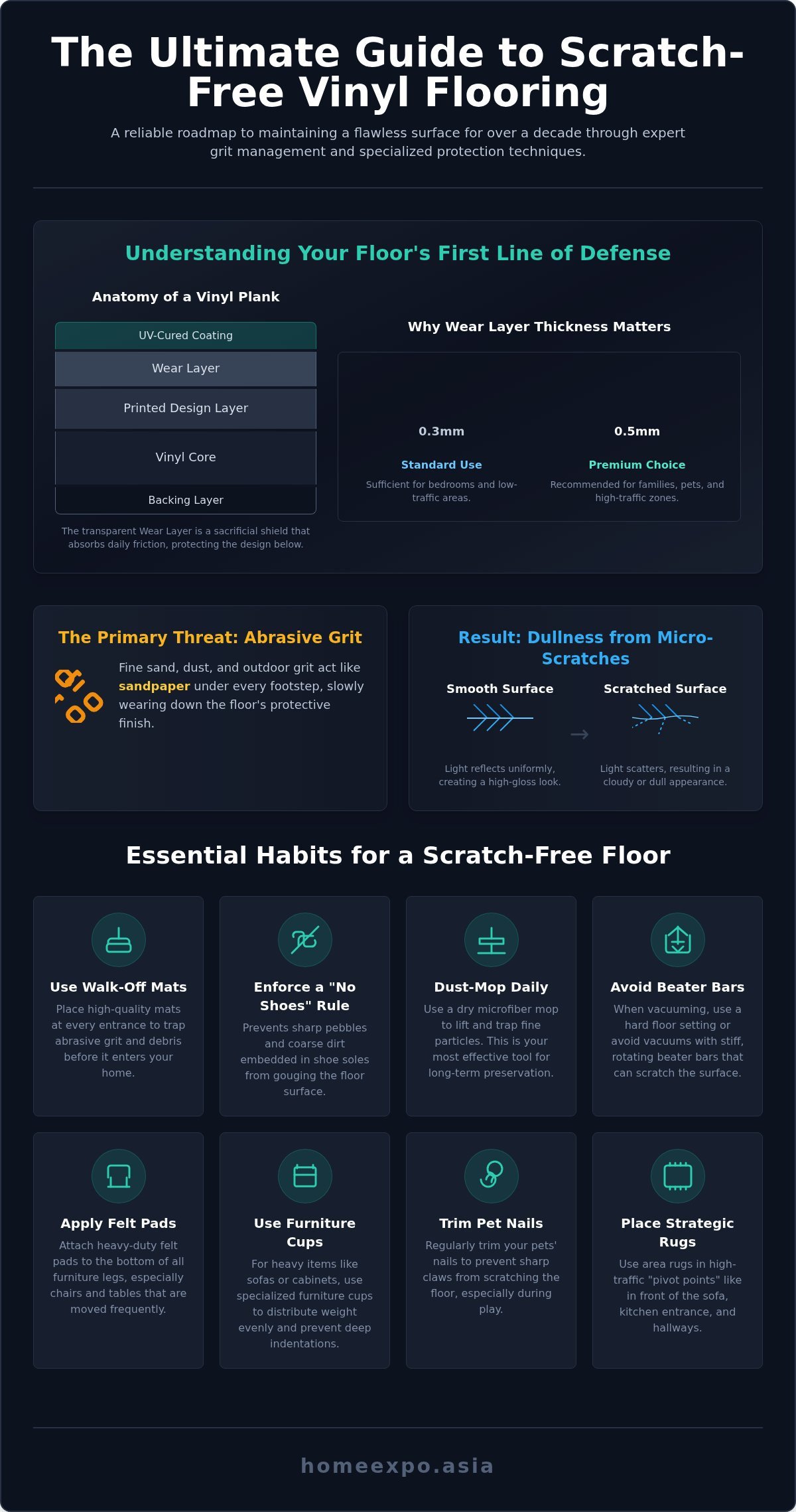
Understanding how to prevent scratches on vinyl flooring begins with the physical construction of the plank itself. Every high-quality vinyl floor features a transparent top coating known as the wear layer. This specialized coating serves as the sacrificial shield of your floor, absorbing the impact of daily friction so the printed design layer remains untouched. While modern manufacturing has made these surfaces incredibly durable, it’s vital to recognize that vinyl is scratch-resistant rather than scratch-proof. No material is entirely immune to damage if enough force or sharp friction is applied.
The science behind this resistance often involves advanced UV-cured coatings. These topcoats frequently incorporate ceramic beads or polyurethane to create a microscopic barrier against abrasions. In Singaporean households, the most common threats to this barrier include fine outdoor grit tracked in from hallways, the sharp claws of family pets, and the heavy friction of dragging mahogany or teak furniture across the room. By understanding vinyl flooring wear layers, you can better appreciate why certain maintenance habits are non-negotiable for long-term protection.
The Role of Wear Layer Thickness
Thickness is the primary metric for durability in residential settings. Most standard vinyl products offer a wear layer of 0.3mm, which is suitable for bedrooms or low-traffic areas in a typical HDB flat. However, for high-traffic zones or homes with large pets, a 0.5mm wear layer is the industry-recommended sweet spot for 2026. This extra thickness provides a significantly deeper buffer against deep gouges. A thicker wear layer doesn’t just resist surface marks; it provides the structural integrity needed to withstand the pressure of heavy cabinets and daily footfall for a decade or more.
- 0.3mm Wear Layer: Sufficient for standard residential use and light foot traffic.
- 0.5mm Wear Layer: The premium choice for families, pet owners, and high-traffic living rooms.
- UV Coating: Enhances surface hardness and prevents the sun’s rays from weakening the protective bond.
How Micro-Scratches Affect Floor Aesthetics
You might not notice a single scratch, but thousands of microscopic abrasions will eventually change how light interacts with your floor. These micro-scratches cause light refraction to scatter in multiple directions, leading to a dull or “cloudy” appearance over time. This effect is often the result of using improper cleaning tools or allowing dust to act like sandpaper under your feet. The high-quality finishes available through Home Expo Asia are specifically engineered to resist this dulling effect, maintaining their original luster even under the rigors of a busy Singaporean household.
5 Essential Cleaning Habits to Stop Abrasive Scratches
Maintaining the pristine look of your home in Singapore’s tropical environment requires a proactive approach to cleanliness. Most homeowners don’t realize that the primary enemy of their floor isn’t heavy furniture, but the microscopic grit that enters through open windows and doorways. Learning how to prevent scratches on vinyl flooring starts with a consistent routine designed to eliminate these abrasive particles before they can do damage. When dust and sand are left on the surface, every footstep turns them into sandpaper, slowly wearing down the protective UV coating we discussed in the previous section.
Grit Management: The First Line of Defense
In many Singaporean households, maintaining these standards is a collaborative effort involving domestic staff. If you are currently searching for a transfer helper singapore to assist with household duties, they can be specifically instructed on these grit-management techniques to keep your floors in top condition.
Singaporean homes face specific environmental challenges that require localized solutions. If you live near the East Coast, fine silica sand is a constant intruder that can easily bypass standard mats. Similarly, residents in new BTO developments often struggle with fine construction dust that lingers for months. High-quality walk-off mats at every entrance are essential to trap this debris. You should also strictly enforce a “No Shoes Indoors” rule. This simple habit prevents sharp pebbles embedded in shoe soles from gouging your planks. Focus your cleaning efforts on high-traffic pivot points, such as the kitchen entrance and the area immediately inside the front door, where grit accumulates most rapidly.
Daily dust-mopping is your most effective tool for long-term preservation. Use a dry microfiber mop to glide over the surface, as these fibers are designed to lift and trap particles rather than just pushing them around. If you prefer vacuuming, ensure your machine is set to the “hard floor” mode. You must avoid vacuums with rotating beater bars at all costs. These stiff bristles are meant for carpets and can leave thousands of micro-scratches on a vinyl surface in a single session. For those who want professional guidance on tailored maintenance, you can mention free site assessments when speaking with our team to get personalized flooring care advice.
Safe Mopping Techniques for 2026
When it’s time for a deeper clean, your choice of chemicals and tools is critical for wear layer integrity. Always use pH-neutral cleaners specifically formulated for vinyl. Harsh detergents or “all-purpose” cleaners can leave a sticky residue that actually attracts more dirt. One major hidden danger is the steam mop. While popular for sanitization, the intense heat can penetrate the seams and weaken the adhesives holding your floor in place. This can lead to plank shifting or warping over time.
- The Two-Bucket Method: Use one bucket for your cleaning solution and a second bucket of plain water to rinse your mop. This ensures you aren’t spreading dirty, gritty water back onto the floor.
- Microfiber Mops: These are far superior to traditional string mops because they use less water and provide a gentler touch.
- No Abrasives: Never use steel wool, scouring pads, or stiff scrubbing brushes, as these will immediately dull the finish.
Furniture Protection 101: Moving Pieces Without Damage
Moving furniture remains the most common cause of deep, permanent gouges in residential spaces. While you might be tempted to slide a dining chair just a few inches; this simple action can bypass your floor’s wear layer if the legs aren’t protected. Learning how to prevent scratches on vinyl flooring requires a disciplined approach to every piece of furniture in your home. This is especially critical for Singaporean households that often feature heavy mahogany dining sets or solid wood cabinets. These heirloom pieces exert immense pressure on small contact points, making protection essential.
Choosing the Right Protective Pads
Adhesive felt pads are the standard recommendation for most household items. They provide a soft buffer and are incredibly easy to replace. You should generally avoid nail-on glides. If the felt wears down on a nail-on glide, the metal nail will directly gouge your floor planks. For a more modern and secure fit; silicone chair leg caps have become a popular alternative in 2026. These transparent sleeves stay in place better than adhesive pads and offer a clean aesthetic for minimalist homes. Regardless of the type you choose, inspect them every six months. Over time, these pads trap the microscopic grit discussed in our cleaning section. This turns them into abrasive sandpaper that will damage your floor surface. This is especially important for heavy furniture; for instance, when setting up a new bedroom suite from The Mattress Boutique, using the right protective base is key to preventing long-term indentations.
- Heavy-Duty Felt Pads: Best for chairs and light tables that move frequently.
- Silicone Caps: Ideal for tapered legs where adhesive pads often fall off.
- Furniture Cups: Necessary for heavy mahogany sofas to distribute weight and prevent dents.
Safe Moving Practices for Heavy Items
When it’s time for a major room rearrangement, the “Never Drag” rule is your best defense. Always lift furniture completely off the floor. For exceptionally heavy appliances like refrigerators or washing machines; create a temporary “road” using plywood or masonite sheets. This distributes the weight across a larger surface area and prevents wheels from creating permanent indentations. Furniture sliders are another excellent tool for occasional movement. They are specifically designed to glide across the surface without friction. Ultimately, the success of these strategies depends on a flat foundation. Professional installation ensures your vinyl flooring is perfectly level. This significantly reduces the risk of edges catching or dragging during movement.
Weight distribution is also a factor in long-term floor health. Distribute the weight of heavy cabinets by using wide coasters or specialized furniture cups. These tools increase the surface area of the contact point, which reduces the PSI (pounds per square inch) exerted on your vinyl. By combining high-quality materials with these simple moving habits, you can keep your floors looking brand new for over a decade.
Managing Pets, Shoes, and High-Traffic Zones
Active lifestyles and furry companions bring life to a home, but they also introduce dynamic risks to your floor’s surface. While previous sections focused on static furniture and microscopic grit, this section addresses the physical impact of movement. Understanding how to prevent scratches on vinyl flooring involves managing the two most common active culprits: pet claws and hard-soled footwear. By identifying high-impact zones, such as the area where you habitually drop your keys or the kitchen floor where utensils might fall, you can implement targeted protection before damage occurs.
Pet-Friendly Flooring Strategies
For pet owners, regular claw maintenance is a fundamental flooring requirement. Long nails act like small chisels, especially when a dog gains traction to run. Keeping nails trimmed and buffed significantly reduces the downward pressure on the wear layer. If you are currently selecting new materials, textured vinyl is a superior choice for pet-friendly homes. The embossed surface provides better grip for paws and effectively camouflages minor surface marks. To manage the “zoomies,” always use high-quality rug grippers under area rugs to prevent the rug from sliding and dragging trapped particles across the floor planks.
- Silicone Mats: Place these under water bowls to catch spills. Moisture can make the surface more susceptible to friction-based scratches.
- Textured Finishes: These hide micro-abrasions better than high-gloss options.
- Entryway Grooming: Keep a towel by the door to wipe paws, ensuring no outdoor pebbles are stuck in the fur.
Area Rugs as Functional Decor
Strategic rug placement is the most effective way to shield “pivot points” like hallways, bed flanks, and sofa fronts. These areas experience the highest frequency of foot traffic and sudden changes in direction, which accelerates wear. When choosing rugs for Singapore’s humid climate, synthetic fibers or treated jute are excellent options as they resist mold. However, you must be careful with rug backings. Avoid rubber or latex backings, as these can chemically react with vinyl and cause permanent discoloration. Instead, opt for non-staining felt or specialized PVC-based pads. For those looking to combine protection with high-end design, explore our guide on herringbone flooring to see how pattern play can enhance high-traffic zones.
Footwear also requires a clear policy. High heels, particularly stilettos, concentrate hundreds of pounds of pressure into a tiny point, which can dent even the most durable materials. Encourage a “house slippers only” environment to maintain a pristine finish. If you need help identifying the best layout for your high-traffic areas, book a professional installation consultation to ensure your home is both stylish and protected.
Why Quality Materials and Installation are the Ultimate Prevention
The most effective strategy for how to prevent scratches on vinyl flooring begins long before you move your first piece of furniture. It starts during the selection and installation phase. Many homeowners focus solely on aesthetics; however, the technical specifications and the skill of the installer determine how well your floor resists damage over the next decade. Lower-quality vinyl products often feature a brittle wear layer that can crack or peel under pressure. In contrast, premium materials are engineered to remain flexible and resilient, even in Singapore’s high-humidity environment.
A significant part of long-term durability comes from what lies beneath the surface. Professional flooring Singapore services prioritize meticulous subfloor preparation to ensure a perfectly level base. If the subfloor is uneven, the planks won’t sit flush. This creates “lippage,” where the edge of one plank is slightly higher than its neighbor. These raised edges are extremely vulnerable to catching on furniture or shoes, leading to premature scratching and chipping that no amount of cleaning can fix.
Professional Installation vs. DIY
While DIY projects are popular, professional installation provides a level of security that self-installs often lack. Experts understand the necessity of expansion gaps. These small spaces around the perimeter of the room allow the floor to breathe as temperatures and humidity levels fluctuate in Singapore. Without these gaps, planks can buckle or shift, creating uneven surfaces that are prone to friction damage. Expert installers also use specialized tools to ensure every joint is airtight. This prevents planks from separating and exposing vulnerable edges to grit and moisture.
Selecting High-Performance Vinyl
When reviewing spec sheets in 2026, look for high AC (Abrasion Class) ratings and a robust wear layer of at least 0.5mm for high-traffic areas. At Home Expo Asia, we source materials that have undergone rigorous testing to ensure they meet international safety and durability standards. With over 200 designs available, you don’t have to sacrifice style for security. Our collections include options specifically engineered with enhanced scratch-resistant topcoats that provide an extra layer of defense against daily wear.
- Subfloor Leveling: Eliminates lippage and protects plank edges from impact.
- Expansion Gaps: Prevents buckling and surface tension in humid weather.
- Climate-Tested Materials: Ensures the wear layer remains resilient and resists becoming brittle.
Your home deserves a foundation that lasts. To find the most durable flooring for your specific lifestyle and home layout, book a free site assessment with our expert team today. We provide the technical guidance and professional craftsmanship needed to keep your vinyl floors pristine for years to come.
Preserving Your Home’s Beauty for the Next Decade
Protecting your investment requires a balance of daily habits and high-quality materials. By mastering how to prevent scratches on vinyl flooring through consistent grit management and the use of heavy-duty felt pads, you ensure your floors remain flawless. Remember that a professional installation on a perfectly leveled subfloor is just as critical as the wear layer itself. These strategies work together to shield your home from the rigors of Singaporean life. It’s about proactive care. It’s about choosing the right experts.
We bring 50+ years of combined industry experience to every project. As professional HDB and Condo installation specialists, we prioritize your peace of mind. Our commitment to quality is backed by comprehensive material and service warranties. Browse our 200+ scratch-resistant vinyl designs today! Your dream home deserves a foundation that lasts. With these simple protective measures, your floors will continue to impress for years to come.
Frequently Asked Questions
Can I use a steam mop on my vinyl flooring?
You should avoid using a steam mop on your vinyl flooring. While steam is excellent for sanitizing hard surfaces, the intense heat can penetrate the seams and weaken the adhesive bond beneath your planks. This often leads to warping or buckling, especially in Singapore’s humid climate. Instead, stick to a damp microfiber mop with a pH-neutral cleaner to maintain the integrity of your floor’s wear layer without any risk of permanent damage.
How do I remove scuff marks from shoes on vinyl?
Most rubber scuff marks can be removed using a clean tennis ball or a specialized soft eraser. Simply rub the mark gently until it lifts from the surface. For more stubborn scuffs, a damp microfiber cloth with a drop of neutral detergent usually does the trick. Avoid using abrasive scouring pads or steel wool. These tools will dull the finish and create micro-scratches that attract more dirt to your floor over time.
Will my dog’s claws definitely scratch the vinyl?
Your dog’s claws won’t necessarily damage your floor if you follow basic maintenance. Keeping your pet’s nails trimmed and buffed is the most effective method for how to prevent scratches on vinyl flooring. Choosing a textured finish or a product with a 0.5mm wear layer also provides extra durability. These premium materials are designed to withstand the active paws of family pets while maintaining their original aesthetic for many years in a busy home.
Are some vinyl floor colors better at hiding scratches than others?
Lighter wood tones and matte finishes are significantly better at camouflaging surface scratches than dark, high-gloss options. Darker colors tend to highlight light refraction from micro-scratches, making them more visible to the naked eye. Selecting a textured or “distressed” pattern can also help hide daily wear and tear. With over 200 designs available, we can help you find a style that balances your aesthetic preferences with the practical needs of your household.
What is the best way to move a heavy refrigerator on vinyl?
You should never drag a refrigerator directly across your vinyl floor. The best method is to lay down sheets of thin plywood or masonite to create a temporary “road” for the appliance. This distributes the heavy weight and protects the planks from indentations or deep gouges. Alternatively, high-quality furniture sliders designed for hard surfaces can help the unit glide safely without causing friction-based damage to the protective topcoat of your vinyl floor.
How often should I replace the felt pads on my chairs?
You should inspect and replace your felt pads approximately every six months. Over time, these pads trap microscopic grit and sand, effectively turning them into sandpaper. If you notice the felt becoming compressed or dirty, it’s time for a fresh set. Maintaining clean, soft pads is a simple yet essential habit for anyone wondering how to prevent scratches on vinyl flooring caused by the frequent movement of dining chairs and heavy tables.
Is there a specific cleaner recommended for Singapore’s humidity?
A pH-neutral cleaner is the gold standard for Singapore’s unique residential environment. Avoid using bleach, ammonia, or oil-based soaps, as these can leave a sticky residue or damage the UV-cured topcoat. In our humid climate, it’s also important to use a well-wrung mop. Excess water can seep into the seams of lower-quality installations, so always aim for a damp rather than soaking wet cleaning process to ensure the floor’s long-term stability.
What should I do if I already have a deep scratch?
Minor surface scratches can often be hidden using a specialized vinyl floor repair pen or floor wax. However, for deep gouges that have penetrated the design layer, the best solution is to replace the affected plank. This is why professional installation is so valuable; it ensures your floor is laid in a way that allows for individual plank replacement without dismantling the entire room. You can contact an expert to assess the damage safely and effectively.