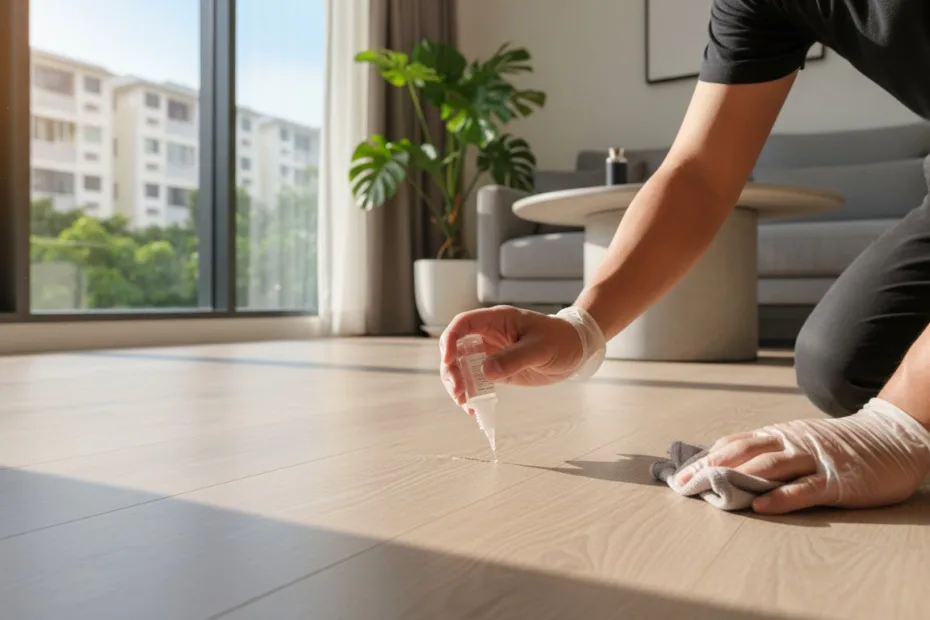
Last Saturday, Mr. Tan from Toa Payoh moved his heavy mahogany sofa and discovered a jagged white line across his brand-new SPC vinyl floor. It’s a sinking feeling that many of the 1.1 million HDB residents in Singapore know all too well. You’ve invested your hard-earned savings into a beautiful, water-resistant interior only to have a single dragged chair leg ruin the aesthetic. It’s natural to feel anxious about a potential S$600 repair bill or the fear that your flooring is permanently damaged. You’re likely searching for how to repair scratches on vinyl flooring without making the problem worse.
We agree that your home should be a place of relaxation, not a source of constant worry over every minor scuff. This 2026 guide teaches you exactly how to fix those marks using the same professional-grade, certified techniques our team has perfected over 50 years of combined industry experience. You’ll learn to distinguish between light surface marks and deep gouges that require specialized fillers. We also provide a clear 3-step prevention strategy to ensure your floors remain scratch-resistant and look as good as the day they were installed for the next 10 years.
Key Takeaways
- Master the “Fingernail Test” to accurately diagnose whether your floor has a minor surface-level scuff or a deep structural gouge.
- Discover professional-grade DIY methods on how to repair scratches on vinyl flooring using pH-neutral cleaners and specialized protective finishes.
- Learn the “Plank Replacement” technique to restore your floor’s integrity when the click-lock system or waterproof seal is compromised.
- Protect your investment with essential prevention tips for Singaporean homes, including the use of high-quality felt pads and strategic area rugs.
- Find out how upgrading to advanced scratch-resistant technology with a 10-year material warranty provides a risk-free solution for long-term peace of mind.
Diagnosing the Damage: Is it a Scratch or a Gouge?
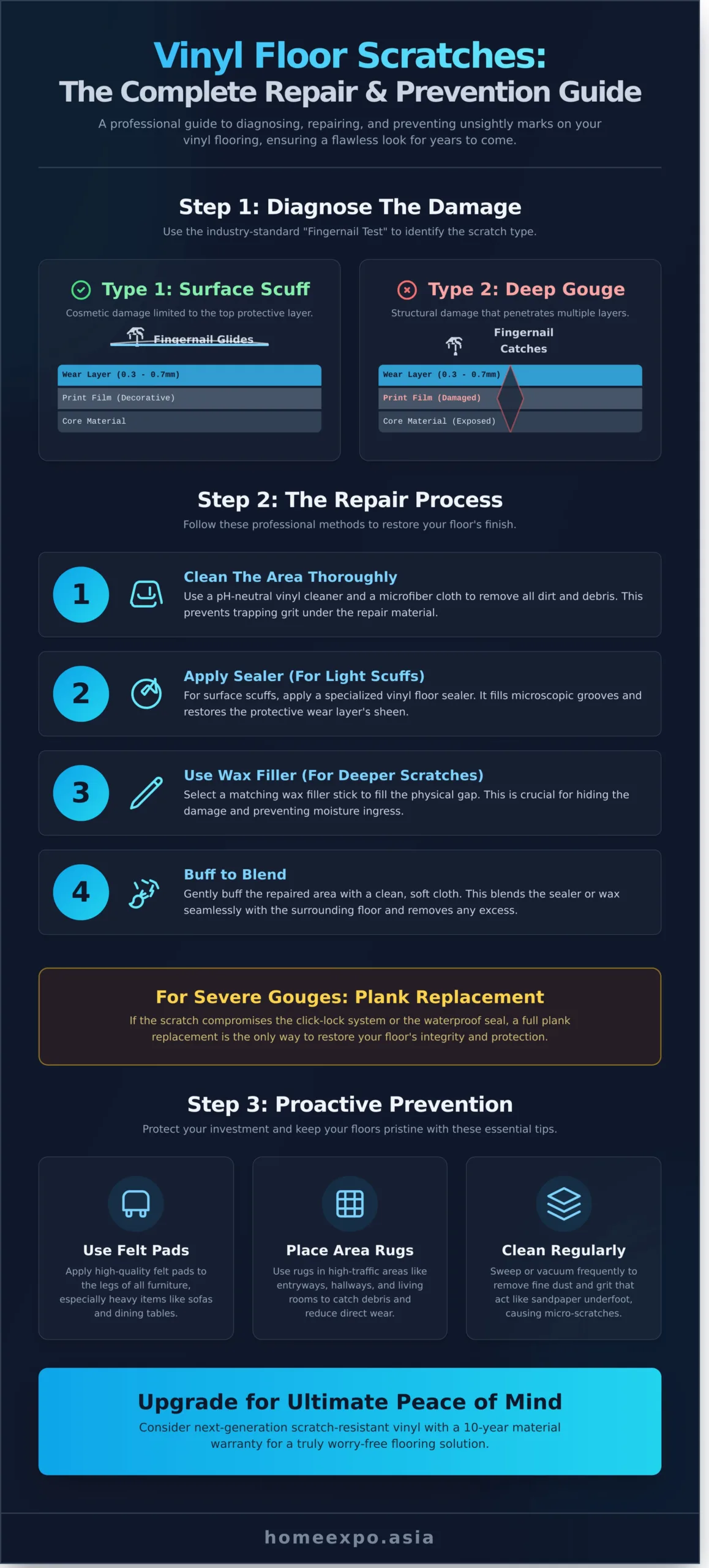
Before you grab a repair kit, you need to know exactly what you’re looking at. Not every mark requires the same solution. Most homeowners panic when they see a white streak on their dark walnut planks, but it’s often just a surface-level disruption. Understanding the layers of your floor is vital when figuring out how to repair scratches on vinyl flooring effectively. Modern vinyl floors are engineered with a multi-layer system. The top layer is a transparent wear layer, typically ranging from 0.3mm to 0.7mm in thickness. When a scratch is shallow, it only affects this clear coat.
The white color you see isn’t paint or core material; it’s light refracting off the torn edges of the protective polymer. It’s similar to how a scratched piece of clear plastic turns opaque. In Singapore, the “Fingernail Test” is the industry standard for a quick diagnosis. It’s a simple, cost-free way to assess if you’re dealing with a cosmetic issue or structural damage. Follow these steps to check your floor:
- ✓ Clean the area with a damp microfiber cloth to remove any debris.
- ✓ Gently run your fingernail perpendicular to the scratch.
- ✓ If your nail glides across without snagging, it’s a surface scuff.
- ✓ If your nail catches in a groove or “clicks,” you have a deep scratch or gouge.
Local environmental factors play a huge role in how visible these marks become. Singapore’s intense natural light, especially in high-floor units with floor-to-ceiling windows, can make even a 0.1mm scratch look like a canyon. If you’ve chosen a matte finish, you’re in luck; these hide imperfections much better than the high-gloss finishes popular in older 5-room HDB renovations. While modern homes use Luxury Vinyl Planks (LVP), some older utility rooms or commercial spaces still feature Vinyl composition tile (VCT), which is more brittle and prone to cracking under heavy impact. Knowing your specific material ensures you don’t use the wrong filler and void your warranty.
Type 1: Surface Scuffs and Light Scratches
These light marks are the most common issues in active households. They don’t penetrate the decorative film layer. You’ll notice they only appear when the sun hits the floor at a specific angle, usually around 4:00 PM in West-facing Singaporean living rooms. Fine dust acts like sandpaper underfoot, and pet claws can leave “ghost” tracks over time. Since the texture is still smooth to the touch, you don’t need heavy fillers. A simple cleaning or light buffing with a specialized floor restorer is usually enough to bring back the original sheen.
Type 2: Deep Scratches and Gouges
Deep damage is much more serious. You’ll feel a distinct ridge or valley when you touch it. These often happen when dragging a S$1,500 designer sofa without felt pads or dropping a sharp kitchen knife. In these cases, the scratch has cut through the wear layer and potentially damaged the print film, making the grey or white core material visible. You can’t just polish these away. Learning how to repair scratches on vinyl flooring of this depth requires using wax fillers or repair pastes to bridge the gap and prevent moisture from seeping into the core, which could lead to swelling.
5 Proven Methods to Repair Vinyl Floor Scratches
Scratches are an inevitable part of home life, especially in high-traffic HDB flats or condos. Whether it’s from moving a heavy sofa or a pet’s claws, minor surface damage doesn’t mean you need a full replacement. Quality is our #1 priority, so we’ve outlined a professional approach to restoring your floor’s appearance. Knowing how to repair scratches on vinyl flooring effectively saves you money and extends the life of your investment.
- Step 1: Thoroughly clean the area with a pH-neutral vinyl cleaner. Dirt and grit act like sandpaper if trapped under a repair kit. Use a dedicated solution like Bona or Selleys to remove 100% of surface debris without leaving a soapy residue.
- Step 2: Use a specialized vinyl floor sealer or finish for light scuffs. If the scratch hasn’t penetrated the wear layer, a clear sealer can fill the microscopic groove. This restores the protective barrier and levels the surface.
- Step 3: Apply a matching wax filler stick for medium-depth scratches. These sticks fill the physical gap in the vinyl. They’re available in various wood-look shades to match your specific plank design.
- Step 4: Buff the area gently with a soft microfiber cloth to blend. Friction generates a small amount of heat. This helps the wax or sealer settle into the scratch and removes any “halo” effect around the repair site.
- Step 5: Allow for proper curing time, especially in humid conditions. Singapore’s average humidity often exceeds 80%. This moisture slows down the hardening process. Give the area at least 24 hours of zero foot traffic to ensure a permanent bond.
If the damage covers more than 25% of a single plank, the structural integrity might be compromised. In these cases, it’s safer to look into durable vinyl flooring replacements that come with a 10-year materials warranty. It’s risk-free and ensures your home stays beautiful for decades.
Using Floor Finish for Scuff Removal
Matching the sheen is the most critical part of a “disappearing” repair. Most Singaporean homes use Matte or Satin finishes, while older commercial spaces might use Glossy. Apply the finish using the “thin coat” rule. Multiple thin layers are better than one thick glob, as thick applications often peel within 6 months. You can find high-quality liquid finishes at local retailers like Selffix or Horme Hardware for roughly S$15 to S$30 per bottle.
The Wax Filler Stick Technique
For a perfect wood-grain match, don’t rely on just one color. Professional installers often blend two shades, a darker brown and a lighter tan, to mimic the natural variation of timber. Use a plastic scraper or an old credit card to remove excess wax. This prevents damage to the surrounding wear layer that a metal blade might cause. Wax sticks provide a temporary but effective cosmetic fix to hide scratches. This method is a favorite for tenants because it’s fast, effective, and keeps the “No Hidden Fee” promise during move-out inspections. Learning how to repair scratches on vinyl flooring with wax is a skill every homeowner should have in their toolkit.
Deep Damage Solutions: When DIY Fixes Aren’t Enough
Surface scuffs disappear with a bit of polish, but deep gouges require a different strategy. You need to identify if the damage is purely cosmetic or structural. If a scratch penetrates the 0.5mm wear layer and reaches the stone polymer composite (SPC) core, your floor’s waterproof integrity is at risk. Moisture can seep into these openings, leading to core expansion or mold growth. This is especially critical in Singapore’s humid climate where indoor humidity often stays above 60%.
The “Plank Replacement” method is the gold standard for fixing severe damage. It’s a permanent solution that restores the floor to its original state rather than just masking a hole. We always advise our clients to keep 5% to 10% of their flooring as “attic stock” after the initial installation. Having these spare planks is a lifesaver. Manufacturers often update their designs or change dye lots every 12 to 18 months. If you don’t have spares from your original batch, a new plank might have a 3% color variance that sticks out like a sore thumb.
When deciding how to repair scratches on vinyl flooring that are too deep for wax, consider the cost-benefit ratio. A DIY repair kit costs roughly S$30 to S$50. It’s cheap, but the results are often temporary and visible under direct sunlight. A professional plank replacement typically ranges from S$150 to S$350. While the price is higher, it preserves your 10-year material warranty and ensures the click-lock system remains airtight. We’ve seen hundreds of cases where a S$40 DIY mistake ended up costing S$500 in corrective repairs.
How to Replace a Single Vinyl Plank
Replacing a middle plank without taking up the whole floor requires the “center-cut” technique. Don’t try to pry the planks up from the edge of the room. You’ll likely break the delicate click-lock tongues on perfectly good boards. Instead, mark a rectangle inside the damaged plank and cut it out using a circular saw set to the exact depth of the vinyl. Once the center is removed, carefully pull the remaining edges away from the surrounding planks. You must scrape the subfloor until it’s 100% level. Even a 1mm piece of old adhesive residue will cause the new plank to “bounce” when you step on it. Apply a thin layer of pressure-sensitive adhesive to the subfloor before dropping the new plank into place for a flush, professional finish.
When to Call a Professional Installer
If you notice “tenting” where planks push against each other or gaps wider than 2mm, these are signs of a larger installation issue rather than simple wear and tear. Attempting a DIY replacement in a high-rise HDB or Condo setting carries risks. Improper tool use can damage the underlying screed or waterproofing membrane, which is a major concern in Singaporean homes. Home Expo Asia handles these complex repairs for our clients using specialized equipment that minimizes dust and noise. We’ve completed over 10,000 successful installations across the island. Our team ensures that every repair maintains the FloorScore and Green Label certifications your family relies on for safety. It’s risk-free because we back our workmanship with a 1-year installation warranty, giving you total peace of mind.
Proactive Prevention: How to Stop Scratches Before They Start
Prevention is the smartest way to manage your home investment. While knowing how to repair scratches on vinyl flooring is a great skill, stopping the damage before it happens saves you significant time and S$100s in potential replacement costs. Your first line of defense is the humble felt pad. In Singapore, many homeowners favor heavy solid wood furniture or marble-topped dining tables. Without protection, these pieces exert hundreds of kilograms of pressure on four small points. High-quality felt pads are essential. You should check these pads every 6 months, as they trap grit and lose their cushioning over time. Replace them immediately if they look flattened or dirty.
High-traffic zones require extra layers of protection. Your entryway and living room see the most action daily. Placing a high-quality area rug or a breathable mat in these spots catches 85% of the dirt and sand brought in from outside. This is vital because sand acts like sandpaper under your feet. Every step on a gritty floor creates thousands of micro-scratches that eventually dull the finish. For pet owners, keeping claws trimmed is a non-negotiable rule. A 20kg dog can easily pierce a thin wear layer if its nails are long and sharp. Aim to trim pet nails every 2 to 3 weeks to maintain a safe, scratch-free environment.
The “No-Drag” rule is the most important habit to adopt. Never slide a sofa, cabinet, or even a light chair across the room. Dragging creates heat and friction that can melt the top layer or cause deep gouges that are difficult to hide. Lifting is the only safe way to move furniture. If a piece is too heavy to lift, use professional furniture sliders designed specifically for hard floors. These tools distribute weight evenly and prevent the concentrated pressure that leads to permanent floor damage.
- ✓ Install heavy-duty felt pads on all furniture legs
- ✓ Use rugs with non-staining backings in entryways
- ✓ Trim pet nails every 14 to 21 days
- ✓ Always lift furniture; never drag it
The Role of the Wear Layer
The wear layer is the transparent protective shield of your floor. It determines how long your flooring stays looking new. At Home Expo Asia, we consider a 0.5mm wear layer the gold standard for Singaporean homes. This thickness provides a robust barrier against daily life. Cheap alternatives often feature a 0.2mm layer, which can wear through in just 3 to 5 years. Our FloorScore certified vinyl is tested by firms like SGS and TUV SUD to ensure it resists scratching better than uncertified products. When you choose quality, you are investing in a floor that meets ISO 9001 standards for consistent durability.
Maintenance Tips for Singaporean Homes
Grit and sand are the hidden enemies of vinyl flooring in our tropical climate. Daily sweeping or dry mopping with a microfiber cloth is the best way to keep your floors pristine. Avoid steam mops at all costs. The intense heat can reach 100 degrees Celsius, which weakens the chemical bonds of the vinyl and can cause the wear layer to peel or cloud. This damage makes it much harder to learn how to repair scratches on vinyl flooring because the structural integrity of the plank is compromised. For the best results, stick to pH-neutral cleaners and damp mops. See our guide on Effortless Vinyl Floor Care for more expert maintenance secrets.
Ready to upgrade to a scratch-resistant floor that lasts? Book a free consultation with Home Expo Asia to see our certified collections.
Upgrade to Scratch-Resistant Vinyl with Home Expo Asia
While mastering the techniques for how to repair scratches on vinyl flooring helps extend the life of your current surface, there comes a point where constant touch-ups become a chore. If your floor is showing its age or the damage is too deep for a quick fix, upgrading to a high-performance alternative is the smartest long-term move. At Home Expo Asia, we’ve curated a collection of over 200 distinct designs that integrate advanced scratch-resistant technology. These floors feature a high-density, reinforced wear layer specifically engineered to handle the high-traffic demands of Singaporean households, from active toddlers to heavy furniture shifts.
Our selection isn’t just about aesthetics; it’s about resilience. We’ve helped over 5,000 Singaporean homeowners transform their spaces with flooring that resists the daily scuffs caused by pet claws and dragging dining chairs. Every plank serves as a testament to durability, ensuring you spend less time worrying about maintenance and more time enjoying your living space. By choosing a superior grade of vinyl with a specialized ceramic bead coating, the frequent need to research how to repair scratches on vinyl flooring becomes a thing of the past. You get a floor that stays looking brand new for years without the constant stress of minor damage.
We believe in a “Risk-Free” approach to home improvement. This commitment is backed by a comprehensive 1-year Home Expo Asia installation warranty and a 10-year material warranty. We take the guesswork out of the renovation process with a professional site assessment. Our experts don’t just measure the floor; they check for subfloor moisture levels and surface evenness. These factors are the primary causes of flooring failure in our humid climate. This proactive step prevents future headaches and ensures your new investment remains pristine, saving you from the S$1,000+ repair bills that often follow poor installations.
Our Quality Is Our #1 Priority
Quality isn’t a vague promise at Home Expo Asia. It’s a verified fact. Our flooring options are ISO 9001 and SGS certified, meaning they meet rigorous global standards for safety and performance. We operate with total transparency in every quote. You’ll never encounter hidden fees or surprise surcharges on your final bill. We provide honest, professional service from the first consultation to the final plank. Ready to start your home transformation? Send us a WhatsApp for a free site assessment and let our experienced team guide you toward the perfect durable floor.
Listen to Our Satisfied Customers
You don’t have to take our word for it. Our 5.0/5.0 Google reviews from hundreds of verified clients highlight our installation excellence and attention to detail. We pride ourselves on prompt after-sales support that stays with you long after the job is finished. This dedication to service is why we’re a trusted name across the island. Don’t settle for subpar materials that scratch easily and require constant care. Choose durable, certified flooring that stands the test of time and keeps your Singapore home looking flawless for the next decade.
Restore Your Floors and Protect Your Home Investment
Maintaining a flawless floor in your Singapore home doesn’t have to be a constant struggle. You’ve now learned that diagnosing the depth of damage is the first step toward a successful fix. Whether you’re using simple wax fillers for light scuffs or replacing entire planks for deeper gouges, knowing how to repair scratches on vinyl flooring keeps your living space looking brand new. It’s often more cost-effective to address these minor issues early before they compromise the structural integrity of your floor.
If your current floors are beyond a simple DIY fix, it’s time to upgrade to a more durable, long-term solution. Home Expo Asia provides premium, scratch-resistant options backed by a 10-year material warranty. Our products are FloorScore and Green Label certified, ensuring a safe and eco-friendly environment for your family. We’re proud of our 5.0/5.0 Google Reviews from satisfied local homeowners who value our professional service and transparent pricing. Don’t settle for damaged surfaces when professional help is just a click away.
Get a Risk-Free Vinyl Flooring Quote Today
Your dream home deserves a foundation that looks beautiful and stands up to the demands of daily life for decades to come.
Frequently Asked Questions
Can you buff out scratches on vinyl flooring?
You can buff out minor surface scuffs using a clean microfiber cloth and a pH-neutral vinyl floor cleaner. If the scratch is slightly deeper, applying a thin layer of floor sealer or a high-quality finish can restore the shine. For 90% of superficial marks, this simple process prevents further wear and keeps your floor looking new.
Will WD-40 or olive oil really fix vinyl floor scratches?
Avoid using WD-40 or olive oil because they create a slippery hazard and leave a greasy residue that attracts dirt. While they might temporarily hide a mark, these substances can degrade the protective wear layer of your flooring over 2 to 3 months. It’s safer to use a professional repair kit that’s SGS tested for compatibility with synthetic materials.
How much does it cost to replace a single vinyl plank in Singapore?
Professional labor for replacing a single vinyl plank in Singapore typically starts from S$120 to S$180 per trip. This price usually covers the expert removal of the damaged piece and the installation of a new one. Since Home Expo Asia provides a 1 year installation warranty, hiring a professional ensures the click-lock system remains water-resistant and secure.
Is it possible to repair deep gouges in SPC flooring?
You can repair deep gouges in SPC flooring by using a specialized wax filler stick that matches your floor’s color. Learning how to repair scratches on vinyl flooring that reach the core involves cleaning the gouge, filling it with melted wax, and leveling it with a plastic scraper. This method restores the 100% waterproof integrity of your Stone Plastic Composite (SPC) planks.
Do furniture sliders prevent scratches on vinyl?
Furniture sliders and felt pads reduce the risk of floor damage by 95% when moving heavy items. We recommend using high-density felt protectors on all chair legs and cabinet bases to maintain your 10 year material warranty. These simple additions prevent the friction that causes permanent white marks on your durable vinyl surface.
What is the best scratch-resistant vinyl flooring for pet owners?
Pet owners should choose SPC vinyl flooring with a wear layer of at least 0.5mm for maximum durability. Our FloorScore certified flooring is designed to withstand 2,000+ cycles of abrasive testing, making it ideal for households with dogs or cats. It’s a safe and eco-friendly choice that resists claw marks while remaining easy to clean.
How do I hide white scratch marks on dark wood-look vinyl?
To hide white scratch marks on dark wood-look vinyl, use a color-matched floor repair marker or a specialized stain pen. This is a key step in how to repair scratches on vinyl flooring when the scratch hasn’t penetrated the decorative film. Simply fill the line and wipe away the excess to make the damage invisible from a standing height of 1.5 meters.
Can I use a heat gun to remove scratches from my vinyl floor?
Don’t use a heat gun on your vinyl floor as temperatures exceeding 60 degrees Celsius can cause the planks to warp or delaminate. High heat damages the chemical bonds in the PVC layer and voids your professional installation warranty. Instead, stick to manufacturer-approved cold repair methods to ensure your floor stays flat and beautiful for decades.