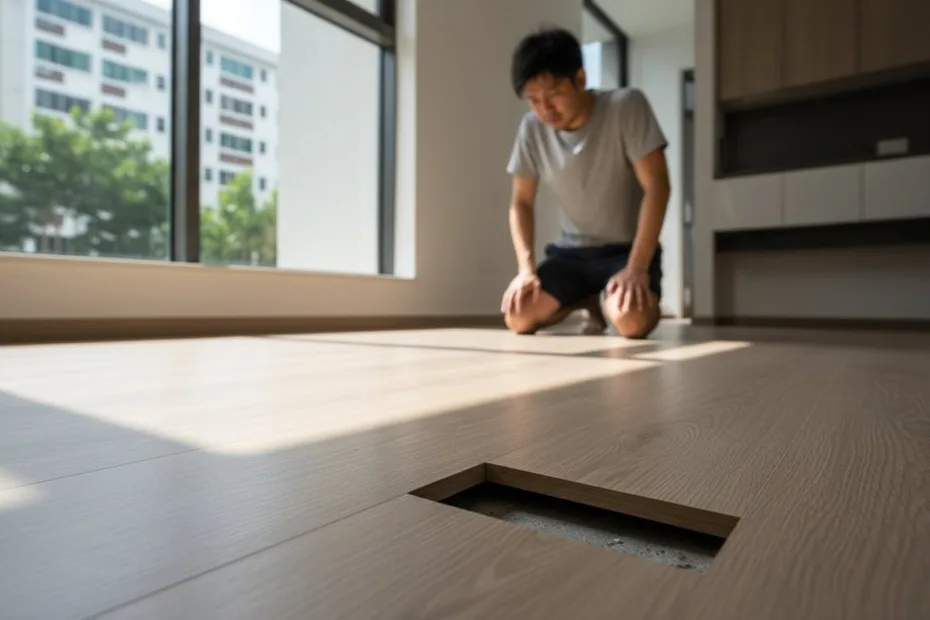
Last Monday, a homeowner named Sarah in Sengkang discovered a 4mm gap widening between her vinyl planks just six months after her S$5,000 renovation. It’s a stressful moment when your flooring investment starts showing “hollow” spots or unsightly separations far sooner than expected. We agree that your home should be a place of comfort, not a source of worry about hidden repair costs or poor workmanship. Understanding common vinyl flooring problems and solutions is essential for every Singaporean homeowner, especially since our 80% average humidity levels can wreak havoc on poorly installed materials.
This complete 2026 guide provides the expert clarity you need to identify if your floor has a genuine material defect or was simply installed without the right technical standards. We draw on over 50 years of combined experience to show you how to fix minor issues yourself and exactly when you must call a certified professional. You’ll gain a clear roadmap to restore your floor’s quality and ensure your home remains a safe, beautiful space for your family.
Key Takeaways
- Understand how Singapore’s 80%+ humidity levels trigger material expansion and why standard installations often fail in our unique tropical climate.
- Identify the root causes behind common vinyl flooring problems and solutions for frustrating issues like “tenting” and “buckling” caused by poor subfloor preparation.
- Master practical fixes for minor gaps and bubbling using specialized suction tools and adhesive techniques to restore your floor’s seamless appearance.
- Learn how to future-proof your home by choosing the right SPC or LVT materials backed by reputable FloorScore and SGS safety certifications.
- Discover how to secure a “Risk-Free” installation with professional-grade durability and comprehensive 10-year material warranties tailored for Singaporean homeowners.
Common Vinyl Flooring Problems in Singapore: Why They Happen
Vinyl flooring failure occurs when the material or the installation process fails to withstand environmental stress. It’s not always a product defect. Often, it’s a mismatch between the floor’s specifications and the room’s conditions. In our experience with thousands of HDB and condo units, we’ve seen that understanding common vinyl flooring problems and solutions starts with recognizing how Singapore’s climate interacts with synthetic materials. Whether it’s a minor “crunching” sound or visible warping, these issues are signals that your floor is struggling against its surroundings.
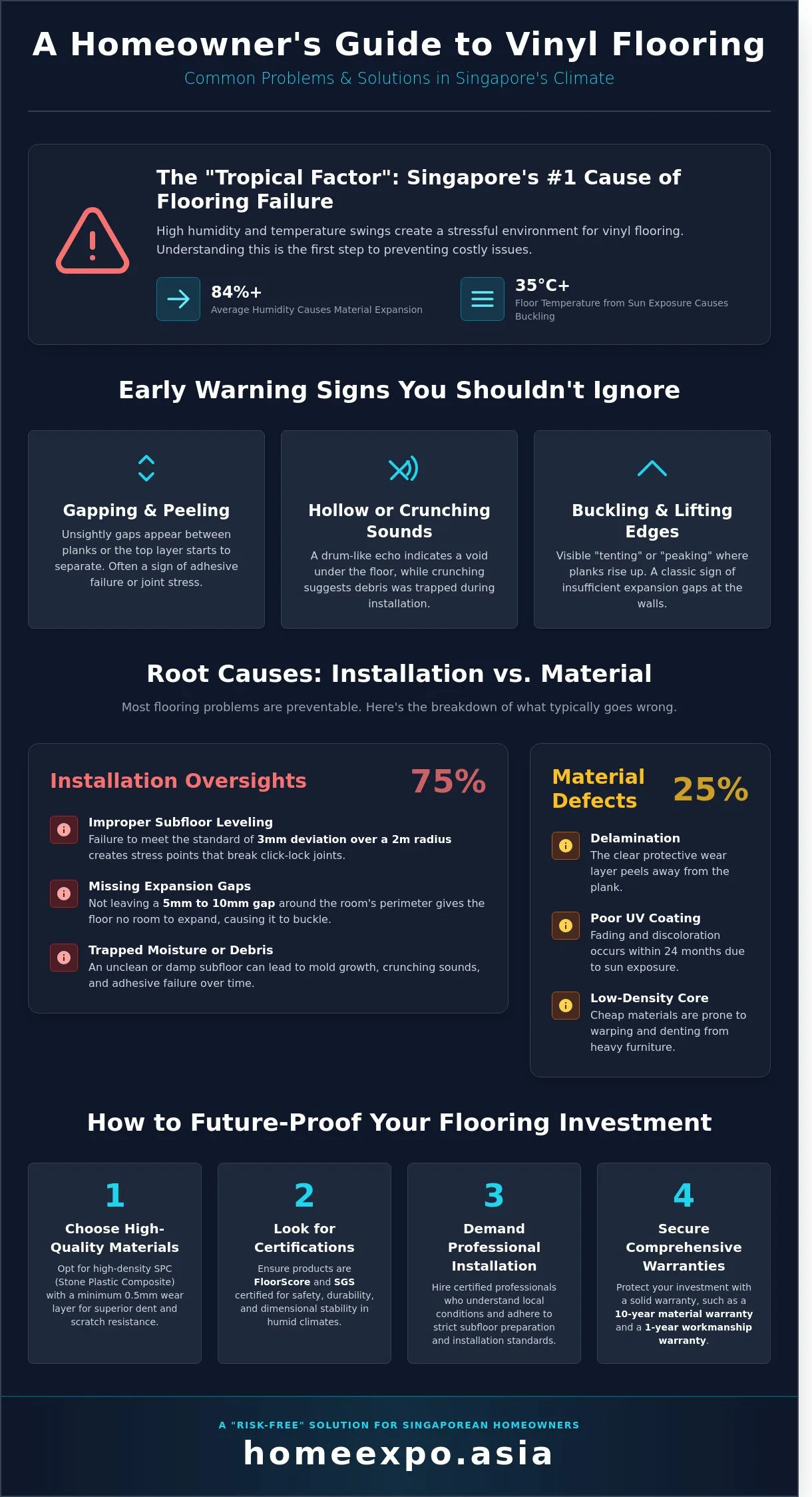
Singapore’s “Tropical Factor” is the leading cause of floor instability. With average relative humidity levels often exceeding 84%, vinyl planks are constantly exposed to moisture. While vinyl is waterproof, the air around it isn’t. High humidity causes microscopic expansion and contraction cycles. Over a 12-month period, these cycles can stress the click-lock joints or weaken the adhesive bond in glue-down options. Understanding the history of materials like Vinyl composition tile (VCT) reveals that while modern luxury vinyl is far more advanced, it still requires a stable subfloor to perform correctly.
Identifying a “hollow sound” is a critical early step in diagnosing trouble. If you walk across your living room and hear a drum-like echo, it usually indicates a gap between the vinyl and the cement screed. This happens if the subfloor wasn’t leveled to the industry standard of 3mm over a 2-meter radius. Early warning signs you shouldn’t ignore include:
- ✓ Discoloration: Yellowing or dark spots often signal moisture trapped beneath the planks.
- ✓ Slight lifting: Edges that “peak” or rise suggest the floor has no room to expand.
- ✓ Crunching noises: This typically means sand or debris was left on the subfloor during installation.
The Impact of Humidity and Temperature Fluctuations
High humidity is the enemy of glue-down vinyl. When moisture levels stay high, the adhesive can undergo “re-emulsification,” turning back into a liquid state and causing planks to slide. Thermal expansion is another major factor. Afternoon sun hitting a large HDB window can raise floor temperatures to 35°C or higher. This heat causes the vinyl to expand. If the installer didn’t leave a 5mm to 10mm expansion gap at the walls, the floor will buckle. Trapped moisture is even more dangerous as it facilitates mold growth under the planks, which can impact your family’s respiratory health.
Wear and Tear vs. Structural Defects
It’s important to distinguish between daily use and actual failure. Surface scratches are usually a maintenance issue. However, if the clear protective layer begins to peel away (delamination), it’s a manufacturing defect. High-quality SPC (Stone Plastic Composite) floors use a high-density core to prevent dents from heavy furniture, like a 100kg teak cabinet. In Singapore’s bright environment, UV exposure is constant. Without a UV-rated ceramic bead coating, your floor might fade within 24 months. Choosing a 0.5mm wear layer ensures your investment stays protected against the common vinyl flooring problems and solutions homeowners face daily.
✓ Quality Is Our #1 Priority: We only use certified, eco-friendly materials tested for Singapore’s unique climate.
✓ It’s Risk Free!: Our installations come with a 1-year workmanship warranty and a 10-year material warranty for your peace of mind.
The Root Causes: Why Your Vinyl Floor is Peeling or Gapping
Understanding common vinyl flooring problems and solutions begins with looking beneath the surface. Most homeowners blame the product when they see gaps or peeling, but 75% of these issues stem from installation oversights rather than material defects. In Singapore’s humid climate, the stakes are higher than in drier regions. If the subfloor isn’t perfectly level, the click-lock system undergoes immense stress every time you step on it. This leads to joint breakage, a problem that’s nearly impossible to fix without replacing entire sections of your home’s flooring.
Expansion gaps are another critical factor that many DIY enthusiasts and inexperienced contractors overlook. Vinyl is a resilient material that expands and contracts with temperature shifts. Without a 5mm to 8mm gap around the perimeter of the room, the floor has nowhere to go. It will eventually “tent” or buckle against your walls. Choosing non-certified, low-quality materials also invites trouble. Cheap vinyl often lacks the dimensional stability found in FloorScore or SGS-certified products, making them prone to warping within just 12 months of installation. It’s simply not worth the risk to save a few dollars on unverified brands.
Installation errors often start before the first plank is even laid. Skipping the acclimation period is a frequent mistake that leads to long-term instability. When you rush the process, you’re essentially gambling with the longevity of your interior. Professional installers know that the environment must be controlled to ensure the material performs as expected for its 10-year or 15-year warranty period.
Subfloor Issues: The Importance of Cement Screeding
A smooth finish requires a solid foundation. An uneven base is the primary culprit behind bouncy floors and snapped joints. This is why a high-quality cement screed is vital for any HDB or condo renovation. It levels the surface to within a 3mm tolerance over a 2-meter radius. Moisture is the silent enemy here. Even if a floor looks dry, trapped vapor can cause adhesive failure. Experts recommend preventing flooring failure by conducting a calcium chloride test to ensure moisture levels are below 3 lbs per 1,000 square feet before laying any planks.
The Acclimation Myth: Why 48 Hours is Non-Negotiable
Skipping the 48-hour acclimation period is a recipe for disaster. Vinyl planks need time to adjust to your home’s specific humidity and temperature. If you install “cold” vinyl straight from a warehouse into a humid 31°C Singapore living room, the planks will shift significantly after they’re laid. You’ll see unsightly gaps appearing within weeks because the material wasn’t given time to stabilize. Don’t leave the planks in a sealed box; stack them in the room where they’ll be installed. It’s best to keep your air-conditioning at its usual daily setting during this period so the material adapts to real-world conditions.
Practical Solutions for Common Vinyl Flooring Issues
Fixing common vinyl flooring problems and solutions doesn’t have to be a headache. Most issues in Singapore homes stem from thermal expansion or subfloor irregularities caused by our humid climate. If you notice gaps between your planks, you don’t need to lift the whole floor. A heavy-duty suction cup tool can pull those gaps shut in seconds. This simple tool costs less than S$30 at local hardware stores and saves hours of labor. You simply attach the suction cup to the displaced plank and tap the tool with a rubber mallet to nudge the vinyl back into its locking track.
Dealing with “bubbling” requires a more tactical approach. Small bubbles often indicate trapped air or a tiny pocket of moisture. You can fix these by using a fine-gauge syringe to inject a small amount of vinyl adhesive into the center of the bubble. Once injected, place a heavy weight on the area for 24 hours. However, if the bubbling is widespread, it’s a sign of a failing moisture barrier. For deeper insights into why these issues occur, you can read about Common Luxury Vinyl Plank Flooring Problems to see if your issue is structural or environmental. If the plank is severely warped, replacement is the only reliable way to maintain your floor’s safety and aesthetics.
- ✓ Minor Scratches: Use matching wax sticks or specialized repair pens for surface-level marks.
- ✓ Deep Gouges: Replace the damaged plank entirely to ensure the floor remains water-resistant.
- ✓ Popping Sounds: These usually indicate a subfloor void of 2mm or more that needs filling.
- ✓ Edge Peeling: Apply a professional-grade seam sealer to bond the vinyl back to the base layer.
DIY Fixes: What You Can Safely Do
You can easily re-click a loose plank if the locking mechanism remains intact. Start by vacuuming the gap thoroughly to remove every bit of grit. Even a single grain of sand can prevent a perfect seal. Use a pull bar and a rubber mallet to gently nudge the plank back into its original position. To prevent future scratches, switch to a soft-bristle vacuum attachment immediately. Grit acts like sandpaper on your floor’s wear layer, especially in high-traffic areas like the living room. Using a vinyl floor seam sealer is another safe DIY task. It creates a moisture-proof barrier that protects your subfloor from accidental spills and mop water.
Professional Intervention: When to Call the Experts
Professional intervention is non-negotiable when you see widespread buckling. This isn’t just an eyesore; it’s a tripping risk for your family. Our experts have over 50 years of combined experience identifying these structural failures. We often find that DIY subfloor leveling attempts make the problem worse. Using the wrong cement mix can lead to moisture entrapment, which voids your FloorScore certification and ISO 9001 standards. Investing S$250 for a professional fix is far better than losing your 10-year material warranty. We provide an official invoice and a 1-year installation warranty, making the repair completely risk-free for you. If more than 15% of your floor is affected, a full relay is usually more cost-effective than piecemeal repairs.
Prevention Strategies: How to Future-Proof Your Floors
Stopping trouble before it starts is the most effective way to manage common vinyl flooring problems and solutions in your Singapore home. Most homeowners focus on the aesthetic, but the technical specs determine whether your floor lasts 2 years or 20 years. Quality is our #1 priority because we’ve seen how “cheap” alternatives fail under the pressure of local humidity. You must be proactive in your selection and care to ensure a risk-free experience.
The first step is choosing between Stone Plastic Composite (SPC) and Luxury Vinyl Tile (LVT). In Singapore’s climate, SPC is the superior choice for most high-traffic areas. It features a rigid core made of limestone powder and stabilizers, making it 100% waterproof and incredibly stable. LVT is softer and more comfortable underfoot, but it’s more prone to expansion and contraction when temperatures fluctuate. If you’re flooring a kitchen or a sun-drenched living room, SPC is your safest bet to prevent buckling.
Certification isn’t just a badge; it’s a guarantee of safety and longevity. We rely on FloorScore and SGS testing to verify that our materials are eco-friendly and structurally sound. These certifications ensure the floor won’t emit harmful Volatile Organic Compounds (VOCs) into your living space. When you insist on certified materials, you’re investing in your family’s health and the floor’s physical durability.
Professional installation is non-negotiable. Many “budget” contractors cut corners by skipping floor leveling or using low-grade adhesives. This “cheap” labor often leads to S$2,000 repairs just months later when the planks start to “pop” or gap. Our team brings more than 50 years of combined experience to every job, ensuring every click-lock mechanism is perfectly engaged. A professional install includes a 1-year installation warranty, giving you peace of mind that the job was done right the first time.
Maintenance is the final pillar of prevention. The “no-wet-mop” rule is the most important habit to adopt. While vinyl is water-resistant, excessive water can seep into the joints and weaken the subfloor bond or cause the edges to swell. Use a damp microfiber cloth instead. By following these strict standards, you won’t have to constantly look for common vinyl flooring problems and solutions to fix avoidable damage.
Selecting High-Quality, Certified Vinyl
FloorScore certification confirms that your flooring meets strict indoor air quality standards. It’s a vital marker for material stability. In Singapore, you should always demand 100% virgin vinyl. Recycled vinyl often contains scrap plastics that expand unevenly in 32°C heat, leading to warped planks. Ensure your choice has a wear layer of at least 0.5mm. This thick protective top layer is essential for HDB households to resist scratches from heavy furniture and pets.
Maintenance Tips for the Singapore Climate
Steam mops are a major threat to vinyl longevity. The intense heat, often exceeding 100°C, can melt the internal adhesives and warp the core of the planks. Use a dehumidifier to keep your home’s humidity between 45% and 60%. This prevents the air from becoming too heavy with moisture, which protects the floor’s structural integrity. Finally, spend S$10 on high-quality felt furniture pads. These small investments prevent the deep dents that occur when heavy sofas sit on vinyl for years.
Ready to upgrade to a floor that’s built to last? Book a free site measurement with Home Expo Asia today and see our certified, high-quality collections in person.
The Home Expo Asia Advantage: Risk-Free Vinyl Solutions
Choosing the right flooring isn’t just about picking a color. It’s about ensuring your home stays beautiful for a decade or more. At Home Expo Asia, we’ve curated a collection of over 200 designs that combine professional-grade durability with aesthetic appeal. We understand that homeowners often worry about common vinyl flooring problems and solutions, which is why we’ve built our entire business model around peace of mind. Our “Risk-Free” promise isn’t just a marketing slogan. It’s a formal commitment backed by a 1-year installation warranty and a 10-year material warranty. This ensures that your investment is protected against manufacturing defects and workmanship issues alike.
Safety is a non-negotiable priority for us. Every plank we install meets rigorous international and local standards. Our products carry the Green Label Singapore certification, ensuring they are eco-friendly and safe for your family. We also adhere to ISO 9001 standards to maintain consistent quality across every project. Whether you need professional cement screeding to level your subfloor or a precise vinyl overlay, we handle the entire process from start to finish. We don’t skip steps because we know that a floor is only as good as the surface beneath it.
Why 50+ Years of Combined Experience Matters
Singaporean homes present unique structural challenges. From the specific floor trap dimensions of HDB flats to the intricate layouts of private condos, our team has seen every possible scenario. Our 50+ years of combined experience allows us to anticipate issues before they happen. We’ve helped many homeowners who came to us with “popping” tiles or warped planks caused by poor previous installations. We don’t just cover up the mess; we fix the root cause. Transparency is our hallmark, so we maintain a strict “No Hidden Fee” policy. The price you see on your official invoice is the price you pay, with no surprise charges for transport or door trimming.
- ✓ Over 50 years of combined technical expertise
- ✓ 5.0/5.0 Google Reviews from verified Singaporean homeowners
- ✓ Official invoice provided with every job
- ✓ No Hidden Fee policy for total transparency
Get Your Professional Site Assessment Today
We don’t believe in one-size-fits-all answers. During a free Home Expo Asia site visit, our experts evaluate your home’s specific environment. We measure moisture levels in your subfloor and check how much direct sunlight hits your living spaces. These factors are critical because high humidity or intense UV exposure can lead to common vinyl flooring problems and solutions often require specialized UV-resistant materials. We provide personalized recommendations to ensure your floor doesn’t buckle or fade over time. You’ll receive a detailed breakdown of the work required, from floor preparation to the final skirting installation.
Stop worrying about floor failures and start enjoying your home. Our team is ready to guide you through every step of the transformation with prompt and efficient support. Book your free site assessment and get a risk-free quote today!
Secure Your Singapore Home with Professional Flooring Solutions
Your home deserves a floor that stands the test of time against Singapore’s 80% average humidity and daily foot traffic. Understanding common vinyl flooring problems and solutions helps you avoid costly mistakes like gapping or peeling. By choosing high-quality materials and expert installation, you eliminate the root causes of floor failure before they ever start. It’s about more than just aesthetics; it’s about safety and long-term value for your property.
Home Expo Asia provides that essential peace of mind. We offer a 10-Year Material Warranty to protect your investment for a decade. Our products are FloorScore and Green Label Certified, ensuring your family breathes clean air every day. With a 5.0/5.0 Google Reviews rating from hundreds of local homeowners, our track record is proven. Don’t settle for subpar results when you can have a certified, durable finish that’s built for the 2026 standard of living. Take the first step toward a beautiful, worry-free interior today.
Get a Risk-Free Vinyl Flooring Quote for Your Singapore Home
Frequently Asked Questions
Why is my vinyl flooring popping up in certain areas?
Your vinyl flooring is likely popping up because of trapped moisture or insufficient expansion gaps at the wall edges. Singapore’s high humidity levels, which often exceed 80%, cause materials to shift if the installer didn’t leave a 5mm to 10mm gap. This is one of the most common vinyl flooring problems and solutions often involve trimming the edges or using a dehumidifier to stabilize the environment.
Can I fix gaps in my vinyl flooring myself?
You can fix minor gaps yourself by using a specialized floor gap fixer tool or a heavy-duty glass suction cup. Simply clean the debris from the gap, apply the suction tool to the plank, and firmly tap it back into place with a rubber mallet. If the gaps are wider than 3mm across multiple areas, it’s better to call a professional to ensure the click-lock system isn’t broken.
Is it normal for vinyl floors to expand and contract in Singapore?
It’s completely normal for vinyl floors to expand and contract due to Singapore’s tropical climate and frequent air-conditioning use. Temperatures in a room can swing from 22°C with the AC on to 32°C when it’s off. Our FloorScore certified materials are tested to handle these shifts, but you must ensure your installer provides adequate perimeter spacing to prevent buckling during these 2% to 3% size fluctuations.
How do I prevent my vinyl floor from scratching?
Prevent scratches by attaching high-density felt pads to the bottom of all furniture legs and avoiding the use of vacuum cleaners with beater bars. Data shows that 70% of floor damage occurs during furniture movement. We recommend using rugs in high-traffic zones and keeping pet nails trimmed to maintain the protective 0.5mm wear layer of your vinyl.
What is the best way to clean vinyl flooring without damaging it?
Use a pH-neutral cleaner and a well-wrung damp microfiber mop to clean your floors safely without leaving streaks. Avoid using steam mops or harsh chemicals like bleach, which can degrade the UV coating over time. For the best results, sweep daily to remove abrasive grit and mop once a week with a solution specifically designed for resilient flooring to keep your 10 year warranty valid.
How long should vinyl flooring last in a Singapore HDB flat?
High-quality vinyl flooring typically lasts between 15 and 25 years in a standard Singapore HDB flat when maintained properly. At Home Expo Asia, we provide a 10 year material warranty and a 1 year installation warranty to give you peace of mind. Our products undergo SGS and TUV SUD testing to ensure they withstand the daily wear and tear of a busy Singaporean household.
Do I need to replace my whole floor if one plank is damaged?
You don’t need to replace the entire floor because individual click-lock planks can be replaced separately without tearing up the whole room. A professional installer can “unclick” the floor from the nearest wall or use a specialized tool to remove the damaged piece and glue in a new one. This is a cost-effective way to handle common vinyl flooring problems and solutions, saving you hundreds of dollars in material costs.
Is SPC flooring better than traditional vinyl for preventing problems?
SPC (Stone Plastic Composite) is generally better than traditional LVT for preventing issues like warping because it has a rigid limestone core. This core makes it 100% waterproof and significantly more dimensionally stable in Singapore’s heat. While traditional vinyl might soften at 30°C, SPC remains firm, making it a reliable choice for HDB kitchens and balconies where sunlight is intense.