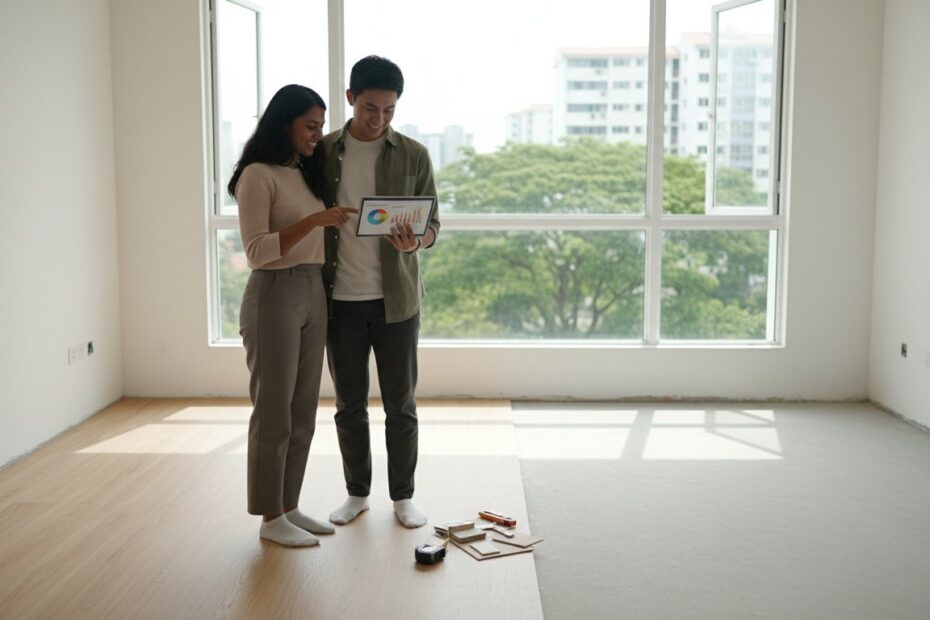
Last month, a homeowner in Toa Payoh signed what looked like a S$3,500 “all-in” deal, only to receive a S$1,200 surcharge for cement screeding and old tile disposal on the very first day. It’s a common and frustrating reality for many in Singapore who find that the hidden costs of flooring renovation often hide behind confusing technical jargon or incomplete quotes. You already know that a home renovation is a massive investment; the last thing you need is a budget blowout that forces you to compromise on safety or material quality.
For prices, options and installation details, see our guide to vinyl flooring services in Singapore.
We’re here to ensure your renovation experience is professional, predictable, and entirely risk-free. This 2026 guide will show you how to spot overlooked expenses like skirting adjustments and furniture handling fees before you sign any contract. You’ll learn how to demand a transparent, line-by-line breakdown that guarantees no surprise add-ons. We’ll walk through exactly what to look for in a quotation so you can secure a high-quality flooring installation that fits your budget perfectly and stands the test of time.
Key Takeaways
- Learn why advertised “per square foot” rates are rarely the final price and how to identify the gap between material-only supply and full installation packages.
- Discover how subfloor conditions and the necessity of professional cement screed can significantly impact your budget and the long-term durability of your floor.
- Identify the logistical “last mile” expenses, such as staircase climbing and furniture protection fees, that are often omitted from basic flooring quotes.
- Protect your budget from the hidden costs of flooring renovation by learning to spot vague contract terms like “subject to site condition” before you sign.
- Ensure a safe home environment by understanding why FloorScore and Singapore Green Label certifications are non-negotiable for long-term quality and family health.
Understanding the Real Cost of Flooring Renovation in Singapore (2026)
Most homeowners start their journey by comparing a price of S$3.50 versus S$5.50 per square foot. This approach is risky because the advertised price rarely reflects the final invoice you’ll receive. You’ll often find that “supply only” rates look attractive on a flyer but ignore the S$500 to S$1,500 logistics and labor fees that inevitably follow. An all-in flooring cost is the total of material, prep, logistics, and labor.
The difference between material supply and “supply and install” packages is the most common point of confusion. A material-only quote means the planks arrive at your void deck, and the rest is up to you. A professional supply and install package should cover the technical labor, but even these can hide hidden costs of flooring renovation if the initial site survey wasn’t thorough. A foundational understanding flooring materials shows that the subfloor is just as important as the surface you walk on, yet it’s the most overlooked part of a quote.
The Myth of the Sticker Price
Low-ball quotes on social media are often “teaser rates” designed to get you into a showroom. These prices almost always exclude essential prep work like moisture testing, self-leveling, or door trimming. It’s a psychological trap where you commit to a “cheap” quote, only to see the hidden costs of flooring renovation pile up once the contractor identifies “unforeseen” floor unevenness. To protect yourself, look for these signs in a quote:
- ✓ No mention of skirting or transition profiles.
- ✓ Absence of floor protection costs for existing cabinetry.
- ✓ Vague terms like “site condition applies” without a site visit.
Property-Specific Cost Drivers in Singapore
The type of home you own dictates your renovation budget more than the material choice itself. In 2026, the variables between property types have become more pronounced due to labor and disposal regulations.
HDB BTO vs. Resale: While BTO units are generally “flooring-ready,” they still require a check for hollow screed. Resale units are where budgets often break. These units often cost 20% to 30% more in preparation because you must factor in the hacking of old tiles and the rectification of decades-old subfloors.
Condo Management Rules: Private estates have strict “work-hour” windows, usually from 9 am to 5 pm, with no work allowed on weekends. This compresses the timeline and increases labor costs. You must also budget for mandatory lift protection and a security deposit to the MCST, which can range from S$1,000 to S$3,000.
Landed Property Challenges: Large floor plates and multi-story layouts introduce “haulage” fees. If your material needs to be carried up to the third or fourth floor without a service lift, expect to pay a premium for manual labor. Logistics for landed homes are rarely included in standard per-square-foot rates.
Structural Surprises: Subfloor Preparation and Hacking Fees
Your subfloor is the foundation of your renovation. Many homeowners focus only on the top layer, but the bare floor underneath dictates whether your vinyl lasts 2 years or 20. If the subfloor is uneven, your new flooring will eventually fail. This is where many hidden costs of flooring renovation begin to surface. Professional installers know that a “cheap” quote often ignores the reality of what’s under your old carpet or tiles.
Achieving a flat surface often requires cement screed. This is a layer of sand and cement applied to level the concrete base. Without it, thin vinyl planks can’t sit flush. In Singapore, HDB has specific guidelines on screed thickness, and failing to account for this can lead to unexpected labor charges later in the project.
The Hidden Complexity of Floor Levelness
Industry standards for vinyl installation require a 3mm tolerance over a 2-meter radius. If your floor exceeds this, you’ll hear “popping” or clicking sounds when you walk. This happens because the locking joints are stressed every time you step on an uneven patch. Rectifying this involves intensive floor grinding or manual patching, which adds labor hours to your final bill. Ensuring a flat base is vital for long-term flooring performance and prevents the material from warping or gapping over time.
Sometimes standard screeding isn’t enough. Self-levelling compound is a liquid resin poured over the floor to create a mirror-flat finish. It’s an extra material cost, often priced per square foot. It’s necessary for high-end click-system vinyl where even tiny bumps cause structural issues. Don’t be surprised if your contractor adds this fee after the initial “hacking” phase reveals a severely sloped floor.
Hacking and Haulage: The Heavy Lifting Costs
Hacking old tiles is more than just manual labor. You’re paying for specialized machinery and the disposal of heavy debris. In Singapore, HDB haulage fees are mandatory. These fees cover the cost of moving broken tiles and concrete from your unit to the designated dumping ground. If you’re staying in a high-floor unit with restricted lift access, these costs can climb quickly.
You also need to account for the protection of your home. Hacking creates massive amounts of dust and vibration. Budgeting for hidden costs of flooring renovation must include protective works, such as:
- ✓ Plastic hoarding to seal off bedrooms and kitchens.
- ✓ Corrugated board protection for existing built-in wardrobes.
- ✓ Specialized vacuum systems to minimize silica dust.
- ✓ Disposal fees for bulky items like old parquet or skirting.
If you want to avoid these structural surprises, it’s best to get a professional site assessment to check your floor levelness before you commit to a material.
Logistical and Administrative Fees You Might Overlook
Many homeowners focus only on the per-square-foot price of vinyl or tiles. They often miss the hidden costs of flooring renovation that appear during the execution phase. These fees cover the physical movement of goods and the legal paperwork required for Singaporean properties. At Home Expo Asia, we believe in transparency. Understanding these “last mile” expenses ensures your budget remains intact from start to finish.
Manpower and Haulage Logistics
Getting materials from the warehouse to your living room isn’t always a simple trip. If your unit lacks direct lift access or requires “staircase climbing,” expect additional labor charges. This is common in older walk-up apartments or during lift maintenance periods. Heavy materials like Stone Plastic Composite (SPC) or large-format tiles require significant physical effort to transport safely.
- ✓ Staircase fees: Industry rates often start from S$20 per level for every worker involved.
- ✓ Heavy handling: Oversized planks or heavy stone composites require specialized equipment or extra manpower to prevent breakage.
- ✓ After-hours premiums: Most HDB and Condo rules forbid noisy work on weekends. If you require night work for commercial spaces, expect a 20% to 40% labor premium.
Administrative and Site Protection Fees
Before a single plank is laid, you’ll encounter paperwork and protection costs. These are essential for a risk-free renovation. Management offices in condos typically require a refundable renovation deposit. These range from S$500 to S$2,000 to cover potential damage to common property. To get this back, your contractor must be meticulous.
Site protection is another non-negotiable cost. You’ll pay for corrugated paper, bubble wrap, or plastic sheets to shield existing walls, built-in wardrobes, and the lift lobby. Proper coordination is key. A trusted carpenter Singapore often works alongside flooring teams to ensure that new floor heights don’t scrape against expensive custom cabinetry. This coordination prevents costly mistakes and ensures HDB renovation permits are filed correctly under the right work scope.
Waste and Wastage: The 10% Rule
You don’t just buy what you use. You must pay for more material than your actual floor area. This is one of the most common hidden costs of flooring renovation. Standard practice requires ordering 5% to 10% extra material for several reasons:
- Cutting loss: Trimming planks to fit odd-angled walls or doorways.
- Batch consistency: If you run out, a new batch might have slight color variations. Buying extra now guarantees a perfect match.
- Future-proofing: It’s wise to keep two boxes of spare planks. If a pipe leaks or a heavy object chips the floor in 2028, you can replace specific pieces easily.
It’s better to account for these logistical realities early. Our team provides an official invoice with clear breakdowns so you don’t face “surprise” fees on delivery day. We prioritize your peace of mind by keeping our process professional and straightforward.

The Cost of Quality: Material Longevity and Health Standards
Choosing the cheapest material is often the fastest way to increase the hidden costs of flooring renovation. While a low price tag looks attractive on a quotation, uncertified materials frequently lead to expensive repairs or health issues that far outweigh the initial savings. Quality is a long-term investment that protects both your wallet and your family. In the Singapore market, “cheap” often means skipping essential safety tests that keep your home environment stable.
Certified Safe vs. Cheap Alternatives
Low-cost vinyl often contains high levels of Volatile Organic Compounds (VOCs). These chemicals off-gas into your home, potentially causing headaches or respiratory problems for years. Professional homeowners in 2026 prioritize FloorScore and Singapore Green Label certifications to ensure their indoor air remains clean. It’s not just about health; it’s about proven durability. Many suppliers claim their products are “scratch-resistant,” but these claims are empty without SGS or TUV SUD testing reports to back them up. Investing in eco-friendly, certified flooring also boosts your property’s resale value. Buyers in Singapore are becoming more discerning, and having a home with certified safe materials is a major selling point that can justify a higher asking price.
Warranty and After-Sales: Avoiding “Hit-and-Run” Contractors
A 10-year material warranty sounds impressive, but you need to read the fine print. Most material warranties only cover manufacturing defects like color fading or delamination. They don’t cover installation errors like popping planks, buckling, or wide gaps. This is why a local installation warranty is crucial for peace of mind. At Home Expo Asia, we provide a 1-year workmanship warranty alongside a materials warranty of up to 25 years because we believe the job isn’t done until it’s perfect. Don’t trust a contractor who disappears once the final payment is made. Verify their track record through genuine social proof and 5.0/5.0 Google reviews. We always say: don’t listen to us, listen to our customers who have seen our work stand the test of time.
Maintenance is another area where quality pays for itself. Choosing high-grade vinyl flooring Singapore options means you spend less on specialized cleaning agents or early replacements. Our materials are tested to be water-resistant and easy to clean, saving you hundreds of dollars in upkeep over the next decade. It’s a risk-free choice for those who want a beautiful home without the stress of constant maintenance. By choosing certified products, you eliminate the hidden costs of flooring renovation that stem from premature wear and tear.
Ensure your home is safe and durable for the long run. Book a free consultation with Home Expo Asia to see our range of certified flooring options today.
Avoiding the Trap: How to Secure a “No Hidden Fee” Quote
Don’t let a low initial price tag fool you. Many homeowners in Singapore end up paying 20% to 30% more than their initial estimate because they didn’t scrutinize the fine print. To truly avoid the hidden costs of flooring renovation, you need a document that accounts for every physical step of the process. A professional quote should be a fixed roadmap, not a starting point for negotiations.
The biggest red flag in any contract is vague language. Phrases like “subject to site condition” or “wastage to be calculated later” are traps. These terms give contractors the freedom to add hundreds of dollars to your final bill once your old floors are ripped up. You should demand a professional site assessment before signing anything. A technician must measure your floor’s moisture levels and levelness to give you an accurate price for screeding or self-levelling compounds.
The Flooring Quote Vetting Checklist
Before you commit, verify that every one of these items is explicitly listed with a fixed price in S$. If it’s not on the paper, it’s a potential hidden cost. Use this list to audit your contractor:
- Hacking and Disposal: Confirm if the price includes the removal of existing tiles, parquet, or vinyl and the subsequent disposal at approved sites.
- Subfloor Preparation: Check for specific mentions of screeding, self-levelling, or grinding.
- Skirting and Trimmings: Ensure the quote covers new skirting and the trimming of doors if the new floor height interferes with them.
- Material Specifics: Verify the exact brand, series, and thickness (e.g., 5mm with a 0.5mm wear layer).
- Final Figures: Confirm that the 9% GST and delivery fees are already included in the total.
The Home Expo Asia Risk-Free Approach
We do things differently to ensure you have total peace of mind. Our process is built on 50 years of combined experience and a commitment to honesty. We provide an official invoice with a complete breakdown of costs before you pay a single cent. This transparency is why we maintain a 4.9/5.0 rating on Google from hundreds of satisfied Singaporean homeowners.
Our “No Hidden Fee” promise means the price we quote is the price you pay. We don’t hide behind fine print or surprise you with “site condition” surcharges mid-project. It’s Risk Free! You get a 1-year workmanship warranty and a materials warranty of up to 25 years, ensuring your investment is protected for the long haul. We focus on quality and safety, using only certified, eco-friendly materials that pass rigorous SGS and FloorScore tests.
Get a transparent, risk-free flooring quote today!
Secure Your Flooring Investment with Total Transparency
Navigating the 2026 Singapore renovation market requires more than just picking a stylish design. You’ve now seen how structural surprises like subfloor preparation and administrative fees for waste disposal can quickly inflate a budget. Choosing materials certified by FloorScore, SGS, and the Singapore Green Label isn’t just a health choice; it’s a financial strategy to prevent premature replacement costs. It’s vital to account for every logistical detail before the first plank is laid.
Avoiding the hidden costs of flooring renovation starts with a partner who values honesty as much as you do. With over 50 years of combined experience in the local industry, we know how to spot potential site issues before they become expensive surprises. Our 4.9/5.0 Google Reviews from real Singaporean homeowners prove that a “No Hidden Fee” quote is possible. Don’t leave your home to chance when you can have peace of mind from the start.
Book a Free Site Assessment & Get a Transparent Quote
Your dream home deserves a high-quality foundation that stays within your budget and lasts for decades.
Frequently Asked Questions
What is the most common hidden cost in Singapore flooring renovations?
The most common hidden cost is subfloor leveling, also known as screeding, to fix uneven surfaces. While your floor might look flat, HDB regulations require a level surface within a 3mm tolerance over a 1.2 meter radius. If your contractor finds dips or slopes after removing old tiles, you might pay an additional S$3.50 to S$6.00 per square foot for self-leveling compound to ensure a stable installation.
Do I need to pay for HDB permits myself when changing my flooring?
You are legally responsible for the permit application, but your contractor usually manages the submission process for you. The administrative fee for the permit is typically included in the contractor’s management fee, but homeowners must provide authorization via Singpass.
How much extra should I budget for subfloor preparation?
You should budget an extra 10% to 15% of your total renovation cost specifically for subfloor preparation. This contingency covers unexpected issues like “hollow” tiles or moisture problems found after stripping the old floor. For a standard 4-room HDB flat, this means setting aside approximately S$800 to S$1,500 to handle these hidden costs of flooring renovation without delaying your project timeline.
Is furniture moving usually included in the flooring installation price?
Furniture moving is rarely included in the base installation price and typically incurs a surcharge of S$150 to S$500 depending on the volume. Professional installers charge this because moving heavy items like pianos or built-in wardrobes requires specialized labor and increases the risk of damage. You can save money by clearing the rooms yourself before the team arrives on site for the installation.
Why do flooring companies charge for more square footage than my actual floor area?
Flooring companies charge for more square footage because of a 10% wastage factor required for cutting and fitting. When planks are cut to fit corners or irregular wall shapes, the offcuts often cannot be reused elsewhere. If your actual floor area is 1,000 square feet, you will likely be billed for 1,100 square feet to ensure there’s enough material to complete the job perfectly.
What happens if my floor is not level during the installation?
The installation will stop immediately until the surface is corrected with a leveling compound. Installing vinyl or laminate over an uneven subfloor causes “bouncing” and eventually breaks the click-lock system. This results in gaps or “popping” sounds when you walk. Addressing this immediately prevents your materials warranty from becoming void due to improper installation conditions and ensures your floor remains durable.
Are there hidden costs associated with eco-friendly or certified vinyl?
There are no hidden fees for certified vinyl, but the initial material cost is roughly 20% higher than non-certified alternatives. These products carry labels like FloorScore or Singapore Green Label, which prove they’ve passed rigorous SGS testing for low VOC emissions. While the upfront price is higher, you save money long-term because these high-quality materials are more durable and safer for your family’s health.
How can I tell if a flooring quote is truly “all-in”?
A truly “all-in” quote must include itemized costs for skirting, door trimming, and site cleaning. Check your official invoice for a “No Hidden Fee” guarantee and specific mentions of waste disposal charges. To avoid the hidden costs of flooring renovation, ensure the quote lists the exact brand of adhesive and the thickness of the underlayment, as these are often added as “extras” in less transparent quotes.